Free collection · Figma file · AI-ready
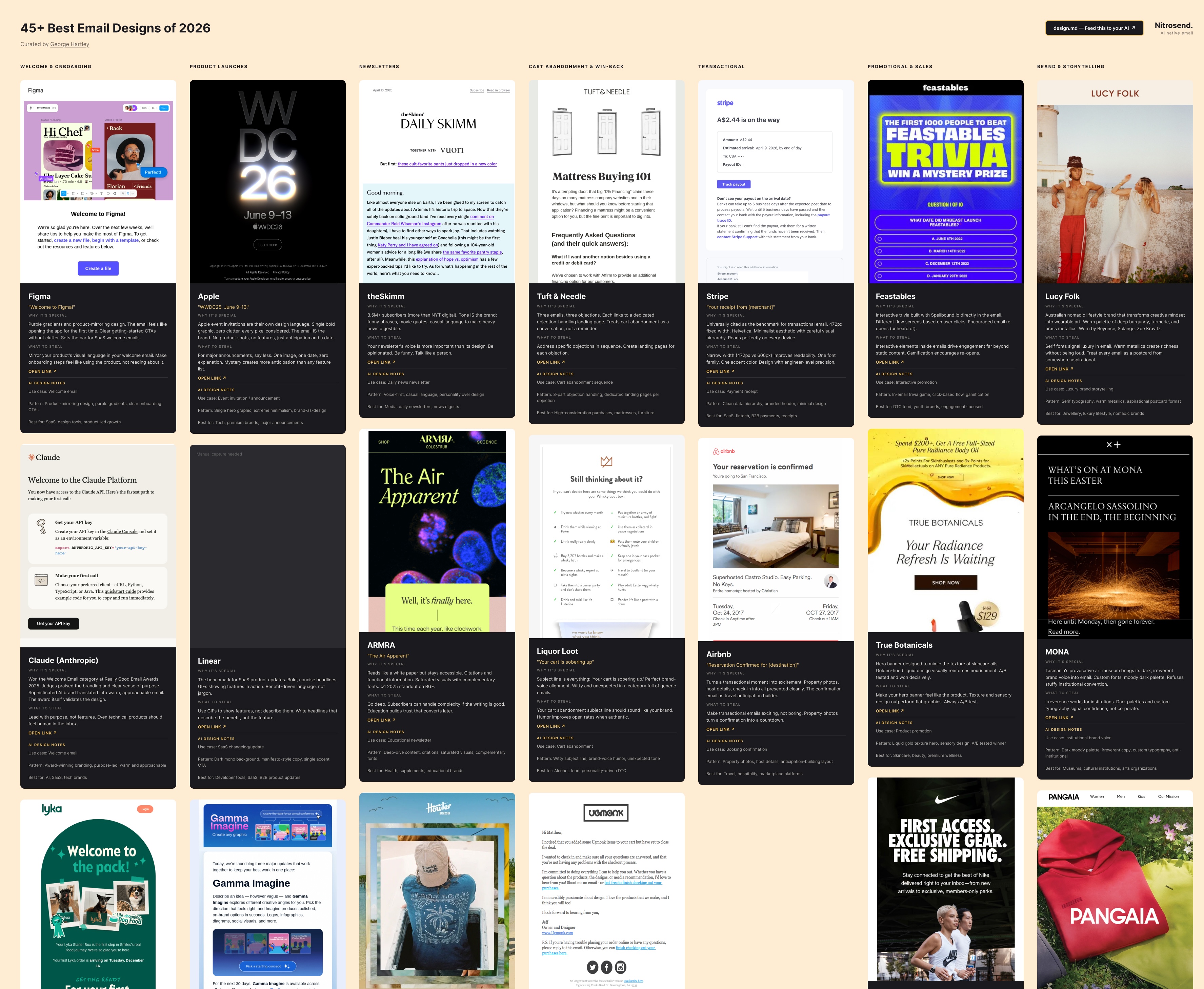
This collection is the hand-picked forty seven. If you want the unedited version, the email example library holds 12,711 of them, sorted by what they are rather than by how good they look.
I started this email design collection to train our own Nitrosend AI (NitroWheel) to design better emails when prompted by Claude and Codex. I'm open-sourcing it because I wish I'd had this to start with.
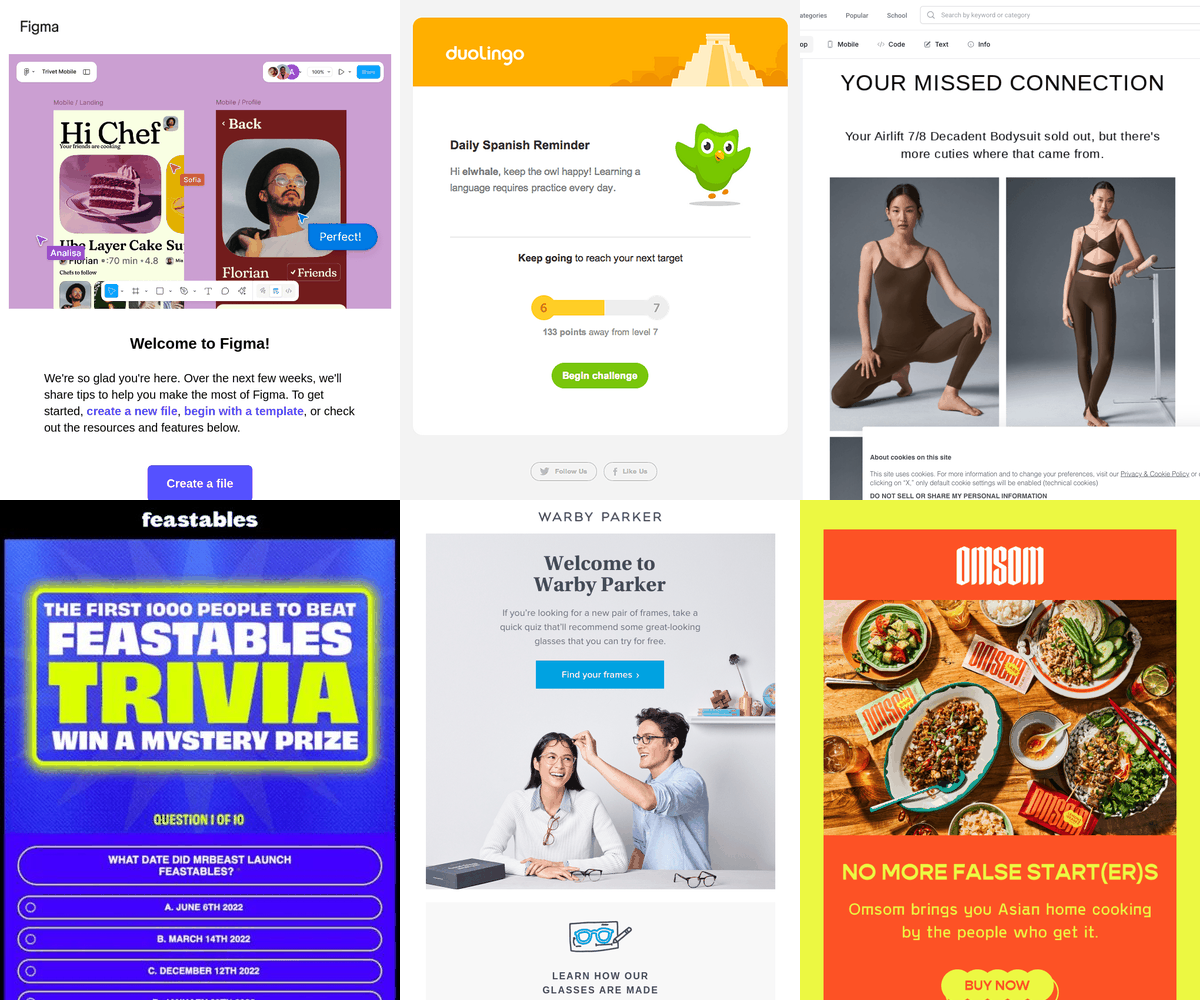
I've sent 6 billion emails. Here's a collection from dozens of brands like Apple, Stripe, Figma, Patagonia, Lucy Folk, MONA, Pangaia, Aesop, and more. Hand-picked for the designs that made me stop and rethink everything. Not a listicle. A design education.
Figma file with all 47 screenshots, structured notes, and a companion AI-readable DESIGN.MD file.
Free on Figma Community · Click to open
Why this exists
Designers obsess over websites and apps, then treat email as an afterthought. White background, blue button, stock photo. The result is a sea of campaigns that all look the same, and nobody stops scrolling for any of them.
AI makes this worse. It generates from the average, which means every AI-drafted email inherits the same safe, forgettable patterns. The fix isn't better prompts. It's better references. Show your AI what exceptional looks like and the output changes completely.
That is not a hypothetical for us. It is the reason Nitrosend built Brand Kit: point it at your own site and it learns your colors, fonts and voice, then hands your AI the reference it needs to draft an on-brand email automatically, no template editor required. The forty seven below are the human-curated version of the same idea.
This collection is 47 real campaigns from brands that treat email as a first-class design surface. Unexpected layouts. Subject lines that earn the open. Copy that sounds human. Every one includes notes on why it works and what to take from it.
Each with a full screenshot, design notes, and what makes it worth studying.
First impressions that set the tone. How great brands make the first email count.
Campaigns that made people talk. Launch emails from Apple, Figma, Linear, and more.
Weekly drops that readers actually open. Voice, rhythm, and restraint.
Recovery flows that don't feel desperate. The best of brand-on-brand.
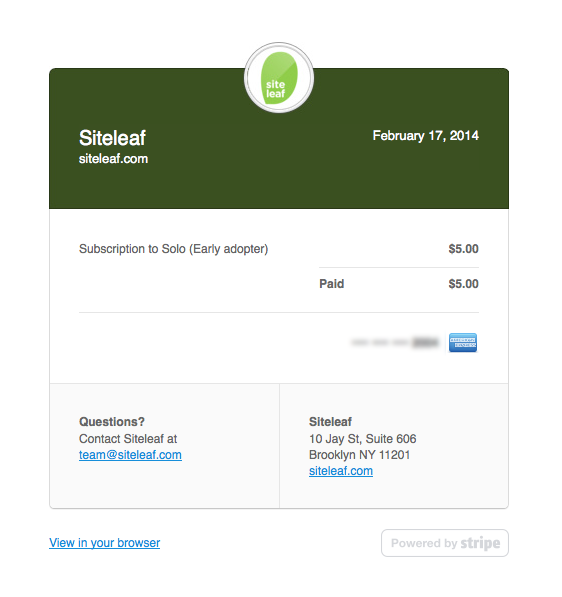
Receipts, confirmations, notifications. Usually boring, sometimes brilliant.
Promotions that still feel premium. Sales emails without the scream.
Long-form editorial emails from brands that treat the inbox as a publication.
Free Figma file with all 47 screenshots, structured notes, and a companion AI-readable DESIGN.MD file.
Apple. Stripe. Lucy Folk. MONA. Pangaia. Aesop. And 41 more.




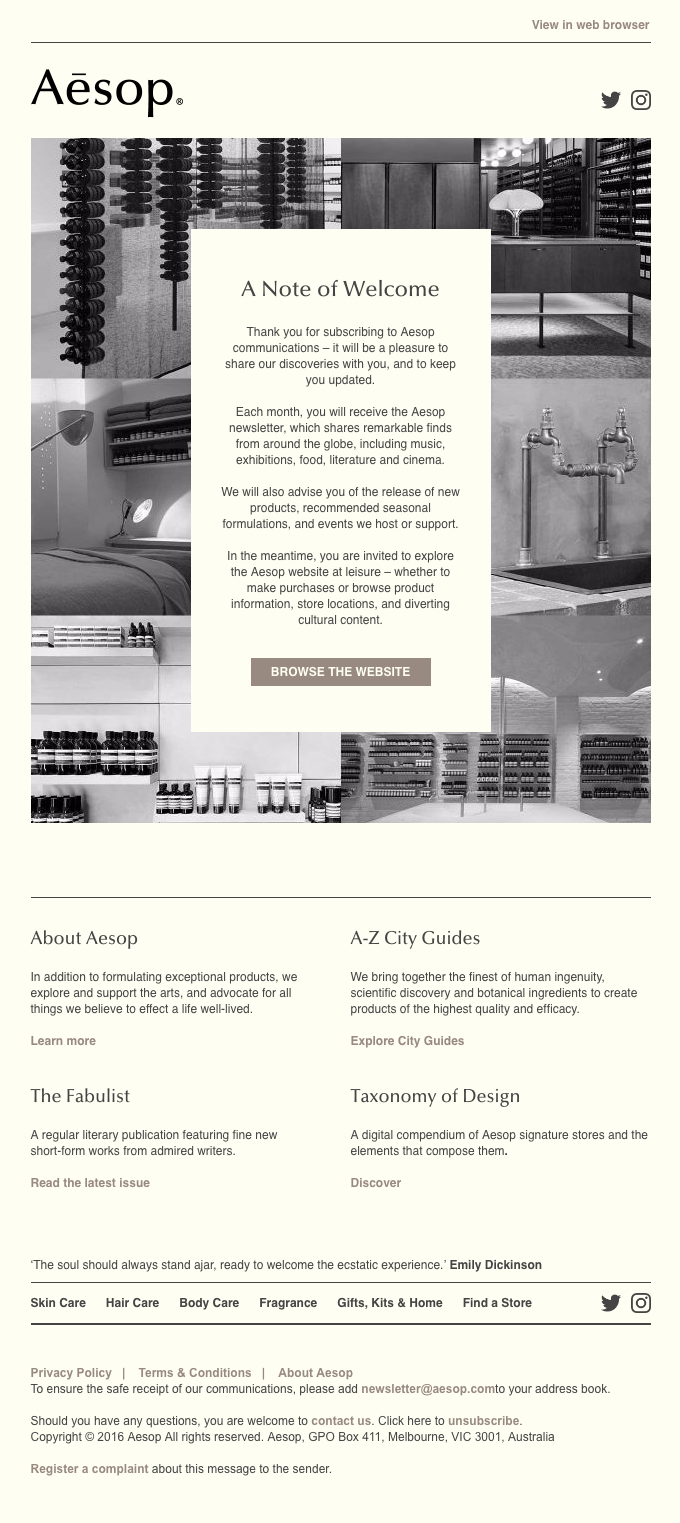
Two of them, in my own words. On MONA, whose emails sound like its founder David Walsh: "The MONA emails reflect every part of Walsh. Brand voice is downstream of founder voice. Always." On Pangaia: "I love Pangaia with their mission written out on full text."
Why I made this
I'm George Hartley. I spent a decade building email tools. My last company, SmartrMail, had 12,000 customers and sent 6 billion emails before it was acquired in 2022. I've seen more email than most people will in a lifetime. Most of it is forgettable.
Now I'm building Nitrosend, a full-stack email platform designed for AI. The goal is simple: you should be able to prompt Claude or Codex and get a beautifully designed email back. Not a template. Not slop. Something with real taste.
Two things make that possible rather than a pitch. Brand Kit scrapes your site and applies your colors, fonts and tone to every email an AI drafts, automatically, so it starts from your brand instead of the average brand. And Nitrosend is a listed app in the ChatGPT app marketplace, not an API with an AI wrapper bolted on. The honest version of "AI-native" is that the AI is the interface, not a feature.
The problem is that AI generates from averages, and the average email is mediocre. The only fix is to show it what great looks like. So I started collecting. 47 emails later, it became something worth open-sourcing.
This collection is also part of the Email Marketing Bible, an 88,000-word guide built from 908 sources and 49 practitioners. If you want to go deeper on strategy, segmentation, deliverability, and the rest of it, start there.
I hope this is useful. I hope it raises the bar for what email can look like. And if it helps you send something that makes one person stop scrolling, it was worth it.