Agent to agent: why we're building Nitrosend
I was doing all my marketing with Claude, but email still sucked. Why we built Nitrosend, and why reading gives you license to think bigger.
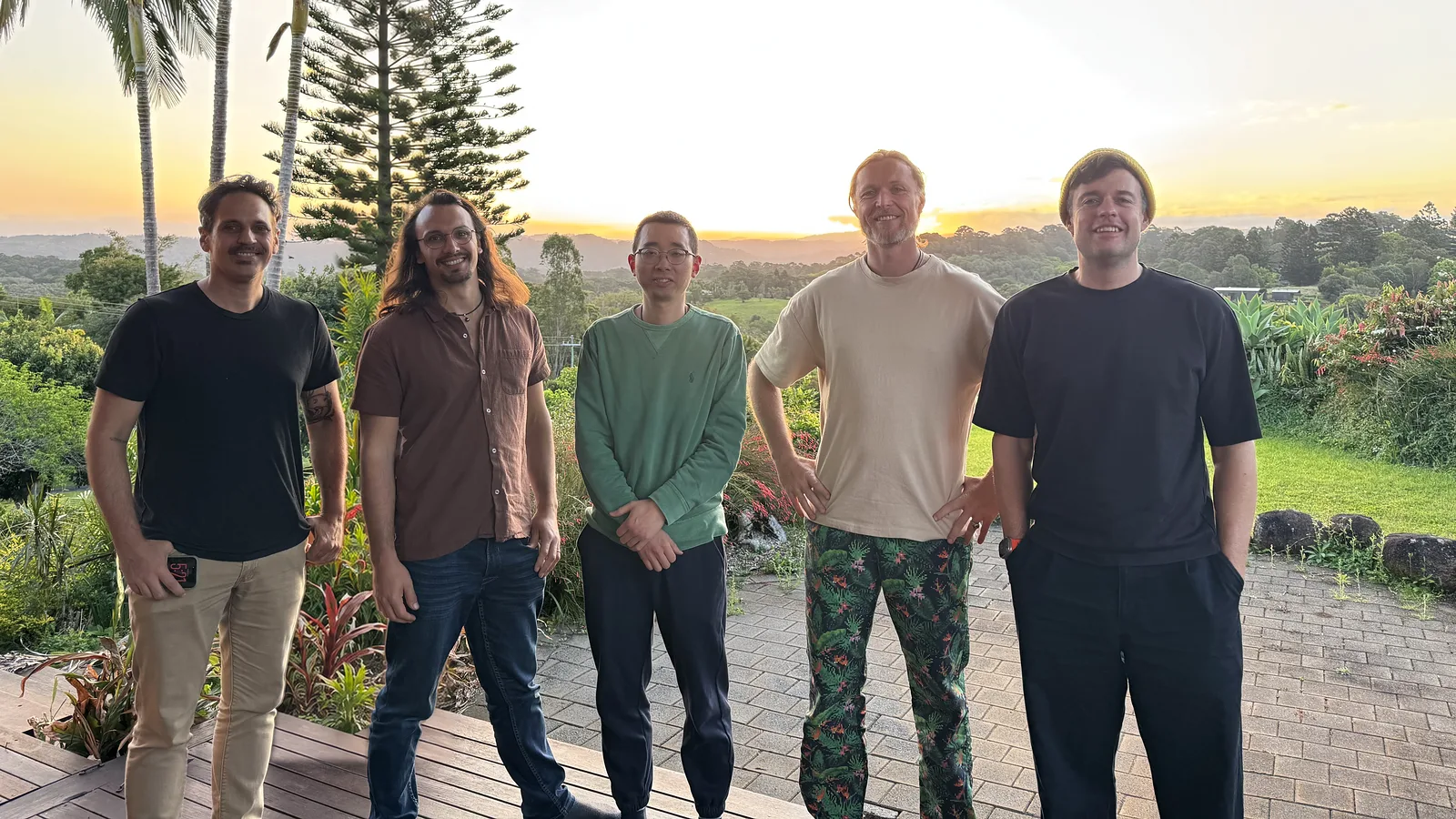
The Nitrosend team in Byron Bay, September 2026.
I don't open my inboxes anymore. An agent triages them and I review what it drafts.
I recorded Fullcast's Go-to-Market podcast with Amy Osmond Cook this week. She asked how you get anyone to reply to an email when everyone assumes it's automated.
My answer: marketing is going through the biggest change any of us have seen as adults, and it's heading agent to agent.
Soon it won't be humans reading the inbox, and it definitely won't be humans writing the email on the other side. Right now we're in a weird middle ground, and I don't think we'll be in it for long.
Email was built for humans
Email is probably the biggest channel agents use to talk to each other today, and it's a clunky one for them. It was built for people writing to people.
I think that changes quickly. We're working on what's basically an open-source extension to SMTP so agents can connect and do real work together over email.
I think email will really change on the consumer side when Google gets its act together and puts a proper agentic face on Gmail with Gemini.
What I said to Kam in February
Our founding team grew and sold SmartrMail, email marketing for ecommerce, and part of selling it was a non-compete. While it ran, I wasn't allowed to build in the space I knew best.
In February, after it had run out, I said to Kam Low, our CTO, more or less: "Kam, I'm automating my life with Claude. I'm doing all the marketing for my side projects with it, but email still sucks. What do we do?"
We built Nitrosend to fix it for ourselves. We figured others had the same problem, or soon would.
96% of actions happen in an agent
We came out of beta on June 1. Nitrosend is full-stack email: campaigns, automated flows, transactional email, an inbox, and outbound (in invite-only beta). You can spin it all up on our sending infrastructure, or bring your own pieces and your existing inboxes.
96% of actions in Nitrosend now happen in someone's AI agent, mostly Claude, Codex, and ChatGPT. Most of our users never see our app.
I don't want to step out of my agent to do email. I want to say: set up email marketing for my brand, work out the best newsletters and flows. Let Claude do it.
We want to be the tool behind the agent that executes all of that well. (We wrote the longer version in What is agentic email? back in March.)
Agents can onboard themselves too. Grok Bot, for example, can find us, set up an account for itself, and create its own inbox on your domain. If your company is yourcompany.com, it becomes [email protected] and talks to people one-to-one like a person would.
That isn't the core use yet (agent inboxes are in beta by request). We built it anyway, because of where I think marketing is going.
One level up
The future we're building for sits one level above where marketing is today. You'll have an agent doing your SEO and another running your paid social, and you sit at the top as the orchestrator.
When one of those agents needs to talk to people, it says: I need an email address for this. It sets one up and starts talking to the people you need to reach.
For one-to-one comms, give your agent your voice as a skill. For brand emails, give it your brand kit and style guide.
While we're in the middle ground, the old rules still hold. Don't buy lists, and watch engagement closely on every campaign and flow. For outbound, use no more than three sentences and one link, and make it relevant to the person reading it.
I still think a human should curate the best ideas coming out of the agents. For now, anyway.
I'm going to sound stupid saying this in a year, but here's my setup today. I run Codex and Claude Code on the desktop, working in projects with a memory file the agent keeps updated as we go.
- My voice as a skill. I had my agent study eight years of my sent email, my WhatsApp and iMessages, my podcast transcripts, and every blog I've written, then work out how I talk, in what context, and to whom. I told it to write more succinctly than it normally would. One-to-one emails land as drafts in my inbox, and I review and send.
- Meeting context. The same project reads my Granola and Gemini call transcripts and my calendar. It drafts follow-ups with the points we discussed, then starts on my side of the actions. I hate admin.
- Who I'm replying to. When someone emails me cold, my agent uses Apollo to tell me who they are before I reply.
- Adversarial reviews. We build features the way a software team would, with test-driven development and review by a separate model. Codex reviews Claude's work with the full context, or the other way around, and the main agent keeps the best bits. Marketing work gets the same jump in polish.
Reading gives you license to think bigger

Part of the stack at home: Dylan, Iger, Chris Blackwell, Isaacson's Franklin, Keith Richards.
Amy's last question was how I stay at the top of my game. I once saw an interview where Jerry Seinfeld said the key to life was espresso, weights, and meditation. I'm nowhere near Seinfeld's level, but I do all three daily and I agree with him.
A lot of the big gains in my life and career came through reading, starting with the book that got me into tech.
Before tech, I quit marketing to be a musician: bass, computer production, a bit of keyboard, and a lot of bands (please don't Google them). I didn't quite hit rockstar heights, and by 25 or 26 I was at a bit of a loss. Then I read Walter Isaacson's Steve Jobs biography.
I'd just gotten an iPhone, and the book reminded me how much I loved making websites. It catalyzed the switch: I went back to study computer science, then built apps and started internet companies.
Software still feels like magic to me. You have an idea, you write it in code, and then a thing exists that people use and love. It feels like being a modern-day architect building a cathedral, just out of software.
I've got a stack of biographies at home, and I still don't read enough. After a long day, sitting down with one feels like work. When I do, I get an insane perspective on what people went through to build the things we take for granted.
Take Sam Zemurray, America's banana king, in Rich Cohen's The Fish That Ate the Whale. He did some nasty things on the way up. In 1911 he backed a mercenary invasion of Honduras that won him tax-free concessions, and he later ended up running United Fruit.
Or Cornelius Vanderbilt, running steamships to carry people to the Gold Rush.
You read these stories and realize none of it existed until someone made it exist. Their lives are full of people calling them idiots, and they build things that change everyone's life anyway.
That gives you license to think: I can do something a bit weird too.
Someone built that bridge
The bridge you walked over to get to work this morning was someone's insane passion project, and it took more work and grit than you can imagine.
Nobody knows that person's name, but the bridge exists because of them. Stripe co-founder John Collison has a line for this that I think about a lot: the world is a museum of passion projects.
Now my kid has a park to play in instead of another building, because someone worked very hard to make it exist. That's why I read. It gives you license to think bigger, or just to do things.
Thanks to Amy and the Fullcast team for having me on.
Connect Nitrosend to Claude, ChatGPT, Cursor, or Codex and ask it to set up email marketing for your brand.