
What a sports marketing email is
A sports marketing email is one that a race organizer, team, league, club or sports shop sends to the people who run, play, watch or buy: entries and tickets, memberships, race-week instructions, newsletters and merchandise.
We collected 101 of them in two ordinary inboxes, sent between 2017 and 2026 under 44 sender names (a few organizations send under more than one event or sponsor name), and show 31 here. The percentages describe all 101. The set leans Australian: 79 of the 101 come from Australian senders and 20 from American ones, so local races such as Runaway Sydney Half Marathon, Sydney Marathon and City2Surf sit beside Golden State Warriors, LA Clippers and the NBA.
Browse 31 sports emails
Filter by type, or search a brand or subject line. Open any email to see it full length, with its subject line, notes on what it is doing, and a prompt that rebuilds it. Use any one as a sports email template: open it and copy the prompt.
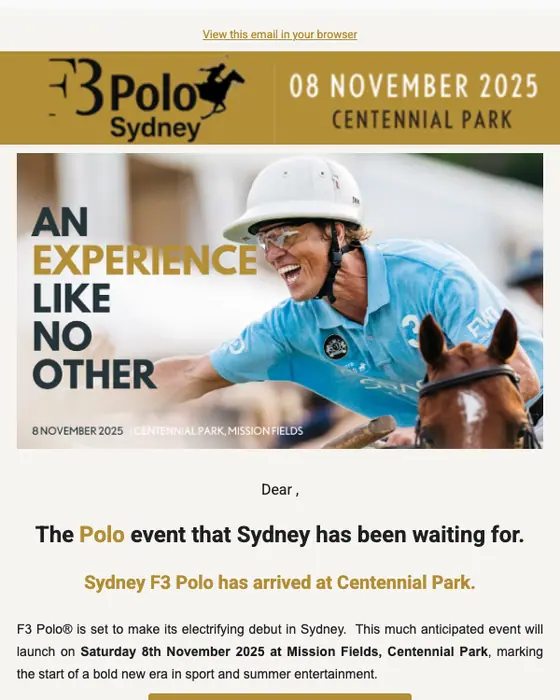
F3 Polo Sydney
The Polo Event Sydney's been waiting for...
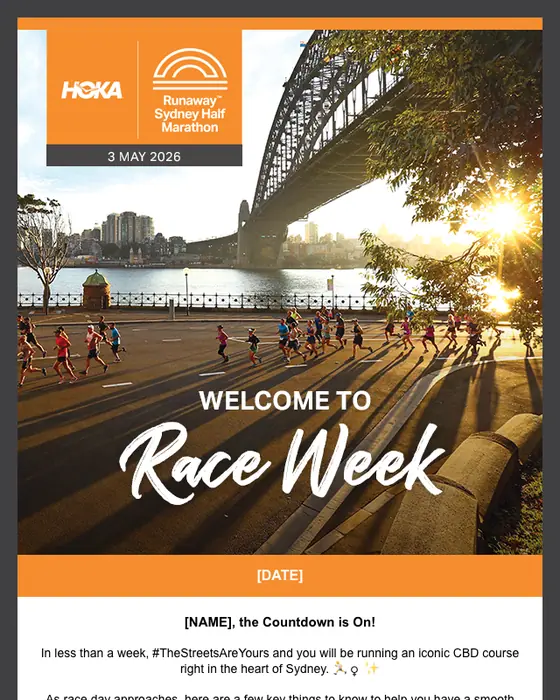
Runaway Sydney Half Marathon
Welcome to Race Week! 🏃♀️✨
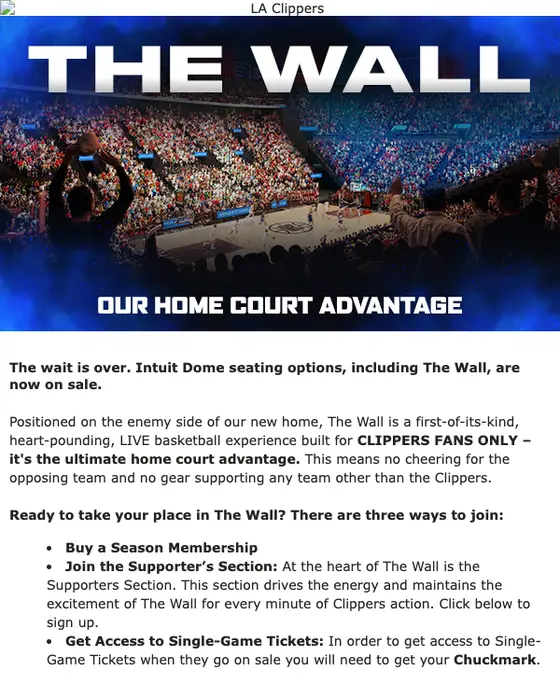
LA Clippers
Intuit Dome Seating is Open! Join The Wall, Get ‘Certified’ & More
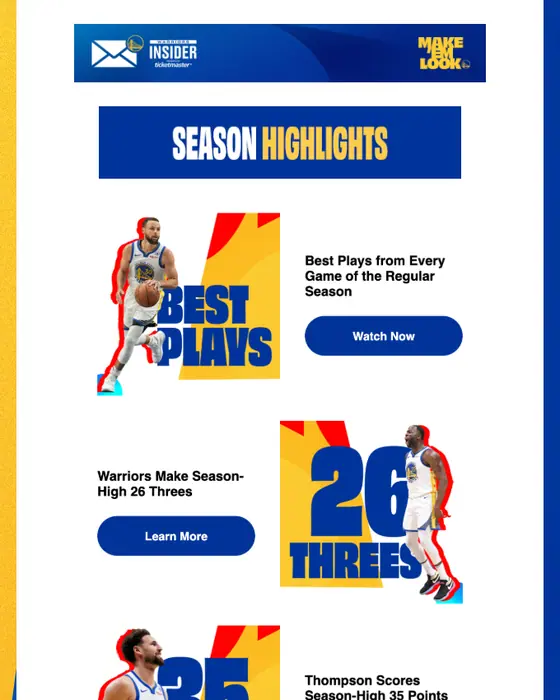
Golden State Warriors
Season Recap ⏪ Plus, WNBA Golden State Reveals Team Identity!
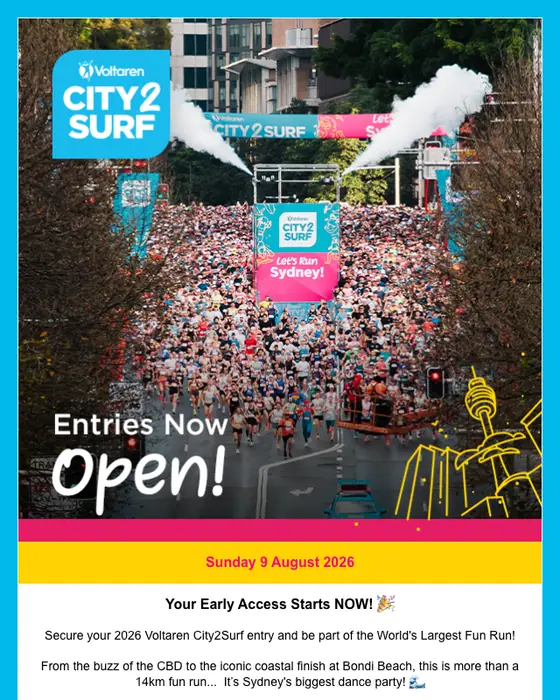
City2Surf
Secure Your Early Access to the 2026 Voltaren City2Surf 🏃♂️🌊
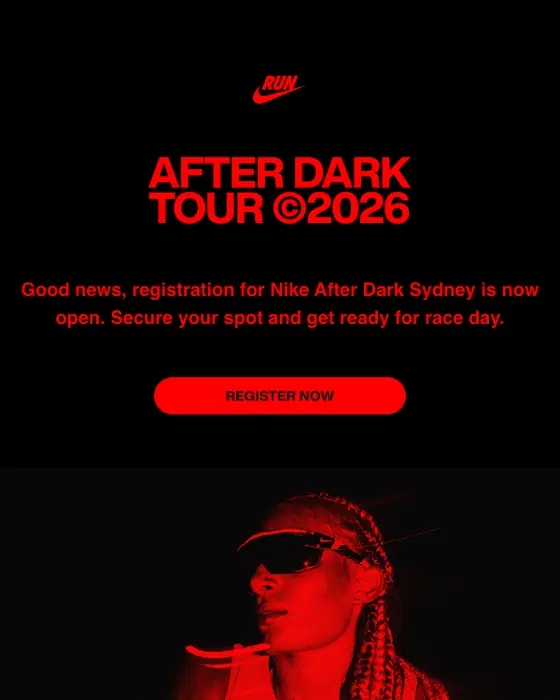
Nike After Dark Tour
Register now for Nike After Dark Sydney.
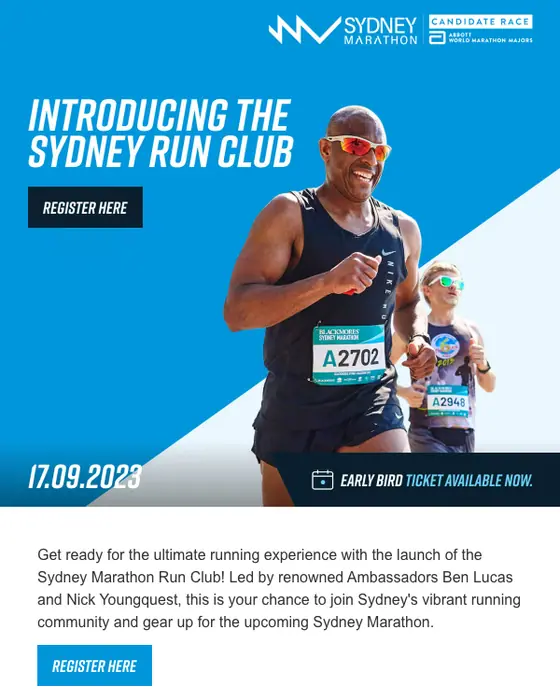
Sydney Marathon
Introducing the Sydney Marathon Run Clubs?
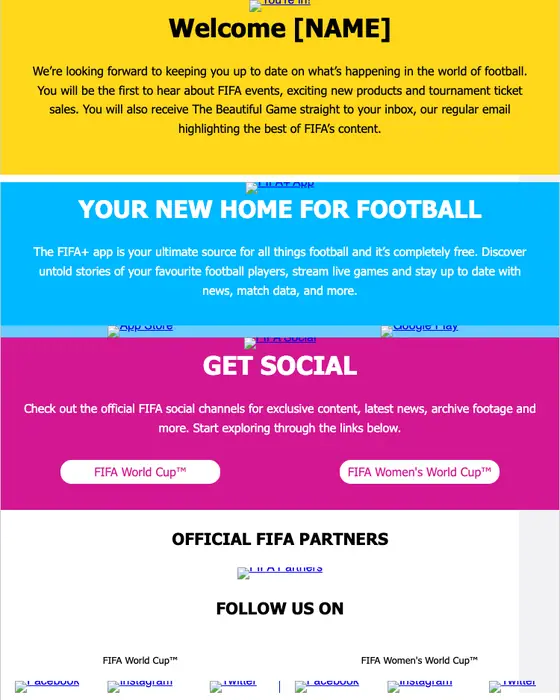
FIFA
You're in! Welcome to FIFA
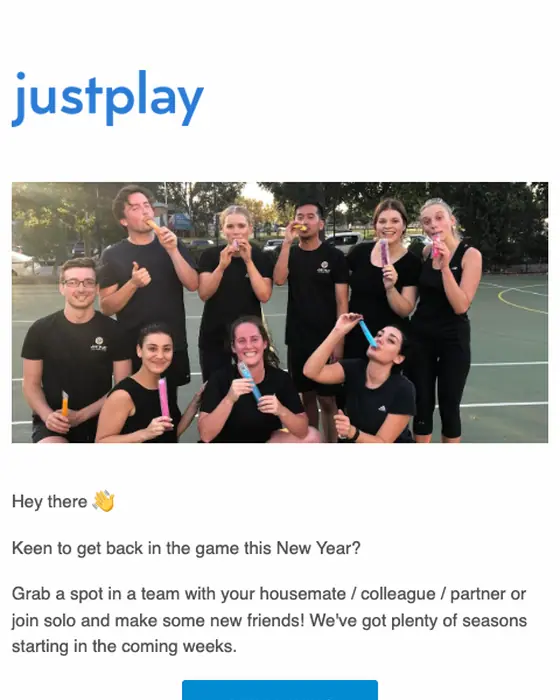
Just Play
Get back playing social sport in 2025 🏆
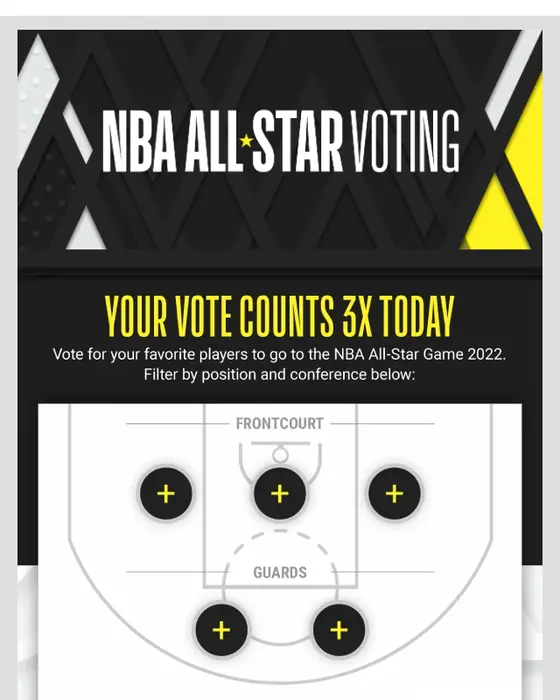
NBA
Vote Now. Your Vote Counts Three Times Today.
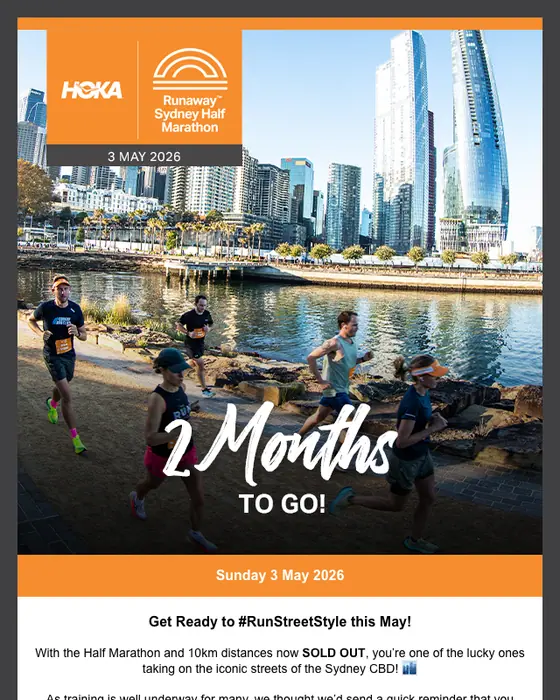
Runaway Sydney Half Marathon
2 Months to Go! Are you ready to run Sydney?
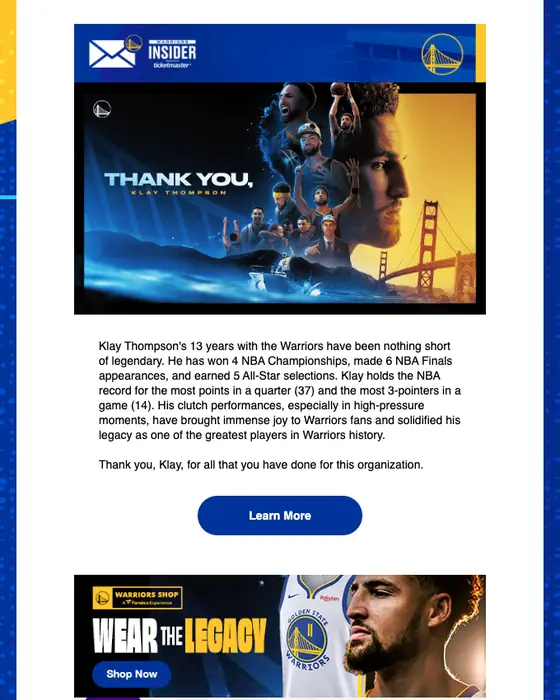
Golden State Warriors
Thank You For Everything, Klay Thompson 💙
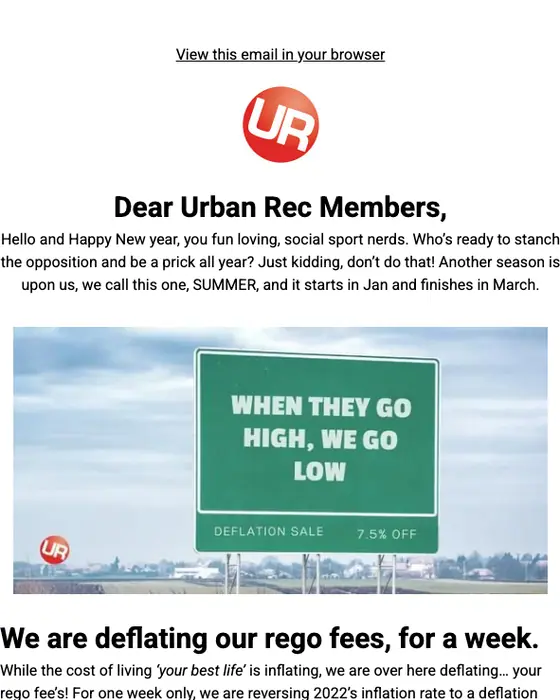
Urban Rec Sydney
Deflation is Coming!
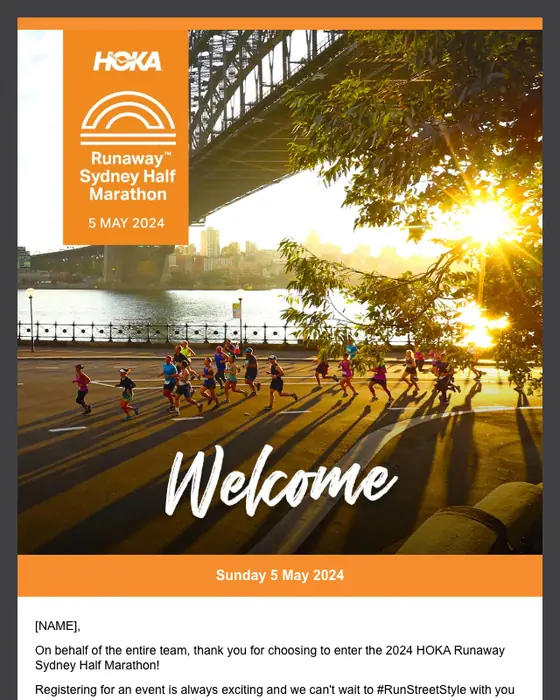
HOKA Runaway Sydney Half Marathon
Welcome to the HOKA Runaway Sydney Half Marathon! 🎉
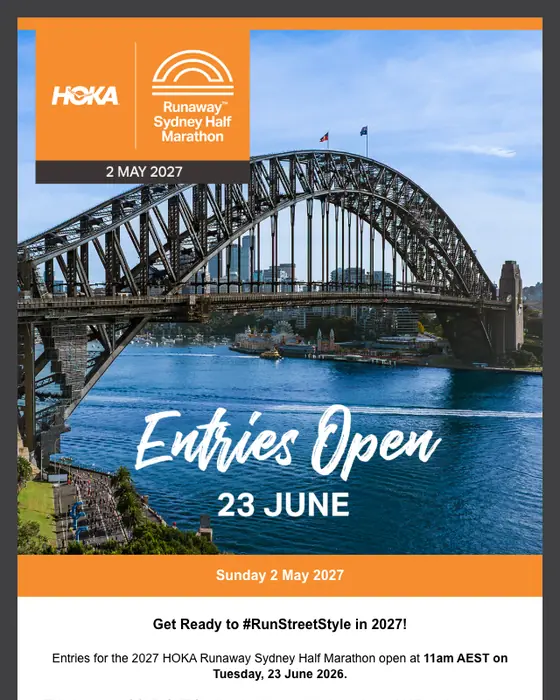
Runaway Sydney Half Marathon
2027 Entries Open on Tuesday, 23 June 🏃♀️
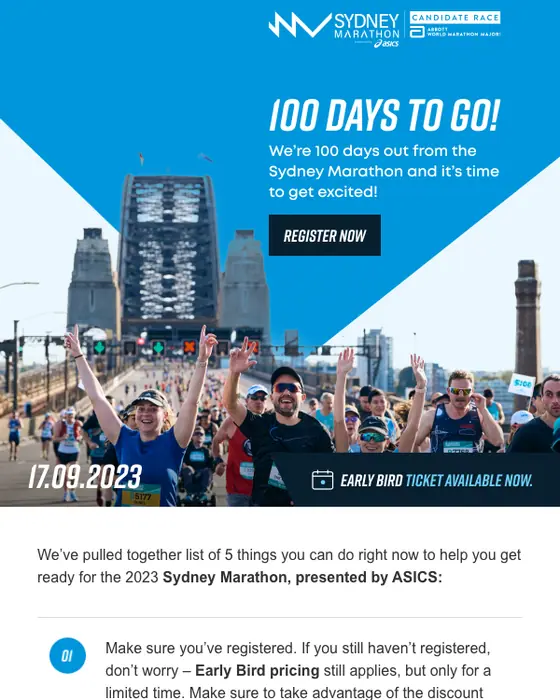
Sydney Marathon
This is 100 days to go until the Sydney Marathon
NRL
Important update to your NRL Account.
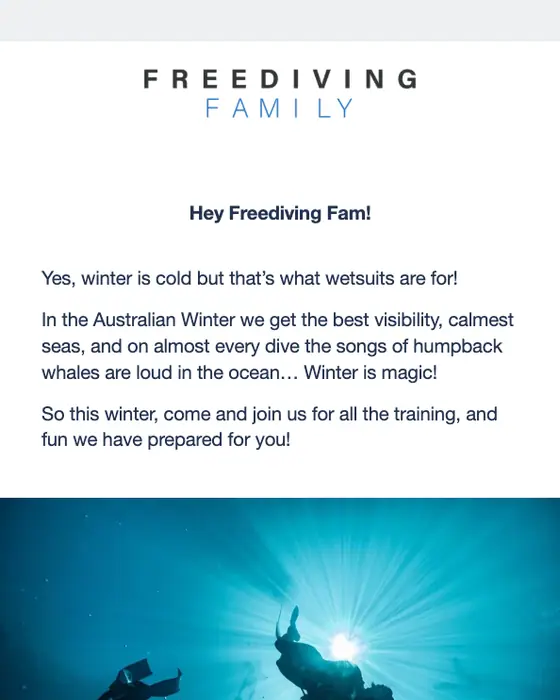
Freediving Family
Winter is coming…
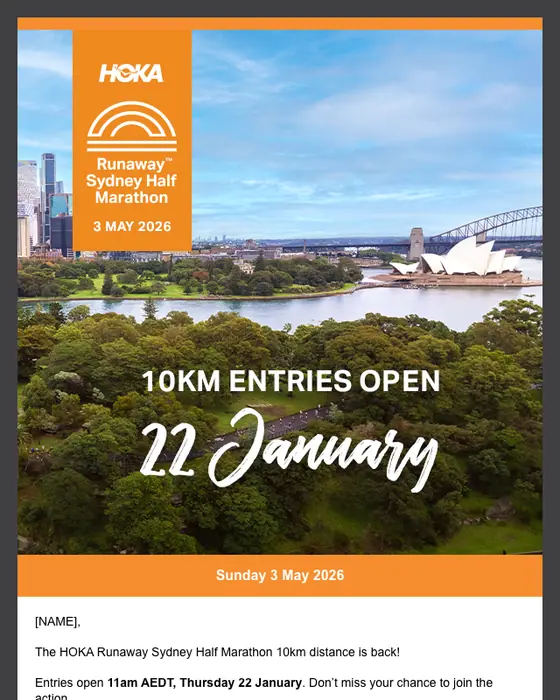
Runaway Sydney Half Marathon
The 10km is Back – Don’t Miss Out!
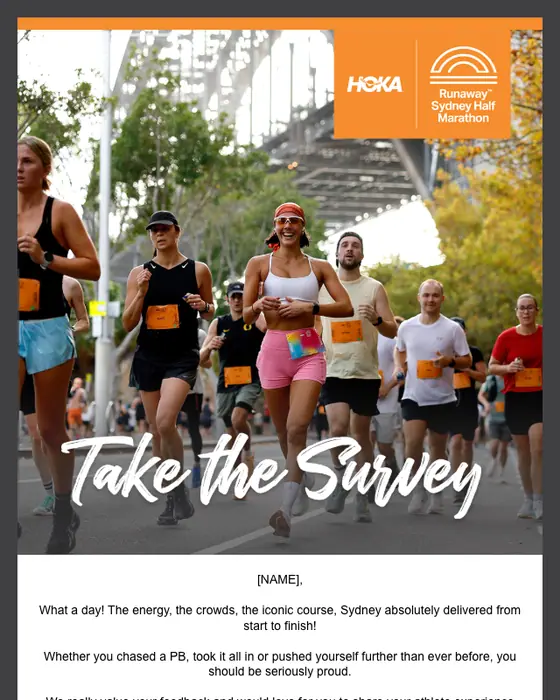
Runaway Sydney Half Marathon
Complete Our Survey for a Chance to Win!
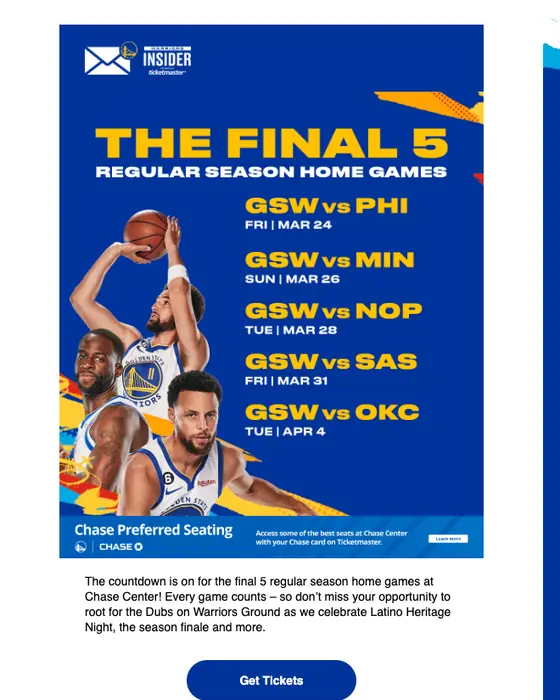
Golden State Warriors
The Final ✋: 5 Regular Season Home Games Left to Be on Warriors Ground
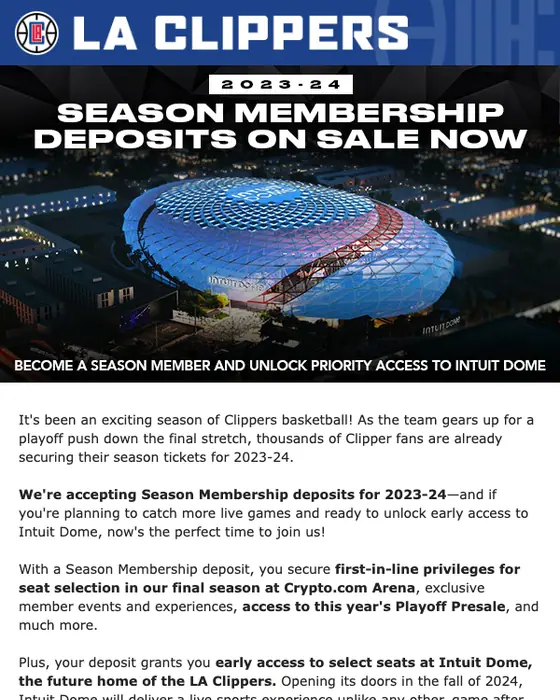
LA Clippers
Join Us as a 2023-24 Season Member & Get Priority Access to Intuit Dome
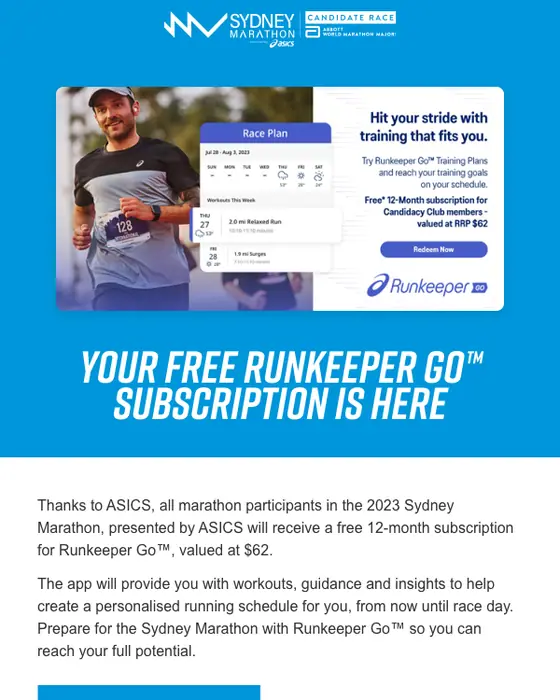
Sydney Marathon
Your Free Runkeeper Go Subscription is waiting!
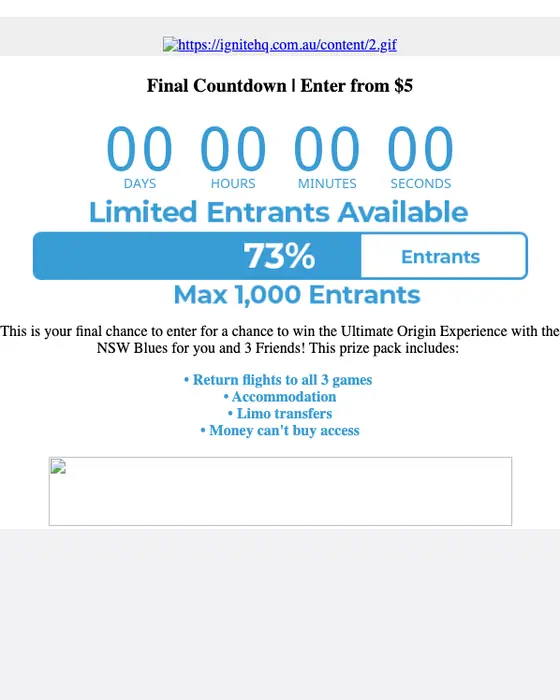
NSW Rugby League
Win the Ultimate Origin Experience with the Blues
How sports email differs from everything else in the same inboxes
Sports email against every other email
101 sports and 12,201 other emails| What we measured | Sports | Everything else |
|---|---|---|
| Promotional emails | 49% | 22% |
| Event invitations | 12% | 4% |
| Newsletters | 14% | 12% |
| Sent to win a new entrant, member or buyer | 32% | 15% |
| Sent to existing members, entrants and fans | 33% | 39% |
| Urgent tone | 21% | 12% |
| Celebratory tone | 11% | 2% |
| Bold graphic design style | 26% | 6% |
| Opens with a hero image | 27% | 12% |
| High-contrast colors | 35% | 15% |
| Single-column layout | 74% | 64% |
| Plain-text layout | 23% | 32% |
| Subject line says what is inside | 47% | 32% |
| Greets the reader by first name | 27% | 39% |
| From an Australian sender | 78% | 47% |
Sports senders sell more and sell to strangers. 49% of their email is promotional, against 22% of everything else, and 12% is an event invitation, against 4%. 32% is written to win a new entrant, member or buyer, about twice the rate of other email (15%), while newsletters run at about the same share (14% against 12%).
It also looks louder. 26% use a bold graphic design, against 6% of other email, 27% open with a hero image, against 12%, and 35% use high-contrast colors, against 15%. The tone runs hotter in both directions: 21% are urgent and 11% celebratory, against 12% and 2%. Fewer greet the reader by first name (27%, against 39%). Australian senders make up 78% of this set and 47% of the rest, so read the comparison as mostly Australian sport against a mixed inbox.
What is in the collected set
By type
all 101 sports emails collected| Type | Emails | Share of the set |
|---|---|---|
| Promotional | 49 emails | 49% of the set |
| Newsletter | 14 emails | 14% of the set |
| Event invitation | 12 emails | 12% of the set |
| Account notice | 10 emails | 10% of the set |
| Invoice | 4 emails | 4% of the set |
| 8 other types | 12 emails | 12% of the set |
By kind of sender
all 101 sports emails collected| Sender | Emails | Share of the set |
|---|---|---|
| Running and athletics events | 35 emails | 35% of the set |
| Triathlon (one organization, six sender names) | 8 emails | 8% of the set |
| Professional teams, leagues and governing bodies | 26 emails | 26% of the set |
| Clubs, coaching and other sport businesses | 32 emails | 32% of the set |
Of the 31 in the grid, 23 were sent in 2023 or later, 17 are promotional and 6 are event invitations. Only 2 of the 14 newsletters have been rendered so far. We left 12 emails off this page: 9 whose images no longer load, one account verification email that shows a live code, and 2 repeat sends of one event's template.
Next to this one
The same library, cut a different way: events and health and fitness by industry, or by the job the email does: event invitations, promotional emails, newsletters and welcome emails.
Questions about the collection
About half are promotions. Of the 101 sports emails we collected, 49 are promotional (49%): race entries, tickets, memberships and merchandise. Newsletters make up 14%, event invitations 12% and account notices 10%. Event invitations are three times as common as in the rest of the inbox (12% against 4%).
We would not crown one from 14 newsletters, and only 2 are rendered here so far. Golden State Warriors sends a season recap of highlights and team news, and NAB RunWest packs several event-program items into its subject line. Search either name in the grid to open them full length.
About half. 49% of the sports emails we collected are promotional, against 22% of every other email in the same inboxes, and 32% are written to win a new entrant, member or buyer, against 15%. Only 33% go to existing members and fans, against 39% elsewhere.
Louder. 26% use a bold graphic design, against 6% of other email, 27% open with a hero image, against 12%, and 35% use high-contrast colors, against 15%. Most still stack in one column (74%), a little more often than the rest of the inbox (64%).
43 of the 101 have been rendered full length for the library so far. We left 12 of those off: 9 whose images no longer load, one verification email showing a live code, and 2 repeat templates. The other 58 still count in every percentage on this page.