
What an event email is
An event email is any email an organizer or ticketing platform sends about an event: the save-the-date, the invitation, the countdown reminder, the ticket confirmation and the follow-up after it ends.
This page collects them from festivals and markets (Field Day, The Makers and Shakers Market), fun runs (City2Surf, Halfling Marathon), conferences (Spark Festival, App Growth Summit, StartCon, MarTech) and ticketing platforms (Eventbrite, Ticketmaster, StubHub, SeatGeek). We collected 163 event emails from 58 senders in two ordinary inboxes, sent between 2016 and 2026, and show 52 of them here. 87 of the 163 are Australian and 55 American.
Browse 52 event emails
The first twelve cards run through the stages of an event: save the date, announcement, call for speakers, countdowns, sold-out warnings, the line-up, the ticket reminder and the follow-up. Filter by type, or search a sender or subject line. Open any email to see it full length, with its subject line, notes on what it is doing, and a prompt that rebuilds it.
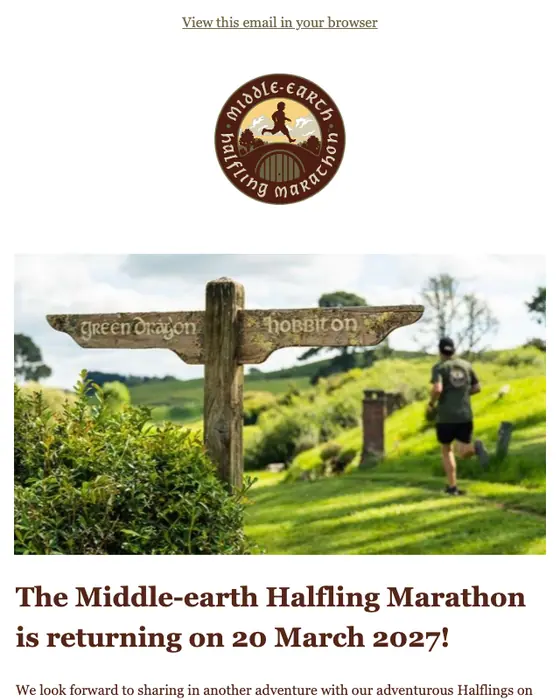
Halfling Marathon Team
Save the date for your next adventure! 🏃
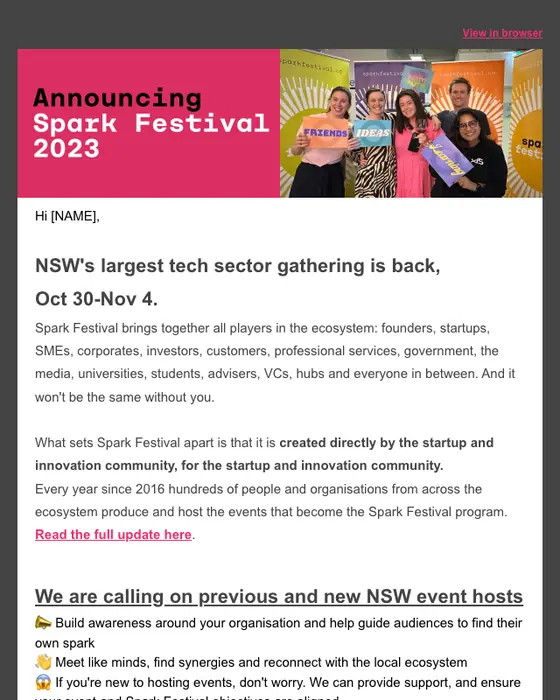
Spark Festival
Announcing Spark Festival 2023, Oct 30-Nov 4 ⚡
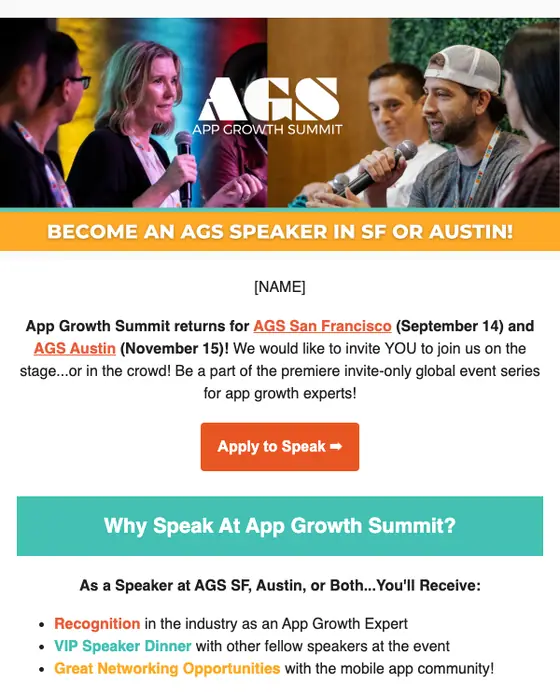
App Growth Summit
Invitation to Speak at AGS SF and AGS ATX! 📣
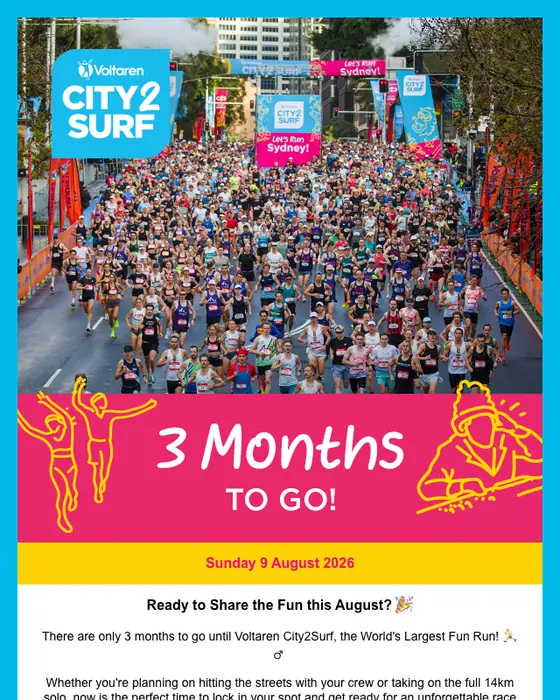
City2Surf
3 Months Until Voltaren City2Surf! 👟
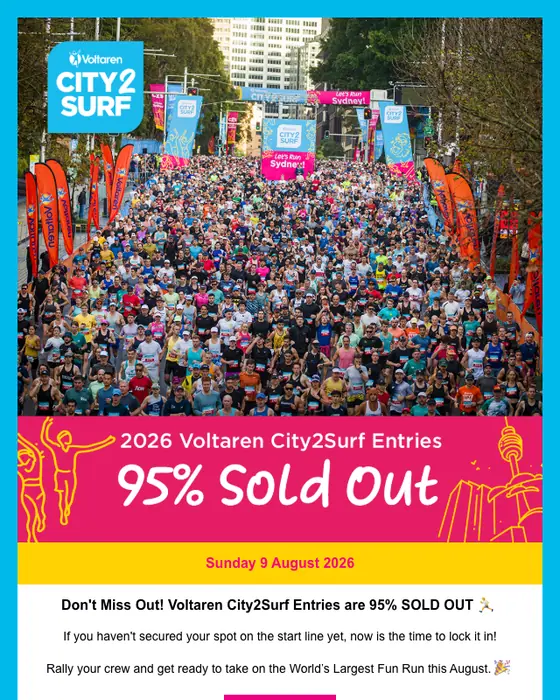
City2Surf
2026 Voltaren City2Surf Entries 95% SOLD OUT 🚨
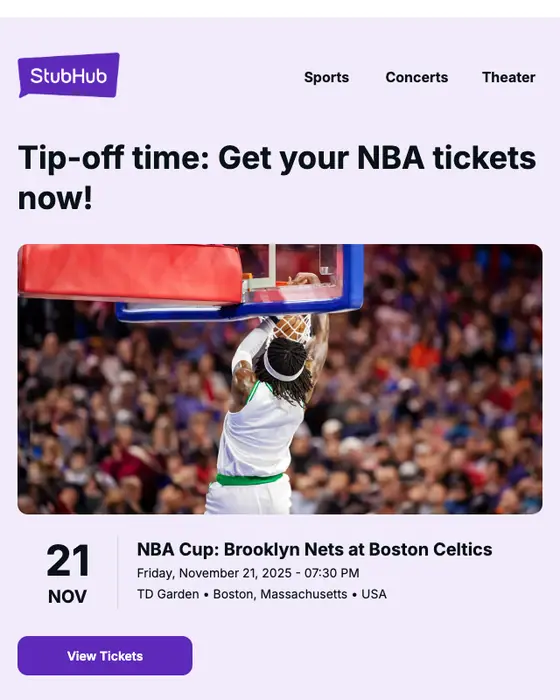
StubHub
🏀 Boston Celtics: 4 days until next game!
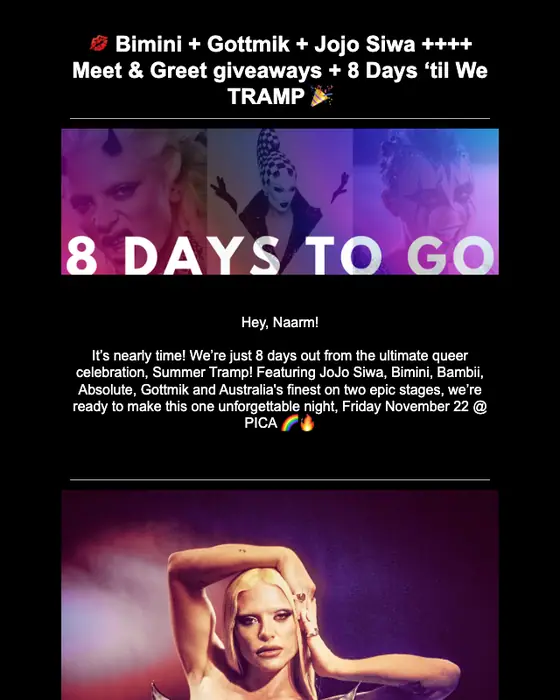
Tramp
Meet & Greet Giveaway + 8 Days ‘til We TRAMP + 🎉
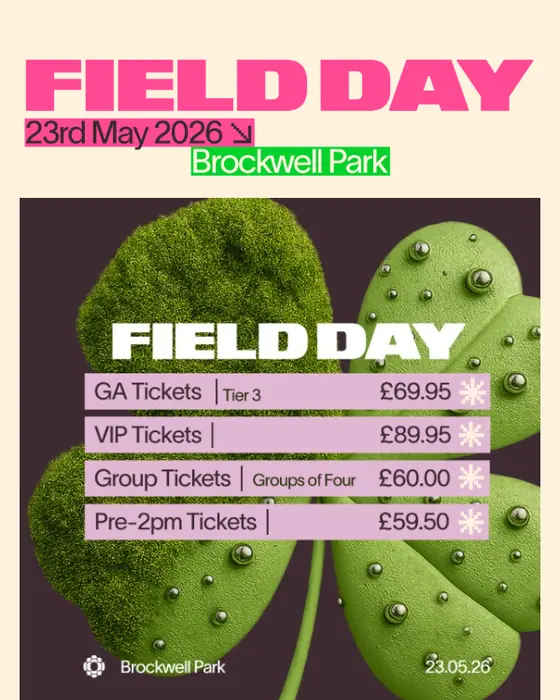
Field Day Festival
Tier 2 tickets sold out. Tier 3 tickets moving fast.
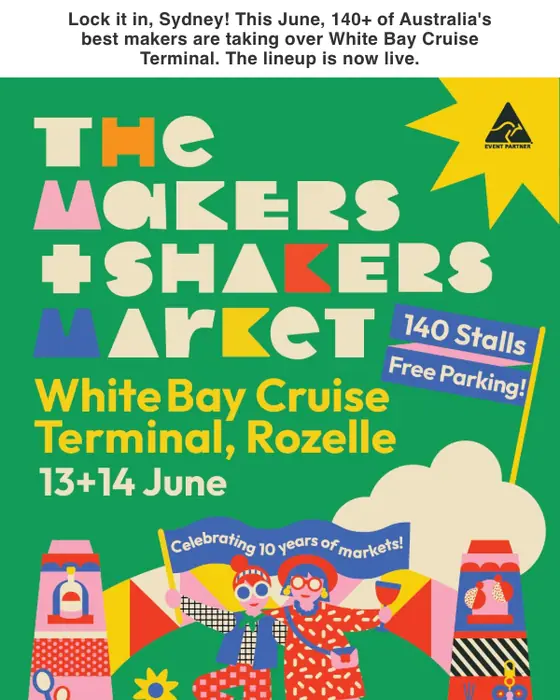
The Makers and Shakers Market
The Lineup is Here! Meet Your Makers 🎉"
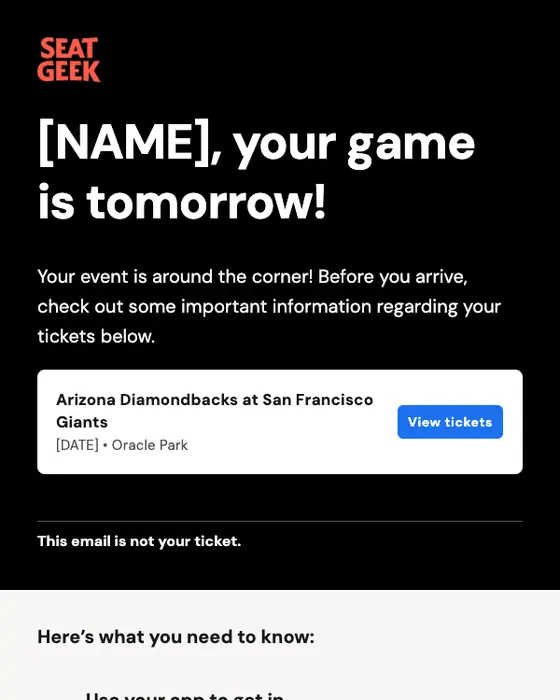
SeatGeek
Get into Arizona Diamondbacks at San Francisco Giants with your phone!
Eventbrite
Good news: More great events await
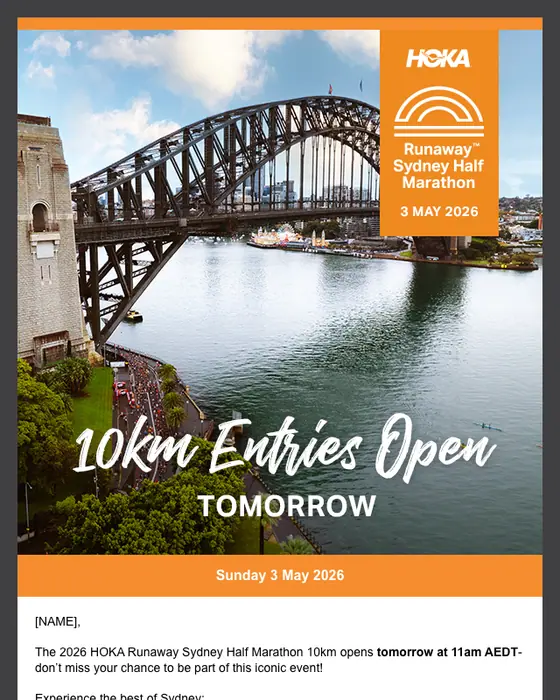
Runaway Sydney Half Marathon
10km Entries Open Tomorrow! 🏃
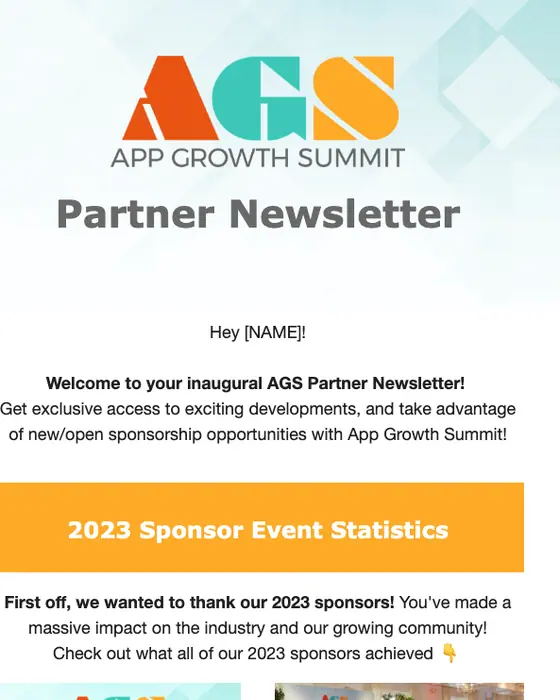
App Growth Summit
Welcome to the AGS Partner Newsletter, [NAME]! 🚀
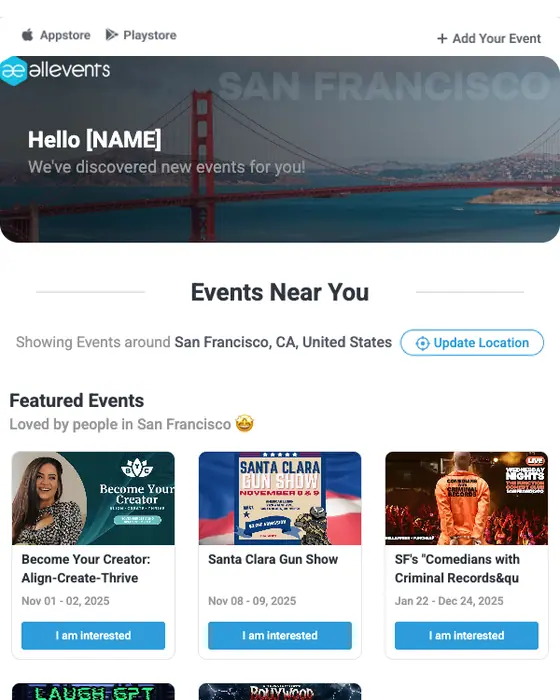
AllEvents
[NAME], popular events this weekend in San Francisco
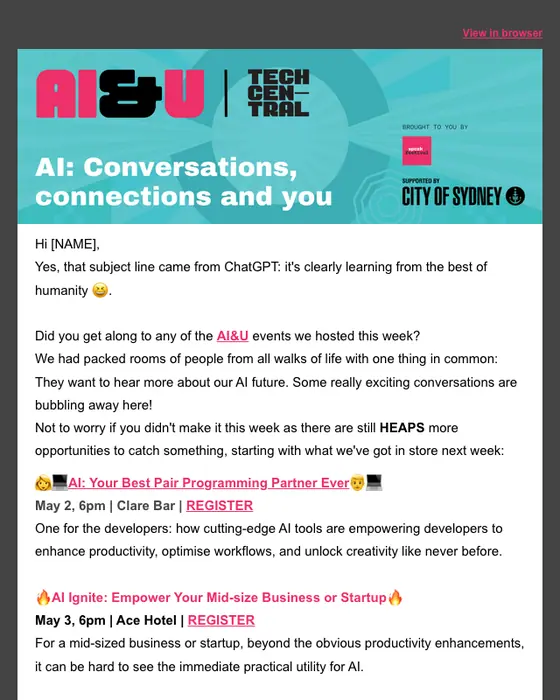
Spark Festival
[AI&U] AI just learned to write catchy subject lines 😂 You won't believe what happens next!
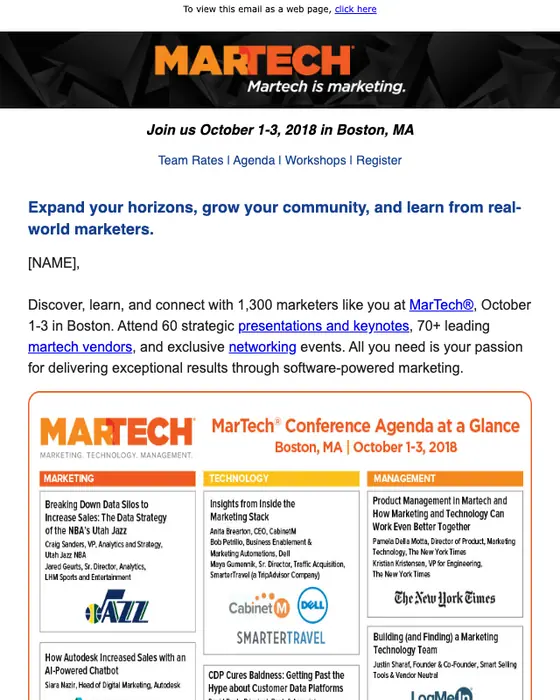
MarTech Conference
MarTech kicks off in 2 weeks… will we see you there?
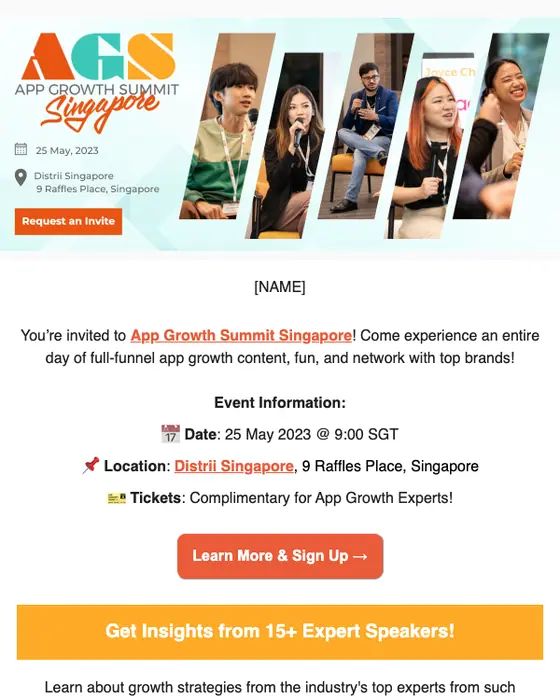
App Growth Summit
AGS Singapore is 25 May - Join us! 🇸🇬
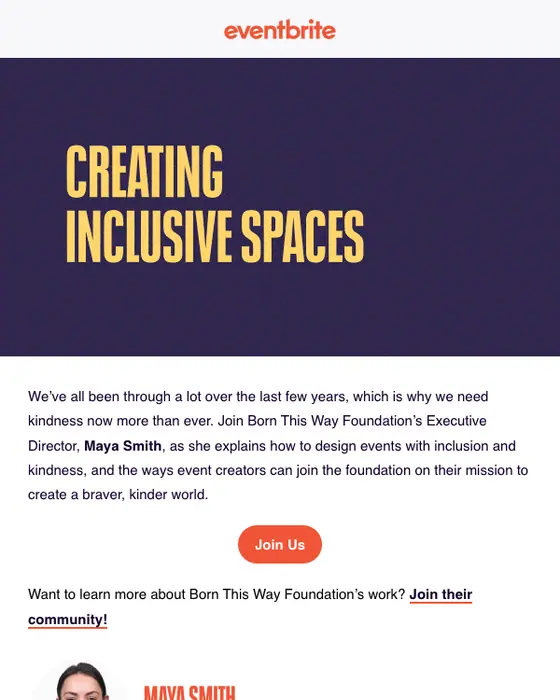
Eventbrite
Design your events with inclusion and kindness
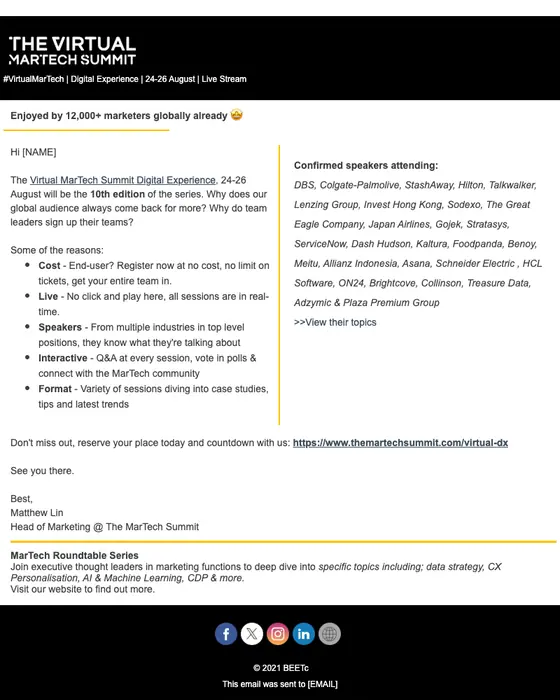
The MarTech Summit
Why Attend The Virtual MarTech Summit?
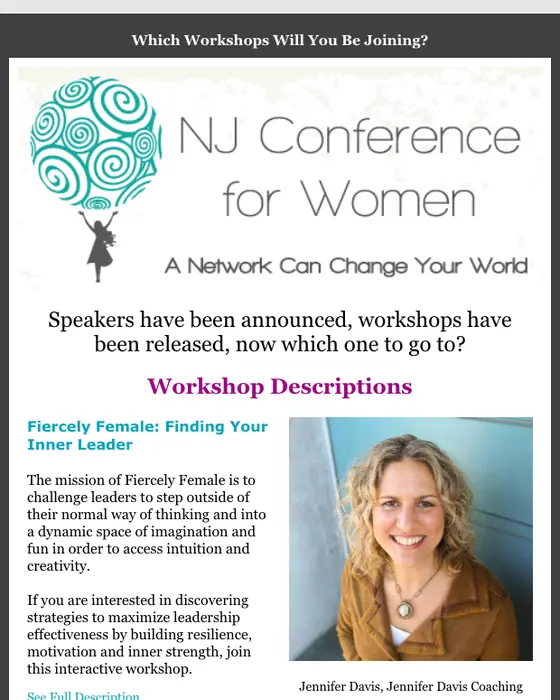
NJ Conference for Women
NJ Conference for Women Workshop Details
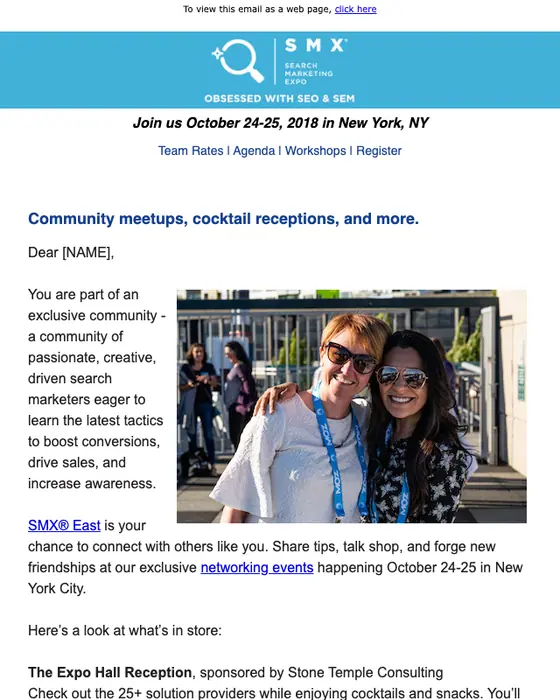
SMX East
Connect with the best and brightest marketers at SMX East
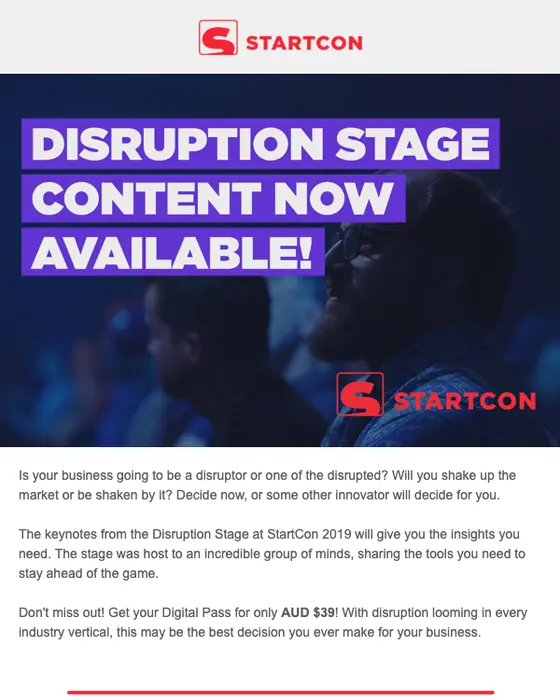
StartCon
StartCon 2019 Disruption Stage keynotes, now available on the Digital Pass!
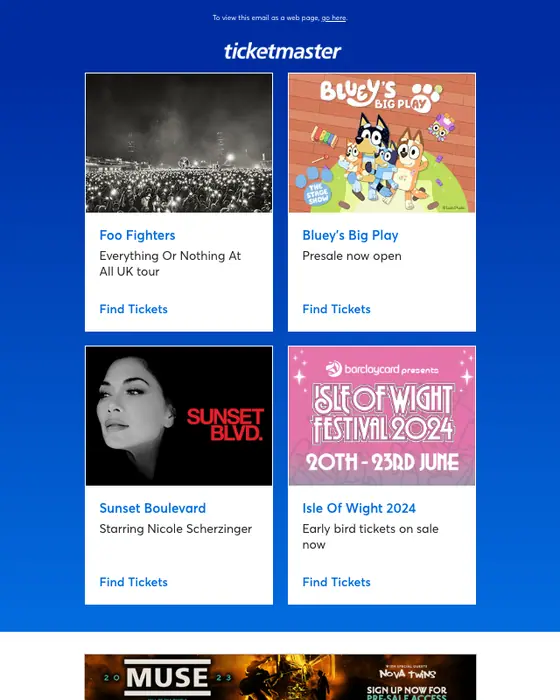
Ticketmaster
Foo Fighters, Bluey's Big Play, Sunset Boulevard, plus many more!
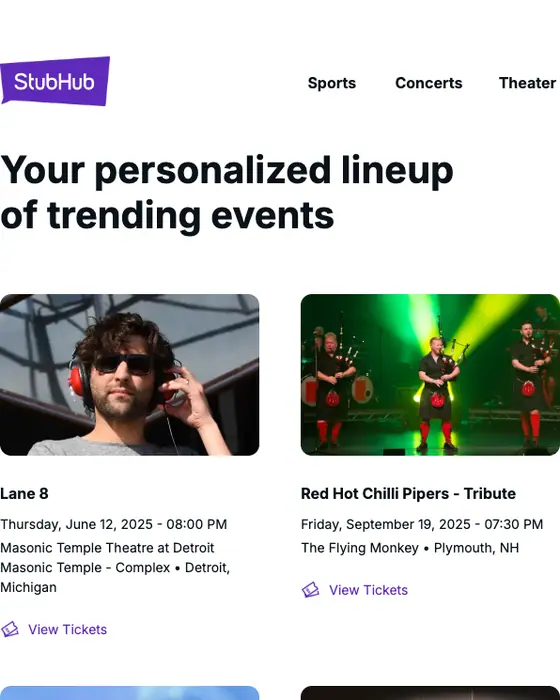
StubHub
Your event lineup: Lane 8, Red Hot Chilli Pipers, and more!
How event email differs from everything else
Event emails against every other email
163 event emails against the other 12,548 emails collected in the same two inboxes| What we measured | Event emails | Everything else |
|---|---|---|
| Invitation to an event | 28% | 4% |
| Promotional email | 23% | 22% |
| Median calls to action | 4 | 2 |
| Exactly one link or button to act on | 10% | 30% |
| Has a button | 49% | 40% |
| Greets the reader by first name | 53% | 40% |
| Long | 23% | 16% |
| Short or very short | 38% | 53% |
| Plain-text layout | 22% | 32% |
| Text heavy | 50% | 61% |
| Black, white and gray only | 42% | 62% |
| Subject line starts with an emoji | 11% | 5% |
| Subject line leads with a discount | 4% | 11% |
| Urgent tone | 12% | 12% |
| Sent to businesses rather than consumers | 21% | 19% |
Event emails ask for more. The median event email carries four calls to action, where other email carries two, and only 10% have exactly one link or button, against 30%. They run longer, 23% long against 16%, and use color more: 42% stay in black, white and gray, against 62% of everything else.
They are also more personal and less price-led. 53% greet the reader by first name, against 40%, and 11% start the subject line with an emoji, against 5%, but only 4% lead the subject line with a discount, against 11%. Urgency is no more common than elsewhere: 12% are urgent in tone, the same as other email.
What is in the collected set
By type
the 163 event emails| Type | Emails | Share of the set |
|---|---|---|
| Event invite | 45 emails | 28% of the set |
| Promotional | 37 emails | 23% of the set |
| Order confirmation | 23 emails | 14% of the set |
| Newsletter | 14 emails | 9% of the set |
| Booking confirmation | 13 emails | 8% of the set |
| Receipt | 6 emails | 4% of the set |
| 14 other types | 25 emails | 15% of the set |
The grid shows 52 emails from 28 senders, 43 of them sent in 2023 or later. It leans toward the emails that sell an event: 18 invitations and 17 promotional sends. Ticket paperwork is under-shown. The set holds 47 order confirmations, booking confirmations, receipts, refunds and invoices, but only 15 of them have been rendered full length for the library. We took ten of those off: four ticket confirmations show a scannable entry code, one order shows a ZIP code and five orders rendered with broken markup. That leaves 5 on the grid.
Next to this one
The same library, cut a different way: entertainment emails, sports emails and hospitality emails by industry, or by the job the email does: event invites, webinar emails, booking confirmations, reminders and promotional emails.
Questions about the collection
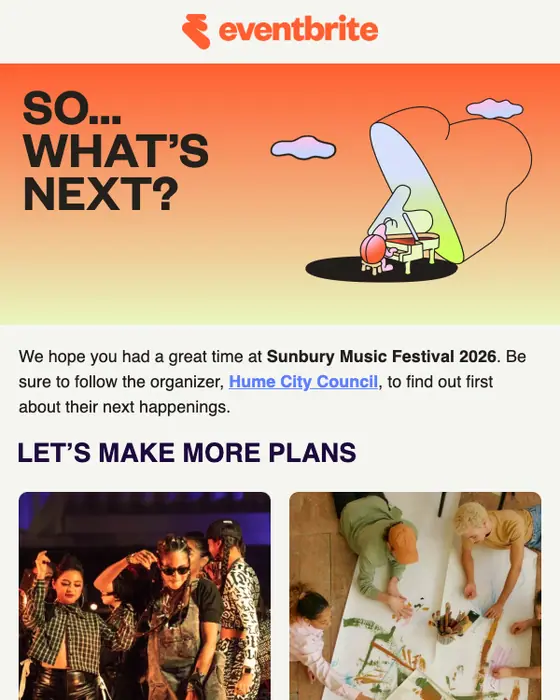
Spark Festival announced its 2023 dates with the line "NSW's largest tech sector gathering is back". City2Surf counts down with "3 Months Until Voltaren City2Surf!". After Sunbury Music Festival, Eventbrite asked "So... What's next?", told the reader to follow the organizer, and offered four ways to find more events. 28% of our 163 event emails are invitations.
In the 163 we collected, invitations lead at 28%, then promotional sends at 23%, order confirmations at 14%, newsletters at 9% and booking confirmations at 8%. Selling the event and confirming the ticket make up most of what organizers and ticketing platforms send.
It asks for more and gets more personal. The median event email has four calls to action against two, and only 10% have exactly one, against 30%. 53% greet the reader by first name, against 40%, and 42% stay in black, white and gray, against 62%.
Put the time left in the subject line. Four of the first twelve cards do: City2Surf with "3 Months Until Voltaren City2Surf! 👟", StubHub with "🏀 Boston Celtics: 4 days until next game!", Tramp with "Meet & Greet Giveaway + 8 Days ‘til We TRAMP + 🎉" and Runaway Sydney Half Marathon with "10km Entries Open Tomorrow! 🏃".
76 of the 163 have been rendered full length so far. We took 24 of those off: 12 repeat sends, four tickets showing a scannable entry code, one order showing a ZIP code, five orders that broke in rendering, one digest listing the reader's local events and one subject line that breaks our page format.