
What a double opt-in email is
A double opt-in email is the message a list sends to ask someone to confirm their address before anything else arrives. The reader confirms by clicking a button or a link.
We collected 42 from 41 brands in two ordinary inboxes, sent between 2018 and 2026, and show 12 of them here. Most were sent straight after a signup; a few are notices or requests to people already on a list, and they are counted with the rest. Most were sent straight after a signup; a few are notices or requests to people already on a list, and they are counted with the rest. Most were sent straight after a signup; a few are notices or requests to people already on a list, and they are counted with the rest. The percentages describe all 42. The other 30 are counted but not rendered for the library yet. Six of the 12 shown, and 18 of the 42 collected, carry the same stock wording word for word, so the grid starts with the ones that do something different.
Browse all 12 double opt-in emails
Search a brand or subject line. Open any email to see it full length, with its subject line, notes on what it is doing, and a prompt that rebuilds it.
Growth.Design
Confirm your email
Business Casual Copywriting
Confirm your subscription
lululemon
Are You on the List?
Hootsuite
Psst. Want free social tools, tips, and templates?
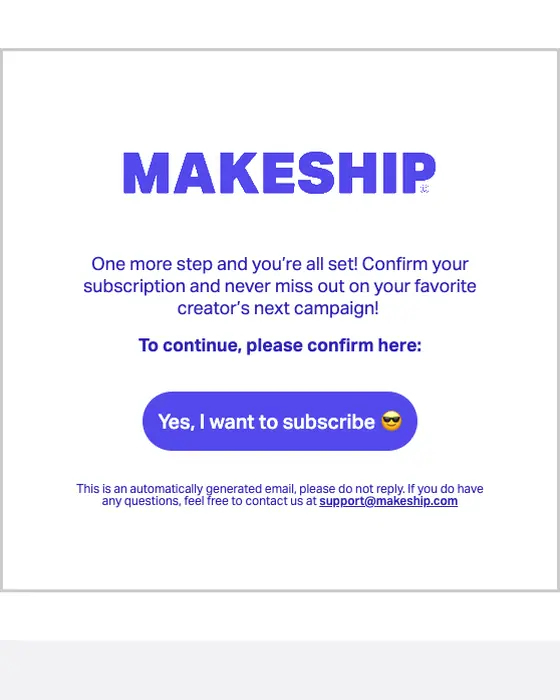
Makeship
Almost there! Please Confirm your Subscription at Makeship 🚀
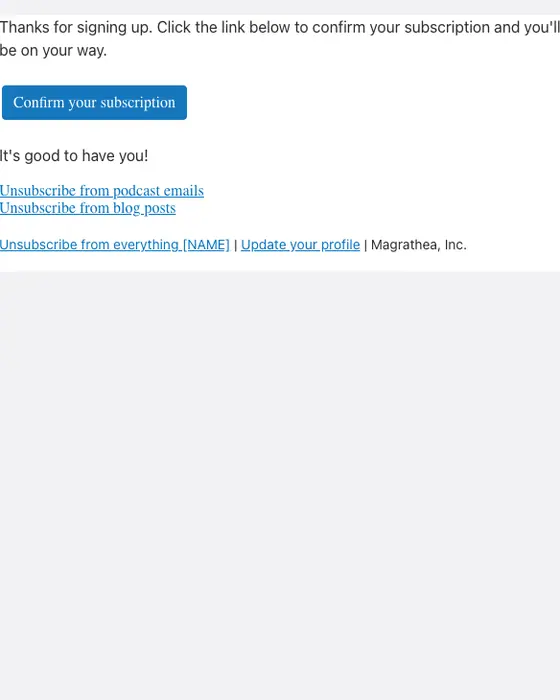
Eric Jorgenson
Important: confirm your subscription
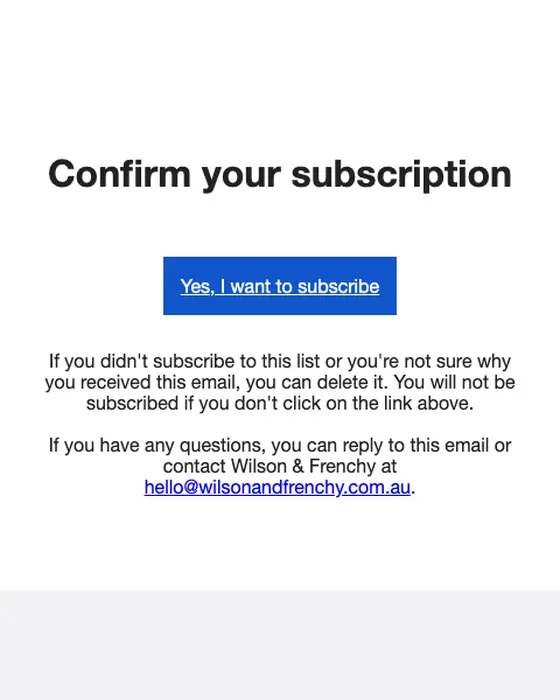
Wilson + Frenchy
Confirm Your Subscription
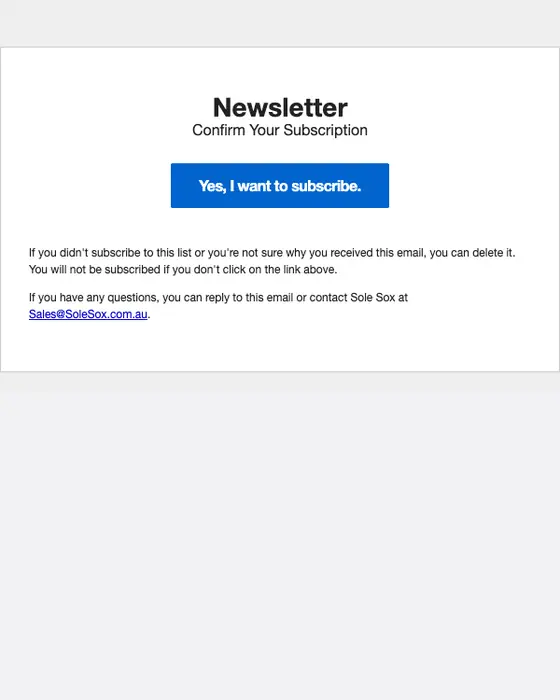
Sole Sox Australia
Confirm Your Subscription
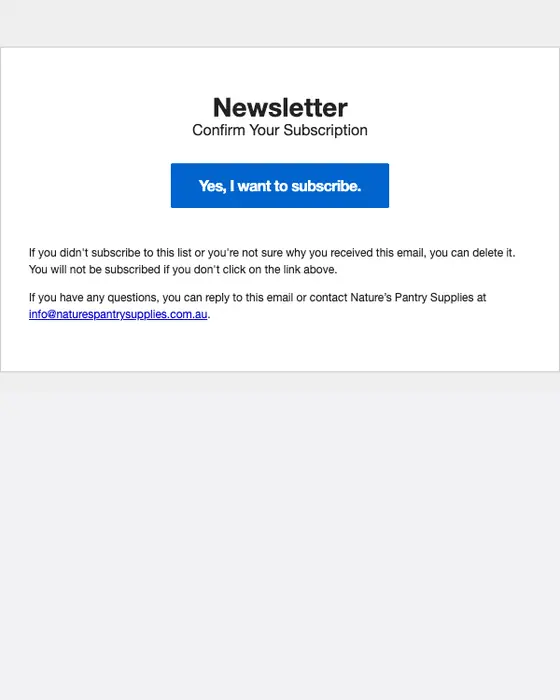
Nature’s Pantry Supplies
Confirm Your Subscription
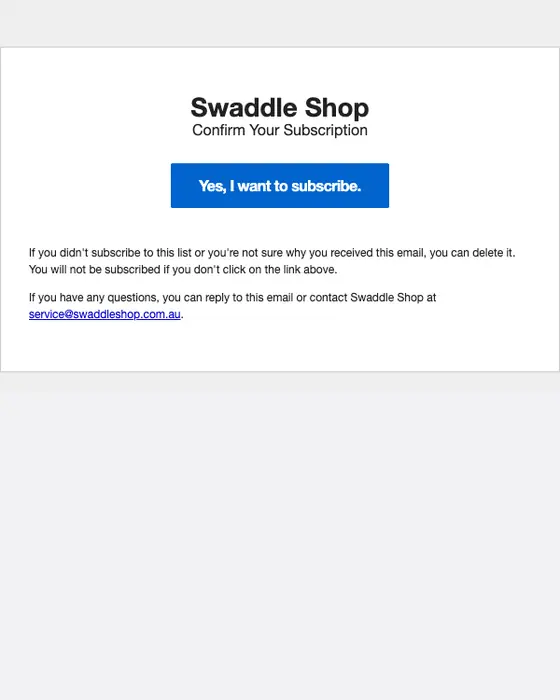
Swaddle Shop
Confirm Your Subscription
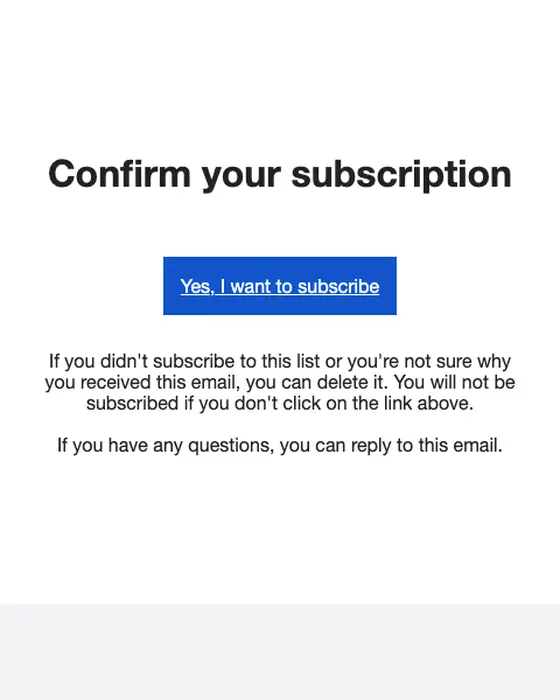
Wildfire Engraving
Confirm Your Subscription
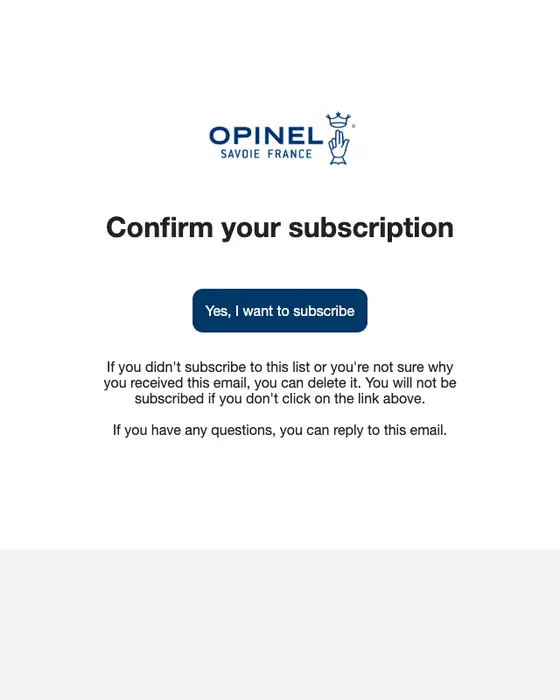
Opinel APAC
Confirm Your Subscription
How double opt-in emails differ from welcome emails and everything else
Double opt-in emails against welcome emails and every other email
42 double opt-in, 468 welcome and 12,669 other emails| What we measured | Double opt-in | Welcome | Every other email |
|---|---|---|---|
| Subject line contains "confirm" | 90% | 0% | 5% |
| Plain subject line that says what it is | 81% | 13% | 32% |
| Exactly one call to action | 88% | 32% | 30% |
| Micro length | 74% | 15% | 12% |
| Text heavy | 88% | 45% | 60% |
| Greets by first name | 14% | 50% | 40% |
| Median calls to action | 1 | 2 | 2 |
The welcome email is what a list sends once someone is on it, so the two sit next to each other in a signup flow and look nothing alike. 90% of double opt-in subject lines contain the word "confirm", against none of the 468 welcome emails and 5% of everything else. 88% carry exactly one call to action, against 32% of welcome emails. Welcome emails greet the reader by first name half the time. Double opt-in emails do it in 14%.
The "Every other email" column includes the welcome emails. The first row is counted from each subject line. The other rows are labels our classifier filed for each email, used as filed and not checked against every image. We left out its hero-image, color and plain-text labels, which the images contradict for cards in the grid.
What the 42 collected say
What is in the 42 emails
read in each email| The email | Emails | Who |
|---|---|---|
| Uses the same stock wording, including the line "You will not be subscribed if you don't click on the link above" | 18 of 42 | 18 brands, 2023 to 2026. Six are in the grid: Wilson + Frenchy, Sole Sox Australia, Nature’s Pantry Supplies, Swaddle Shop, Wildfire Engraving and Opinel APAC |
| Subject line is exactly "Confirm your subscription" | 20 of 42 | All 18 stock-wording senders, plus Business Casual Copywriting and one other |
| Tells the reader what happens if they did not sign up | 25 of 42 | The 18 stock-wording senders and 7 others, among them lululemon and Business Casual Copywriting |
| Says what happens if the reader does not confirm | 1 of 42 | One sender, a parenting newsletter not in the grid: unsubscribed after 48 hours, though the link still works afterwards |
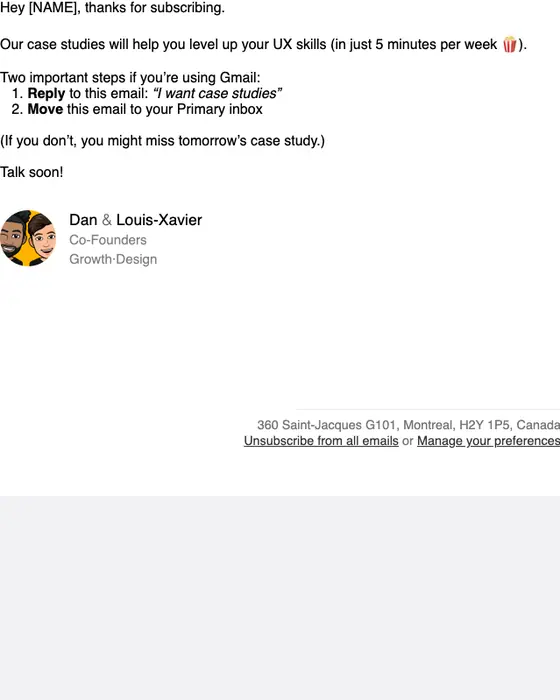
| Asks for a reply rather than a click | 1 of 42 | Growth.Design, after "thanks for subscribing": the reply and the move to the Primary inbox are steps for Gmail delivery |
How the reader confirms
read in all 42 images| The email confirms with | Emails | Share |
|---|---|---|
| A button | 39 | 93% |
| A text link, no button | 1 | 2% |
| No click: a reply, or a notice that the signup already went through | 2 | 5% |
29 of the 42 were filed as acquisition email and 8 as onboarding. Ecommerce is the largest industry, with 7. Our classifier had filed 19 of the 39 button emails as text links, so this table is counted from the images. In the grid, 11 of the 12 confirm with a button and Growth.Design asks for a reply.
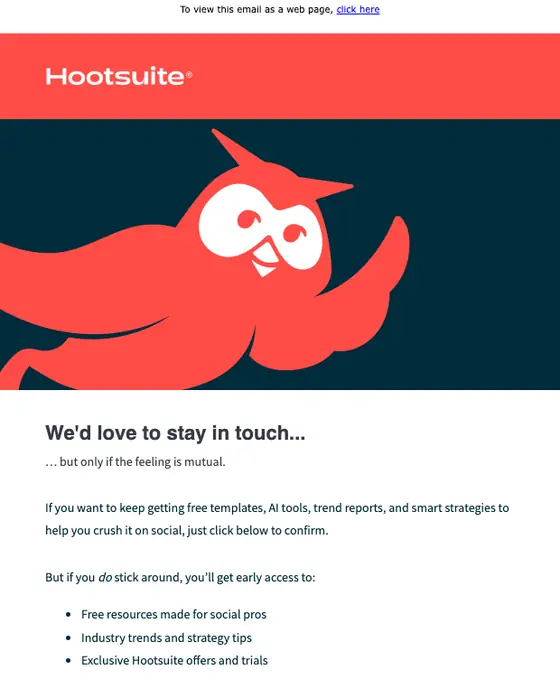
Three patterns. Direct: the 18 stock sends, a heading, one button and two short lines. Value-led: Hootsuite lists the free templates and trend reports you keep getting, and Makeship says you will not miss a creator's next campaign. Reply: Growth.Design asks for a reply instead of a click.
Next to this one
The same library, cut by the job the email does: welcome emails, which follow the confirmation, email verification emails, which confirm an account rather than a list, subscription emails and newsletters.
Questions about double opt-in emails
It is the email a list sends to ask a person to confirm their address before they are added, usually straight after a signup. Of the 42 we collected, 39 (93%) confirm with a button and 90% put the word "confirm" in the subject line. None of the 468 welcome emails in the same inboxes do.
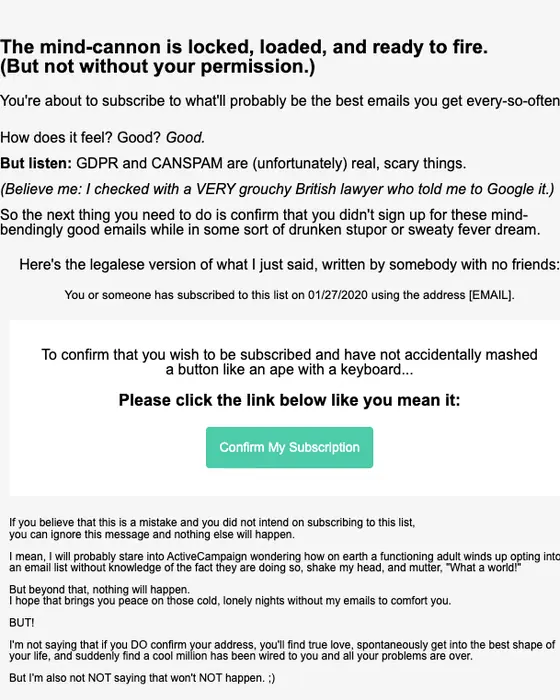
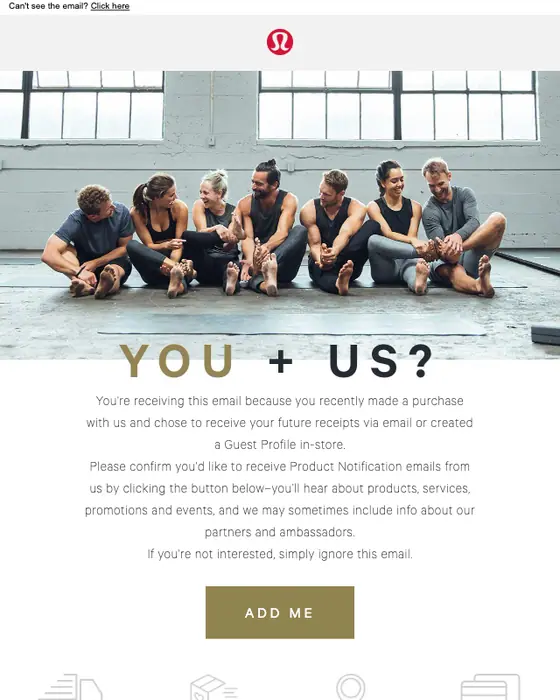
Growth.Design (2025) asks you to reply "I want case studies" and move the email to your Primary inbox. Business Casual Copywriting (2020) turns the confirmation into a joke about GDPR. lululemon (2020) uses one "ADD ME" button. Hootsuite's (2025) still shows a template line, "Offer ends Month Day, Year." Most are plainer: 39 of the 42 we collected confirm with a button. All 12 shown are in the grid above.
Say what the email is. 38 of the 42 we collected contain the word "confirm", and 20 are exactly "Confirm your subscription". None of the 468 welcome emails use that word. Two of the four that do not are in the grid: Hootsuite ("Psst. Want free social tools, tips, and templates?") and lululemon ("Are You on the List?").
With single opt-in the first email a subscriber gets is the welcome. With double opt-in it is this confirmation, and the list should send nothing else until they confirm. The two read differently: in the same inboxes, 90% of double opt-in subject lines contain "confirm" and none of the 468 welcome emails do, and 39 of the 42 confirmations use a button.
It is a trade: it costs signups from people who never click, and buys a list of addresses that are real and wanted. Our email marketing best practices sets out when it pays. Whatever you decide, the email is short work: 39 of the 42 we collected confirm with a button.
12 of the 42 have been rendered full length for this library so far, and all 12 are shown. The other 30 are counted in the percentages but not shown yet. Six of the 12 use the same stock wording, which is why they sit at the end of the grid.