
What an email verification email is
An email verification email is the message a service sends to prove you own the address you just gave it. It carries a link or button to click, or a code to type back into the app or site.
We collected 149 from 132 brands in two ordinary inboxes, sent between 2017 and 2026, and show 31 of them here. The percentages describe all 149.
Browse all 31 email verification emails
Filter by the links and buttons in each email, or search a brand or subject line. Open any email to see it full length, with its subject line, notes on what it is doing, and a prompt that rebuilds it.
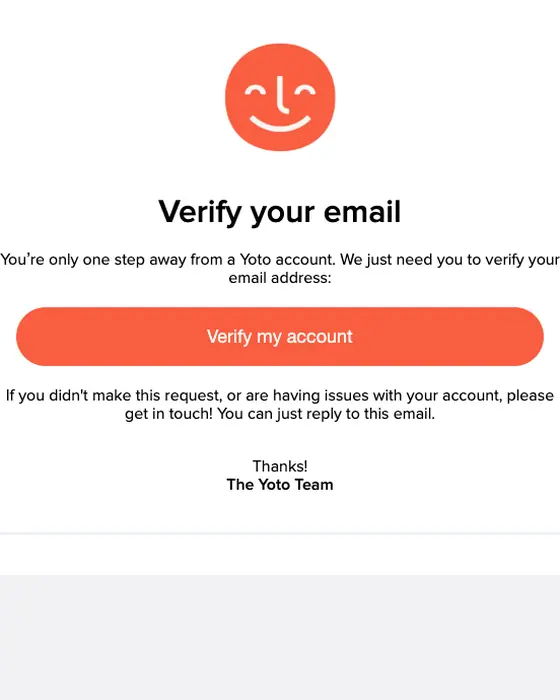
Yoto
Verify your email address
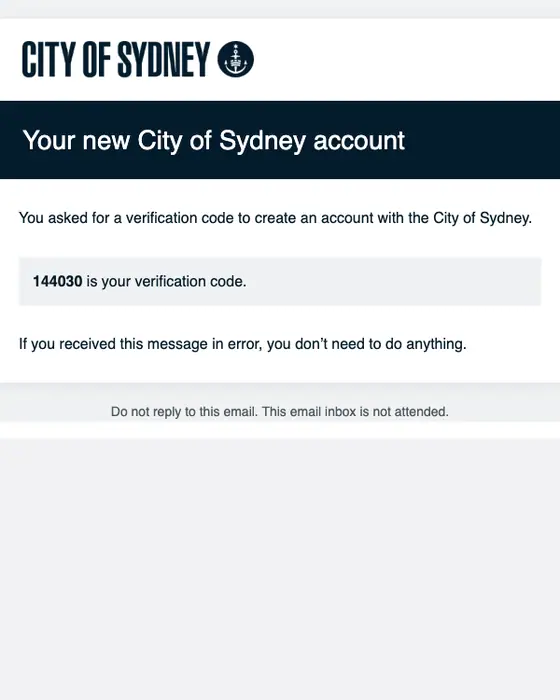
City of Sydney
Verification code: new City of Sydney account
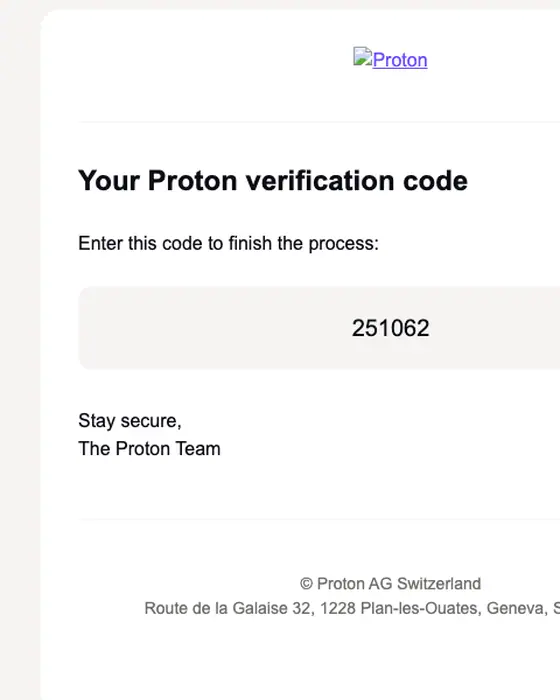
Proton
Proton Verification Code
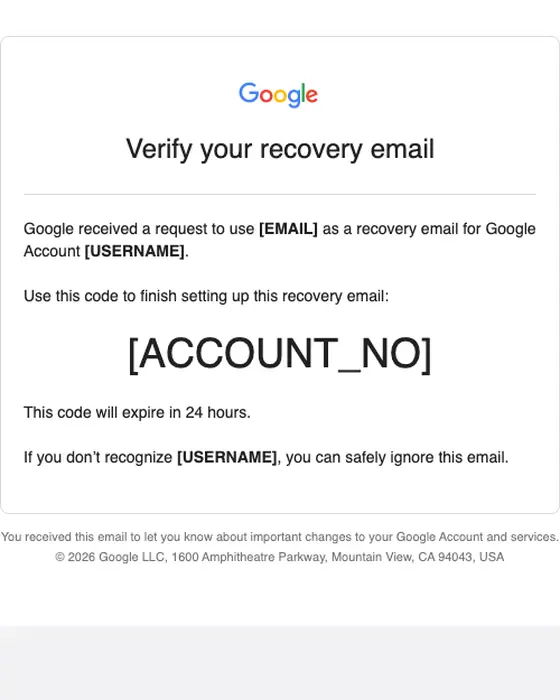
Email verification code: [ACCOUNT_NO]
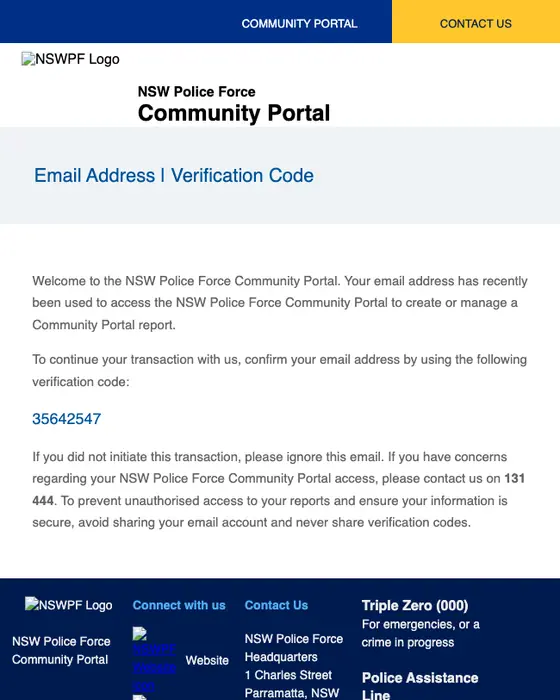
NSW Police Force Community Portal
NSW Police Force Community Portal Verification Code
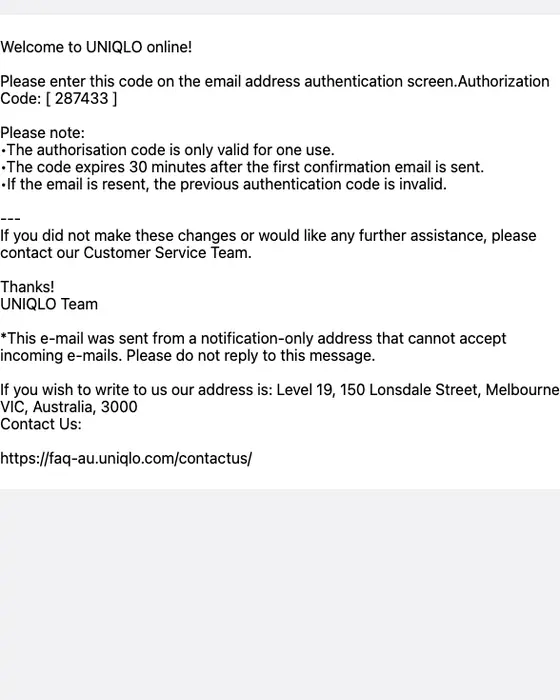
UNIQLO
<UNIQLO Australia> Automated Message: Please Confirm Your Email Address
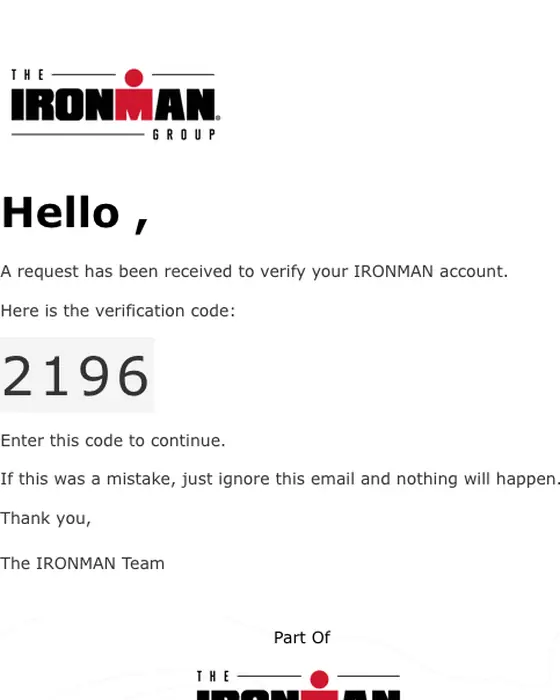
The IRONMAN Group
Account Email Verification [One Time Code: 2196]
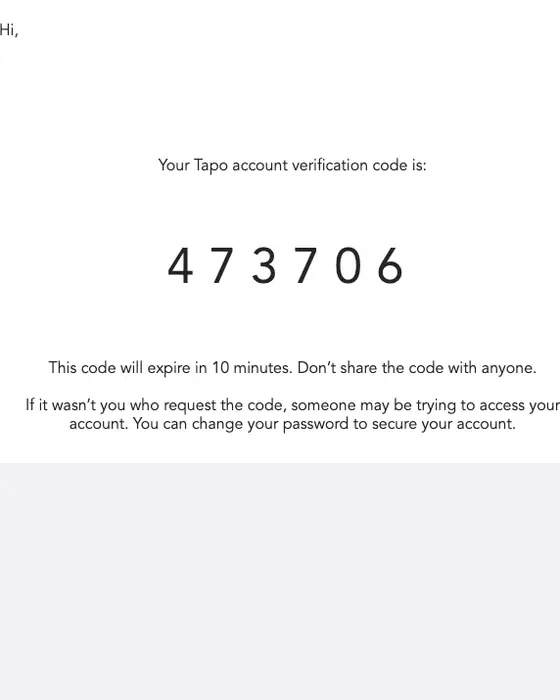
TP-Link
Tapo Account Verification Code
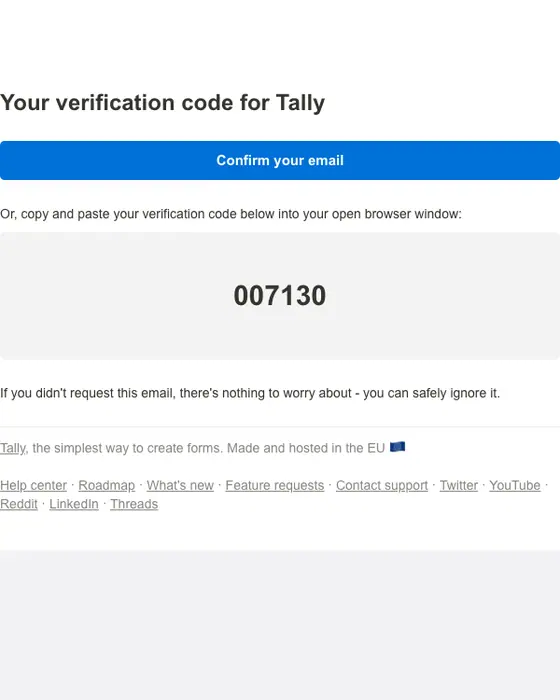
Tally Forms
Confirm your email address
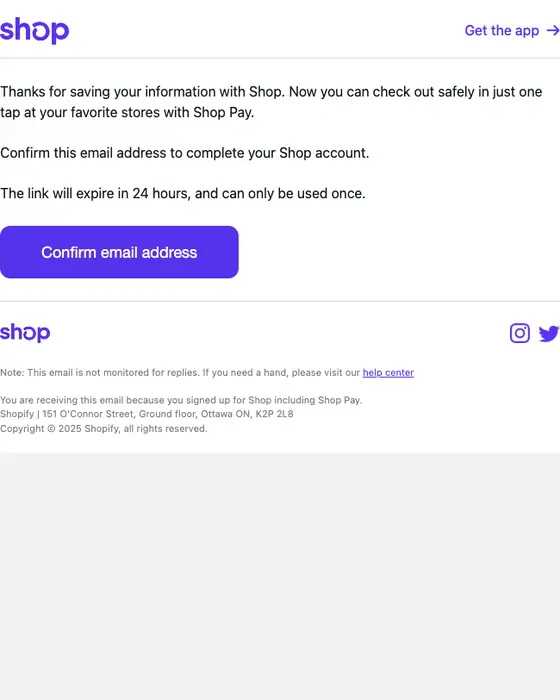
Shop
Confirm your email
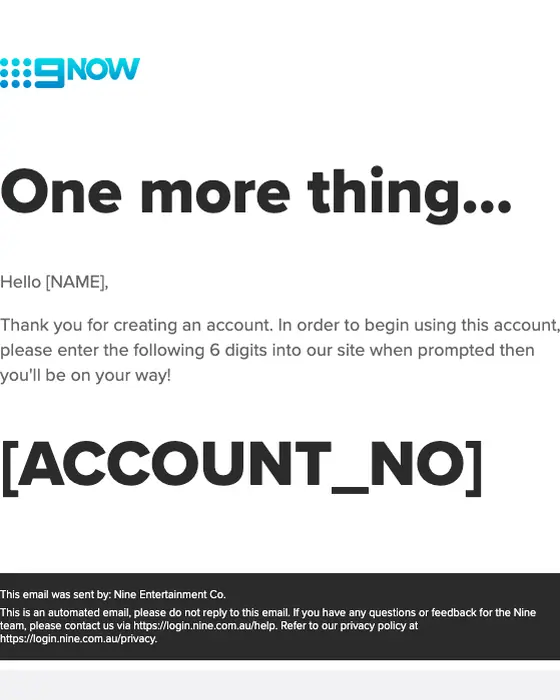
Nine Entertainment Co.
Your verification code: [ACCOUNT_NO]
SeatGeek
Verify your email
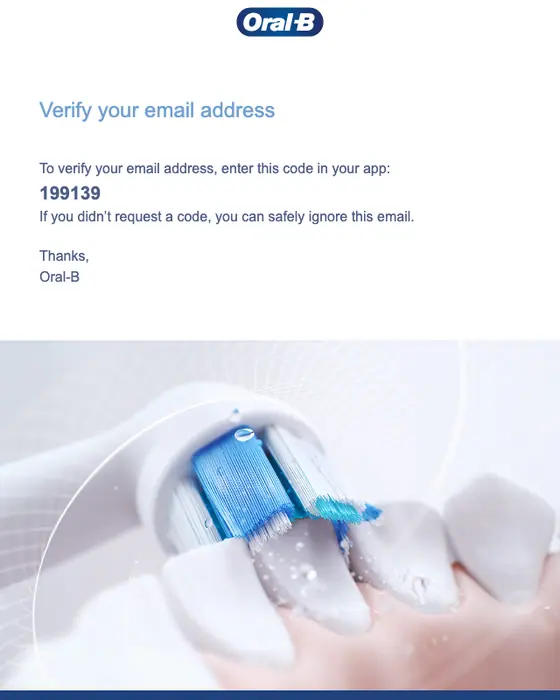
Oral-B
Verify Your Email
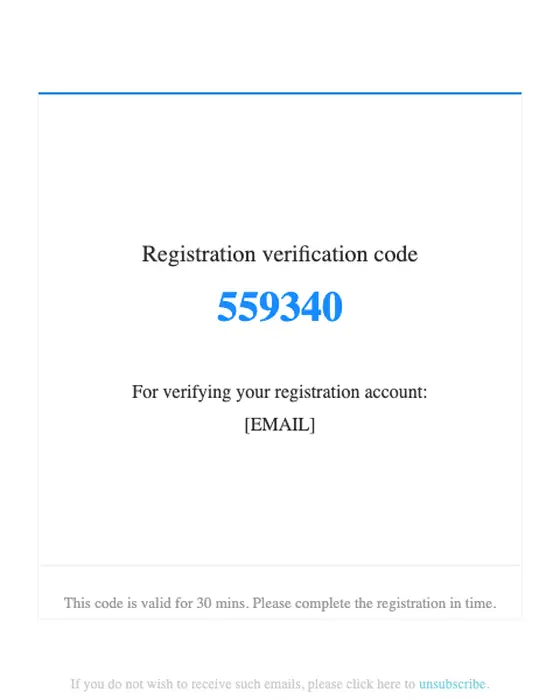
Home Connect
Home Connect Registration verification code
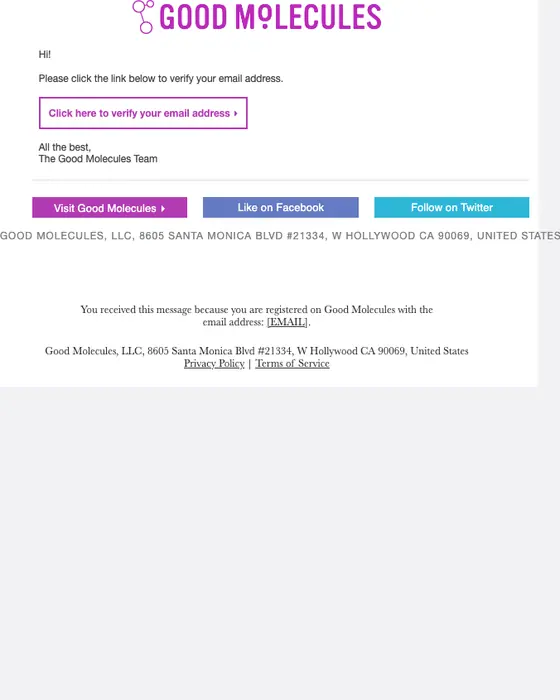
Good Molecules
Verify your email address
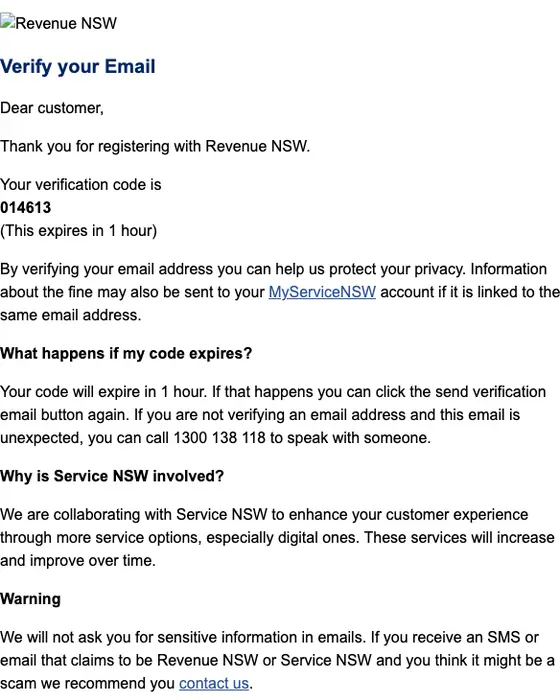
Revenue NSW
Please verify your email address
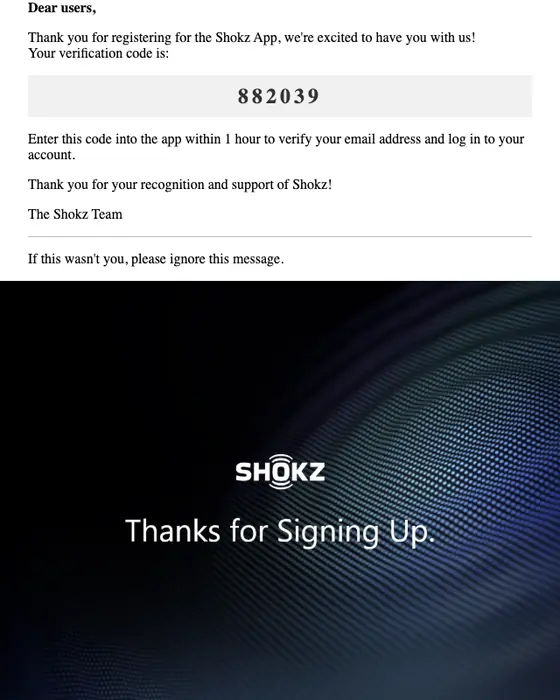
Shokz
[Shokz] Your App Verification Code
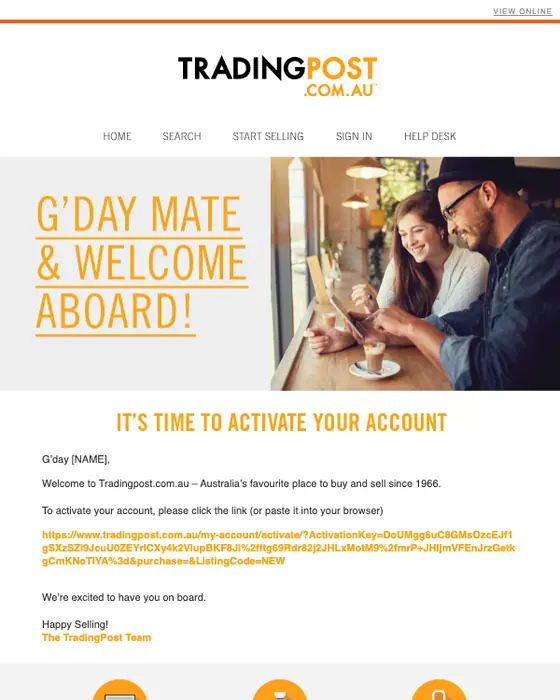
Tradingpost.com.au
Attention Needed - Activate Your Account
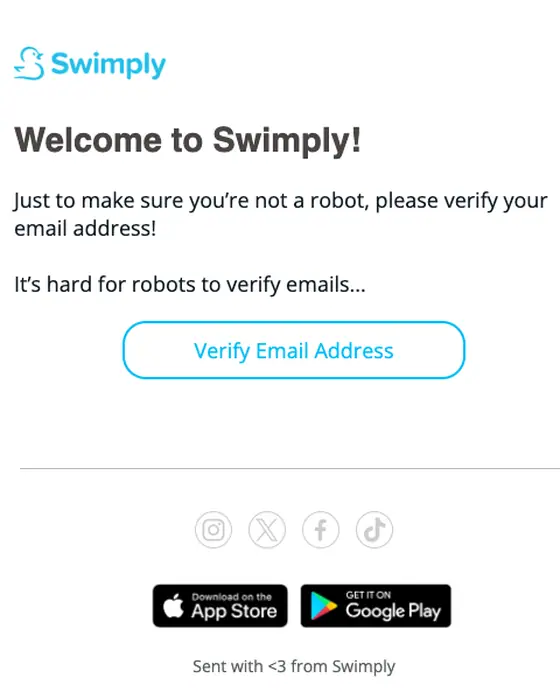
Swimply
Please Verify Your Email Address
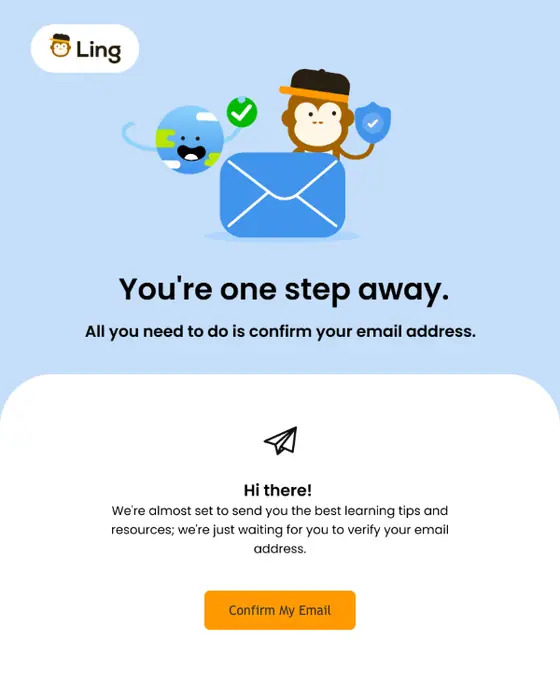
Ling
Reminder to verify your email!
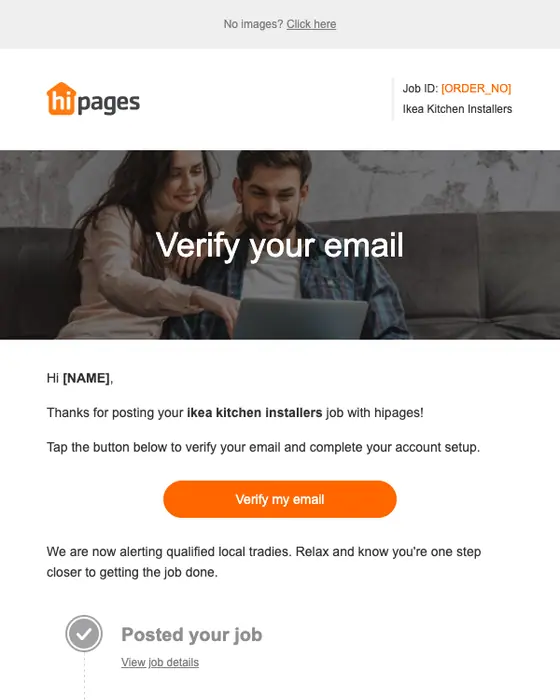
hipages
Job posted! Now verify your email
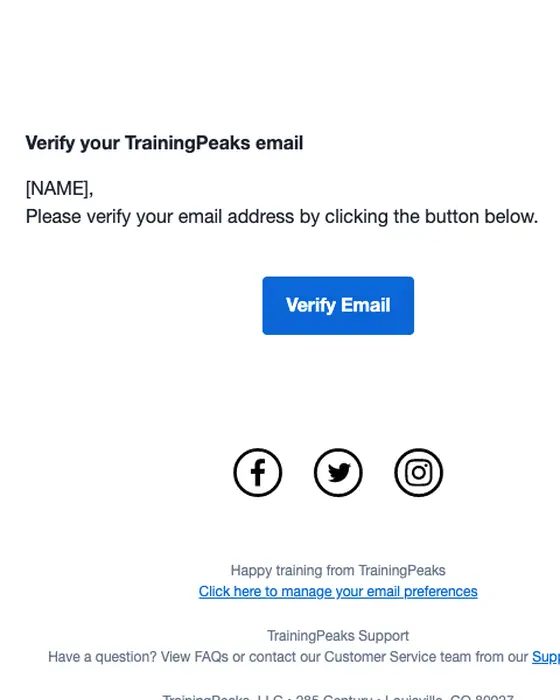
TrainingPeaks
Please verify your email for TrainingPeaks.com
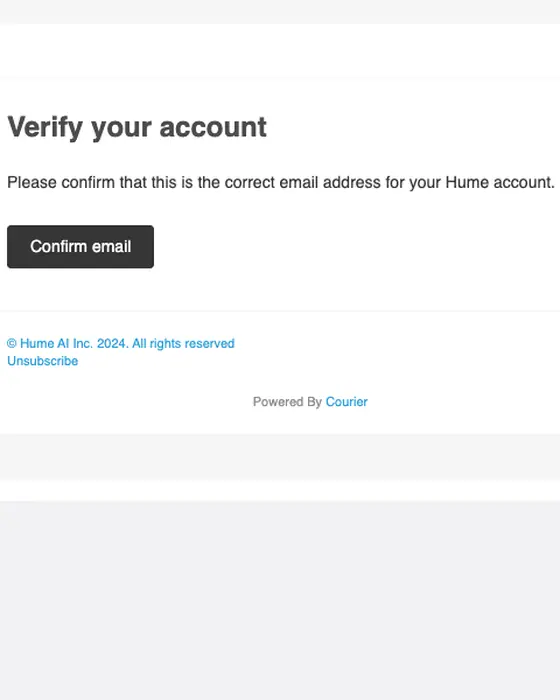
Hume AI
Please confirm your email
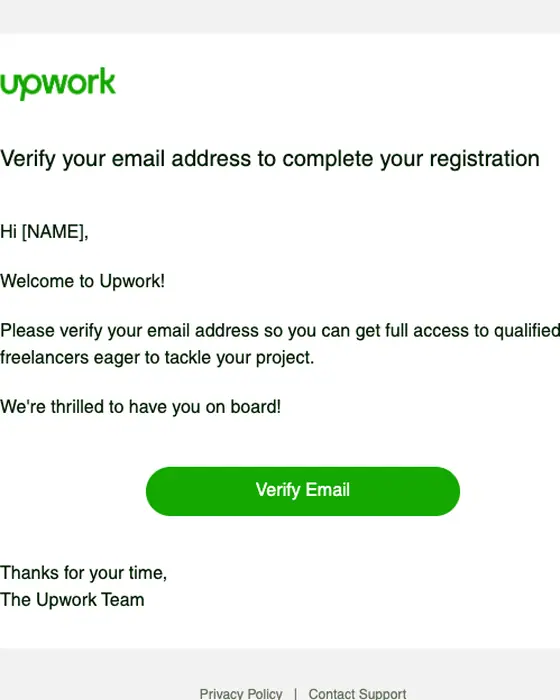
Upwork
To get started on Upwork, verify your email address
How verification emails differ from everything else in the same inboxes
Verification emails against every other email
149 verification and 12,562 other emails| What we measured | Verification | Everything else |
|---|---|---|
| Micro length | 62% | 12% |
| Plain subject line that says what it is | 92% | 32% |
| Plain-text layout | 60% | 31% |
| Text heavy | 91% | 60% |
| Monochrome color | 92% | 61% |
| Exactly one call to action | 52% | 30% |
| No link or button at all | 27% | 5% |
| Median calls to action | 1 | 2 |
| Greets by first name | 30% | 40% |
The gap is in length and focus. 62% of verification emails are micro length, against 12% of everything else the same inboxes received, and 92% carry a plain subject line that says what the email is, against 32%. 52% have exactly one call to action, and 27% have no link or button at all because the reader types a code instead, against 5% of other email. Personalization runs the other way: 30% greet the reader by first name, against 40%.
What is in the collected set
Links and buttons in the email
all 149 collected| The email contains | Emails | Share |
|---|---|---|
| A text link | 54 | 36% |
| No link or button, only a code | 40 | 27% |
| A button | 37 | 25% |
| A button and a text link | 18 | 12% |
When it was sent
all 149 collected| Stage | Emails | Share |
|---|---|---|
| Onboarding | 111 | 74% |
| Security | 24 | 16% |
| Account admin | 11 | 7% |
| Activation | 3 | 2% |
SaaS is the largest industry, with 35 of the 149. The links-and-buttons count takes in every link in the email, footer links included, so it is not the same as how the reader confirms: NSW Police, UNIQLO, TP-Link (Tapo) and Home Connect are counted as a text link, yet each confirms with a code. In the grid, 11 emails contain a button, 8 a text link, 4 both, and 8 no link or button. 25 of the 31 were sent in 2023 or later, and 14 use a plain-text layout.
Next to this one
The same library, cut by the job the email does: one-time passcode emails, password reset emails, welcome emails, security alerts and account notices.
Questions about the collection
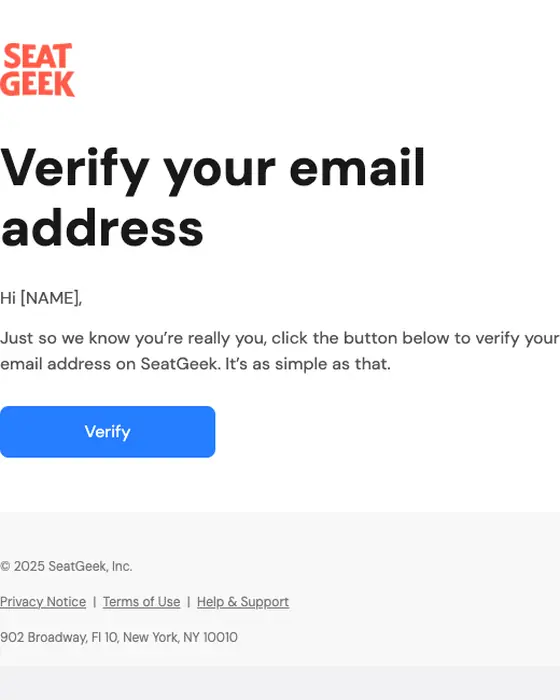
SeatGeek's, from 2025, is a clean one. The subject is "Verify your email", the body asks "Just so we know you're really you, click the button below to verify your email address on SeatGeek", and there is a single "Verify" button. Yoto's, from 2026, opens with two short sentences and a "Verify my account" button. Of the 149 we collected, 109 contain a link or button; the other 40 carry only a code.
City of Sydney's is typical. The subject reads "Verification code: new City of Sydney account", and the body is one line saying why it was sent, the six-digit code, and a note that you can ignore it if it reached you in error. 40 of the 149, or 27%, carry no link or button at all, only a code to type back in.
Keep it short and ask for one thing. Of the 149 we collected, 62% are micro length, 92% use a plain subject line that says what the email is, and the median email has one call to action. Our transactional email best practices cover the sending side.
Open any of the 31 emails above to see it full length, with its subject line, notes on what it does, and a prompt you can paste into an AI assistant to build your own version. For every email a product needs, verification included, see transactional email templates.
So far 39 of the 149 have been rendered full length for this library. We removed one broken render, a second send of the same template, and six that showed something about the person who received them: a device and browser, an account id or sign-in link, or a child's school. That leaves 31 from 31 brands. The rest are counted in the percentages but not shown yet.