

What a real estate email is
A real estate email is a message an agency, property portal or property manager sends to buyers, sellers, tenants and owners: new listings, open-home and auction invites, market updates, saved-search property alerts and account notices.
We collected 237 from two ordinary inboxes, sent between 2018 and 2026, and show 22 of them here. The percentages describe all 237. 222 of the 237 come from Australian senders, so this is mostly the Australian market: agencies, portals such as realestate.com.au and Domain, and property managers. realestate.com.au sent the most, 15.
Browse 22 real estate emails, including newsletters and property alerts
Filter by type, or search a brand, suburb or subject line. Open any email to see it full length, with its subject line, notes on what it is doing, and a prompt that rebuilds it.
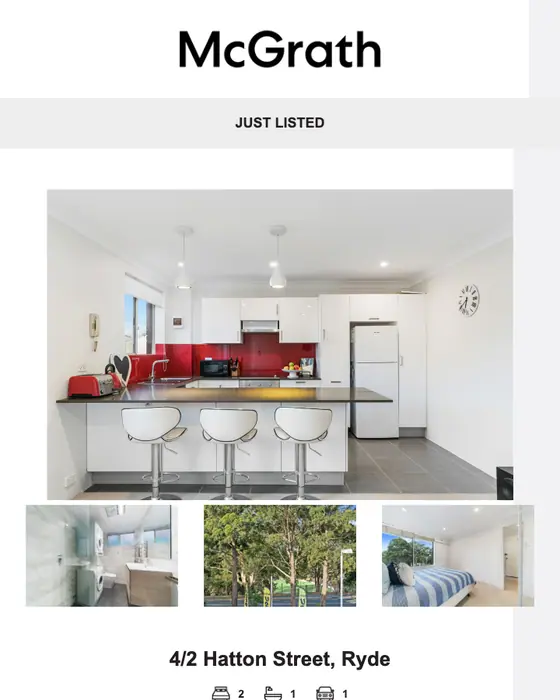
McGrath
JUST LISTED - 4/2 Hatton Street, Ryde
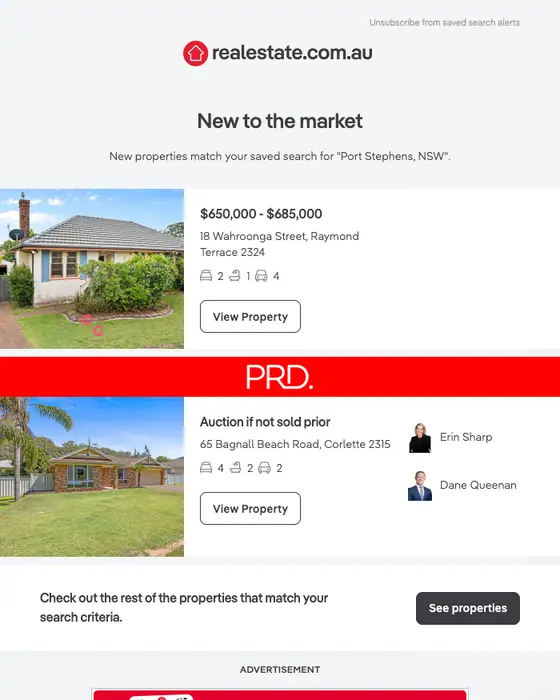
realestate.com.au
New to market: Alert for your "Port Stephens, NSW" saved search
Colliers International
Norfolk Residences, Randwick | Limited Release Residences & Terraces Coming Soon
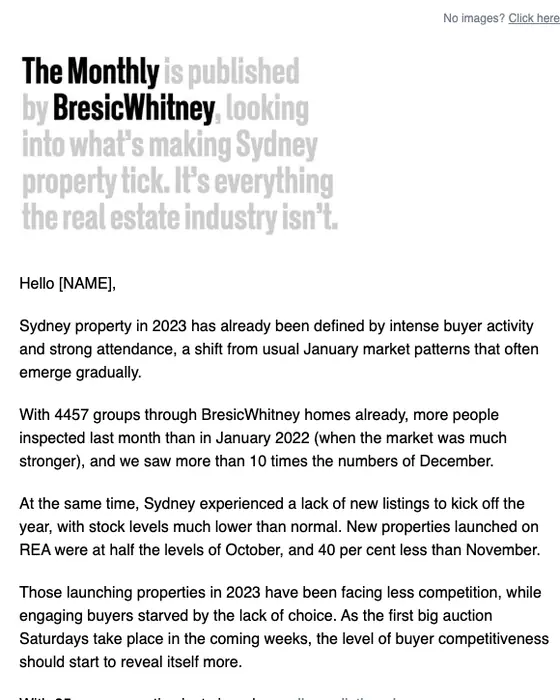
BresicWhitney
Buyers flock to Sydney property, what next for 2023?
Elders Real Estate - Double Bay
Elders Real Estate - Double Bay
Homes.com.au
Access Over 30,000 Off-Market Listings
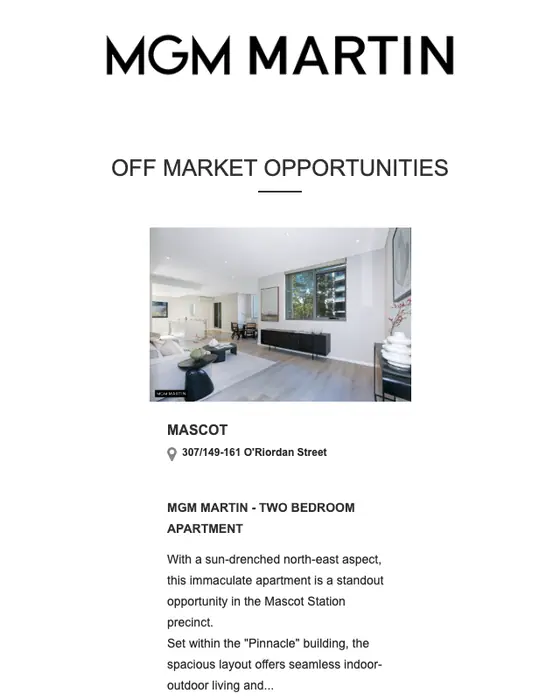
MGM MARTIN
OFF MARKET OPPORTUNITIES
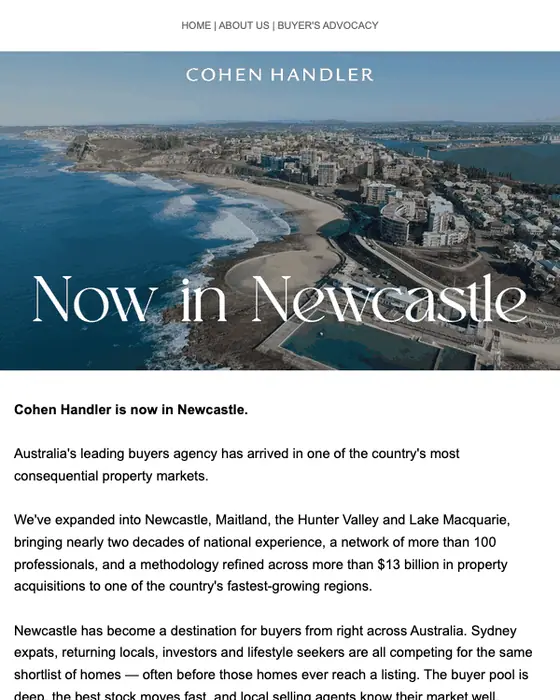
Cohen Handler
We're Now in Newcastle and the Hunter Region
YourPorter
[NAME], just a quick question about YourPorter
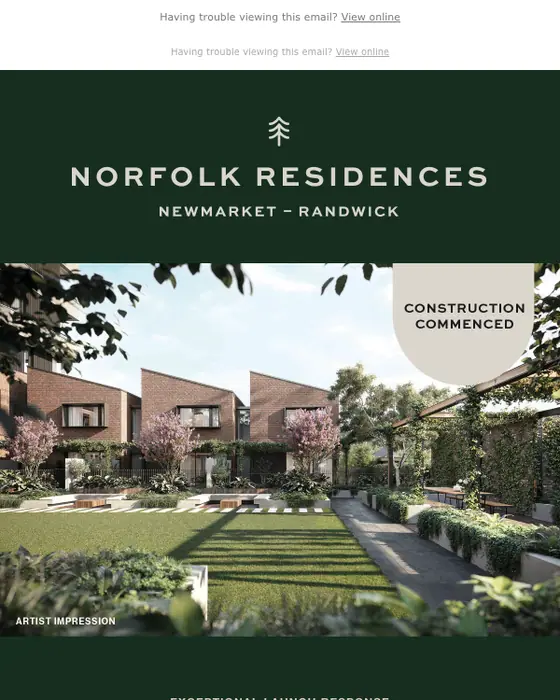
Colliers Residential Sydney
Norfolk Residences by Cbus Property - Exceptional Launch Response
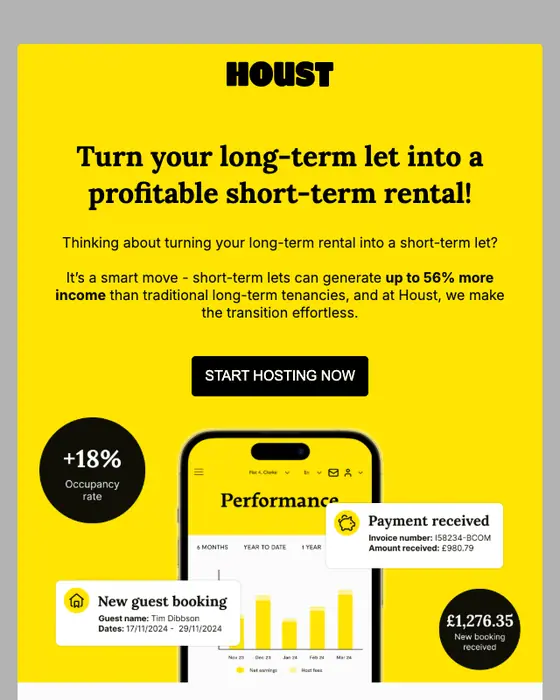
Houst
Ready to earn more from your rental property?
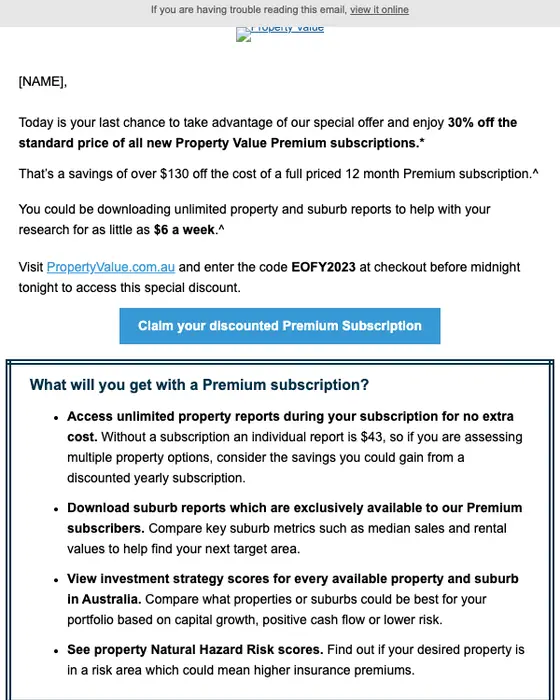
Property Value by CoreLogic
Last day - 30% off Premium Subscriptions
Airbode Property
Beyond Nightly Rates: The Accountant's Approach to Airbnb Success

Picki.com.au
20 years of investing knowledge → 16 hours of learning

Homes.com.au
Unlock AI Home Buying Insights That Give You The Edge
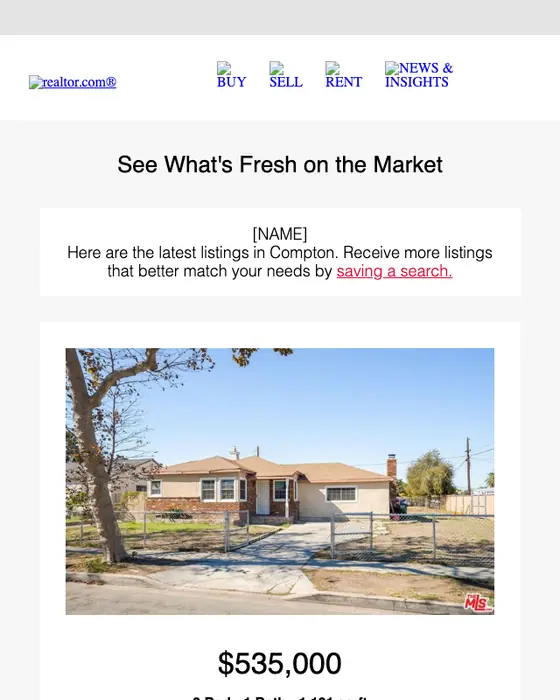
realtor.com
New listings in Compton, CA
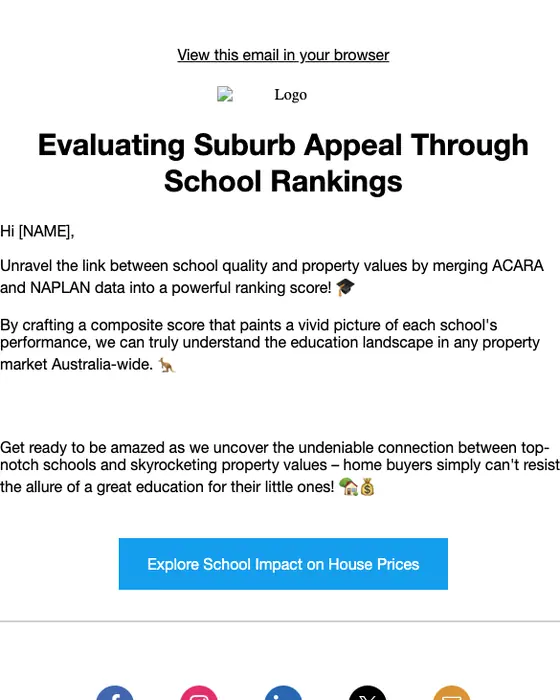
HtAG Analytics
🏠 How School Quality Drives Property Values?
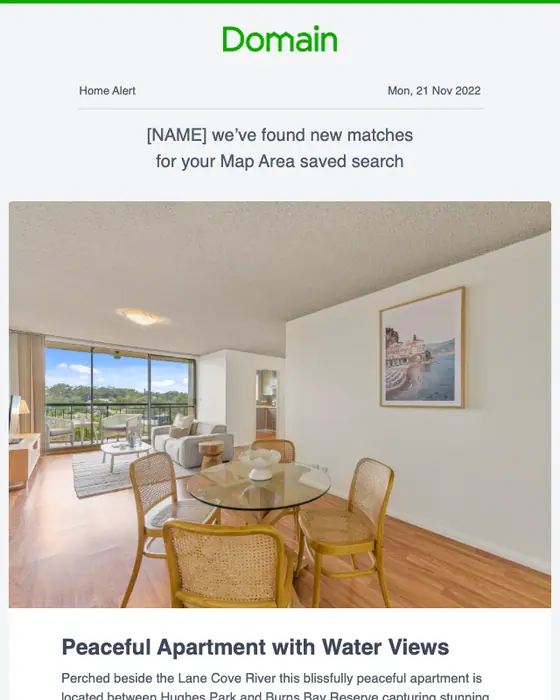
Domain.com.au
Home Alert for Map Area
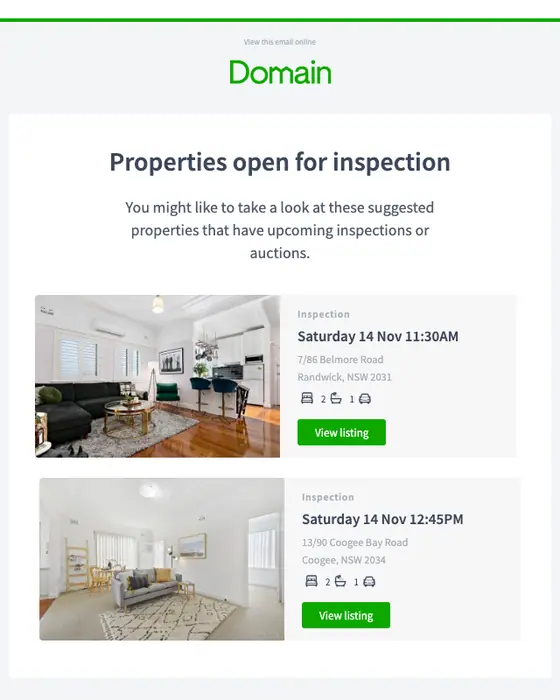
Domain
Suggested property inspections for you this week
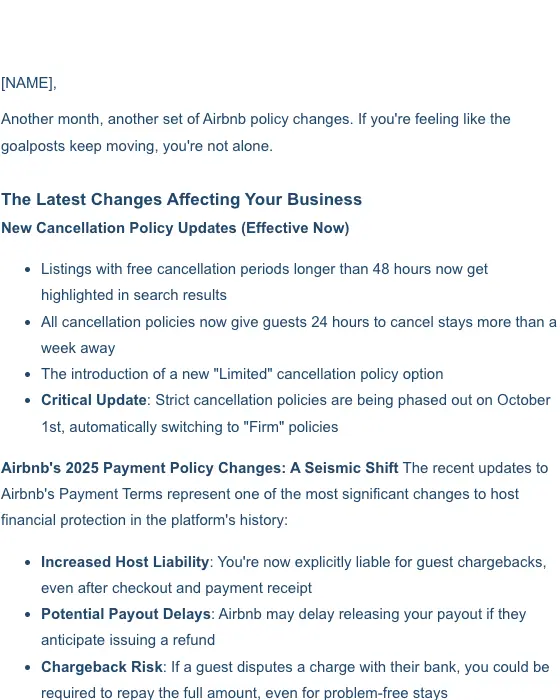
Airbode Property
The Airbnb Landscape is Shifting Again – Here's What You Need to Know

WeWork
[NAME], find the right workspace solution for you

WeWork
Which WeWork membership works best for your needs?
How real estate email differs from everything else in the same inboxes
Real estate email against every other email
237 real estate emails and 12,474 other emails| What we measured | Real estate | Everything else |
|---|---|---|
| Promotional | 39% | 22% |
| Newsletters and market updates | 22% | 12% |
| Property alerts | 9% | None |
| Account notices | 11% | 7% |
| Event invites: open homes, auctions, investor events | 4% | 4% |
| Sales and discount offers | 3% | 6% |
| Subject line says plainly what is inside | 62% | 31% |
| Discount named in the subject line | 5% | 11% |
| Written to win a new client or buyer | 43% | 15% |
| Corporate design style | 24% | 10% |
| Minimal design style | 7% | 20% |
| Modular grid layout | 7% | 1% |
| Plain-text layout | 24% | 32% |
| Image heavy | 3% | 6% |
| Greets the reader by first name | 51% | 40% |
| Warm tone | 6% | 15% |
| Exactly one call to action | 27% | 30% |
| Sent by an Australian brand | 94% | 47% |
| Median calls to action | 2 | 2 |
Real estate email is mostly selling and informing. 39% is promotional, against 22% of other email, and 22% is a newsletter or market update, against 12%. 43% is written to win a new client or buyer, against 15%. Property alerts, the emails a portal or agency sends, mostly about new listings that match what the reader asked for, are 9% of the set (22 emails). The library files them as job alerts, the nearest type it has. The other 33 alerts in the same inboxes are job listings, so the table shows none for everything else.
Discounts are rare. Sales and discount offers are 3% of real estate email, against 6% of other email, and all 7 come from one sender, Property Value by CoreLogic, selling a data subscription. The subject line says what is inside instead: 62% are plainly descriptive, against 31%, and 5% name a discount, against 11%.
The look is corporate rather than minimal: 24% use a corporate design style, against 10%, and 7% a minimal one, against 20%. A modular grid layout is 7% against 1%, and most of those are agency market-update newsletters. The tone is cooler, 6% warm against 15%, but 51% greet the reader by first name, against 40% of other email.
What is in the collected set
By type
all 237 real estate emails collected| Type | Emails | Share of the set |
|---|---|---|
| Promotional | 93 emails | 39% of the set |
| Newsletters and market updates | 52 emails | 22% of the set |
| Account notices | 26 emails | 11% of the set |
| Property alerts | 22 emails | 9% of the set |
| Event invites: open homes, auctions, investor events | 9 emails | 4% of the set |
| Re-engagement | 5 emails | 2% of the set |
| 15 other types | 30 emails | 13% of the set |
In the grid, 19 of the 22 were sent in 2023 or later and 18 come from Australian senders. The grid leans to promotional email and property alerts: 12 of the 22 are promotional, against 39% of all 237, and 3 are newsletters, against 22%. It shows 4 of the 22 property alerts and none of the 26 account notices, which are mostly owner and tenant admin such as work orders and property updates. 1 of the 22 uses a plain-text layout, against 24% of all 237.
Next to this one
The same library, cut a different way: home and furniture emails, finance emails and professional services emails by industry, or by the job the email does: newsletter examples, promotional emails, event invitations and alert emails, where the property alerts also sit.
Questions about the collection
There are 22 above, from 17 brands. Across the 237 we collected, 39% are promotional, 22% are newsletters and market updates, 11% are account notices, 9% are saved-search property alerts and 4% invite people to an open home, auction or investor event.
A good real estate email says plainly what is inside. In the 237 we collected, 62% have a descriptive subject line, against 31% of other email, and only 5% name a discount. 51% greet the reader by first name, and the median email carries two calls to action.
We can only say what agencies send, not what worked for them. In this collection the mix is listings, market updates and saved-search alerts, with 43% written to win a new client or buyer, against 15% of other email. Our real estate email marketing guide covers which sends to run.
71 of the 237 have been rendered full length so far. We took 49 off this page: 22 repeats of a template already shown, one duplicate, six with broken images and twenty held back over a street address, an agent's direct contact details or a QR code. The other 166 count in every percentage but are not shown yet.