
What a home furniture email is
A home furniture email is one that a brand selling furniture, mattresses, bedding or other things for the home sends to shoppers and customers: sale and new-range announcements, welcome emails, order and delivery updates, and requests for a review once the piece has arrived.
We collected 188 of them in two ordinary inboxes, sent between 2017 and 2026 under 57 sender names, which is 48 brands once regional and spelling variants such as Koala and Koala AU are merged. 29 are shown here, from 21 brands including Koala, Castlery, Mocka, Temple & Webster, Ecosa and Matt Blatt. The percentages describe all 188, and 159 of those are tagged to Australia.
The tag is wider than furniture. It also takes in cookware, kitchen appliance, cleaning product and air purifier brands, which count in the numbers but are not shown. The grid keeps furniture, mattresses, bedding and home furnishings, with no more than four emails from any one brand.
Browse 29 home furniture emails
Filter by type, or search a brand or subject line. Open any email to see it full length, with its subject line, notes on what it is doing, and a prompt that rebuilds it.
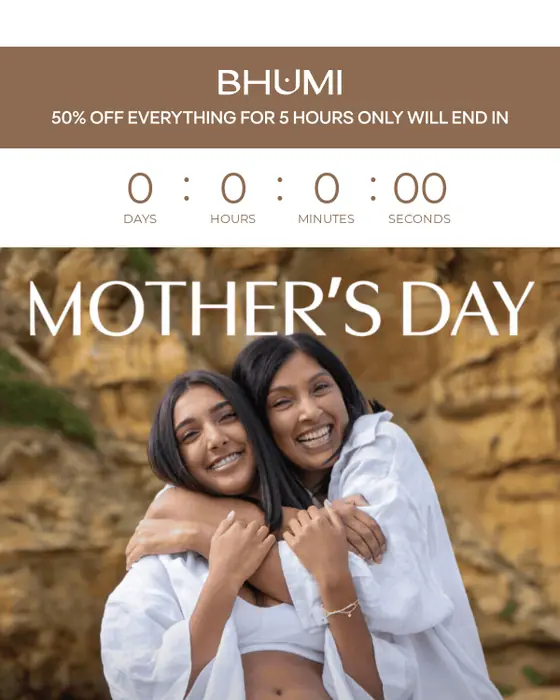
Bhumi Organic Cotton
50% OFF EVERYTHING IS ON. 5 Hours Only ⏳
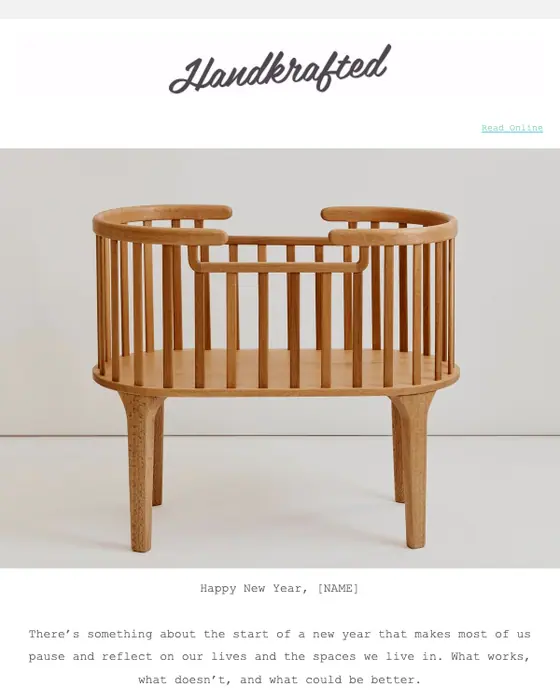
Handkrafted
Some beautiful things worth starting the year with
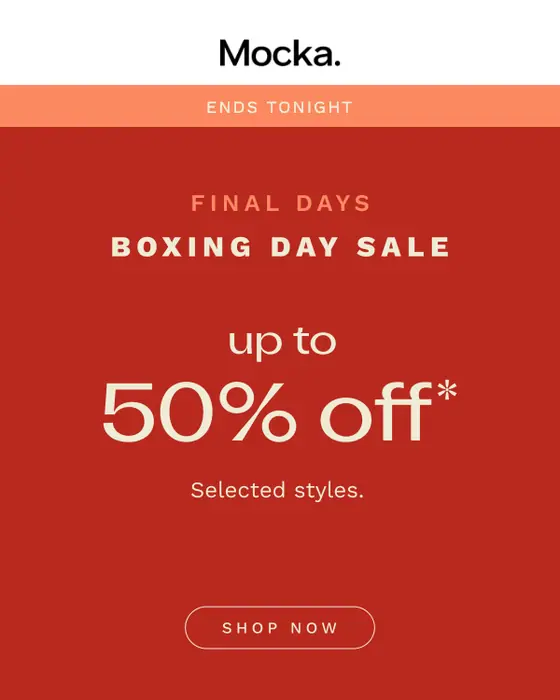
Mocka
ENDS TONIGHT: Up to 50% Off* Selected Styles
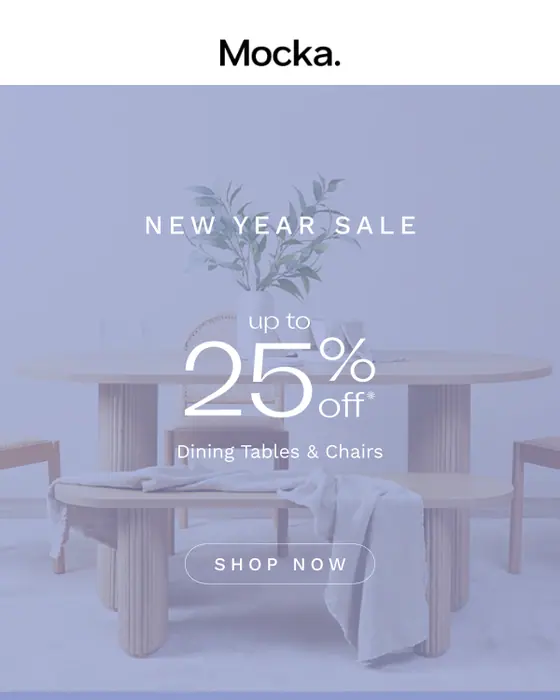
Mocka
Dining Room Refresh: Sale Styles up to 25% Off*
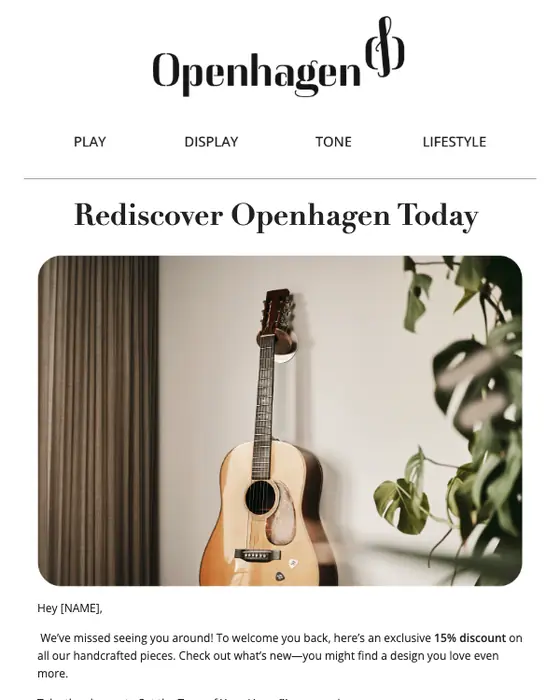
Openhagen
🎸 We Miss You! Come back for an exclusive 15% OFF!
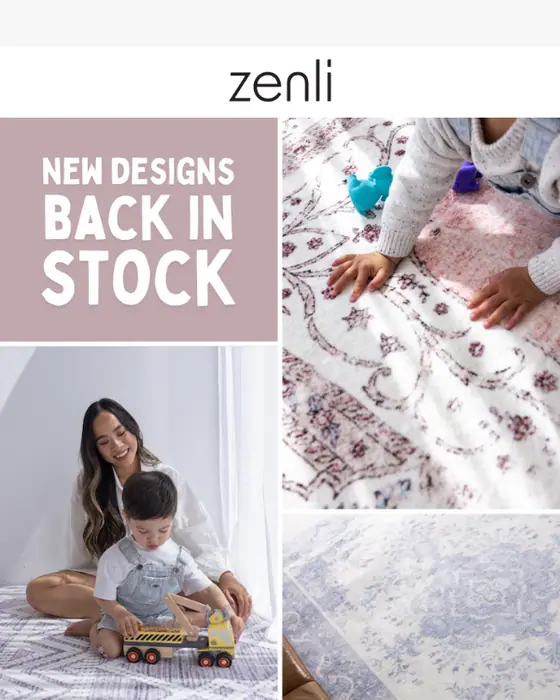
Zenli
New Designs Are Back In Stock
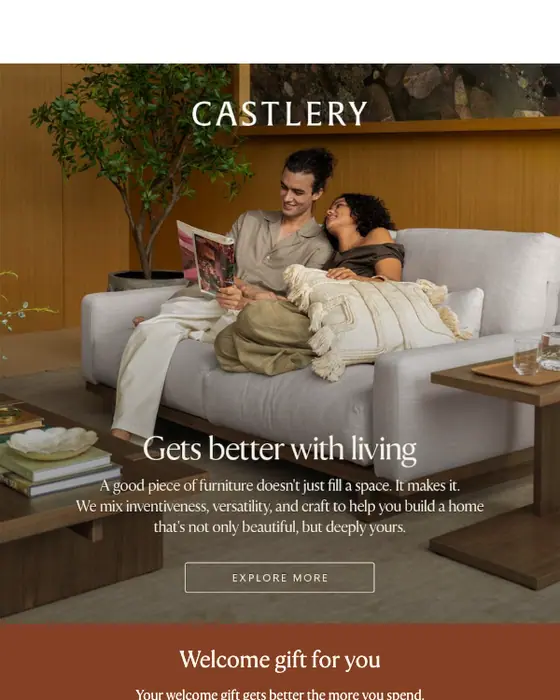
Castlery
Welcome to Castlery
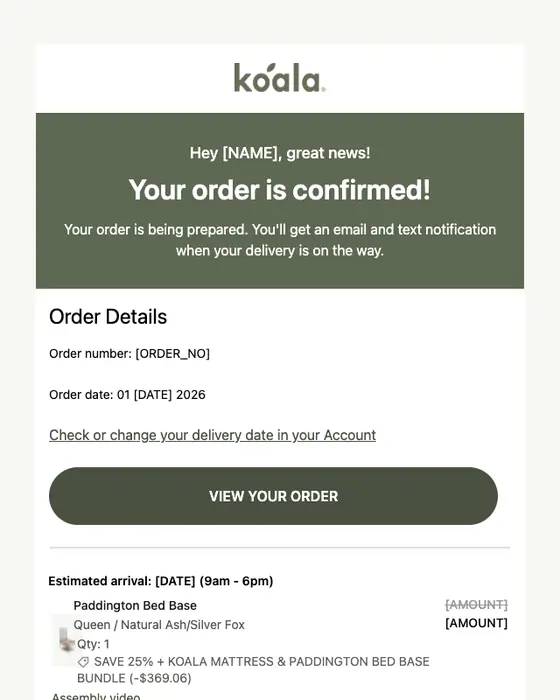
Koala AU
Order [REF] confirmed
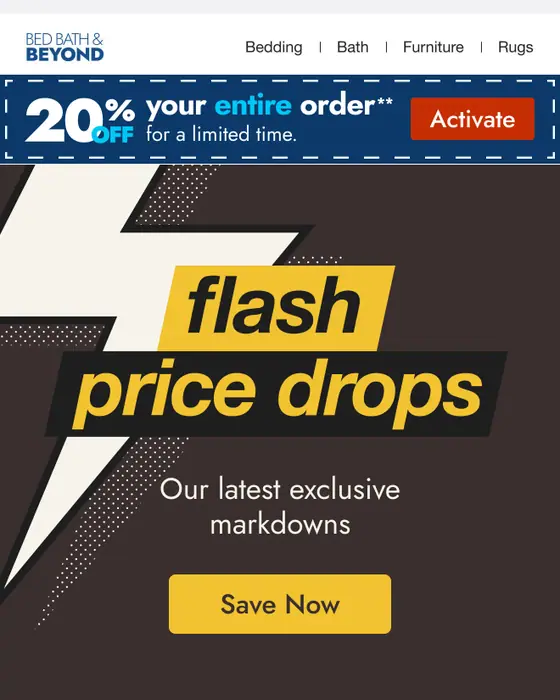
Bed Bath & Beyond
Flash Price Drops: Your Outdoor Oasis 🏝️
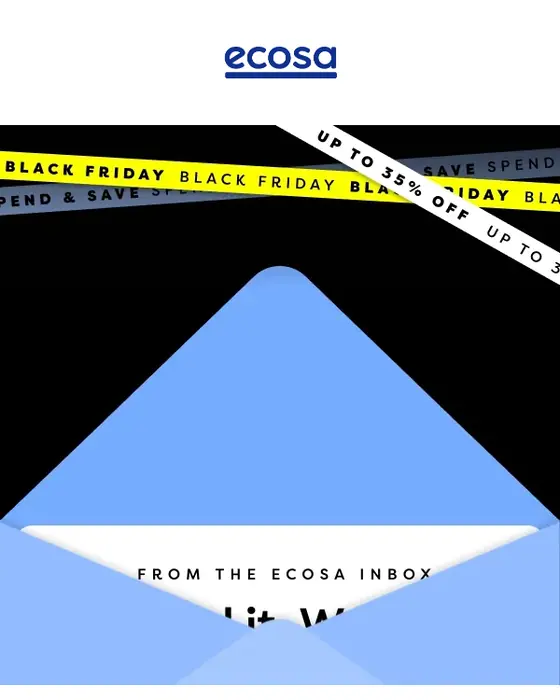
Ecosa
some emails don't need an intro
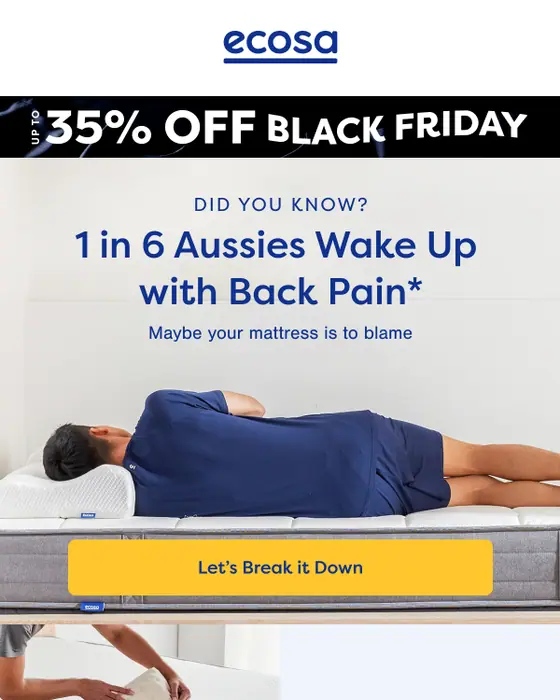
Ecosa
We prefer Back Friday (not a typo).
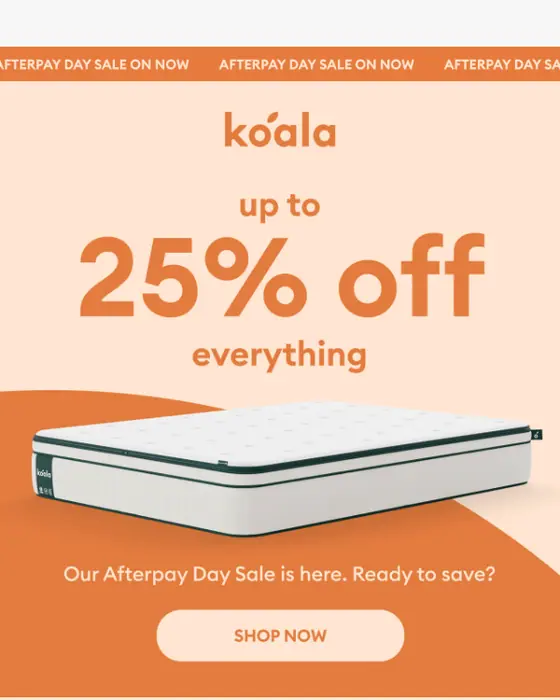
Koala
RE: Up to 25% off - Don’t miss out!
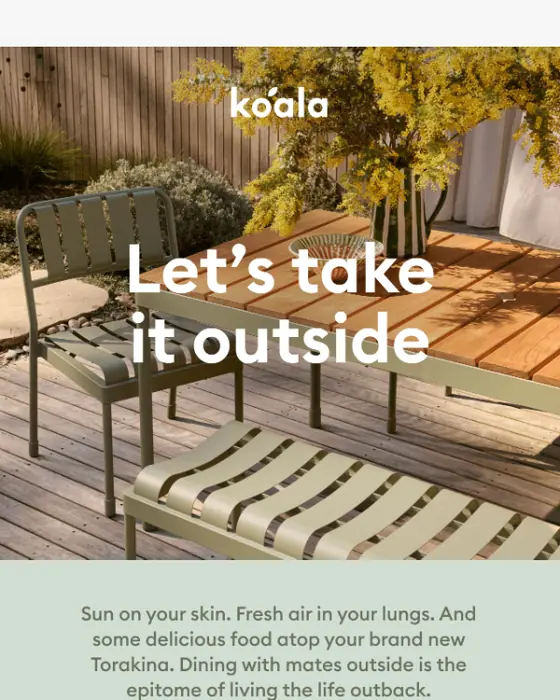
Koala
Wanna take this outside?
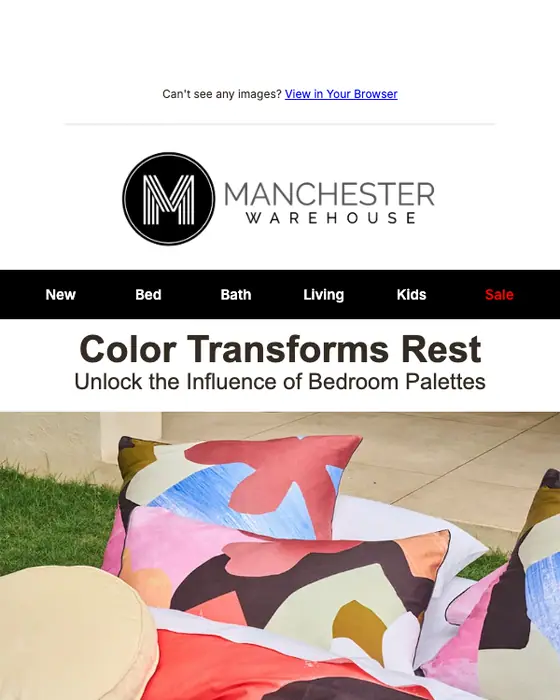
Manchester Warehouse
Unlock Serenity: The Power of Bedding Color
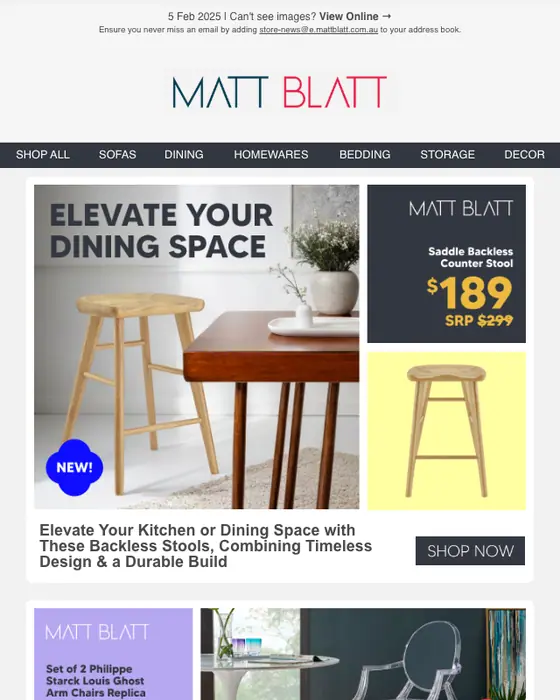
Matt Blatt
NEW 🔥 Matt Blatt Saddle Backless Counter Stool ONLY $189
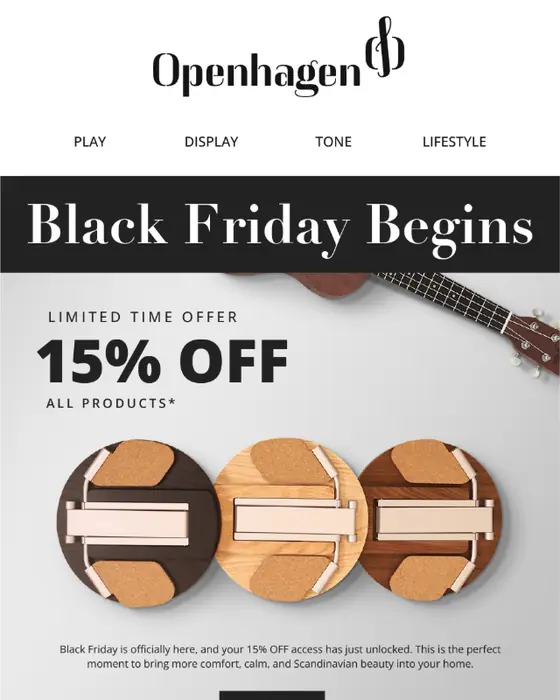
Openhagen
🎸This Black Friday choose décor designed for your guitar
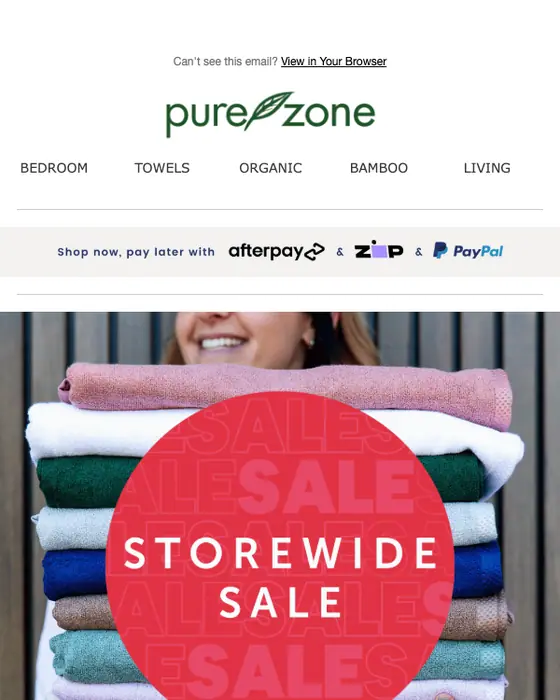
Pure Zone
Boxing Day SALE // Up to 70% OFF RRP Today
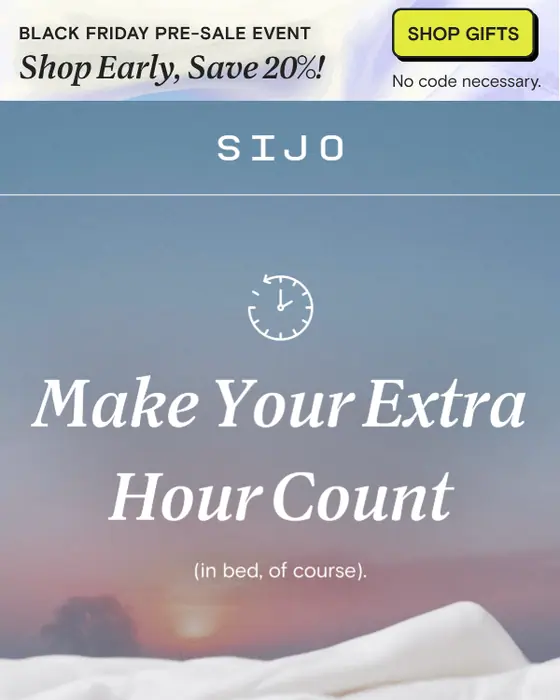
SIJO
⏰ Clocks fall back tomorrow + 20% OFF
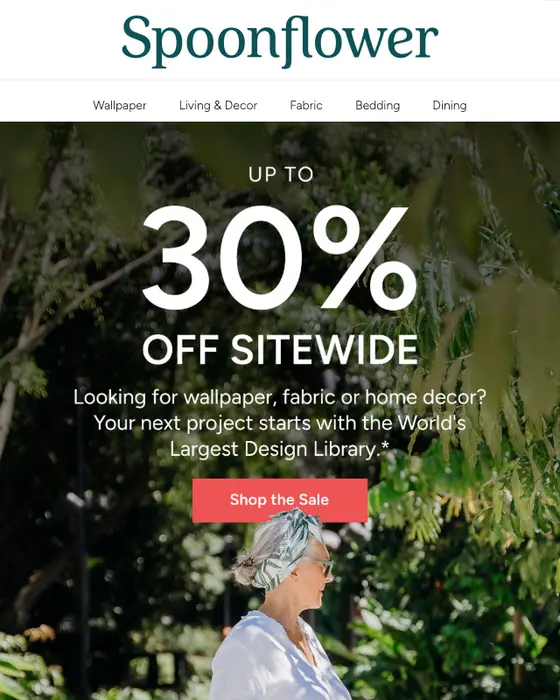
Spoonflower
Get up to 30% off everything
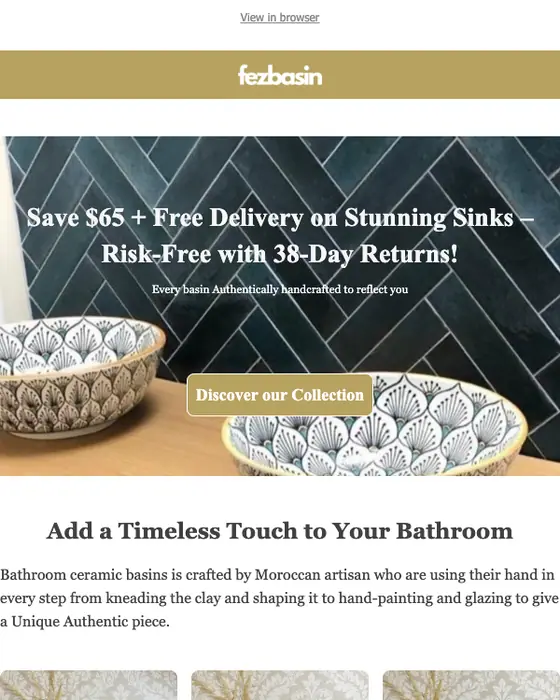
fezsink
Your Favorite Basin Style, Now With a Special Offer!
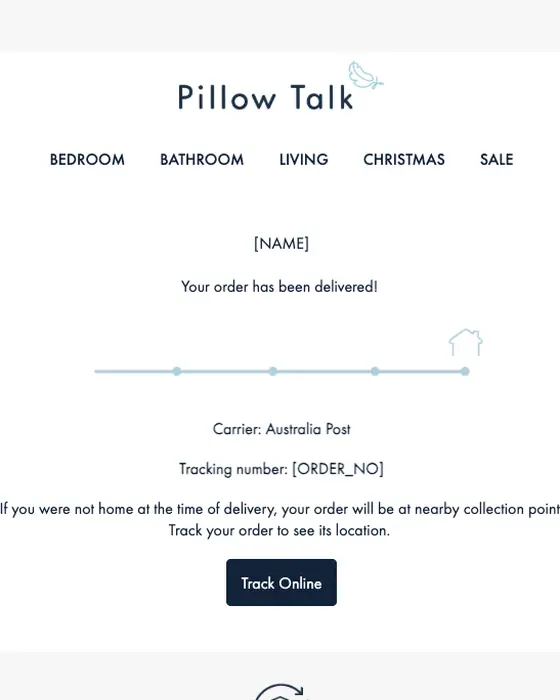
Pillow Talk
Your Pillow Talk order has been delivered - enjoy!
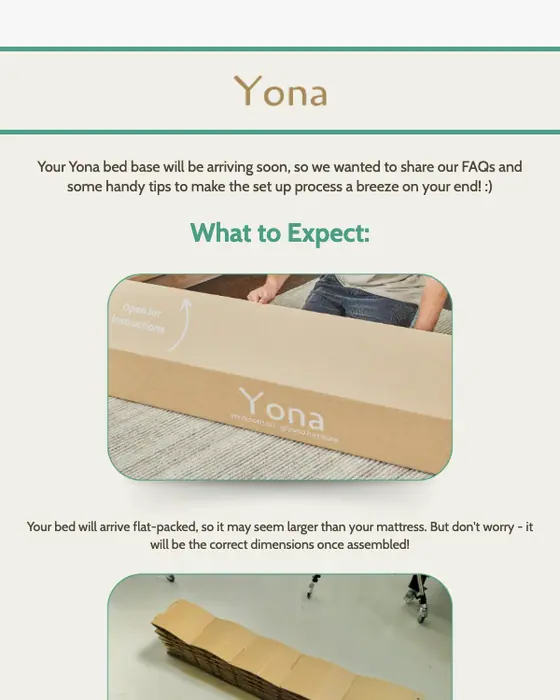
Yona
Got Questions? We've Got Answers!
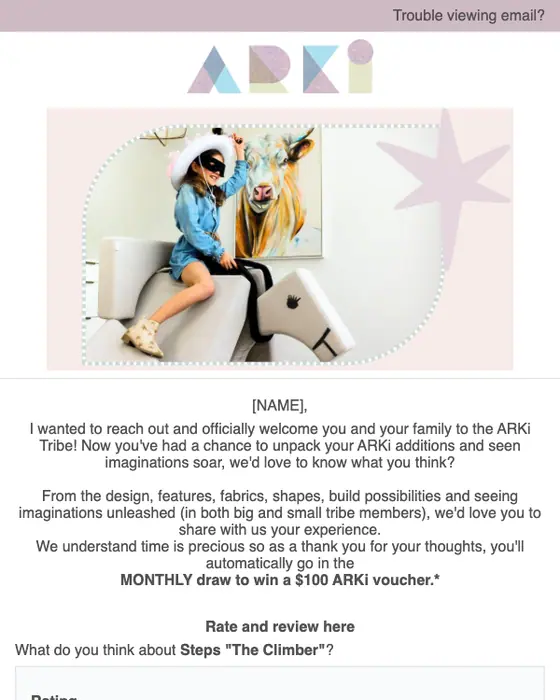
ARKi
Hi [NAME], We'd love to hear what you think about Steps "The Climber"
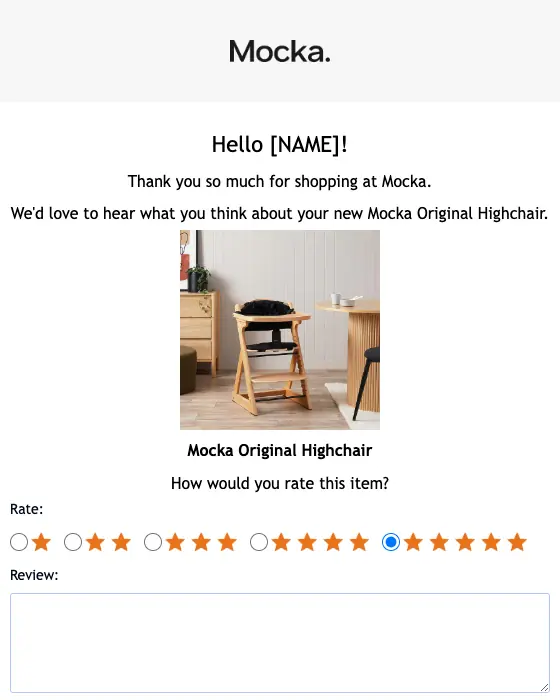
Mocka
Love it or Have Feedback? Let us know!
How home furniture email differs from everything else in the same inboxes
Home furniture email against every other email
188 home furniture emails and 12,114 other emails from the same two inboxes| What we measured | Home furniture (188) | Everything else (12,114) |
|---|---|---|
| Sale or discount offer | 21% | 6% |
| Promotional email | 22% | 23% |
| Order, shipping, delivery or invoice email | 20% | 17% |
| Survey or review request | 9% | 3% |
| Welcome email | 7% | 4% |
| Newsletter | 1% | 13% |
| Abandoned cart email | none | 1% |
| Sent to existing customers | 50% | 39% |
| Opens with a hero image | 42% | 12% |
| Shows a grid of products | 24% | 4% |
| Image heavy | 24% | 6% |
| Minimal design style | 40% | 19% |
| Plain-text layout | 22% | 32% |
| Subject line names a discount | 29% | 11% |
| Exactly one call to action | 42% | 30% |
| Greets the reader by first name | 32% | 39% |
| Tagged to Australia | 85% | 46% |
Home furniture email is more visual than the rest of the two inboxes. 42% open with a hero image against 12% of everything else, and 24% show a grid of products against 4%. Of the 27 industries with at least 50 emails in the set, home furniture has the highest share on both.
It is also more sale-led. 21% are sale or discount emails against 6% elsewhere, and 29% of subject lines name a discount against 11%. Those two shares are the highest of the same 27 industries as well.
After the order, these brands ask for feedback more often. 9% of the set is a survey or review request, about three times the 3% elsewhere. Newsletters are close to absent, at 2 of 188. No abandoned cart email has turned up in this set, against 68 from other industries in the same inboxes. A selection of those is on the abandoned cart page.
What is in the collected set
By type
all 188 home furniture emails collected| Type | Emails | Share of the set |
|---|---|---|
| Promotional | 42 emails | 22% of the set |
| Sale | 32 emails | 17% of the set |
| Survey or review request | 16 emails | 9% of the set |
| Shipping update | 15 emails | 8% of the set |
| Welcome | 14 emails | 7% of the set |
| Order confirmation | 13 emails | 7% of the set |
| Account notice | 8 emails | 4% of the set |
| Discount offer | 8 emails | 4% of the set |
| 18 other types | 40 emails | 21% of the set |
The five biggest senders
of 188 collected, and how many are shown| Sender | Collected | Shown here |
|---|---|---|
| Koala | 28 emails | 4 shown |
| IKEA | 20 emails | 0 shown |
| Pillow Talk | 10 emails | 1 shown |
| Mocka | 9 emails | 3 shown |
| Ecosa | 8 emails | 2 shown |
Of the 29 in the grid, 25 were sent in 2025 or 2026, 12 are promotional and 6 are sale emails. IKEA is the second biggest sender and has none in the grid, because the only two IKEA emails from this set rendered so far are one-time login codes.
76 of the 188 have been rendered for the library so far, and we left 47 of those off: 24 repeat sends of a template already shown, 14 that sell cookware, kitchen appliances, cleaning products, air purifiers, baby goods or pantry storage and not furniture, 3 bare login codes, 3 whose images no longer load, 2 that show personal details and 1 held back for a formatting fault in its subject line.
Next to this one
The same library, cut a different way: ecommerce and retail and fashion by industry, or by the job the email does: sale, promotional, welcome, product launch, abandoned cart, survey and shipping.
Questions about the collection
Mostly offers. Of the 188 home furniture emails we collected, 42 (22%) are promotional and 40 (21%) are sale or discount emails. Order confirmations, shipping and delivery updates and invoices make up another 20%, review and feedback requests 9% and welcome emails 7%. Only 2 are newsletters.
No. The 80/20 rule says about 80% of email should help and 20% should sell. Of the 188 home furniture emails collected here, 82 (44%) are promotions, sales or discount offers, against 29% of everything else in the same two inboxes. Furniture is one of the most sale-led sets in the library.
More visual. 42% open with a hero image, against 12% of other email in the same inboxes, and 24% show a grid of products, against 4%. 40% use a minimal design style, about double the 19% elsewhere. Plain-text layouts are less common, at 22% against 32%.
None of the 188 home furniture emails collected here is an abandoned cart email, so this page cannot show one. That describes what reached two inboxes, not what every furniture brand sends. The same inboxes hold 68 abandoned cart emails from other industries, 31 of them from ecommerce brands, and a selection is on the abandoned cart page.
76 of the 188 have been rendered for the library so far. We left 47 of those off: 24 repeat sends of a template already shown, 14 from brands that sell cookware, appliances, cleaning products or baby goods, and 9 with a login code, a broken image, personal details or a formatting fault. All 188 count in the percentages.