
What a professional services email is
A professional services email is any email a firm that sells expertise sends to its clients and prospects: law firms, accountants, recruiters, agencies, consultants and coaches inviting people to events, sending newsletters and offers, and handling client admin such as deadlines, onboarding and invoices.
We collected 834 of them from 358 brands out of two ordinary inboxes, sent between 2016 and 2026. Nothing here is a mockup. Showing 45 from 35 brands, 33 of them sent in 2023 or later. The first 20 in the grid are all from 2023 or later. What we left out, and why, is in the questions below.
Browse all 45 professional services emails
Tap a kind of firm to narrow the grid: legal, tax and accounting, recruiters and careers, marketing, design and digital agencies, or consultants and coaches. Open any email to see it full length, with its subject line, notes on what it is doing, and a prompt that rebuilds it.
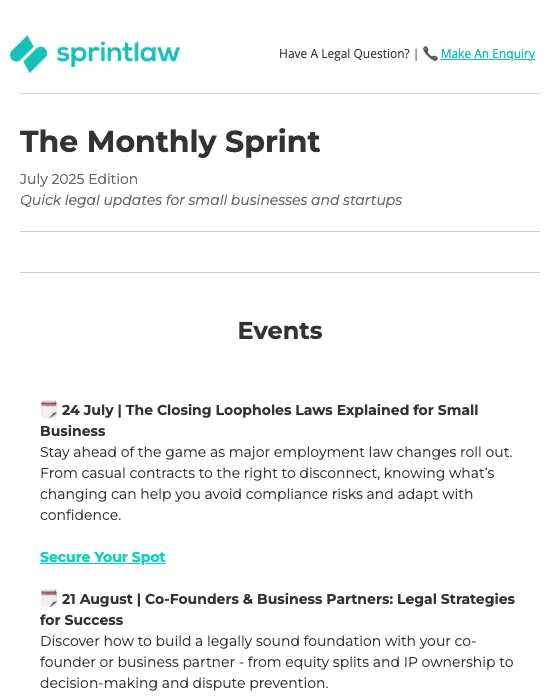
Sprintlaw
Last chance to register: Top 10 Legal Mistakes Business Owners Make
Inspire Accountants
Discover April With Inspire
Robert Walters
Mid-year career discussions start with data
TFX
🔒 Don’t risk penalties – tax deadline in 2 weeks
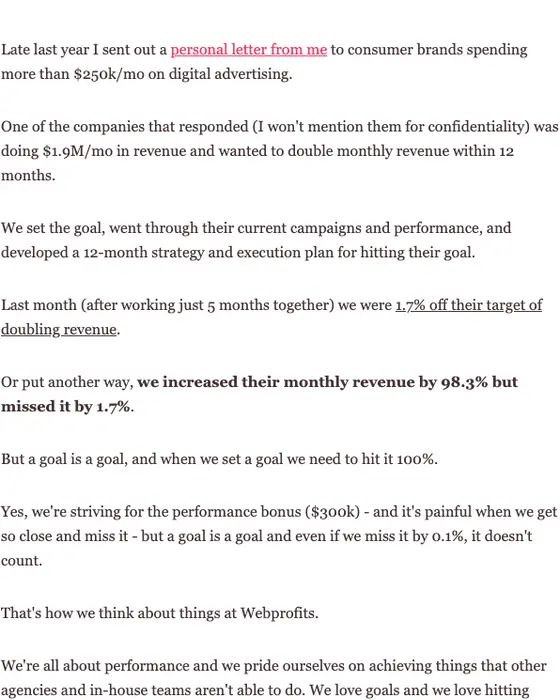
Webprofits
We missed the goal by 1.7%
Sprintlaw
Employment Law Mistakes You Didn’t Know You’re Making
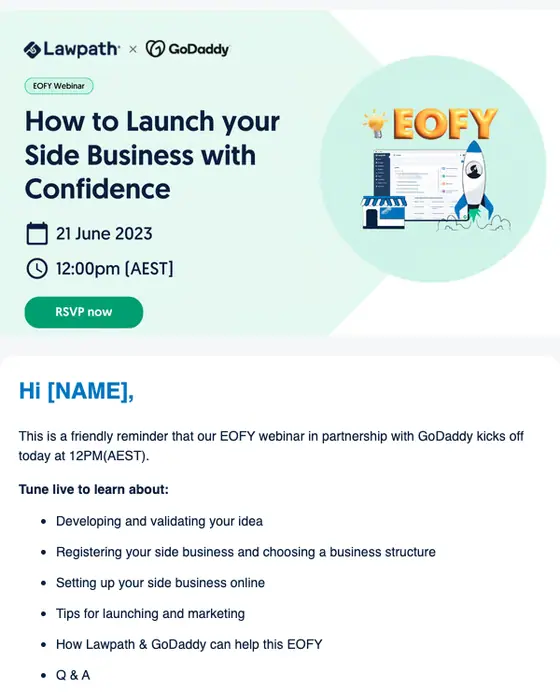
Lawpath
[Starting soon] Lawpath x GoDaddy EOFY Webinar
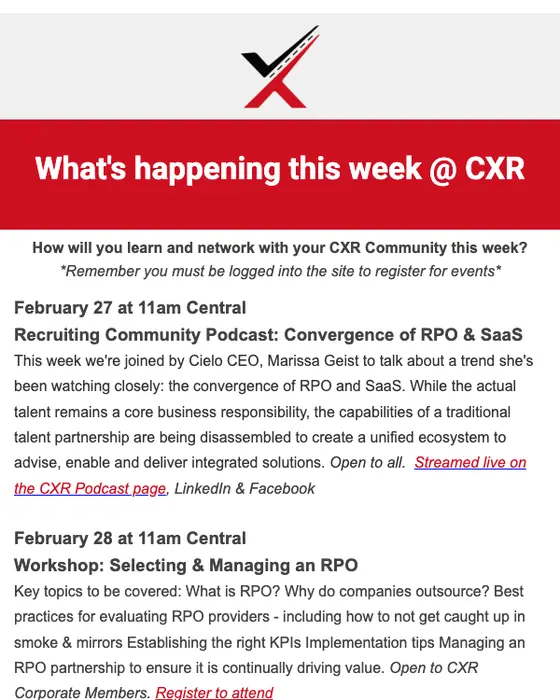
CXR
This week @ CXR | February 26📆
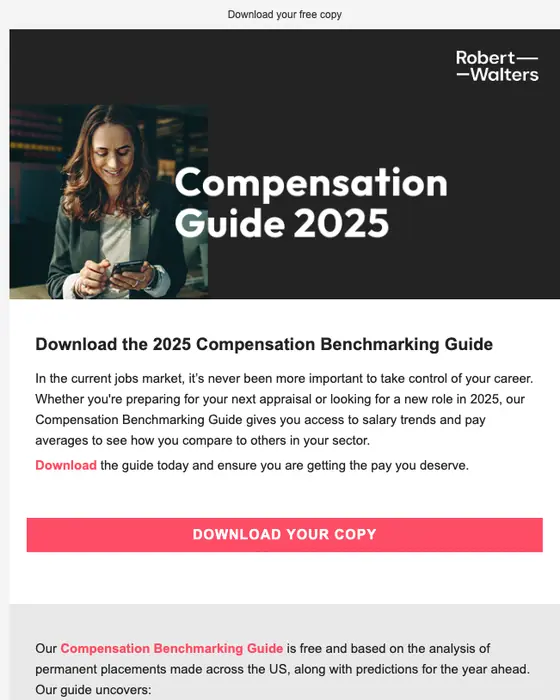
Robert Walters
Are you getting the pay you deserve? Download the free 2025 Compensation Benchmarking Guide
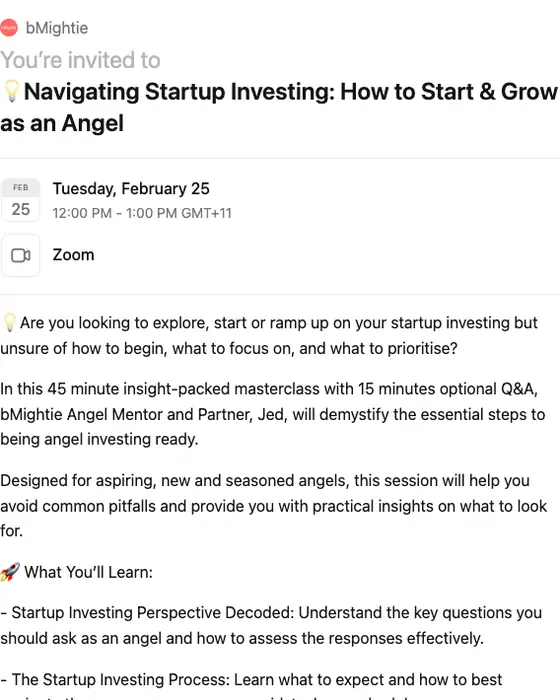
bMightie
You are invited to 💡Navigating Startup Investing: How to Start & Grow as an Angel
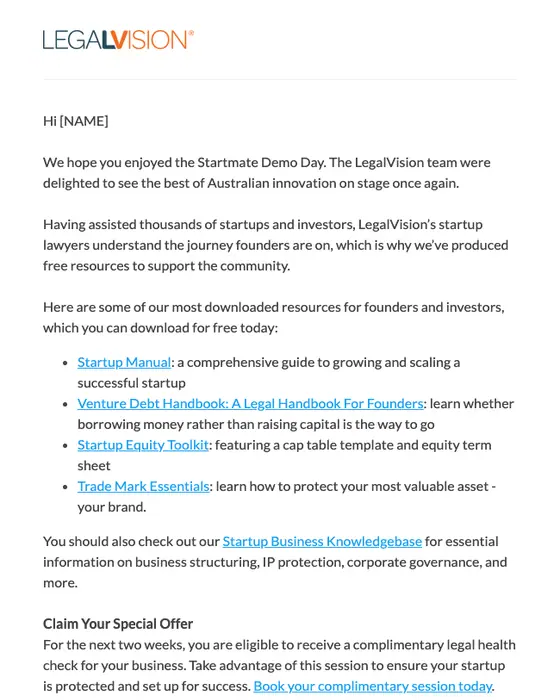
LegalVision
Your startup resources from LegalVision
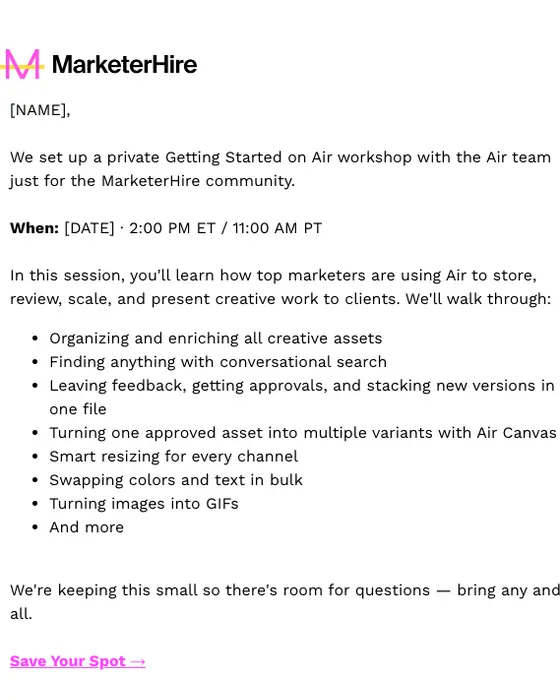
MarketerHire
You're invited: live Air Canvas workshop
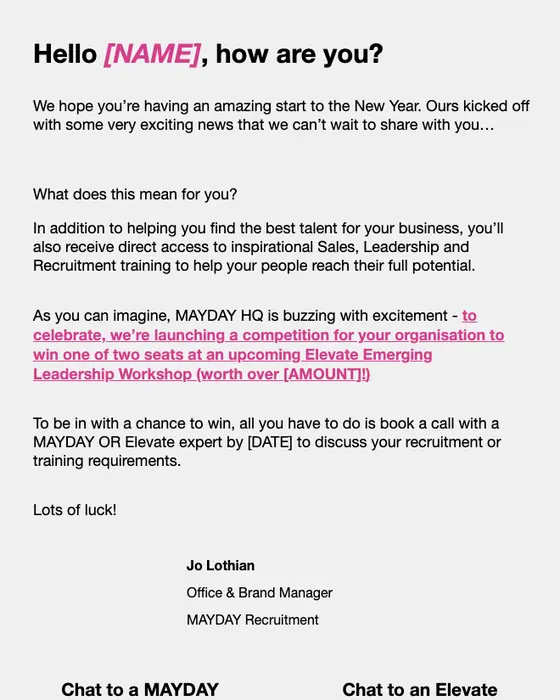
MAYDAY Recruitment Group
Heard the news [NAME]?
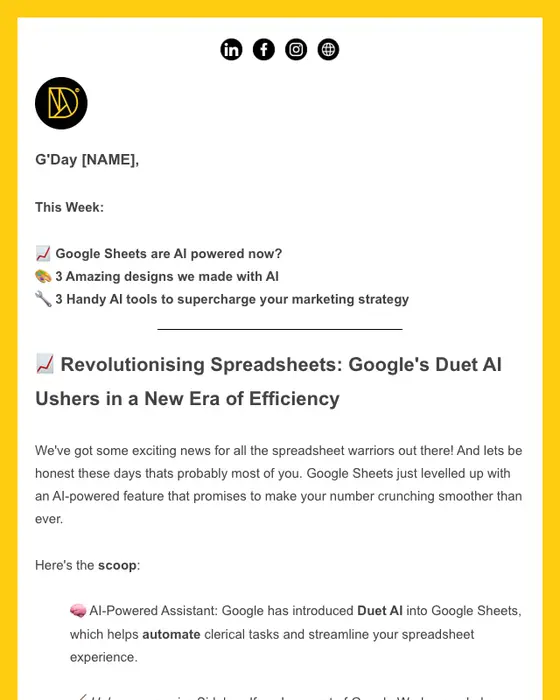
Sydney Digital Marketing
🌓 Marketing Matters by SDM™
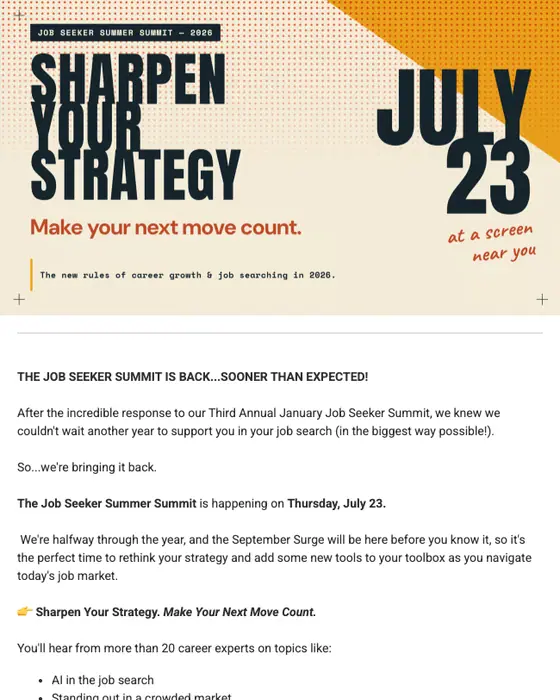
Career Benders
☀️ BIG NEWS: It’s back...
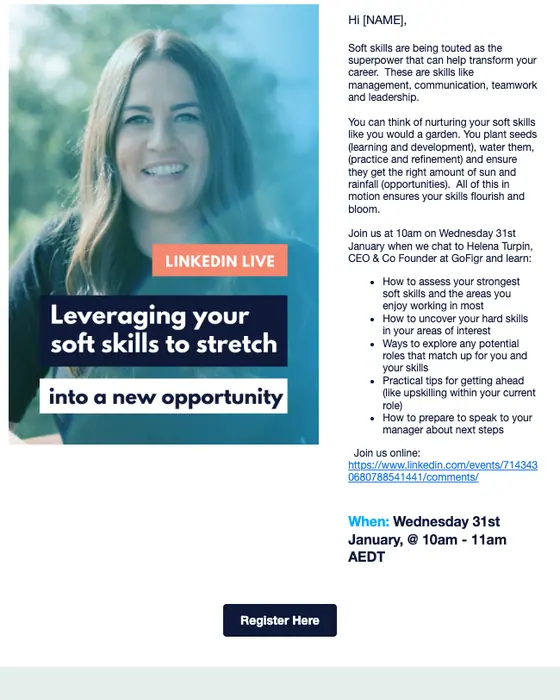
Talenza
[NAME], Looking for your next opportunity? Join us online.
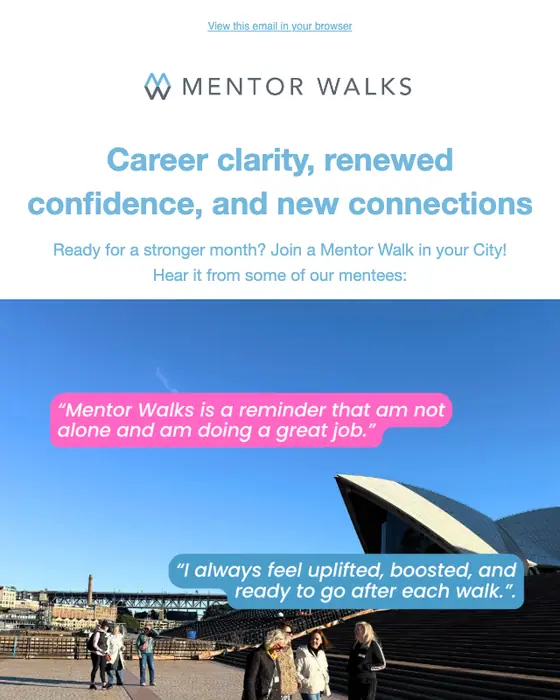
Mentor Walks
Walk with a mentor in your city this month 👟
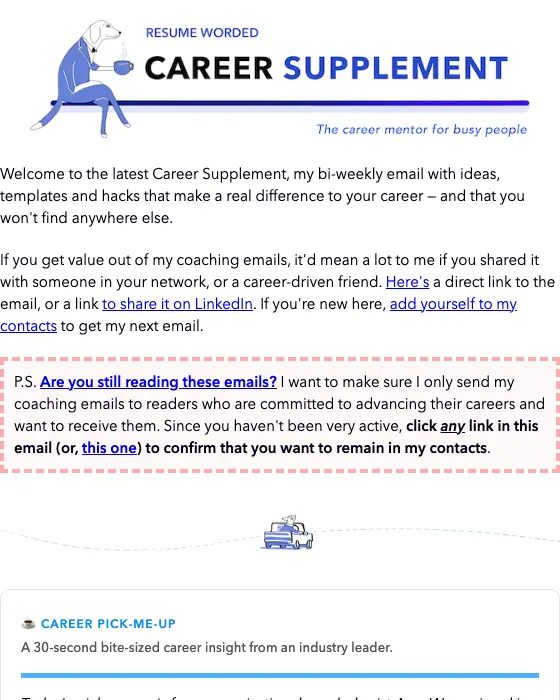
Career Supplement (by Resume Worded)
CS #188: Why you need to ask for what's yours + more

99designs by Vistaprint
Launching a new biz? Here are 6 helpful tips for branding on a budget

The Empowered Franchisee
Get the money to realize your dream
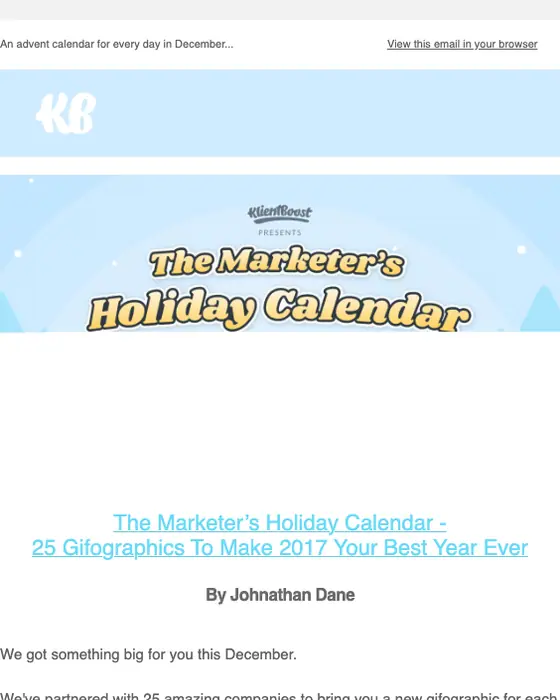
KlientBoost
We're going all out for the holidays, you're gonna like this 🎅🎄🎁
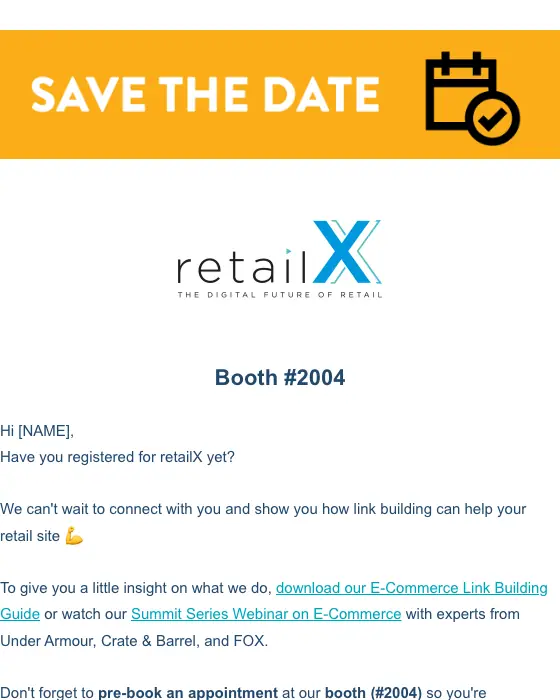
Page One Power
[NAME], t-minus 2 WEEKS until retailX! 😱
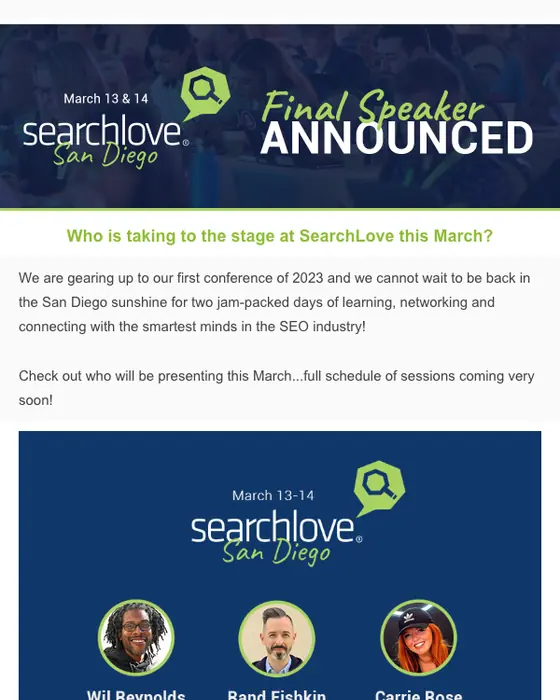
SearchLove
Speaker lineup announced! SearchLove San Diego 2023.
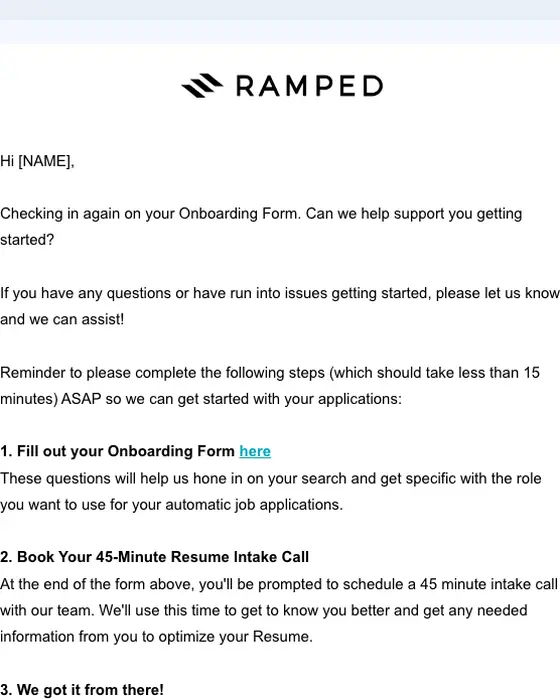
Ramped
REMINDER: Can we help you complete the Onboarding Form?
How professional services email differs, same two inboxes
Professional services email and all other email, same two inboxes
834 professional services emails, 11,877 other emails| What we measured | Professional services | All other email |
|---|---|---|
| Sent to a business audience | 64% | 16% |
| Plain-text layout | 56% | 30% |
| Text heavy | 85% | 59% |
| Instructional in tone | 56% | 36% |
| Greets the reader by first name | 53% | 39% |
| Aimed at winning a new client (acquisition stage) | 39% | 14% |
| Event or webinar invite | 17% | 5% |
| Newsletter | 21% | 11% |
| Invoice | 6% | 1% |
| Has a hero image | 2% | 13% |
| Asks for one thing only | 32% | 30% |
| Median calls to action | 2 | 2 |
Firms write to businesses: 64% of these emails go to a business audience, four times the 16% rate elsewhere. They look like letters more than campaigns: 56% use a plain-text layout against 30%, 85% are text heavy, and 2% open on a hero image against 13%. More of them greet the reader by first name, 53% against 39%.
What they send differs too. Event and webinar invites make up 17%, more than three times the 5% elsewhere, and newsletters 21% against 11%. 39% are aimed at winning a new client, against 14% of other email. The number of asks does not differ: the median email carries 2 calls to action in both sets, and about a third ask for one thing only.
What is in the set
By kind of firm
the 45 shown on this page, sorted by sender| Kind of firm | Emails | Share |
|---|---|---|
| Legal, tax and accounting | 7 emails | 16% of those shown |
| Recruiters and careers | 14 emails | 31% of those shown |
| Marketing, design and digital | 18 emails | 40% of those shown |
| Consultants and coaches | 6 emails | 13% of those shown |
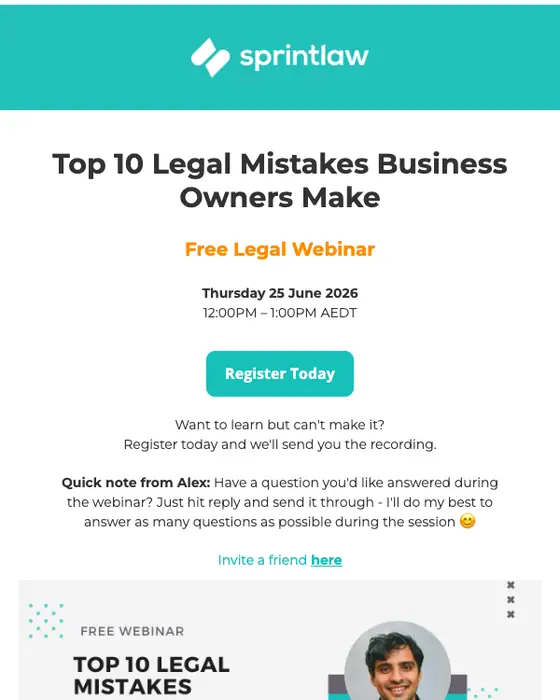
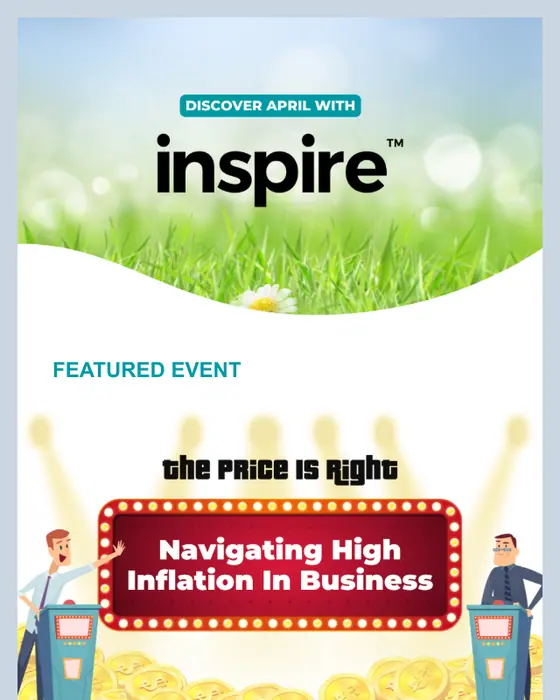
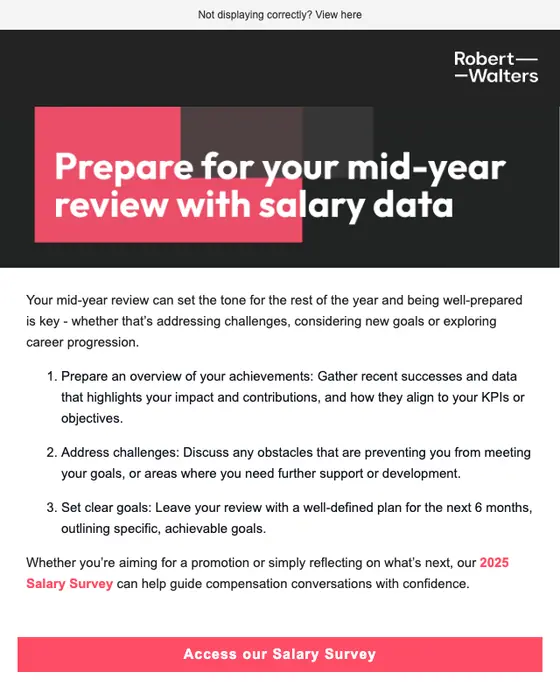
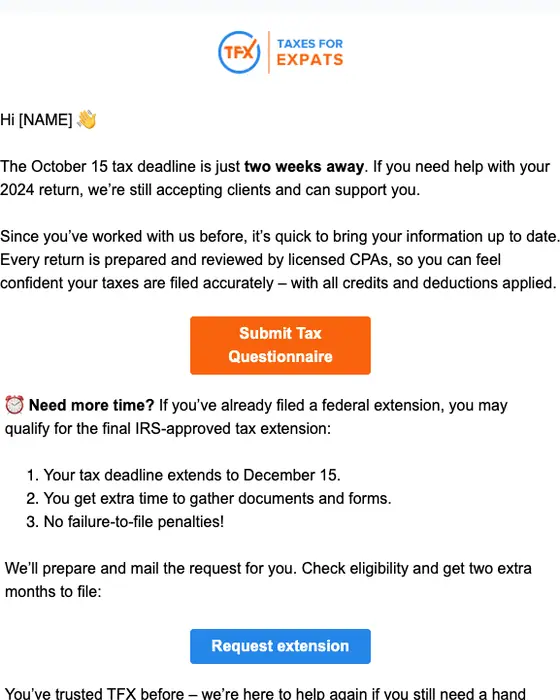
The five at the top show the range. Sprintlaw invites business owners to a free legal webinar on the top 10 legal mistakes, and offers the recording to anyone who registers but cannot attend. Inspire Accountants leads its April newsletter with a webinar on high inflation, then explains an ATO ruling on trust distributions and offers a free 20-minute call with an accountant. Robert Walters lists three steps to prepare for a mid-year review and points to its salary survey. TFX reminds past clients that the October 15 tax deadline is two weeks away, with one button for its tax questionnaire and one to request an extension. Webprofits sends a plain-text letter from its co-founder about a client that grew monthly revenue 98.3% and still missed its target by 1.7%.
By type
the six most common types among all 834 collected| Type | Emails | Share of the set |
|---|---|---|
| Promotional | 232 emails | 28% of the set |
| Newsletter | 178 emails | 21% of the set |
| Event invite | 105 emails | 13% of the set |
| Account notice | 54 emails | 6% of the set |
| Invoice | 50 emails | 6% of the set |
| Webinar | 39 emails | 5% of the set |
Each type has its own page across every industry: event invite examples, webinar email examples and invoice email examples.
If you came for a client email
Search results for this topic are mostly one-to-one templates: a project status update, a follow-up, a note to a single client. This library holds emails firms send to a list, so it has no letters to one person. The closest sends to a client in the set are these four.
- TFX deadline reminder tells past clients the October 15 tax deadline is two weeks away, with one button for its tax questionnaire and one to request an extension.
- Ramped onboarding reminder chases a new client for an unfinished form, lists the three steps still to do, asks them to book a 45-minute intake call and ends on one button.
- Safewill welcome is a plain-text note from the co-founder after sign-up that explains why the firm exists and offers help by reply or live chat.
- Inspire Accountants newsletter explains an ATO ruling on trust distributions and offers a free 20-minute call with an accountant.
Next to this one
The same library, cut a different way: professional services newsletters, B2B emails, plain-text emails, and emails from finance and SaaS companies.
Questions about professional services emails
A legal webinar invite (Sprintlaw), an accountancy newsletter (Inspire Accountants), a tax-deadline reminder (TFX) and a salary-survey offer from a recruiter (Robert Walters). Of the 834 professional services emails we collected, 28% are promotions, 21% newsletters and 13% event invites. These are sends to a list, not letters to one client.
Many are. 56% of the 834 we collected use a plain-text layout, against 30% of all other email in the same two inboxes. 85% are text heavy and only 2% open on a hero image, against 13% elsewhere. On this page, 9 of the 45 shown are plain text.
Often. 17% of the professional services emails we collected are event invites or webinar invites, against 5% of all other email. On this page, 12 of the 45 shown are event invites and 2 are webinars, among them two legal webinars, a recruiter's leadership workshop, a conference in San Diego and a book launch.
Only 121 of the 834 have been published as images in this library so far. We took 76 of those off this page: repeats of a template the same brand already has here, senders that are not professional services firms, weak sends, and 18 that show a person's details or render badly. The percentages still describe all 834.
Send one like it
Simple pricing. Unlimited contacts.
Every plan includes full stack emailing: Flows, Newsletter Campaigns and Transactional Email, plus our NitroWheel LLM and all agent integrations (Claude, ChatGPT, Codex, Cursor and others). Pay for what you send, not who you store.
- Emails 8,000then 500/mo
- Email types Transactional & Marketing
- AI actions 20/mo
- Contacts Free & Unlimited
- Brands 3 · Custom domain 1
- Seats 1
- Recipients / rolling 24h 100–5,000
- Email validation Prepaid only
- Emails 20,000/month
- NitroWheel LLM Included
- Brands 5 · Domains 3
- AI actions 1,000/mo
- Contacts Free & Unlimited
- BYO sending and AI keys Yes
- Seats 3
- Recipients / rolling 24h 1,000–100,000
- Email validation Prepaid only
- Emails 125,000/month
- AI actions 5,000/mo
- Brands 10 · Domains 10
- Seats 10
- Frontier AI Included
- Dedicated IP Available
- Recipients / rolling 24h 1,000–625,000
- Email validation Prepaid only
- AI actions Unlimited
- Unlimited brands & domains Included
- SSO / SAML Included
- 99.9% SLA Included
- Recipients / rolling 24h Contracted
- Email validation Prepaid only
Daily allowances depend on your plan and sender standing. Strong list, domain and delivery evidence can raise standing, including on day one. Trusted receives the full plan allowance; available email credits, safety checks and delivery pacing still apply.
Free forever. No credit card required. See full comparison →