
What a SaaS product launch email is
A SaaS product launch email tells people a software product has something new: a feature, a major version, an integration, or a whole new product.
We collected 225 of them from 143 SaaS brands out of two ordinary inboxes, sent between 2016 and 2026. Nothing here is a mockup. This page shows 31 from 30 brands. Only 44 of the 225 have been published as images so far, and we left off 13 of those, mostly repeats of a brand’s template. 29 of the 31 shown were sent in 2023 or later.
Most of them go to people who already use the product: 90% were sent to activate or keep existing users, against 69% of all product launch emails we collected.
Browse all 31 SaaS product launch emails
Tap what the email launches to narrow the grid: a new feature, a major version, an integration or API, several updates at once, or a new product. Open any email to see it full length, with its subject line, notes on what it is doing, and a prompt that rebuilds it.
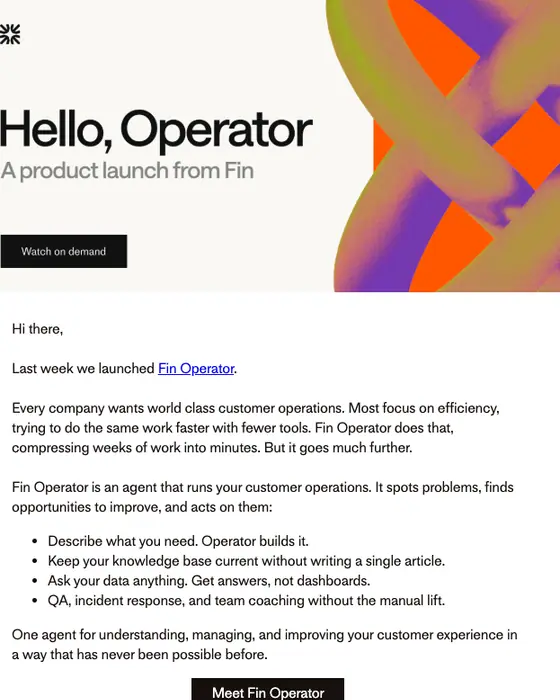
Fin
Hello, Operator
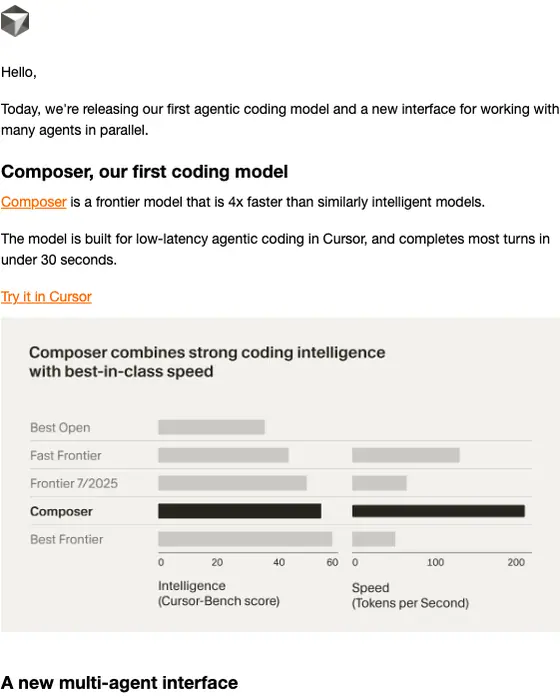
Cursor Team
Introducing Cursor 2.0 and Composer
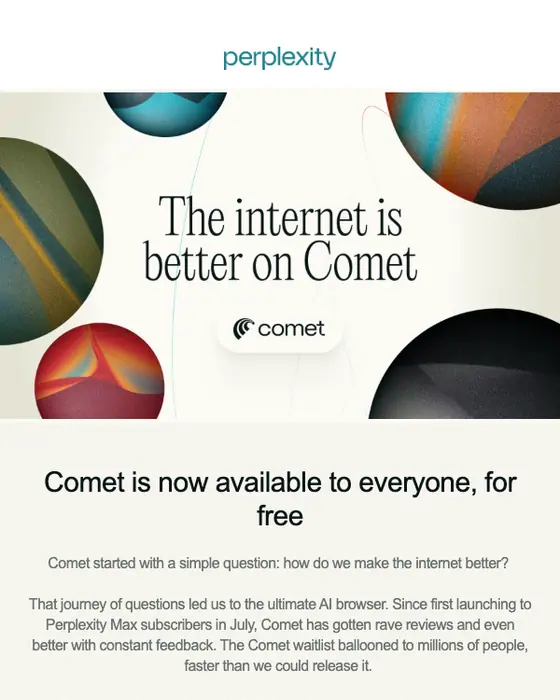
Perplexity
Comet is now available to everyone
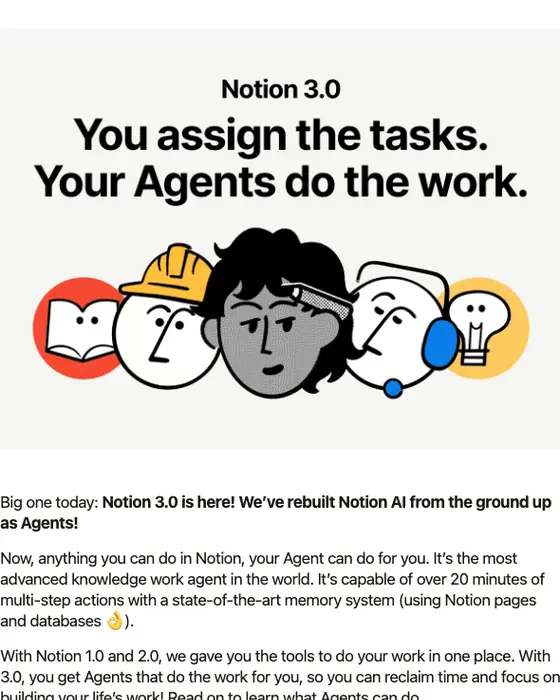
Notion
Notion 3.0: Agents
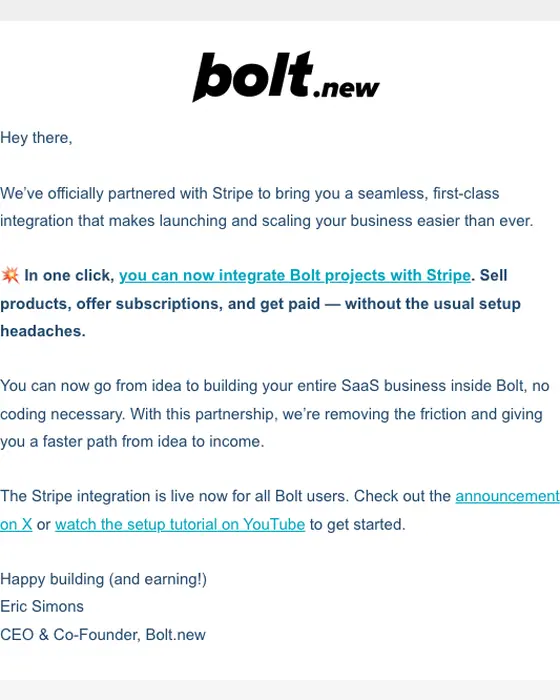
Bolt.new
Bolt + Stripe is live 💥
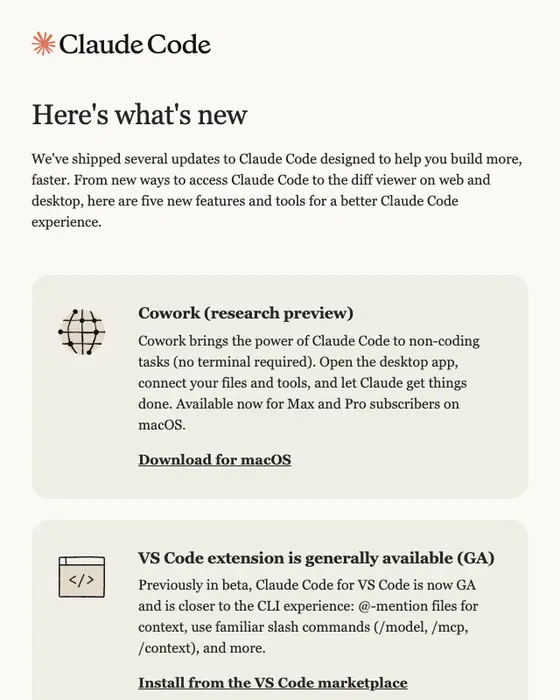
Claude Team
New in Claude Code: Cowork, diff viewer, and more
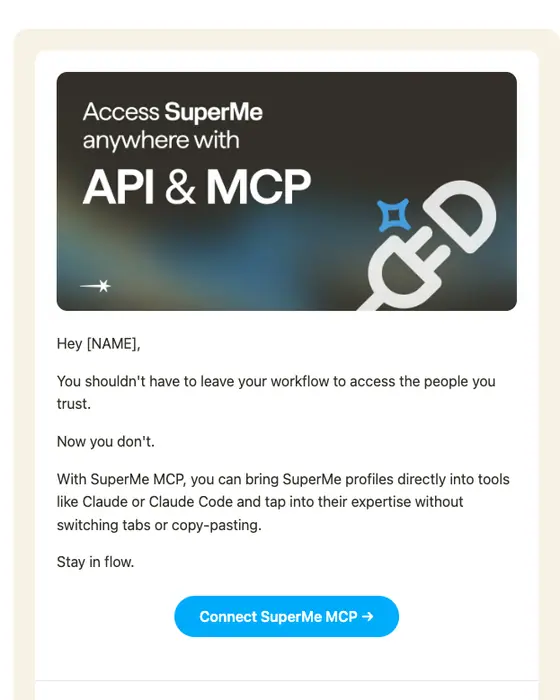
SuperMe
Access SuperMe Anywhere with Our MCP & API
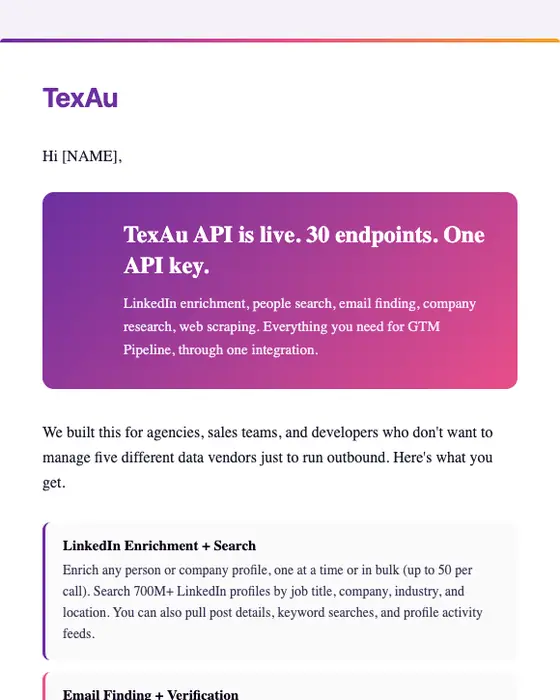
TexAu
TexAu API is live: 30 endpoints, 1 key
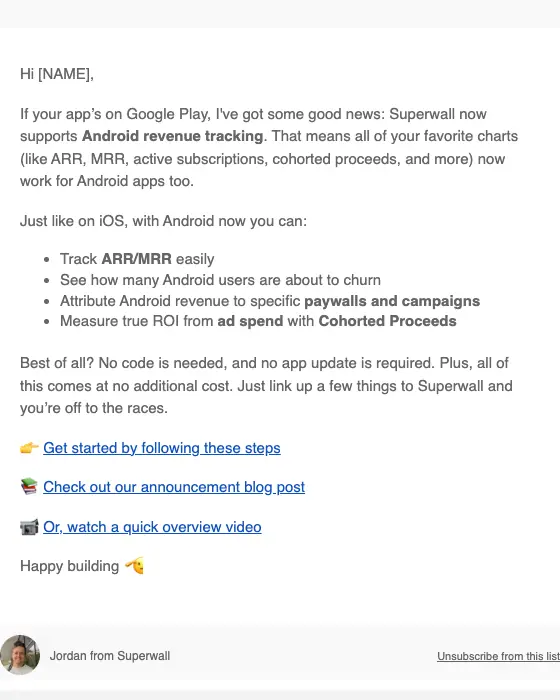
Superwall
📢 Android Revenue Tracking Has Arrived
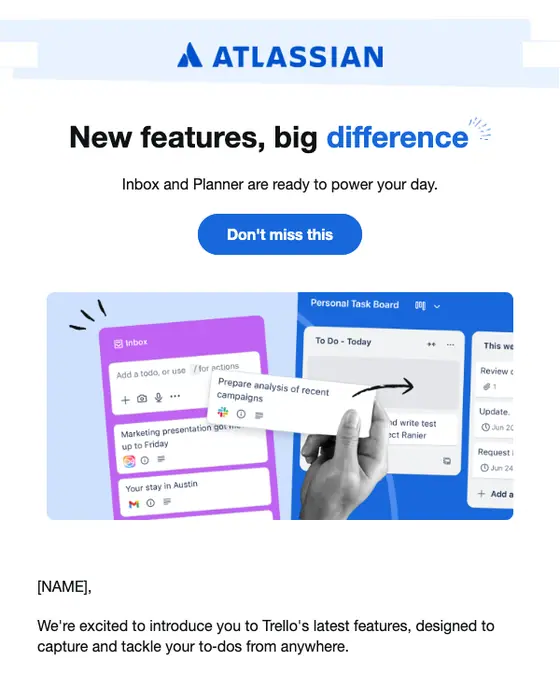
Trello
Trello just got better ✨
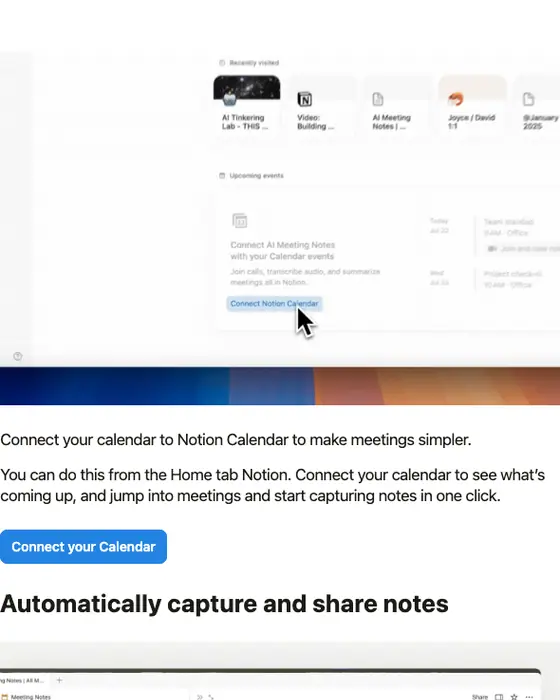
Notion
Connect your calendar with AI Meeting Notes
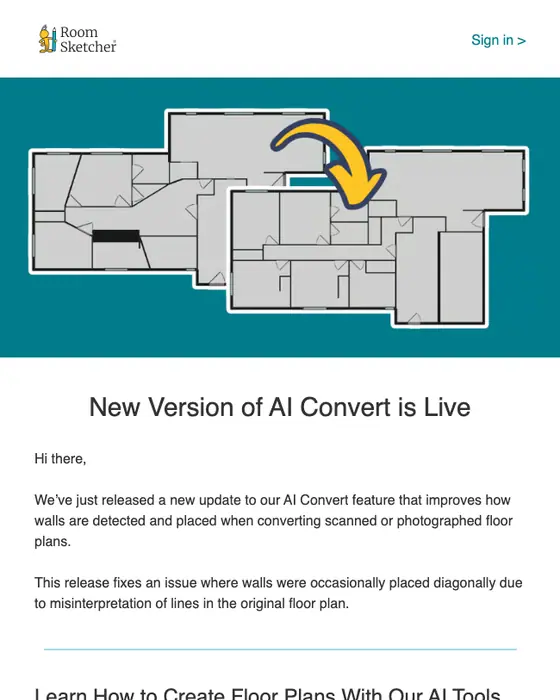
RoomSketcher
New AI Convert Update
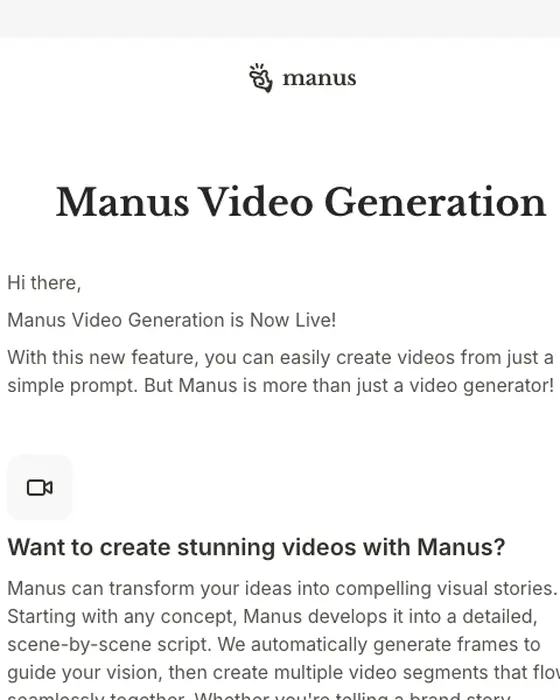
Manus
Unlock stunning videos with Manus!
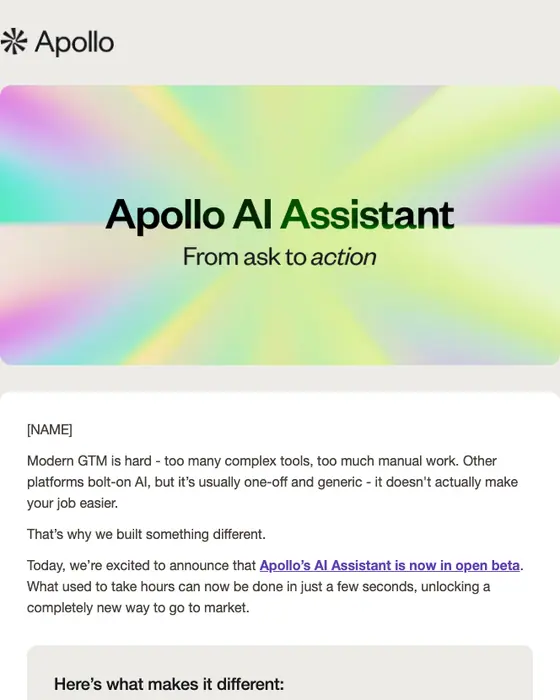
Apollo
The GTM AI Assistant that actually works
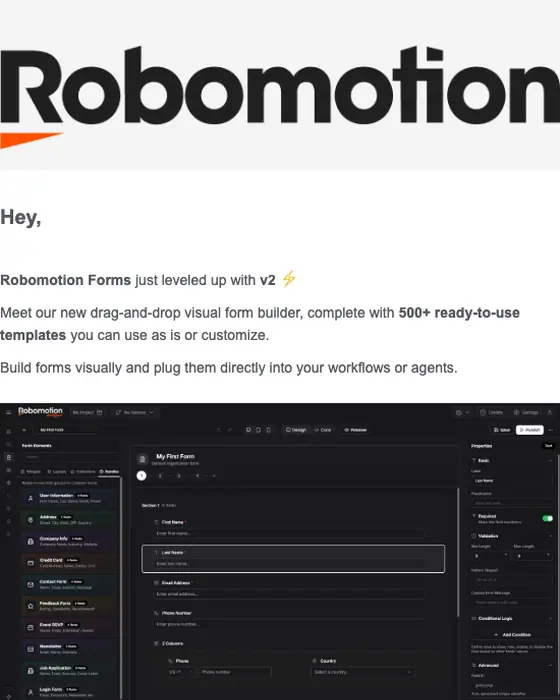
Robomotion
🚨 Meet the new Robomotion Forms
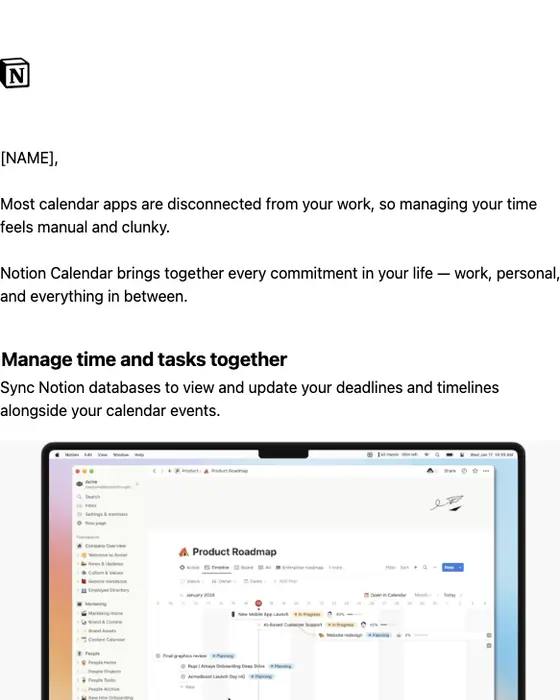
Notion Calendar
Manage time and work together with Notion Calendar
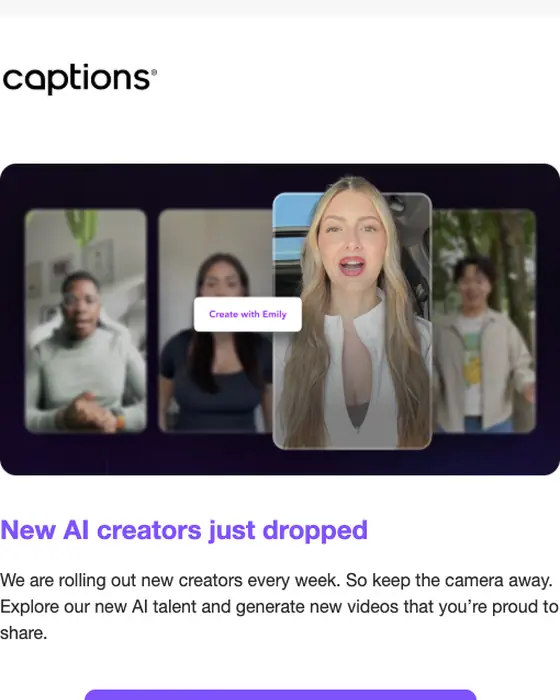
Captions
NEW AI avatars dropped 👀
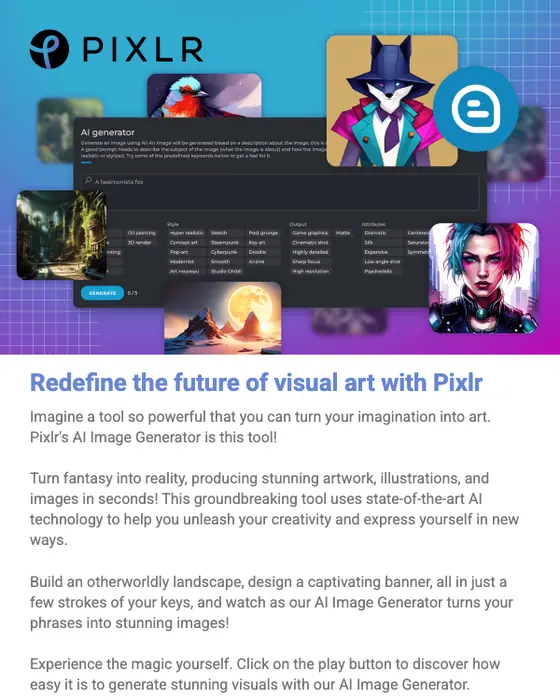
Pixlr
Generate unique images in seconds with Pixlr’s AI Image Generator
Hume
Try Octave 2 (preview) - multilingual hyper-realistic text-to-speech
WordAi
Article Forge 4.5 is HERE! + Free Gift 🎁

Tripo AI
🚀 Major Upgrade Is Live + Limited-Time Holiday Rewards 🎁
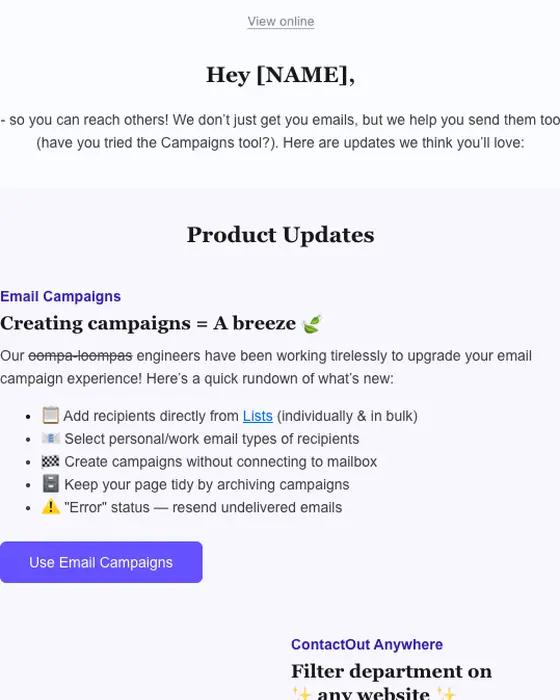
ContactOut
Reaching your inbox 🫴 -
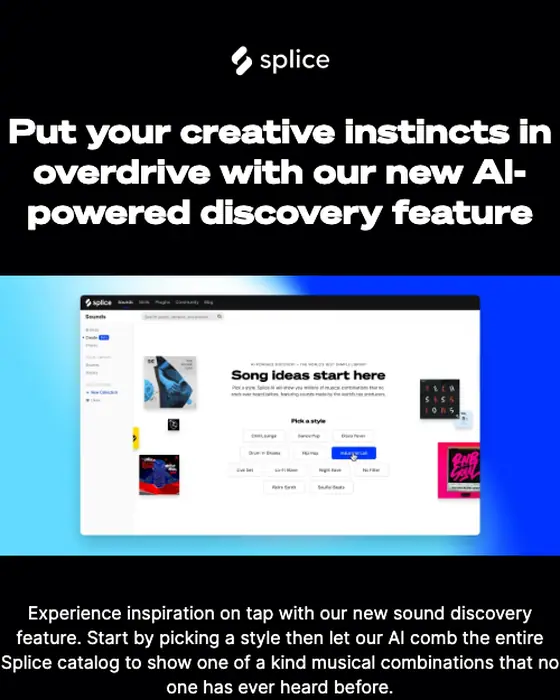
Splice
Create musical ideas faster than ever with Splice AI
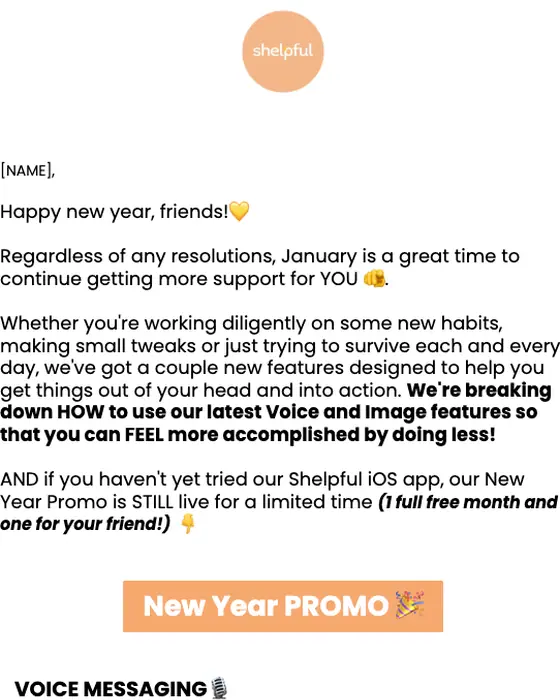
Shelpful
Discover Shelpful's new Voice & Image features
How SaaS launches differ from other product launches, same two inboxes
SaaS product launches, all product launches and all email, same two inboxes
225 SaaS launch emails, 484 product launch emails, 12,711 emails| What we measured | SaaS launch | All product launches | All email |
|---|---|---|---|
| Sent to existing users (activation or retention) | 90% | 69% | 44% |
| Sent to a business audience | 57% | 31% | 19% |
| Instructional in tone | 75% | 53% | 37% |
| Has a hero image | 13% | 31% | 12% |
| Text heavy | 53% | 42% | 60% |
| Greets the reader by first name | 28% | 17% | 40% |
| Descriptive subject line | 75% | 71% | 31% |
| Subject line leads with an emoji | 9% | 11% | 5% |
| Asks for one thing only | 35% | 36% | 30% |
| Median calls to action | 2 | 2 | 2 |
| Short or very short | 50% | 54% | 53% |
| Plain-text layout | 22% | 18% | 32% |
A SaaS launch is written for someone already inside the product. 90% go to existing users, against 69% of all product launches, and 57% go to a business audience, against 31%. They explain more than they show: 75% are instructional in tone, against 53%, and only 13% open on a hero image, against 31% of all product launches.
Two things barely move. The median launch of any kind carries 2 calls to action, and about a third ask for one thing only. Subject lines are plain everywhere: 75% of SaaS launches describe what is new, close to the 71% of all launches.
What is in the set
By what the email launches
the 31 shown on this page, sorted by hand| What it launches | Emails | Share |
|---|---|---|
| A new feature | 12 emails | 39% of those shown |
| A major version | 7 emails | 23% of those shown |
| An integration or API | 5 emails | 16% of those shown |
| Several updates in one send | 4 emails | 13% of those shown |
| A new product | 3 emails | 10% of those shown |
We read each of the 31 and sorted it by what it launches. A single new feature is the most common: Superwall announces Android revenue tracking in a plain-text note with three links. Major versions come next, from Cursor 2.0, which carries a chart of intelligence against speed for its new coding model, to Notion 3.0, which opens on a large illustration. Bolt’s Stripe integration arrives as a short letter from its CEO with no hero image, and Fin launched Operator with a letter from its chief product officer a week after launch day.
By length
all 225 SaaS launch emails collected| Length | Emails | Share of the set |
|---|---|---|
| Short | 97 emails | 43% of the set |
| Medium | 86 emails | 38% of the set |
| Long | 26 emails | 12% of the set |
| Very short | 16 emails | 7% of the set |
Short and medium cover four in five, and only 12% run long.
Next to this one
The same library, cut a different way: all product launch emails, every SaaS email, SaaS newsletters, which carry product updates too, SaaS welcome emails, activation emails and B2B emails.
Questions about SaaS product launch emails
Going by what SaaS companies actually send: name the new thing in the subject line and keep it short. 75% of the 225 SaaS launch emails we collected use a plain descriptive subject, half are short or very short, and the median carries 2 calls to action. Only 13% carry a hero image.
The one that says what launched. Three in four SaaS launches we collected do exactly that, like “Introducing Cursor 2.0 and Composer” or “Notion 3.0: Agents”. Only 9% lead with an emoji and 5% try for curiosity. A feature name or version number does the work.
Four on this page bundle several updates into one send. Claude Code’s “New in Claude Code: Cowork, diff viewer, and more” gives each update its own card and link, and Descript’s “New in Descript: Multicam support, plus a lot more” leads with multicam. Tap “Several updates” above the grid to see all four.
Mostly people who already use the product. 90% of the SaaS launches we collected were sent to activate or keep existing users, against 69% of product launches overall, and 57% went to a business audience. Only 9% were written to win new sign-ups.
Only 44 of the 225 have been published as images so far, and 13 of those came off this page: repeats of a brand's template, one broken render, one with named demo contacts, a funding announcement, a personal post and our own launch email. The comparison and length figures cover all 225; the launch-kind split covers the 31 shown.
Send one like it
Simple pricing. Unlimited contacts.
Every plan includes full stack emailing: Flows, Newsletter Campaigns and Transactional Email, plus our NitroWheel LLM and all agent integrations (Claude, ChatGPT, Codex, Cursor and others). Pay for what you send, not who you store.
- Emails 8,000then 500/mo
- Email types Transactional & Marketing
- AI actions 20/mo
- Contacts Free & Unlimited
- Brands 3 · Custom domain 1
- Seats 1
- Recipients / rolling 24h 100–5,000
- Email validation Prepaid only
- Emails 20,000/month
- NitroWheel LLM Included
- Brands 5 · Domains 3
- AI actions 1,000/mo
- Contacts Free & Unlimited
- BYO sending and AI keys Yes
- Seats 3
- Recipients / rolling 24h 1,000–100,000
- Email validation Prepaid only
- Emails 125,000/month
- AI actions 5,000/mo
- Brands 10 · Domains 10
- Seats 10
- Frontier AI Included
- Dedicated IP Available
- Recipients / rolling 24h 1,000–625,000
- Email validation Prepaid only
- AI actions Unlimited
- Unlimited brands & domains Included
- SSO / SAML Included
- 99.9% SLA Included
- Recipients / rolling 24h Contracted
- Email validation Prepaid only
Daily allowances depend on your plan and sender standing. Strong list, domain and delivery evidence can raise standing, including on day one. Trusted receives the full plan allowance; available email credits, safety checks and delivery pacing still apply.
Free forever. No credit card required. See full comparison →