
What an acquisition email is
An acquisition email is one a business sends to someone who has not bought or signed up yet, to win that first purchase, sign-up or booking: a first-order offer, a launch, an event invite or a webinar.
We collected 1,932 of them from 1,056 brands in two ordinary inboxes, sent between 2016 and 2026, and show 278 here. The percentages on this page describe all 1,932.
Browse 278 acquisition emails
Filter by type, or search a brand or subject line. Open any email to see it full length, with its subject line, notes on what it is doing, and a prompt that rebuilds it, so any of them can serve as a template.
How acquisition email differs from everything else in the same inboxes
Acquisition email against every other email
1,932 acquisition and 10,779 other emails| What we measured | Acquisition | Everything else |
|---|---|---|
| Promotional emails | 57% | 16% |
| Event invites | 15% | 2% |
| Webinar invites | 7% | 1% |
| Sent to a business audience | 40% | 15% |
| Subject line says what is inside | 44% | 29% |
| Subject line leads with a discount | 16% | 10% |
| Subject line teases instead of telling | 11% | 5% |
| Urgent tone | 20% | 11% |
| Greets the reader by first name | 32% | 42% |
| Opens with a hero image | 18% | 11% |
| Plain-text layout | 36% | 31% |
| Exactly one call to action | 35% | 29% |
| Median calls to action | 2 | 2 |
Acquisition email sells and invites. 57% are promotional, against 16% of everything else, and event and webinar invites together make up 23%, against 3%. 40% go to a business audience, against 15% of other email, and SaaS and professional services firms send 40% of the set.
The subject lines are plainer and lean harder on discounts. 44% say plainly what is inside, against 29%, 16% lead with a discount and 11% tease, both higher than the rest of the inbox. Personal touches go the other way: 32% greet the reader by first name, against 42% of other email.
The audience decides the layout. 48% of acquisition emails sent to a business audience use a plain-text layout, against 28% of those sent to consumers. A first email to someone who has never bought reads as a note from a person when it is plain text, and as a brochure when it is fully branded. Rich HTML and branding suit readers who already know the brand.
What is in the collected set
By type
all 1,932 acquisition emails collected| Type | Emails | Share of the set |
|---|---|---|
| Promotional | 1,094 emails | 57% of the set |
| Event invite | 294 emails | 15% of the set |
| Webinar | 142 emails | 7% of the set |
| Product launch | 136 emails | 7% of the set |
| Discount offer | 59 emails | 3% of the set |
| Newsletter | 48 emails | 2% of the set |
| 16 other types | 159 emails | 8% of the set |
By industry, SaaS sends the most at 23%, then professional services at 17%. In the grid, 224 of the 278 were sent in 2023 or later, 68 go to a business audience and 34 use a plain-text layout, so the grid leans further to designed consumer email than the collection does.
Next to this one
The same library, cut a different way: the stage after this one, onboarding emails, then activation and retention, or by the job the email does: promotional emails, event invites, webinar invites and product launches.
Questions about the collection
An acquisition email is one a business sends to someone who has not bought or signed up yet, to win that first purchase, sign-up or booking. Of the 1,932 we collected, 57% are promotional, 15% invite the reader to an event and 7% to a webinar, against 16%, 2% and 1% of every other email.
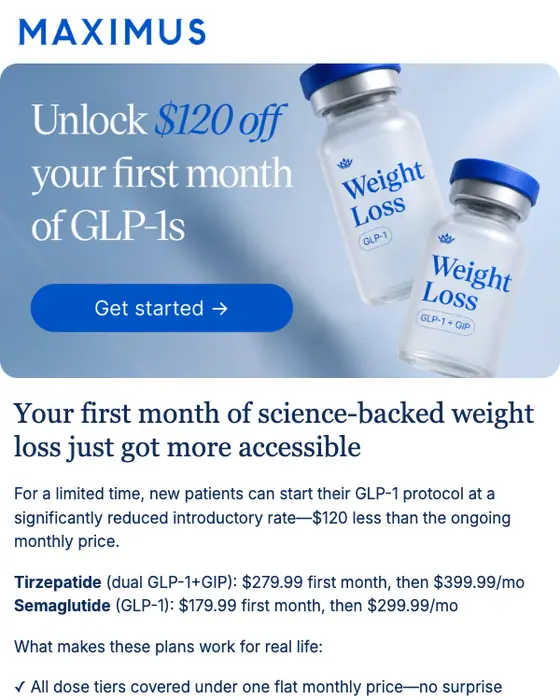
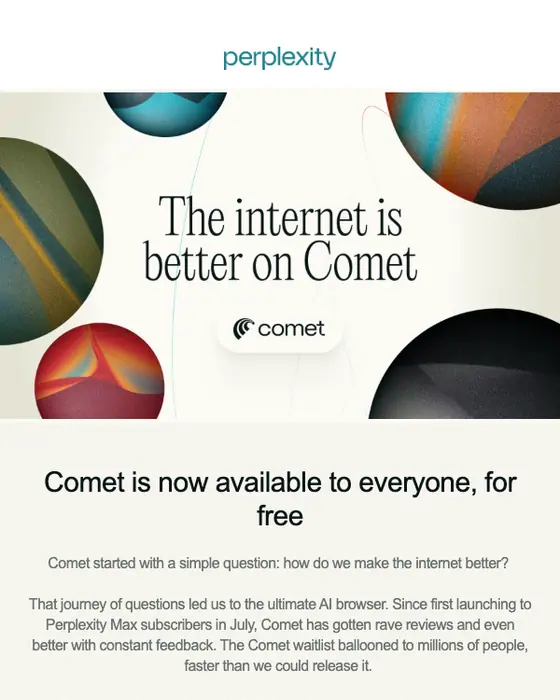
Maximus offers “Unlock $120 off your first month” (2026), Perplexity announces “Comet is now available to everyone” (2025), Reddit for Business invites readers to a webinar (2025), and Stacking the Bricks sends business owners a plain-text email that lists landing-page problems before offering help (2023). All four are in the grid above, and promotions lead the set at 57%.
Say what is inside. 44% of the acquisition subject lines we collected do, against 29% of other email, and 35% carry exactly one call to action. Fewer use the reader's first name, 32% against 42% elsewhere. Our promotional email guide, linked above, covers the writing step by step.
466 of the 1,932 have been rendered full length for the library so far, and 278 of those are on this page, from 276 brands. The other 1,466 count in every percentage here but are not shown yet, so open the grid for the look of acquisition email and read the tables for the whole set.