
What a plain text email layout is
A plain text email layout is one column of running text, often set out like a letter: a greeting, a few short paragraphs, links written into the sentences, and a sign-off. There are no columns, and product grids and banner images are rare. Some add a logo, a photo of the sender or one picture.
We collected 12,711 emails from two ordinary inboxes between 2016 and 2026, and 4,027 of them, from 1,829 brands, use this layout. Nothing here is a mockup. This page shows 178 from 162 brands, and 145 of them were sent in 2023 or later. Why some are not shown is answered under Questions below.
This page sorts emails by how they are built. Our plain text email examples page sorts them by how they look. The two overlap: 2,958 of the 4,027 here also look plain, and most of the other 1,069 (965) are utilitarian notices such as receipts, shipping updates and account notices set out the same way.
Browse all 178 plain text layouts
Tap a type to narrow the grid, or search a brand or subject line. Open any email to see it full length, with its subject line, notes on what it is doing, and a prompt that rebuilds it as your own plain text email template.
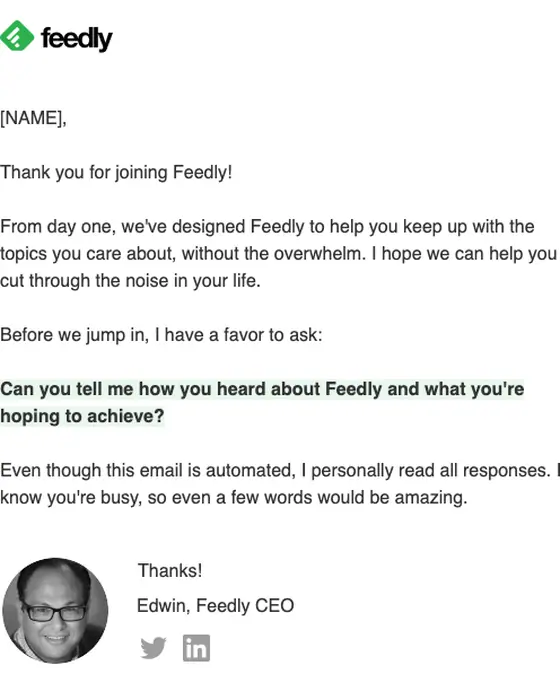
Feedly
A quick hello
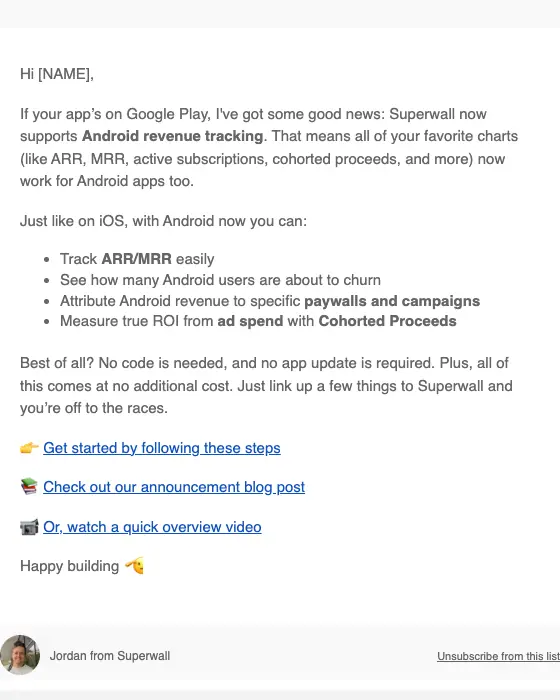
Superwall
📢 Android Revenue Tracking Has Arrived
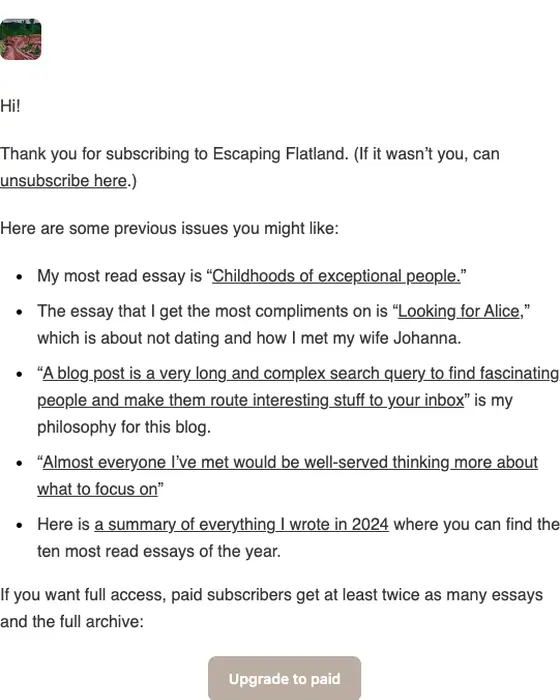
Escaping Flatland
Welcome to Escaping Flatland
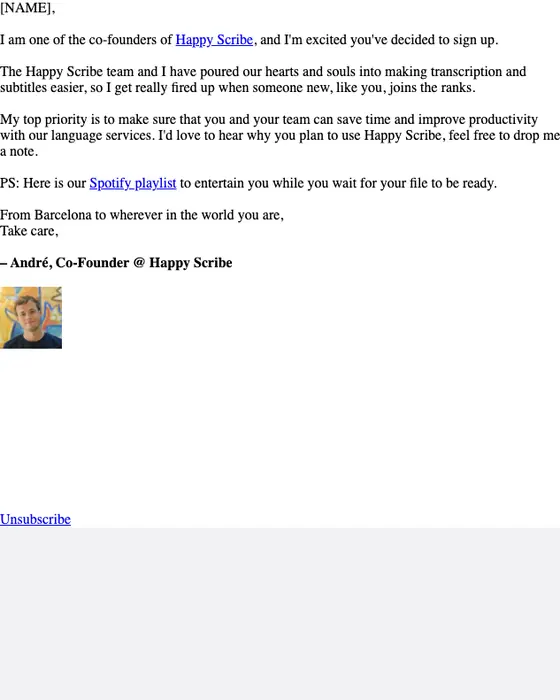
Happy Scribe
a personal hello
Tangle
Welcome to Tangle! Please read me :)
Cursor Team
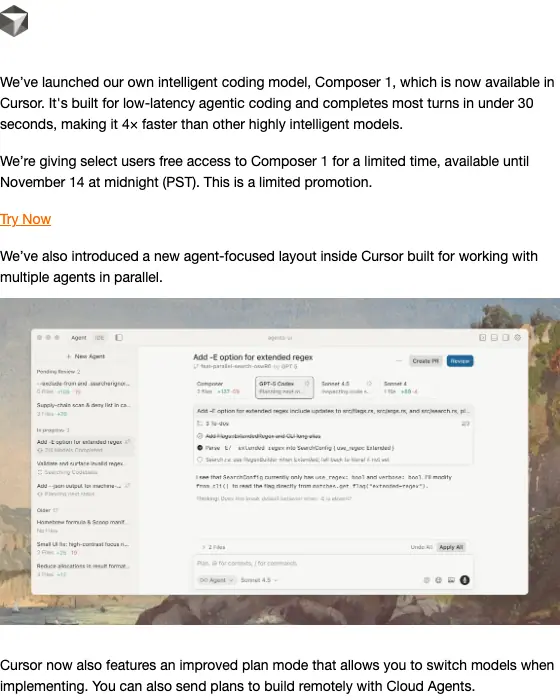
New: Try our model Composer 1, free for a limited time
DistroKid
Small price increase (and a new feature)
Wispr
Give this a quick try
Commit Action
We still on for 3:15pm today?
Yuka
The Power of 60 Million Users 💪
Fitbod
A note of thanks from the Fitbod Founders
George Mack
0.1% Ideas: The Busy Trap
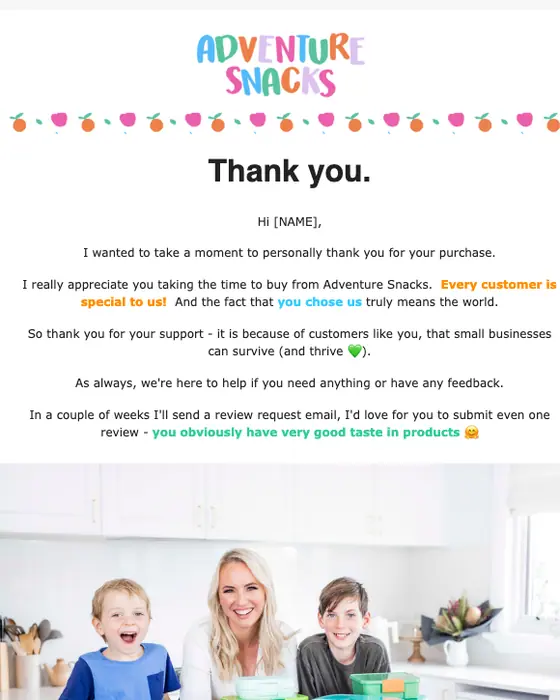
Adventure Snacks
Thank You From The Founder 💚
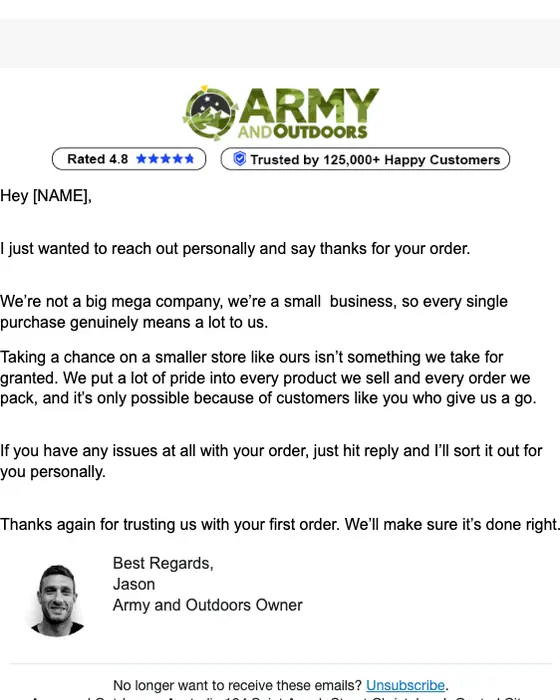
Army & Outdoors
Thanks for giving us a shot
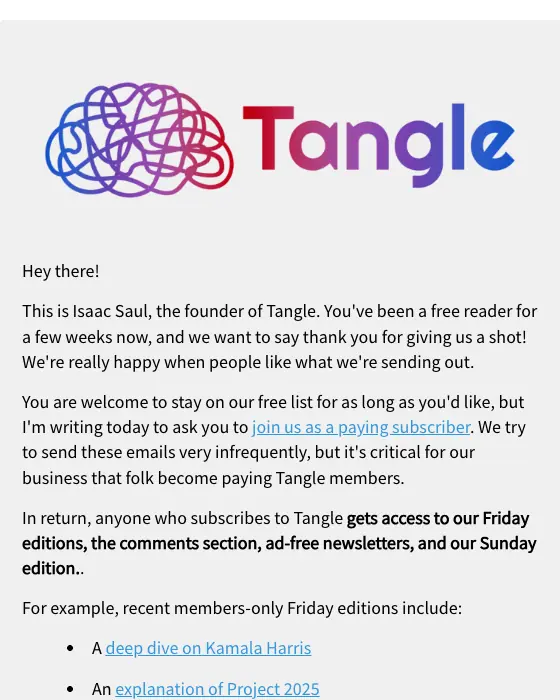
Tangle
Have you been enjoying Tangle?
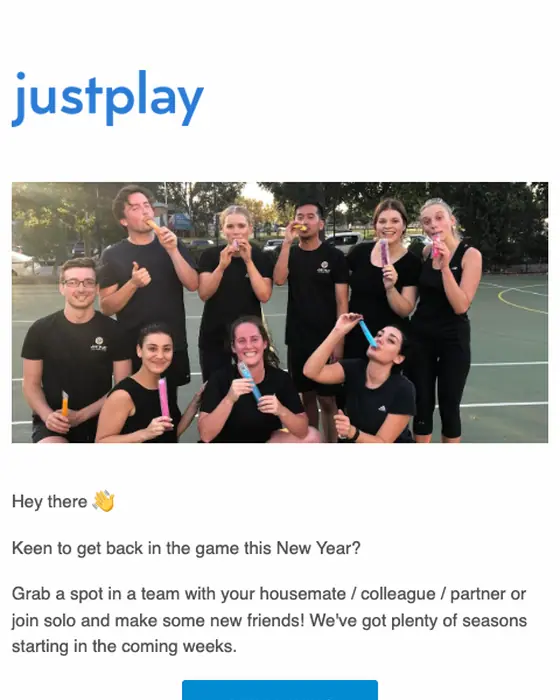
Just Play
Get back playing social sport in 2025 🏆
Taplio
Your AI settings are ready - check them now
Inhouse Ventures
A note from James at Scalare Partners
Mentwell
EOFY Employee gifts and the Mentwell mission xx
Antler
Last call to apply to AUS13 Antler
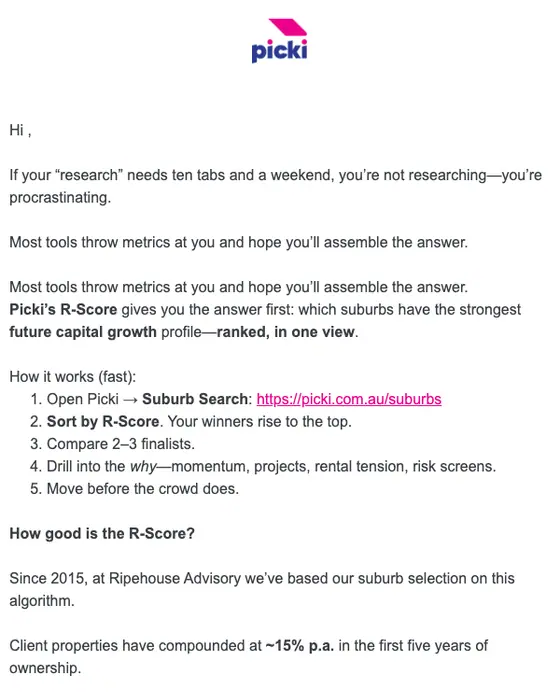
Picki.com.au
Dashboards don’t buy properties. Decisions do.
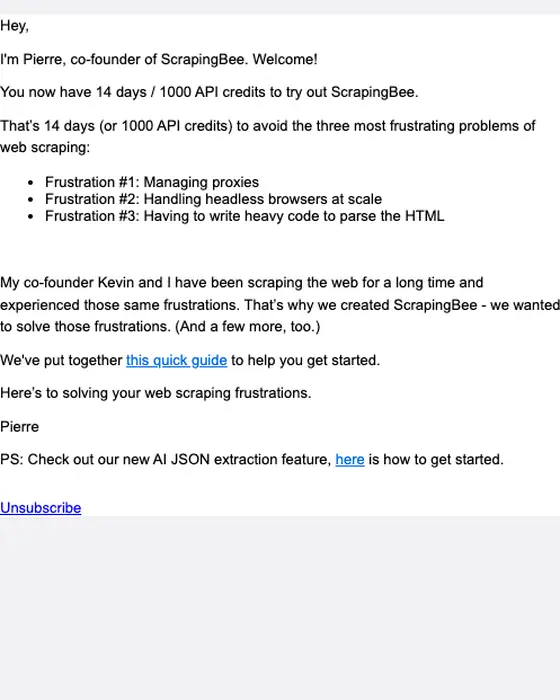
ScrapingBee
🎉 Welcome to ScrapingBee
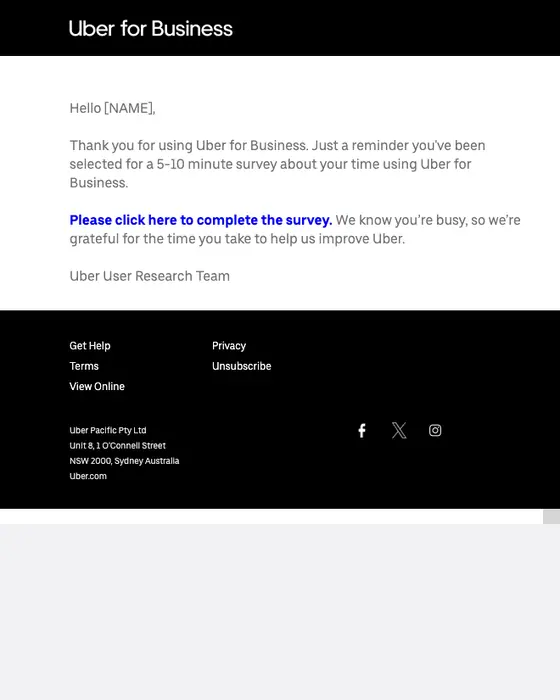
Uber Research
Reminder: Help us improve Uber for Business!
Plain text layout or designed layout: same two inboxes
Plain text layout and designed layouts, same two inboxes
4,027 plain text and 8,684 designed emails| What we measured | Plain text layout | Designed layouts |
|---|---|---|
| Uses a button | 2% | 57% |
| Call to action is a link in the text | 85% | 41% |
| No call to action at all | 13% | 1% |
| Median calls to action | 1 | 3 |
| Exactly one call to action | 39% | 26% |
| Short or very short | 72% | 44% |
| Greets by first name | 49% | 36% |
| Black, white and gray only | 98% | 45% |
| Promotional, sale or discount emails | 21% | 32% |
| Sent to business buyers (B2B) | 26% | 16% |
The biggest difference is where the ask sits. In a plain text layout the link is part of a sentence: 85% make the call to action a link in the sentence and 2% use a button, against 41% and 57% of emails built with single-column, two-column, grid or multi-column layouts. They also ask for less. The median plain text layout has one call to action against three, and 13% ask for nothing at all, which is what an account notice, an invoice or a booking confirmation looks like.
They are shorter (72% short or very short, against 44%) and more often open with the reader's first name (49% against 36%). Fewer of them sell: 21% are promotional, sale or discount emails, against 32% of designed ones. When to choose plain text over a designed email is covered in B2B email best practices, where 44% of B2B email in the same inboxes uses this layout.
What is in the collected set
By type
all 4,027 plain text layouts collected| Type | Emails | Share of the set |
|---|---|---|
| Promotional | 701 emails | 17% of the set |
| Account notice | 445 emails | 11% of the set |
| Newsletter | 285 emails | 7% of the set |
| Receipt | 238 emails | 6% of the set |
| Shipping | 200 emails | 5% of the set |
| Invoice | 177 emails | 4% of the set |
The largest industries are SaaS (26%) and professional services (12%). By stage, 31% are fulfillment emails such as receipts and shipping updates. The 178 in the grid lean toward emails a person would write: promotional sends (21), welcome emails (14), newsletters (11), and re-engagement emails and surveys (10 each) are the largest groups. The percentages on this page describe everything collected.
Next to this one
The same library, cut by layout: single-column emails, two-column emails, modular grid emails. By type, this layout carries more than half of account notices (445 of 845) and about half of receipts (238 of 465) in the same inboxes, against 32% of all email.
Questions about the library
178 emails from 162 brands, picked from 4,027 plain text layouts that 1,829 brands sent to two real inboxes between 2016 and 2026. 145 were sent in 2023 or later. The largest groups are promotional sends (21), welcome emails (14), newsletters (11), and re-engagement emails and surveys (10 each).
Feedly's welcome email "A quick hello" (2023) is a short note from the CEO that asks the new user one question and has no button. Superwall's "Android Revenue Tracking Has Arrived" (2025) is a product announcement written the same way, with a short list and three links in the text. Open either card in the grid to read it full length.
Two ordinary inboxes that signed up to products, shops and newsletters the way any customer would. Nothing is a mockup, and nothing is taken from another email gallery. The same inboxes hold 8,684 emails with designed layouts, which is where the comparison on this page comes from.
We left out security and sign-in alerts because they can show where an account was accessed from, repeat sends of one brand's template, most one-time codes, password resets and verify-your-email messages (a few stay), and some that showed a person's name, a phone number, an address, a booking number or a private conversation, had an image that failed to load, or had little worth copying. The percentages still describe all 4,027.
A true plain text email has no HTML: no images, fonts or buttons, and links show as bare web addresses. An HTML email can carry all of those. The emails here are grouped by how they read, one column of text with links in the sentences. In the same inboxes 2% of them use a button, against 57% of designed layouts.
Many emails are sent with two versions of the same message inside: an HTML version with formatting and a plain text version with none. An email app that cannot show HTML, or is set not to, shows the plain text version instead. This library keeps the HTML version of each email, so it groups emails by how they read, not by which versions were sent.