
![Atolea Jewelry thank-you email: Thanks for your order, [NAME]! Here's a special surprise...](/email-examples/img/19b879b12547e30f-t.webp)
What a customer retention email is
A customer retention email goes to someone who already buys from you or uses your product, to keep them doing it: a post-purchase thank-you, a replenishment reminder to reorder, a renewal or loyalty-points expiry notice, a request for feedback, a referral invite, or a re-engagement nudge for someone who has gone quiet. This page is about those marketing emails, not employee retention or how long a company keeps its email archive.
Collected 679 from 456 brands, showing 45, one per brand, out of two ordinary inboxes. Nothing here is a mockup. Most of the 4,853 emails sorted into the retention stage are newsletters, promotions and sales, so the numbers on this page count only the 679 that do one of the six jobs above. The questions below say what was left off and why. 444 of the 679 were sent in 2023 or later, and so were 37 of the 45 shown, which open the grid.
Browse all 45 retention emails
Tap a type to narrow the grid: 14 re-engagement emails (win-backs and reorder nudges), 13 renewal or expiry notices, 9 feedback requests, 4 thank-you emails and 4 referral invites. The one reorder reminder is under All. Open any email to see it full length, with its subject line, notes on what it is doing, and a prompt that rebuilds it.
The Dinner Ladies
We've missed you! Here's $20 off your next order
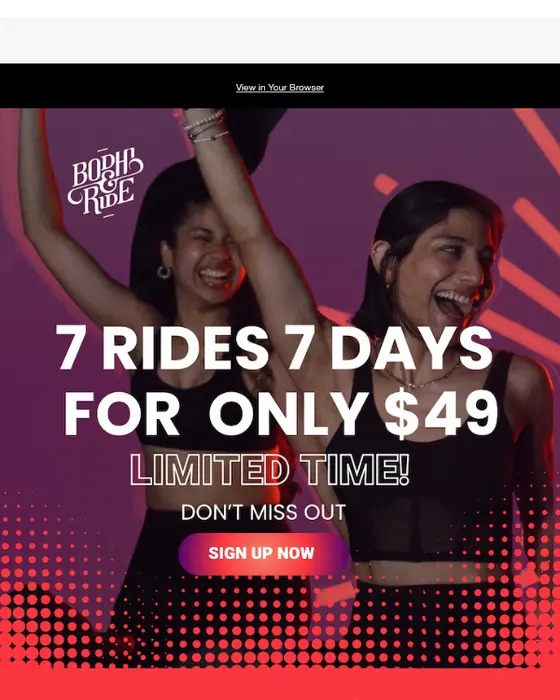
Bodhi and Ride
We miss you! Let’s get you back into RIDE!
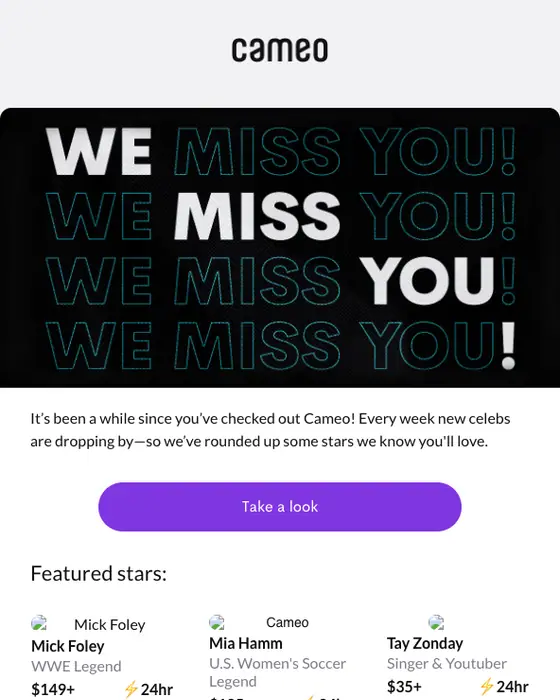
Cameo
Where have you been? 🥲
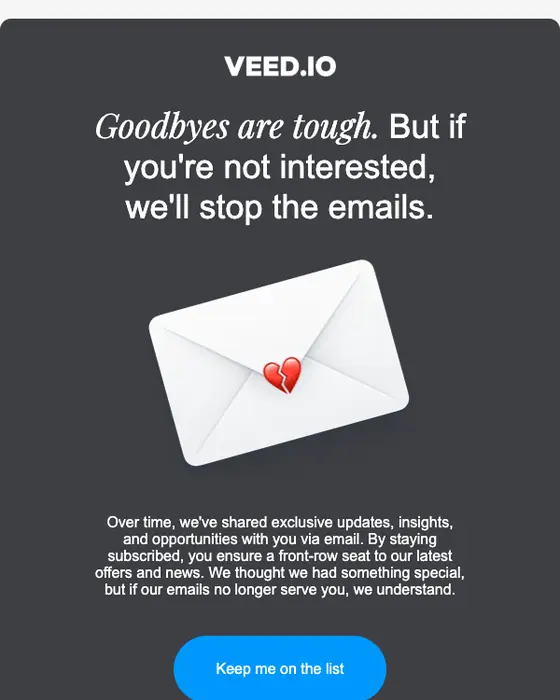
VEED
Have we reached the end of our time together?
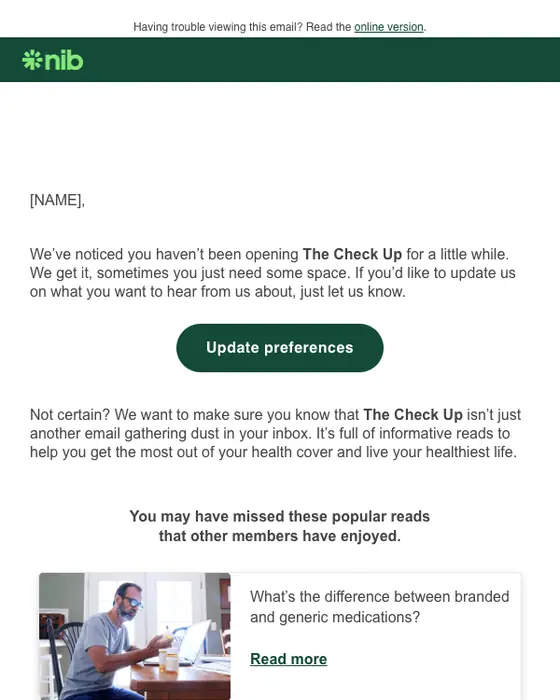
nib Insurance
[NAME], do you still want to hear from us?
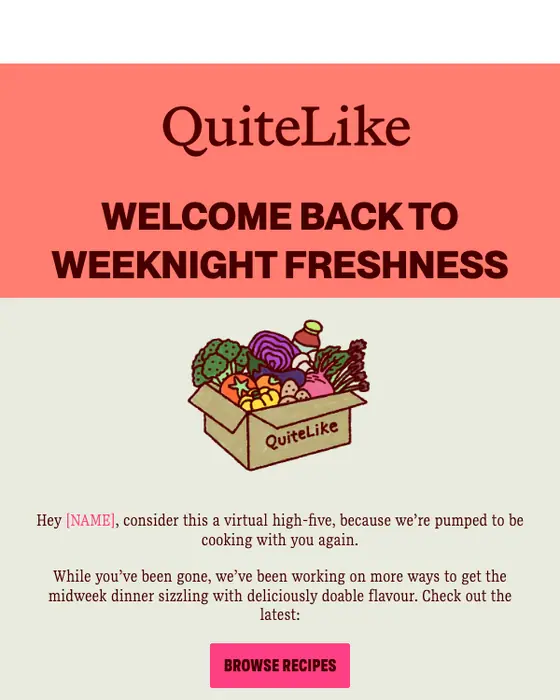
QuiteLike
Look who’s back! Spoiler: it’s you.
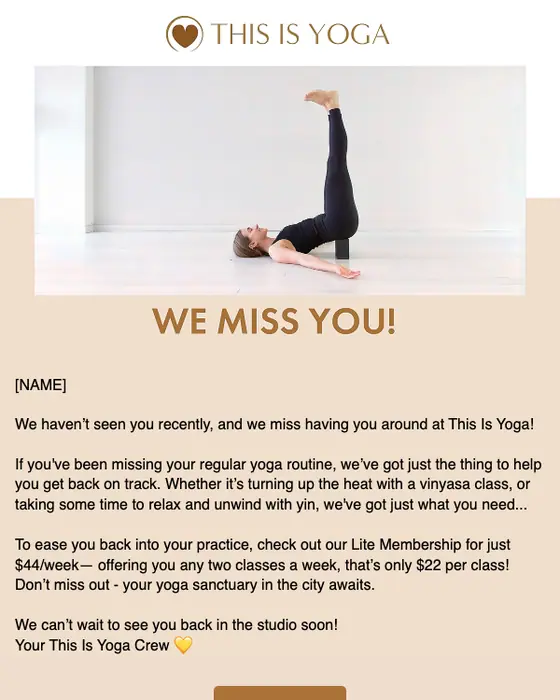
This is Yoga | Randwick
We want you back! 💛
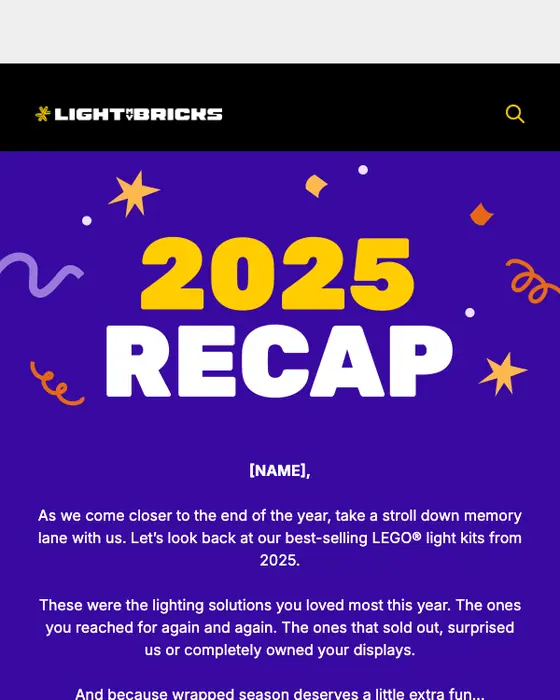
Light My Bricks Australia
Your 2025 LEGO® lighting wrapped is here
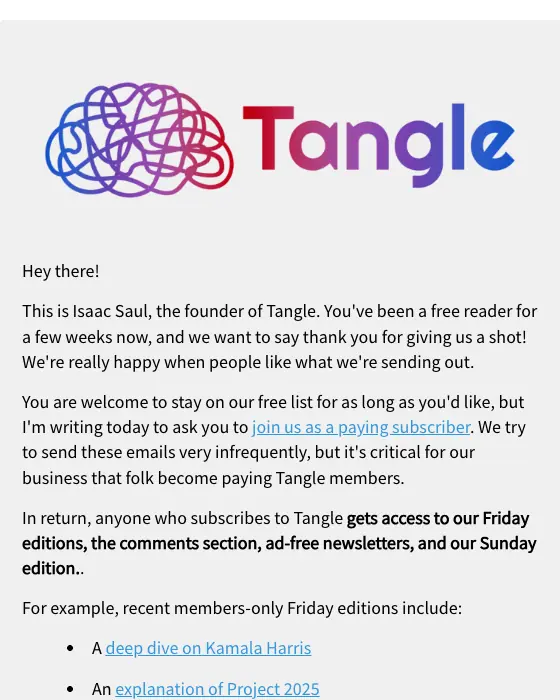
Tangle
Have you been enjoying Tangle?
iHerb
Restock Your Essentials Now
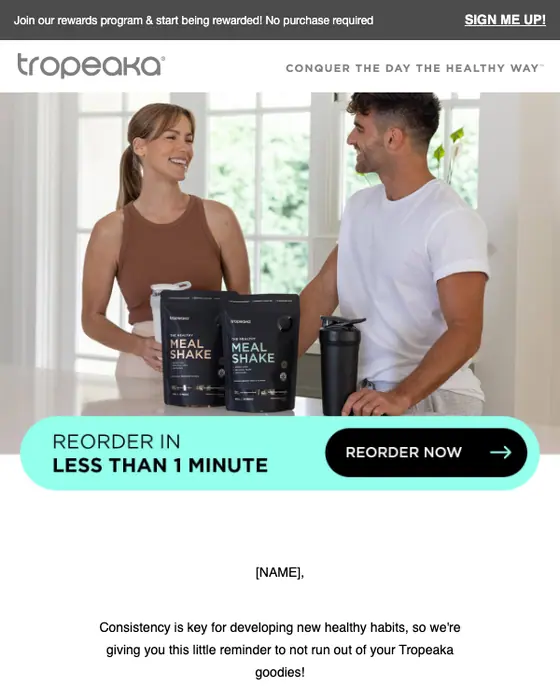
Tropeaka
Reorder Now in Just 2 Clicks [NAME] 😲 🎁
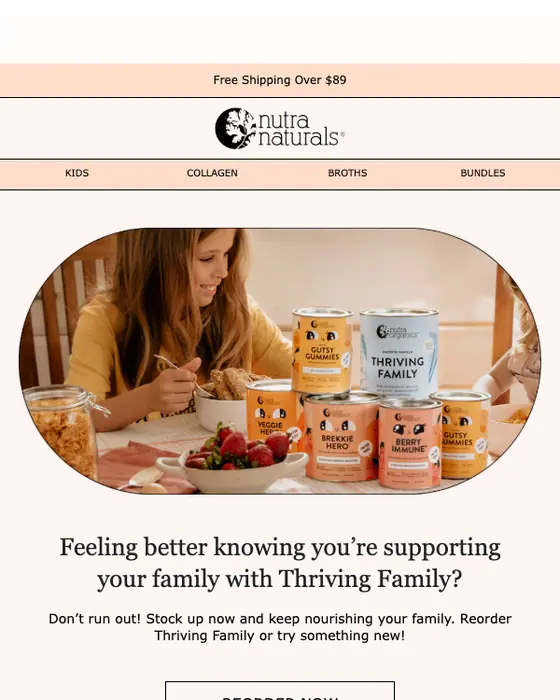
Nutra Organics
Don't forget to refill your Thriving Family
Honey
Last chance! Your Gold points expire tomorrow.
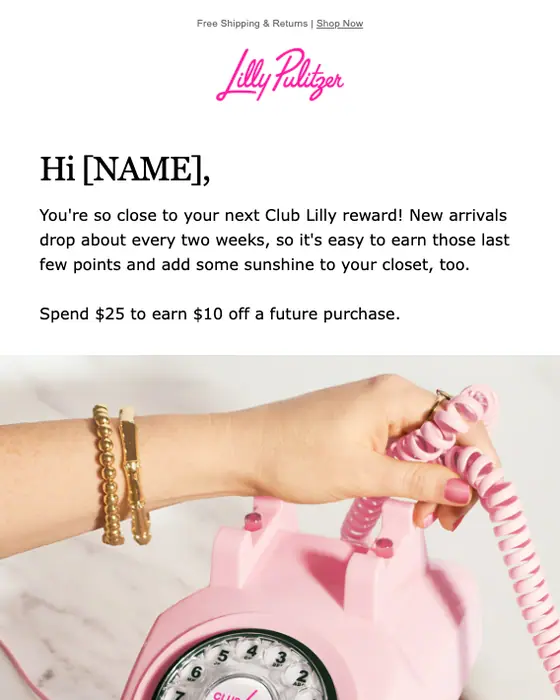
Lilly Pulitzer
[NAME] You're SO Close to a $10 Reward!
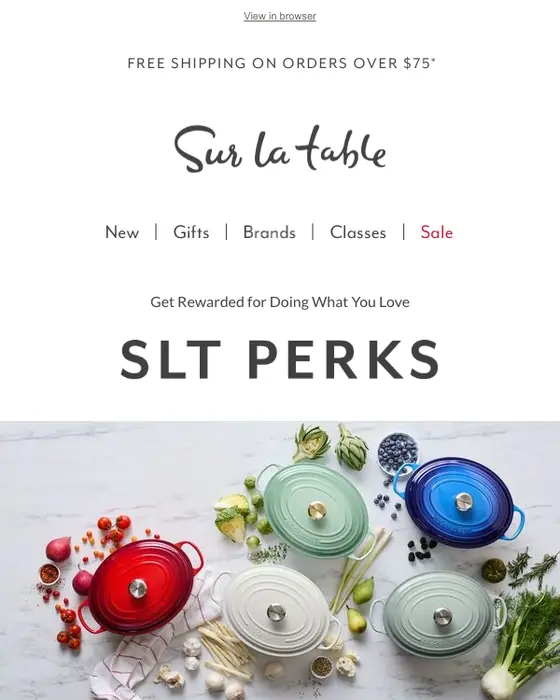
SLT Perks
[NAME], only 3 days left to use your SLT Perks!
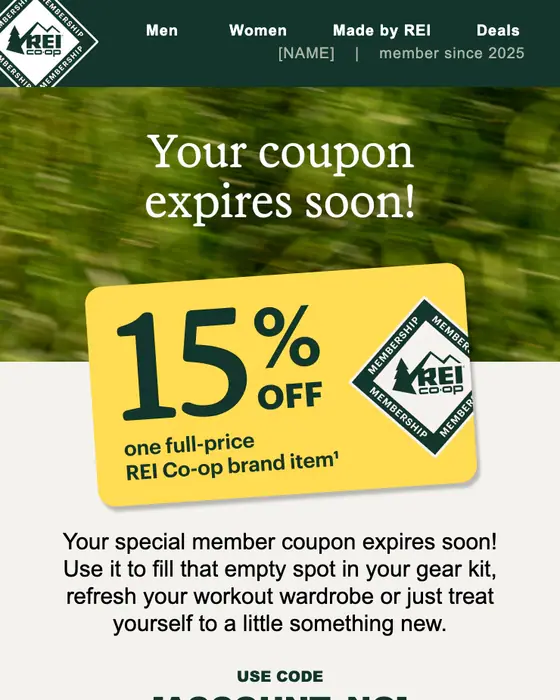
REI Membership
Your Coupon is About to Expire
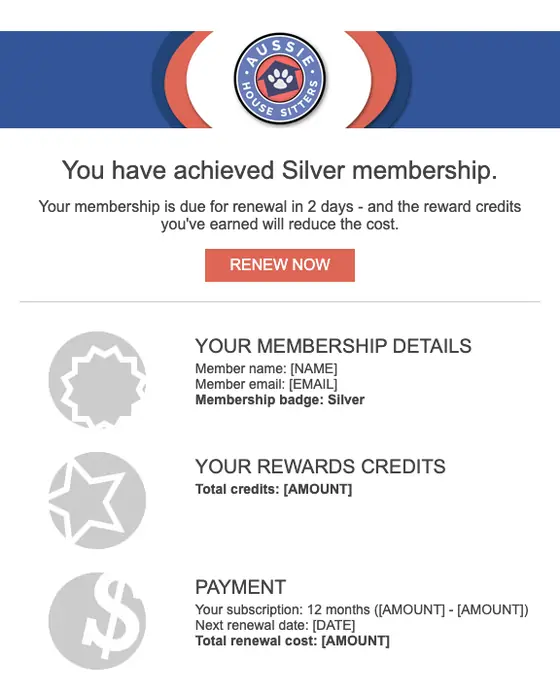
Aussie House Sitters
Aussie House Sitters: Membership renewal in 2 days - Claim your rewards discount
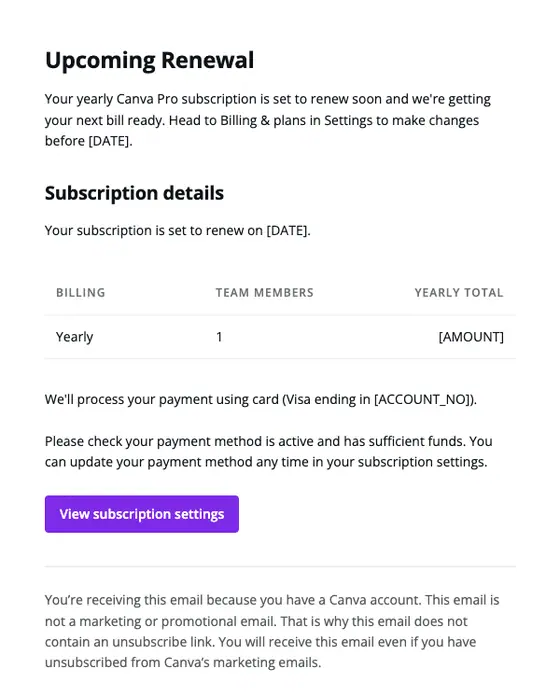
Canva
It’s renewal time!
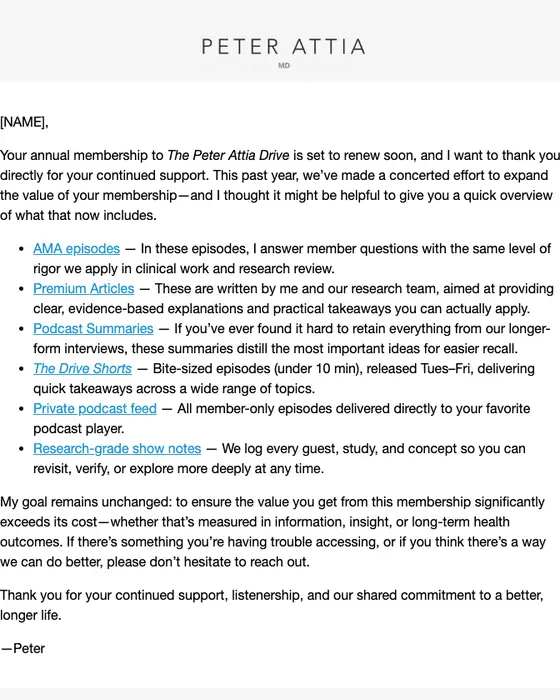
Peter Attia
Your subscription is renewing soon
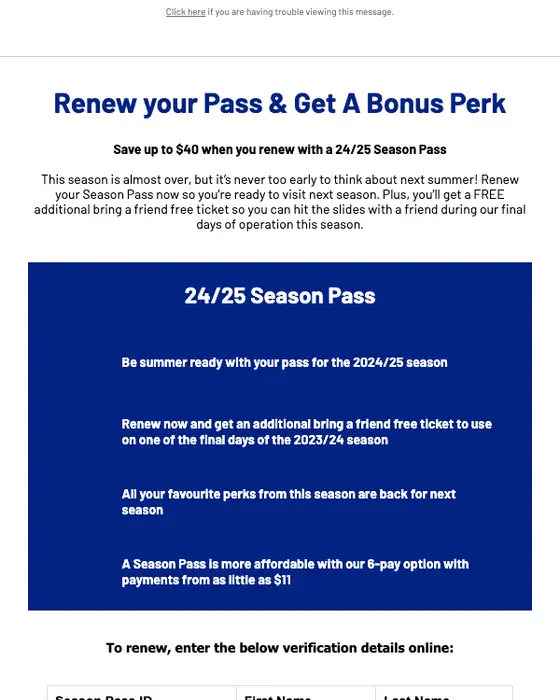
Raging Waters Sydney
Renew Your Pass & Get A Bonus Perk
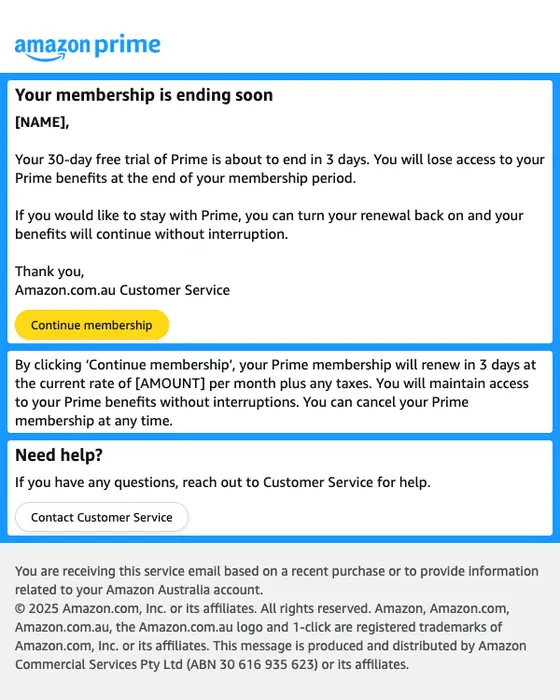
Amazon Prime
Your 30-day free trial of Prime is expiring in 3 days
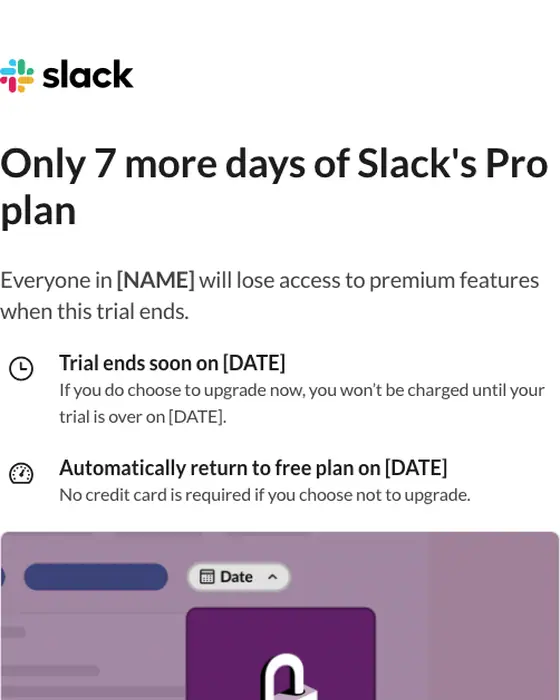
Slack
[NAME]'s free trial of Slack Pro ends in 7 days
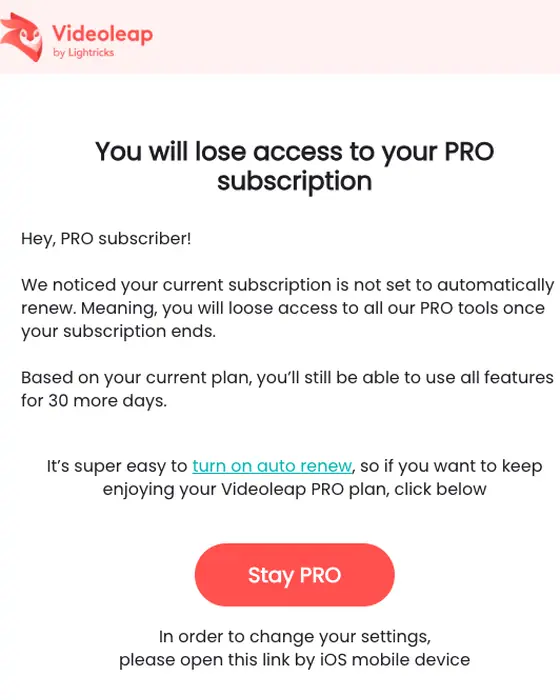
Videoleap
You disabled auto renew on your PRO subscription
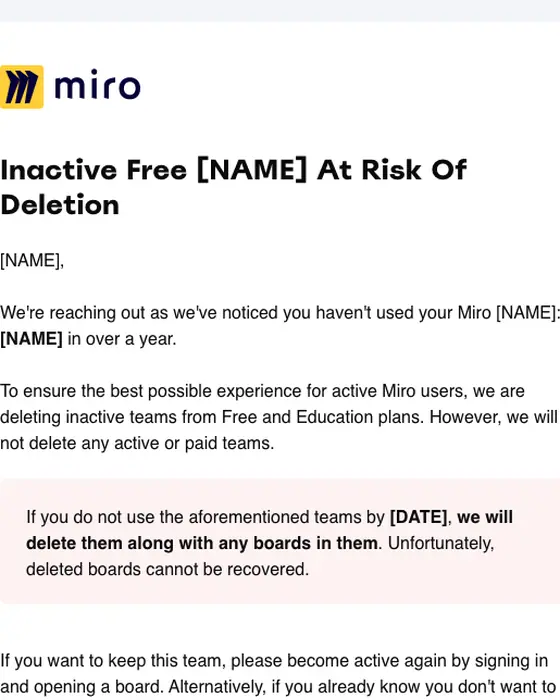
Miro
Important: Inactive Team(s) on Miro Will Be Deleted
How retention emails differ from other email
Retention emails and all email, same two inboxes
679 retention emails, 12,711 emails| What we measured | Retention | All email |
|---|---|---|
| Personalized subject line | 25% | 7% |
| Greets the reader by first name | 59% | 40% |
| Warm in tone | 30% | 15% |
| Short or very short | 71% | 53% |
| Asks for one thing only | 39% | 30% |
| Subject line leads with a discount | 8% | 11% |
| Has a hero image | 10% | 12% |
| Plain-text layout | 29% | 32% |
| Sent to a business audience | 11% | 19% |
| Median calls to action | 2 | 2 |
Retention email is written to a person it already knows. 25% personalize the subject line, more than three times the rate of email overall (7%), 59% greet the reader by first name against 40%, and 30% are warm in tone, twice the 15% of all email.
It sells less than email overall does. Only 8% lead with a discount in the subject line, against 11% of all email, and 71% are short or very short, against 53%. 39% ask for one thing, against 30%, though the median still carries 2 calls to action.
Customer retention emails, by job
By type of email
all 679 retention emails collected| Type | Emails | Share of the set | Ask for one thing | Warm in tone | Urgent in tone |
|---|---|---|---|---|---|
| Feedback request or review ask | 274 | 40% | 49% | 29% | 1% |
| Re-engagement: win-back, reorder nudge or still-interested check | 226 | 33% | 31% | 39% | 11% |
| Renewal, trial end or loyalty points expiry | 118 | 17% | 37% | 7% | 48% |
| Post-purchase thank-you | 23 | 3% | 39% | 91% | 0% |
| Reorder reminder (replenishment) | 21 | 3% | 0% | 0% | 5% |
| Referral invite | 17 | 3% | 47% | 53% | 0% |
Feedback requests and re-engagement emails make up 74% of the set. Feedback requests hold to one ask most often, 49% of them. Renewal and expiry notices carry the urgency: 48% are urgent in tone, against 1% of feedback requests. Thank-you emails are the warmest, 91% of them. 19 of the 21 reorder reminders come from one grocer, so treat that row as one brand's habit.
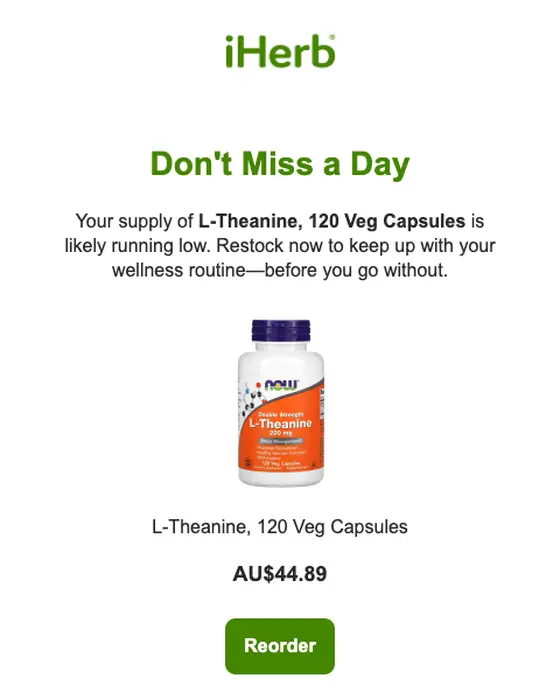
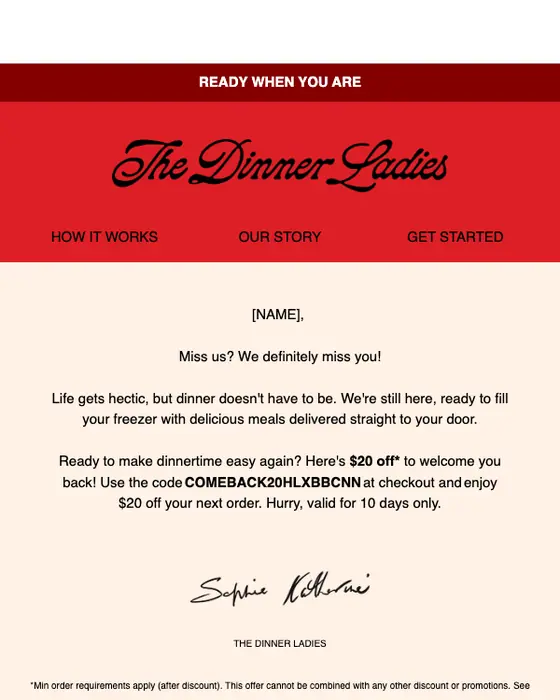
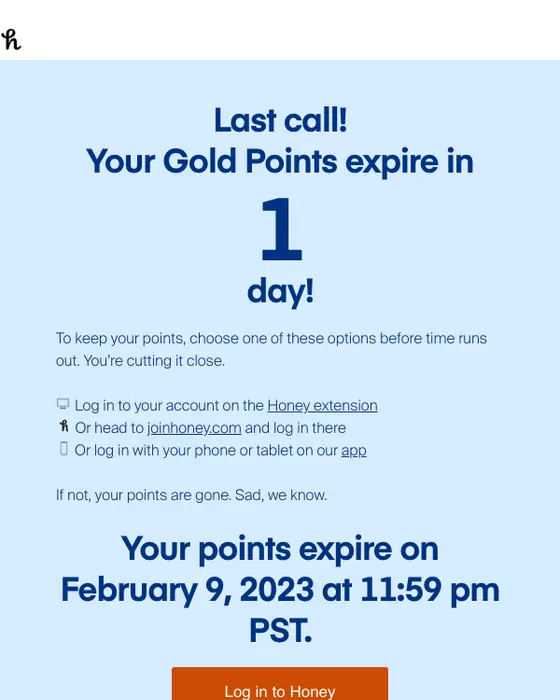
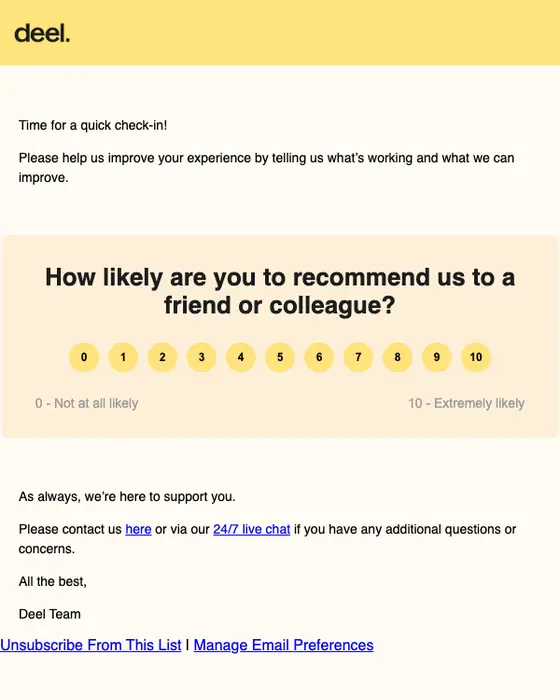
Some of these do one job well. Honey sent "Last chance! Your Gold points expire tomorrow." on February 8, 2023: the deadline, three ways to keep the points and one Log in button, in one short email. iHerb's "Restock Your Essentials Now" (November 2025) names the capsules the reader bought, says the supply is likely running low and puts a Reorder button under the price. The Dinner Ladies open a re-engagement email with a $20 code valid for 10 days, then show this week's menu, so the offer is not the only reason to come back. VEED offers to stop the emails altogether, with one ask, a Keep me on the list button, repeated at the foot. Deel asks a single 0 to 10 question inside the email, and Atolea's co-founder thanks the reader and asks for a review, with a code sent once they reply.
The other emails sorted into the retention stage
4,174 of the 4,853, not counted on this page| Type | Emails |
|---|---|
| Newsletter | 1,420 |
| Promotional | 1,411 |
| Sale | 338 |
| Discount offer | 307 |
| Product launch | 170 |
| Account notice | 166 |
| Seasonal | 96 |
| Digest | 87 |
| Other (event invites, abandoned carts, job alerts, back in stock and more) | 179 |
These went to people already on the list, so they sit at the same stage, but they sell or inform rather than do one of the six jobs above. They have their own pages: newsletters, promotional emails, sale emails, discount offers, product launch emails and account notices.
Next to this one
The same library, cut by type: re-engagement emails, survey and feedback emails, expiration notices, thank-you emails, referral emails and reorder reminders. By stage: activation emails come before these, and win-back emails go to people who have already left.
Questions about retention emails
A retention email goes to someone who already buys from you or uses your product, to keep them doing it: a thank-you, a reorder reminder, a renewal or expiry notice, a feedback request, a referral invite or a win-back. Of the 679 we collected, 40% ask for feedback and 33% try to re-engage someone who has gone quiet.
Honey's "Last chance! Your Gold points expire tomorrow." is one: the deadline, three ways to keep the points and one button, in one short email. iHerb's "Restock Your Essentials Now" names the product the reader bought and puts a Reorder button under it. All 45 on this page open full length.
Write it to the person, about what they already have. 25% of the retention emails we collected personalize the subject line, against 7% of all email, and 59% greet the reader by first name. Keep it short, as 71% do, and lead with the reason to act, not a discount: only 8% do that.
39% of the retention emails we collected ask for one thing, against 30% of all email, and the median carries 2. Feedback requests hold to one most often, 49% of them, against 37% of renewal and expiry notices and 31% of re-engagement emails.
259 of the 679 have been published as images in this library so far. We took 214 of those off this page: 48 we have flagged for removal from the whole library (personal details, broken or clipped renders and similar defects), 6 that may show where the reader went or what they gave, 6 with subject lines we do not reprint for formatting reasons, and 154 that repeat a brand already shown or do the same job less clearly. The percentages on this page still describe all 679.
Send one like it
Simple pricing. Unlimited contacts.
Every plan includes full stack emailing: Flows, Newsletter Campaigns and Transactional Email, plus our NitroWheel LLM and all agent integrations (Claude, ChatGPT, Codex, Cursor and others). Pay for what you send, not who you store.
- Emails 8,000then 500/mo
- Email types Transactional & Marketing
- AI actions 20/mo
- Contacts Free & Unlimited
- Brands 3 · Custom domain 1
- Seats 1
- Recipients / rolling 24h 100–5,000
- Email validation Prepaid only
- Emails 20,000/month
- NitroWheel LLM Included
- Brands 5 · Domains 3
- AI actions 1,000/mo
- Contacts Free & Unlimited
- BYO sending and AI keys Yes
- Seats 3
- Recipients / rolling 24h 1,000–100,000
- Email validation Prepaid only
- Emails 125,000/month
- AI actions 5,000/mo
- Brands 10 · Domains 10
- Seats 10
- Frontier AI Included
- Dedicated IP Available
- Recipients / rolling 24h 1,000–625,000
- Email validation Prepaid only
- AI actions Unlimited
- Unlimited brands & domains Included
- SSO / SAML Included
- 99.9% SLA Included
- Recipients / rolling 24h Contracted
- Email validation Prepaid only
Daily allowances depend on your plan and sender standing. Strong list, domain and delivery evidence can raise standing, including on day one. Trusted receives the full plan allowance; available email credits, safety checks and delivery pacing still apply.
Free forever. No credit card required. See full comparison →