
What a re-engagement email is
A re-engagement email is one a brand sends to a subscriber or customer who has gone quiet, to get them opening, buying or using the product again.
This page collects them by lifecycle stage, whatever the format. We found 46 emails tagged at the re-engagement stage, from 43 brands, in two ordinary inboxes between 2016 and 2026, and show 11 of them here, from 11 brands. 8 of the 11 were sent in 2023 or later. The 35 left out are mostly older bulk sends (23 date from before 2023 and 15 are plain text), plus broken renders, a repeat of one brand’s template, emails showing personal data or signed with a sender’s full name, sends that were not aimed at a lapsed reader, and emails rated 3 of 5 or lower that were never rendered for the library. Nothing here is a mockup. It is one slice of the Nitrosend email library.
The stage tag is separate from the type of email. 33 of the 46 are typed as promotions and only 1 as a re-engagement email. For emails written as a re-engagement format, including preference checks and final notices, see the re-engagement email examples library.
Browse the 11 re-engagement emails
Newest first, from 2026 back to 2020. Tap a tone to narrow the grid, or search a brand or subject line. Open any email to see it full length, with its subject line, notes on what it is doing, and a prompt that rebuilds it.
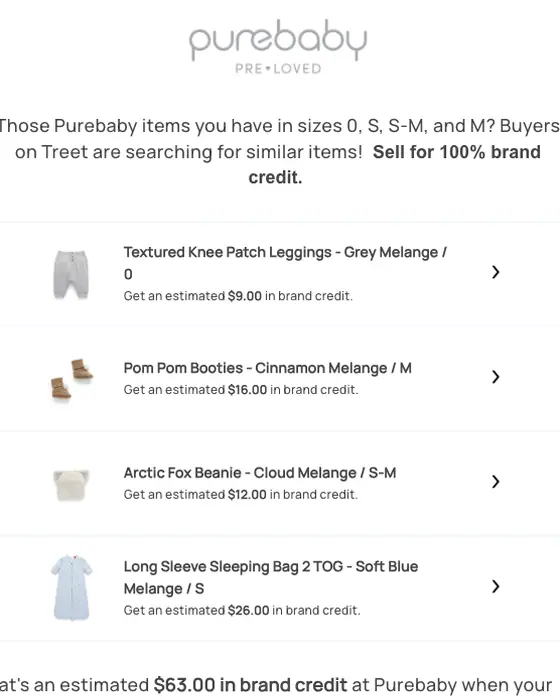
Purebaby Pre-Loved
Sell Purebaby, Earn 100% Brand Credit
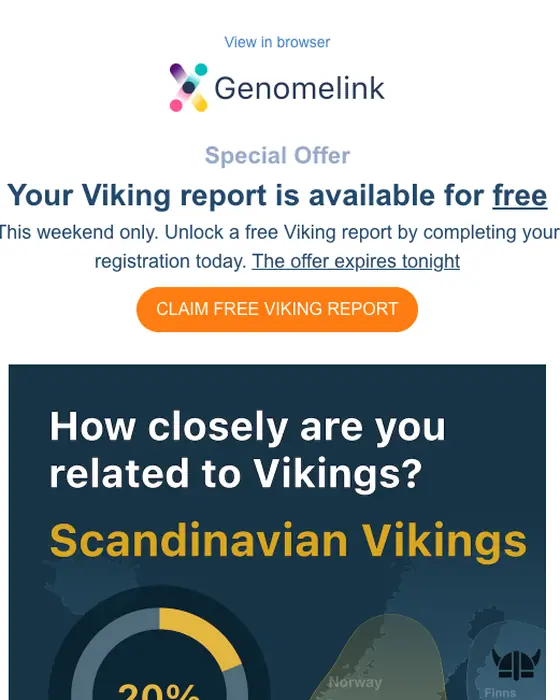
Genomelink
Your Viking report is available for free
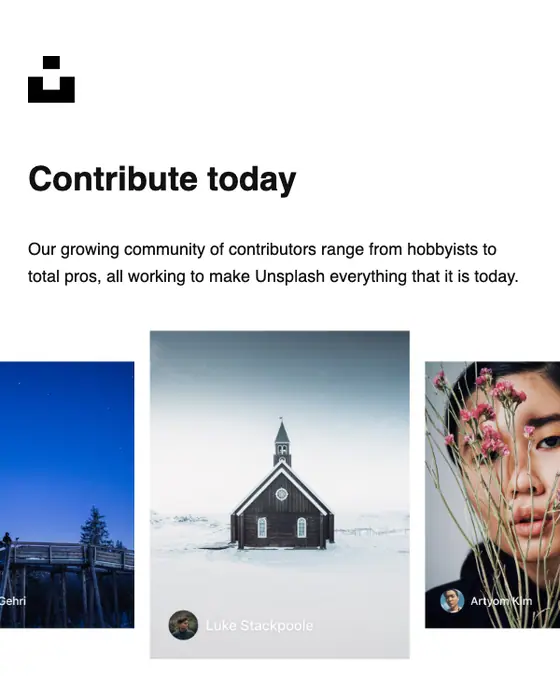
Unsplash
A special invitation 💌
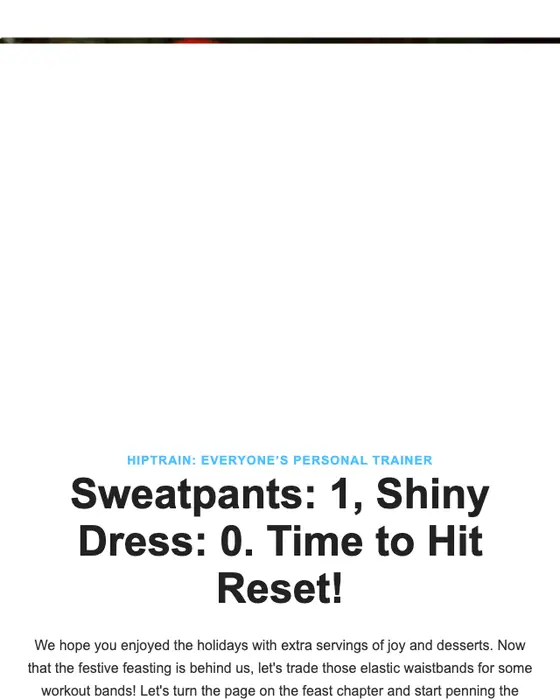
HipTrain
Bidding Farewell to Festive Feasts!
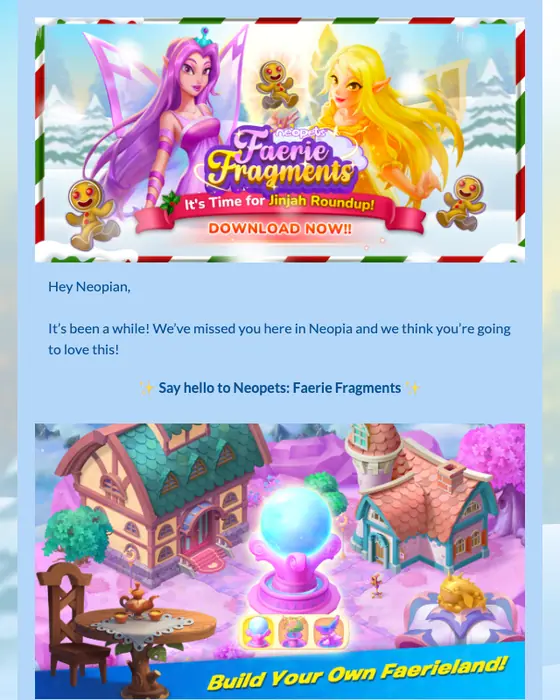
Neopets
❄️ Winter Comes to Faerie Fragments for the First Time! ❄️
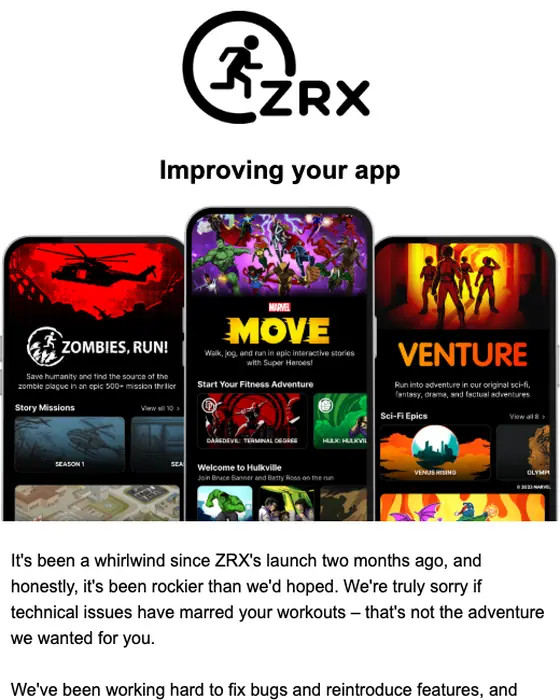
Six to Start
Improving Your App + ZR Season 10 + Captain America: Turkey Trot
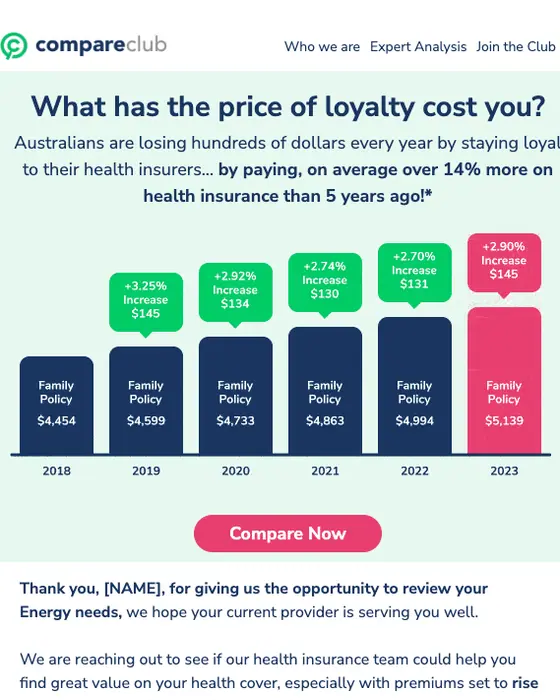
Compare Club
How much does loyalty to your health fund cost you?
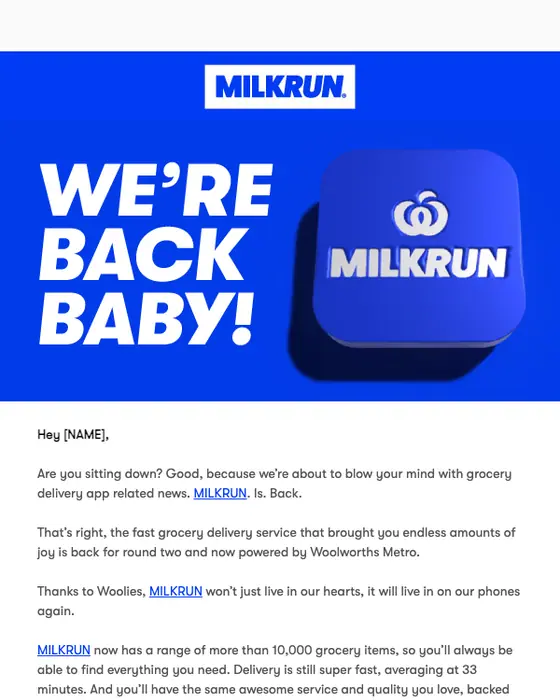
MILKRUN
MILKRUN is back. Celebrate with $15 off!
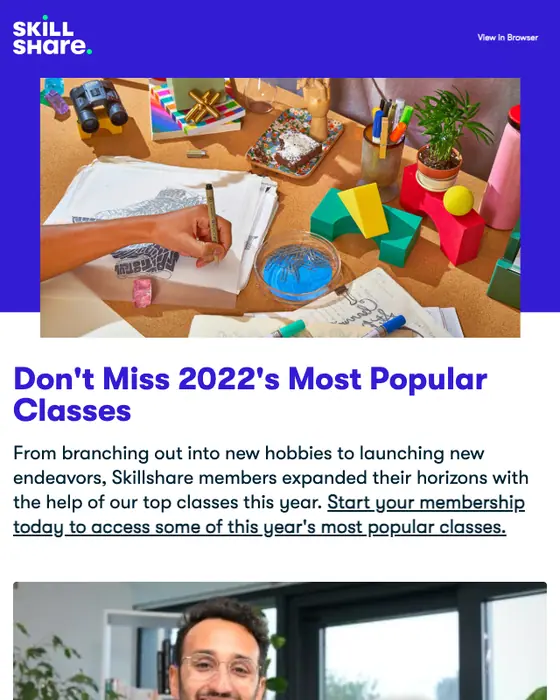
Skillshare
Don't Miss 2022's Most Popular Classes
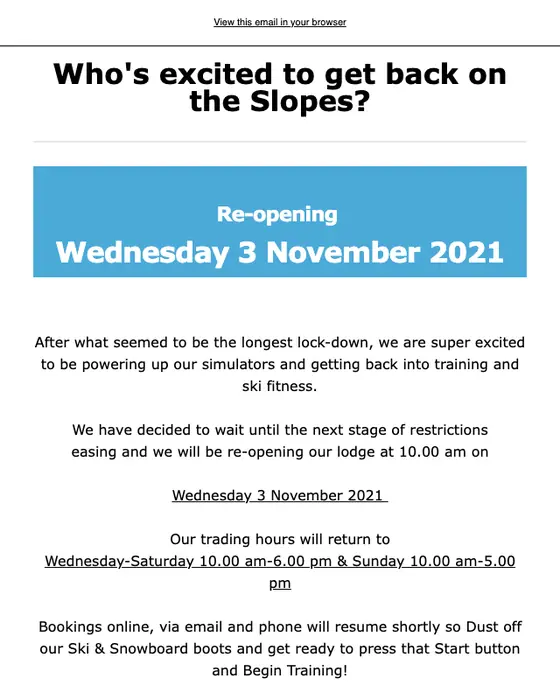
Off-Piste Ski & Snowboard
Are you ready to hit the Slopes?
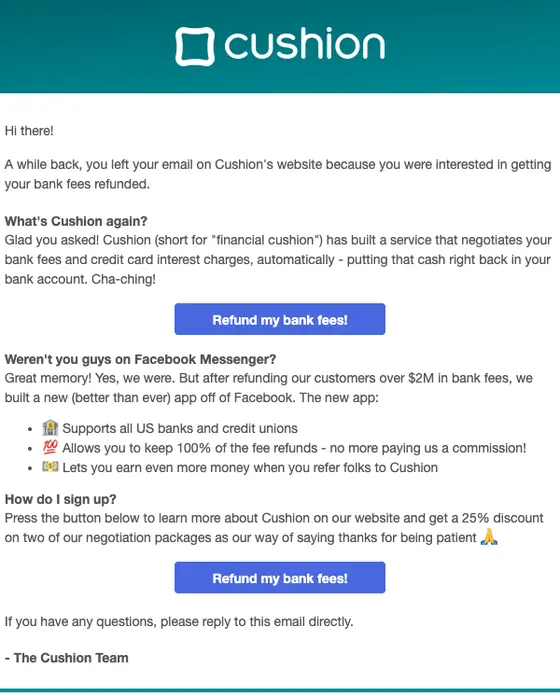
Cushion
You're invited to get your fees refunded 💌
The reason each of the 11 gives to come back
Reasons to come back
the 11 emails shown on this page| Reason given | Emails shown | A real subject line |
|---|---|---|
| The service is back, fixed or has something new | 5 of 11 | MILKRUN: MILKRUN is back. Celebrate with $15 off! (2023) |
| A time of year to start again | 2 of 11 | HipTrain: Bidding Farewell to Festive Feasts! (2024) |
| A next step for someone already signed up | 4 of 11 | Genomelink: Your Viking report is available for free (2025) |
Five of the 11 report a change on the sender’s side. MILKRUN announces its relaunch, Off-Piste gives a reopening date after a lockdown, Six to Start apologizes for a rocky app launch and asks readers to give it another try, Cushion writes to people who once left an email address to say it has built a new app, and Neopets opens with “It’s been a while! We’ve missed you” before showing a new game.
Two use the calendar. HipTrain writes at the new year and Skillshare rounds up the year’s most popular classes. The other four point an existing contact at a next step: Compare Club offers a health cover comparison to someone whose energy needs it had reviewed, Genomelink offers a free report for completing registration, Purebaby Pre-Loved suggests reselling items for brand credit, and Unsplash invites subscribers to contribute photos. Each email is counted once, by its main reason.
Three of the 11 add an incentive: $15 off from MILKRUN, a 25% discount from Cushion and Genomelink’s free report. None of the 11 is a preference check or a final notice before removal. Those are in the re-engagement emails sorted by format, and the stage for customers a brand is trying to win back has its own page of winback email examples.
How re-engagement stage emails differ from other email, same two inboxes
Re-engagement stage and all other email, same two inboxes
46 re-engagement stage emails and 12,665 others| What we measured | Re-engagement stage | All other email |
|---|---|---|
| Promotional, by type | 33 of 46 (72%) | 22% |
| Curiosity subject line | 9 of 46 (20%) | 5% |
| Personalized subject line | 8 of 46 (17%) | 7% |
| Question as the subject line | 4 of 46 (9%) | 2% |
| Urgent tone | 12 of 46 (26%) | 12% |
| Warm tone | 13 of 46 (28%) | 15% |
| Discount in the subject line | 6 of 46 (13%) | 11% |
| Greets by first name | 18 of 46 (39%) | 40% |
| Plain-text layout | 15 of 46 (33%) | 32% |
| Median calls to action | 2 | 2 |
The differences are in the subject line and the tone. 9 of the 46 (20%) use a curiosity subject line, against 5% of the other 12,665 emails in the same inboxes. 12 (26%) take an urgent tone against 12%, and 13 (28%) a warm one against 15%. A discount is barely more common than anywhere else: 6 of the 46 (13%) put one in the subject line, against 11%.
The design does not move. First-name greetings (39% against 40%), plain-text layout (33% against 32%) and the median number of calls to action (2 and 2) match the rest of the inbox. 46 is a small set, so one email moves a share by about two points. Treat the small gaps as no difference. For how to write the subject line itself, see our guide to email subject lines.
What is in the collected set
By email type
46 emails collected from 43 brands, 11 shown| Type | Emails collected and shown | Share of the 46 collected |
|---|---|---|
| Promotional | 33 collected, 8 shown | 72% of the 46 |
| Discount offer | 4 collected, 0 shown | 9% of the 46 |
| Newsletter | 2 collected, 1 shown | 4% of the 46 |
| Event invite | 2 collected, 1 shown | 4% of the 46 |
Five more types have one email each: survey, account notice, product launch, webinar and re-engagement. Of those, only the account notice is shown. Discount offers as a type are on their own page of discount offer emails.
The grid is a selection, so it does not mirror the 46. 11 of the 11 shown carry a quality rating of 4 out of 5, against 8 of the 35 left out, and all 11 use a designed single-column layout, where 15 of the 46 collected are plain text. The percentages on this page describe all 46.
Next to this one
The same library, cut a different way: re-engagement emails as a format, the winback stage, the retention stage and promotional emails.
Questions about re-engagement emails
The 11 emails here each lead with one reason to come back. 5 say the service is back, fixed or has something new, 2 tie the ask to a time of year and 4 point an existing contact at a next step. 3 add an incentive. Who to send to, and when to stop, is in our re-engagement campaign guide.
Of the 46 collected at this stage, 12 (26%) use a plain descriptive subject line, 9 (20%) curiosity, 8 (17%) a personalized one and 6 (13%) a discount. Curiosity is the one that stands out: only 5% of the other 12,665 emails in the same inboxes use it.
This page sorts by lifecycle stage: 46 emails sent to a contact who had gone quiet, whatever the format, and 33 of them are typed as promotions. The re-engagement email examples page sorts by format, so it holds the emails written as come-back offers, preference checks and final notices. Only 1 email carries both tags.
Two ordinary inboxes that signed up to products and newsletters the way any customer would, between 2016 and 2026. Nothing is a mockup, and nothing is taken from another email gallery. The same inboxes hold 12,665 other emails, which is where the comparison on this page comes from.
The 11 render in full and passed a check. Of the 35 left out, 23 date from before 2023 and 15 are plain text. Others are broken renders, a repeat of one brand's template, emails showing personal data or a sender's full name, or emails rated 3 of 5 or lower and never rendered. Percentages describe all 46.