
What a re-engagement email is
A re-engagement email is a message a brand sends to a subscriber or customer who has stopped opening, clicking or buying, either to bring them back or to confirm they still want to hear from it.
We collected 396 of them from 276 brands out of two ordinary inboxes, 2016 to 2026. This page shows 58, from 53 brands, and 41 of them were sent in 2023 or later. We reviewed the candidates one by one and kept the clear cases. We left out emails tagged as re-engagement that were really newsletters, year recaps, onboarding nudges or plain promotions, and repeats of one brand's template. Nothing here is a mockup. It is one slice of the Nitrosend email library.
Browse all 58 re-engagement emails
The first 24 were all sent between 2023 and 2026. Tap a subject line style to narrow the grid, or search a brand or subject line. Open any email to see it full length, with its subject line, notes on what it is doing, and a prompt that rebuilds it.
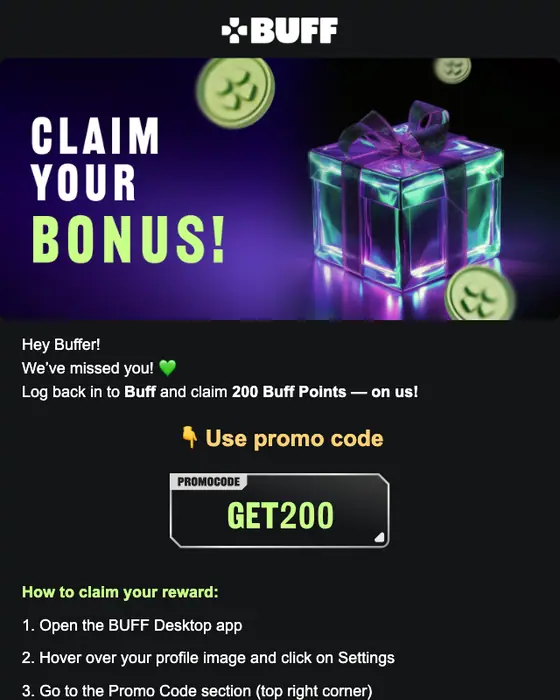
Buff
🔥 Get 200 Buff Points Free — Limited Offer!
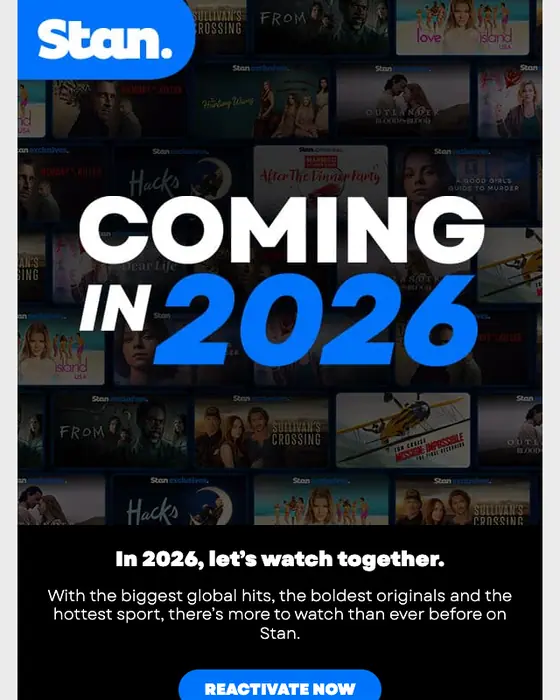
Stan.
Coming in 2026
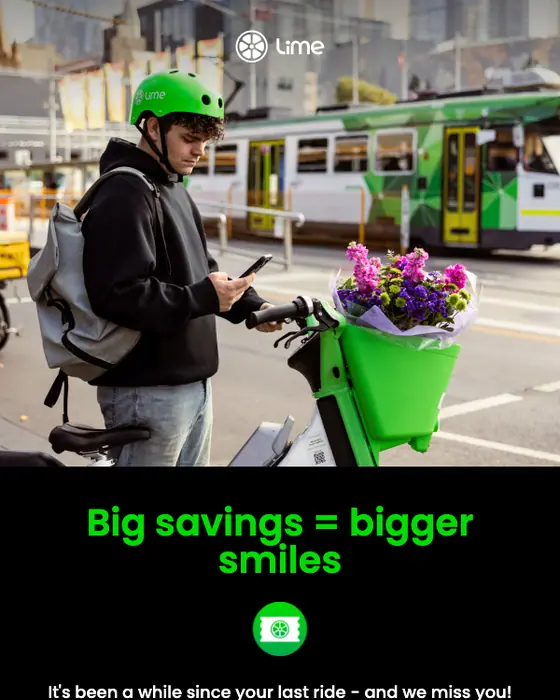
Lime
Open for big savings on Lime 💸 What are you waiting for?
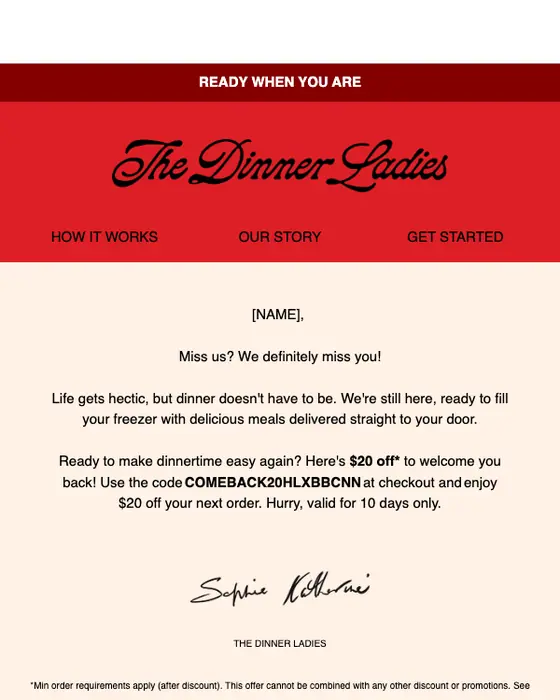
The Dinner Ladies
We've missed you! Here's $20 off your next order
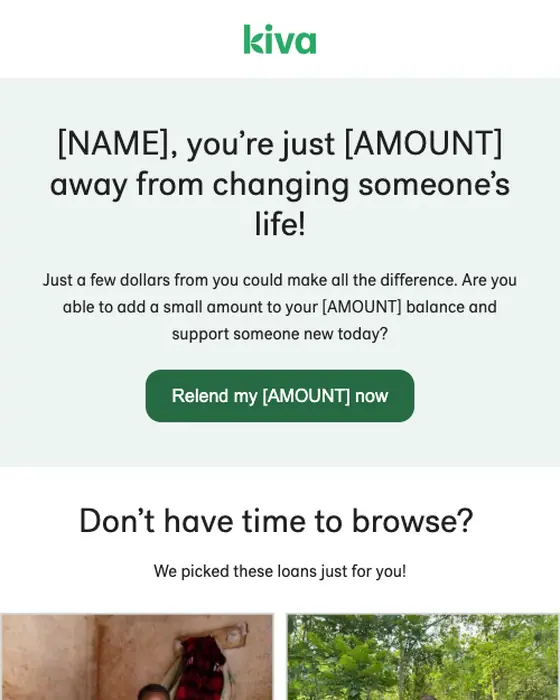
Kiva
You have $22.23 ready to relend!
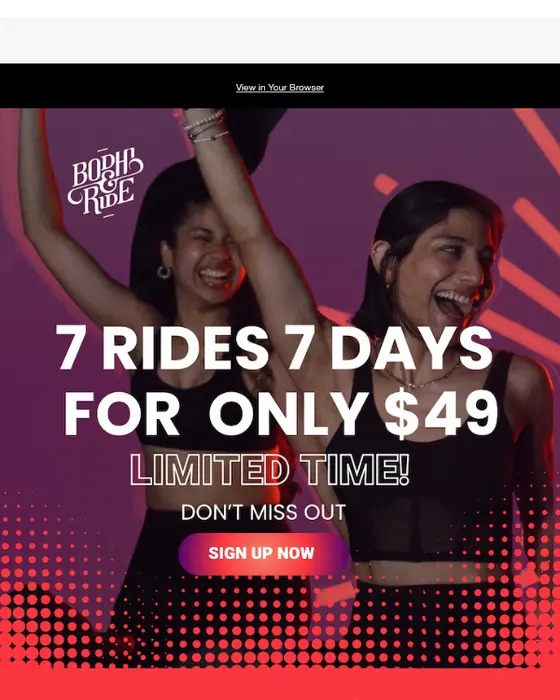
Bodhi and Ride
We miss you! Let’s get you back into RIDE!
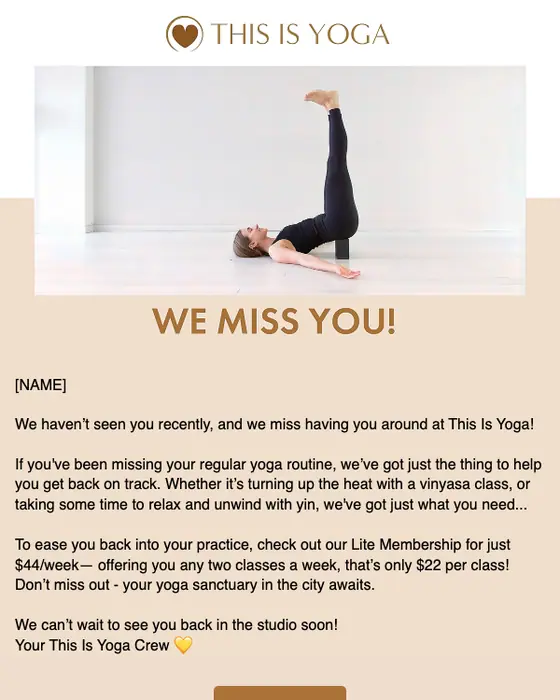
This is Yoga | Randwick
We want you back! 💛
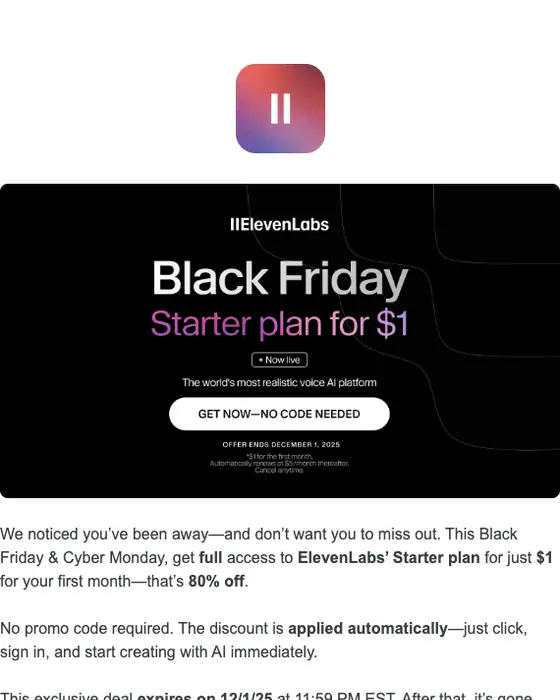
ElevenLabs
Come Back to ElevenLabs for $1 — Black Friday Week Only
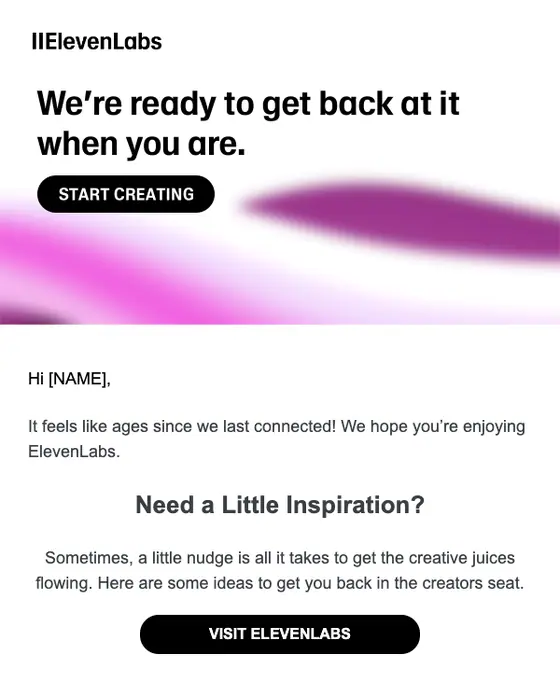
ElevenLabs
Need a little inspo?
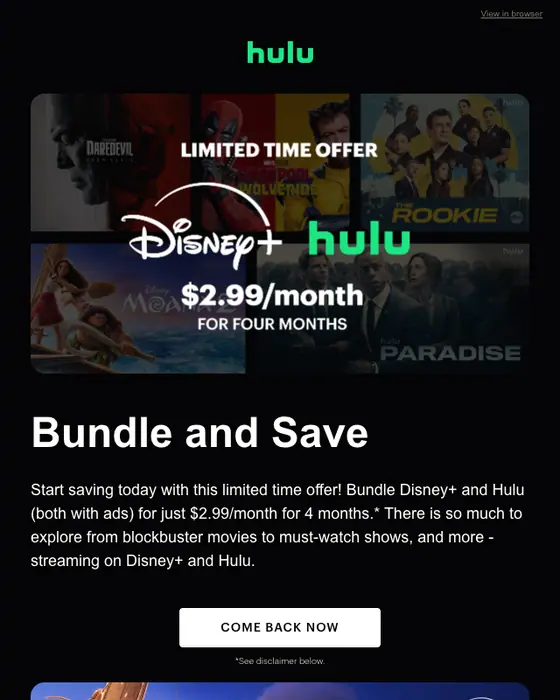
Hulu
Get This Deal and Watch 'Moana 2' on Disney+
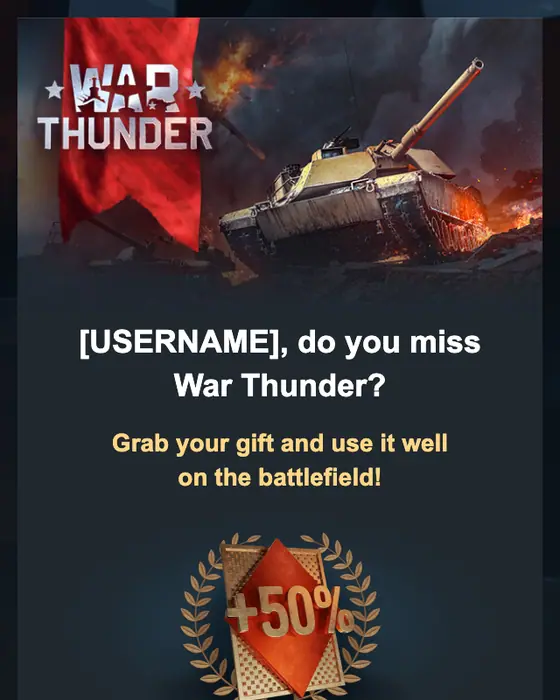
War Thunder
[USERNAME], War Thunder is waiting for you! Grab your bonus and join other players!
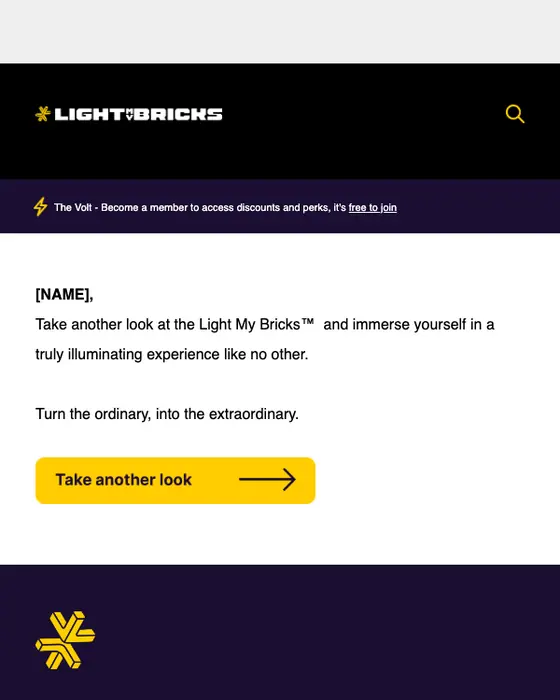
Light My Bricks Australia
Revisit the Light My Bricks™
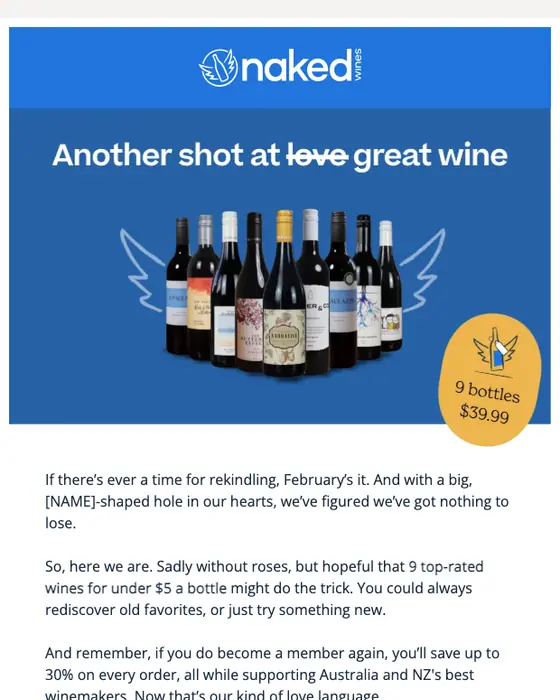
Naked Wines
Make amends with 9 wines for $39.99
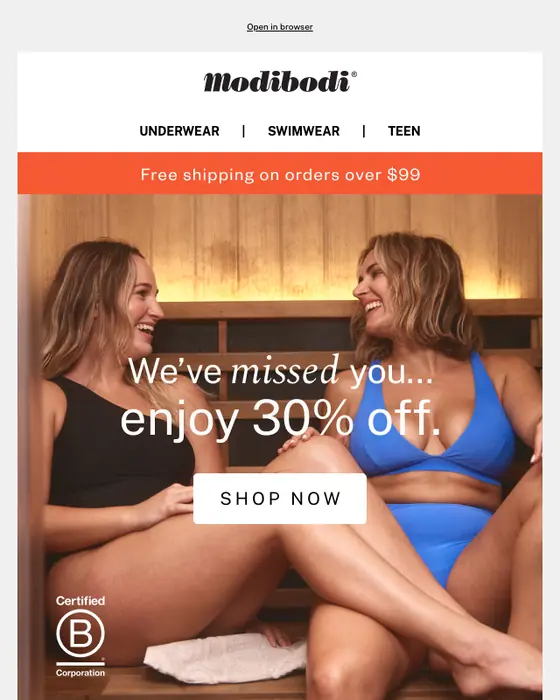
Modibodi
Where’d you go?
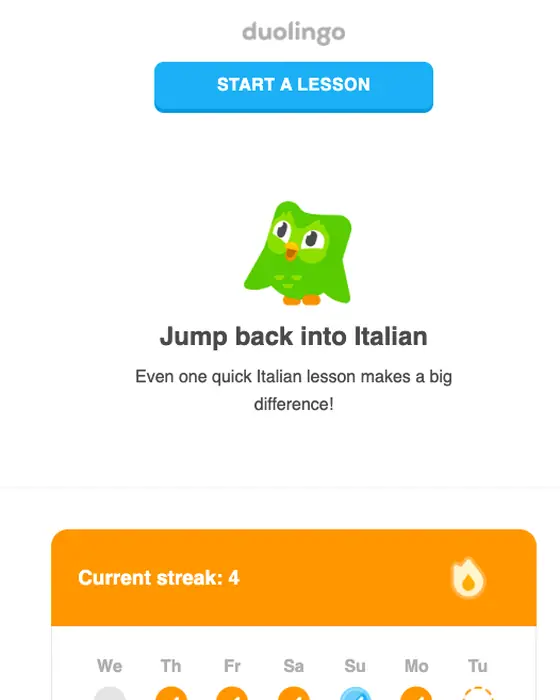
Duolingo
⏰ [NAME], got 3 minutes?
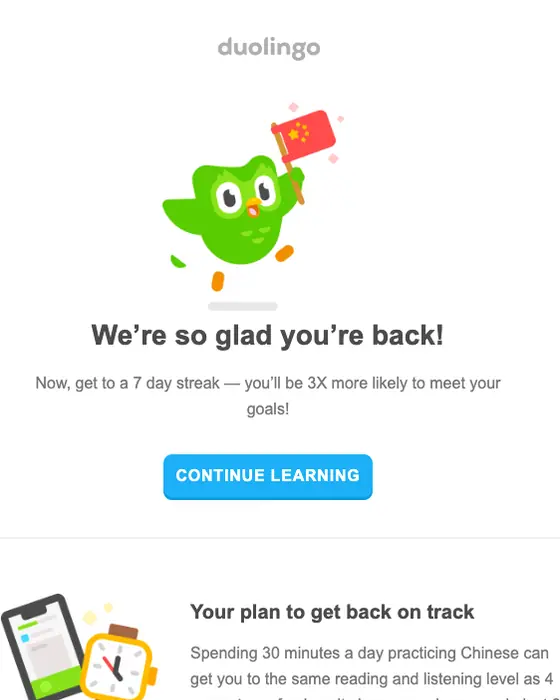
Duolingo
Welcome back! Check out your personalized learning plan
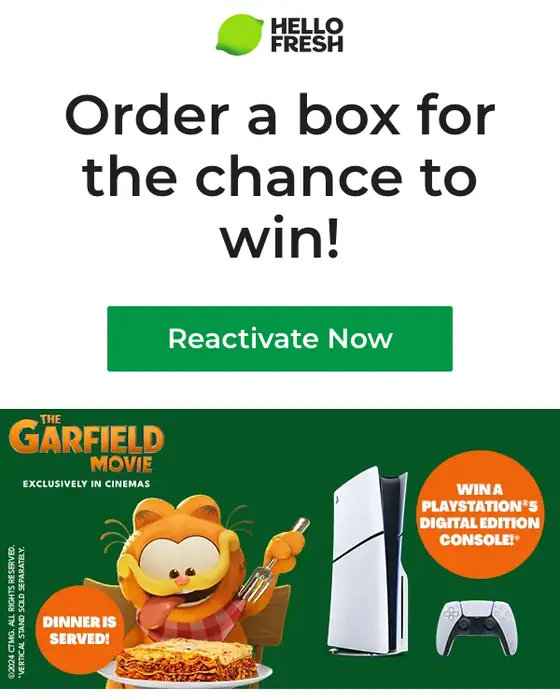
HelloFresh
Last chance to win BIG! 🙀
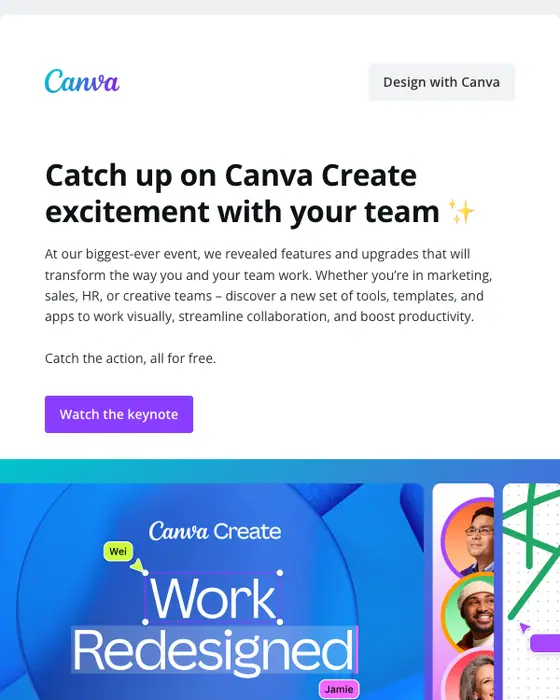
Canva
Come back to a fresh, new Canva 🤩
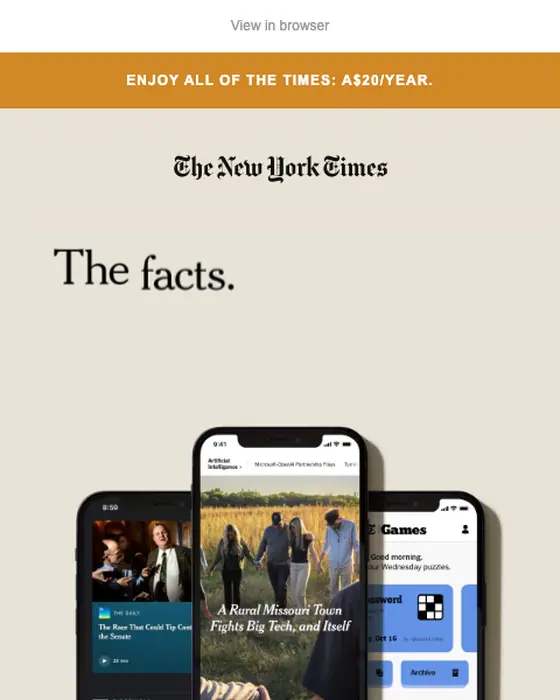
The New York Times
Save on The Times when you resubscribe.
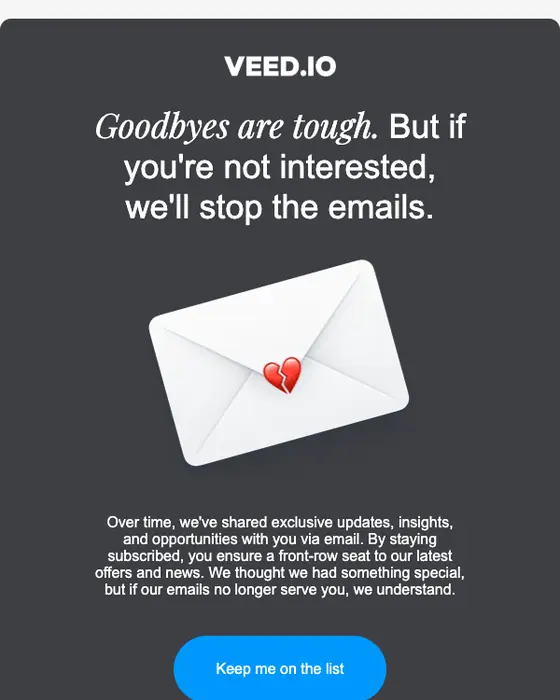
VEED
Have we reached the end of our time together?
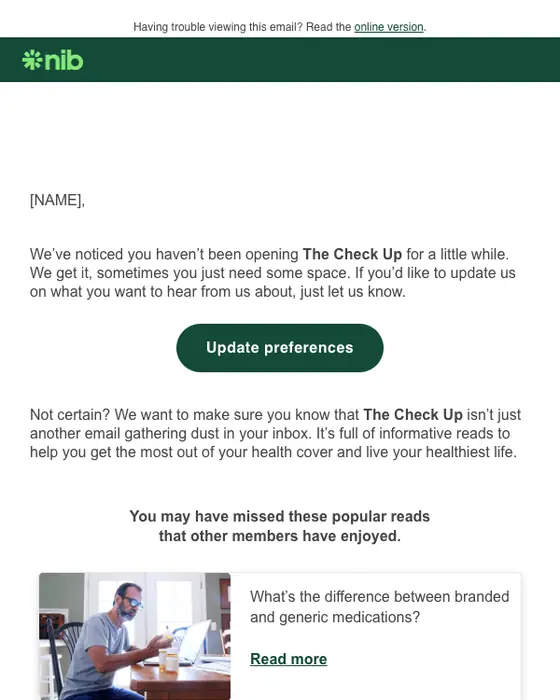
nib Insurance
[NAME], do you still want to hear from us?
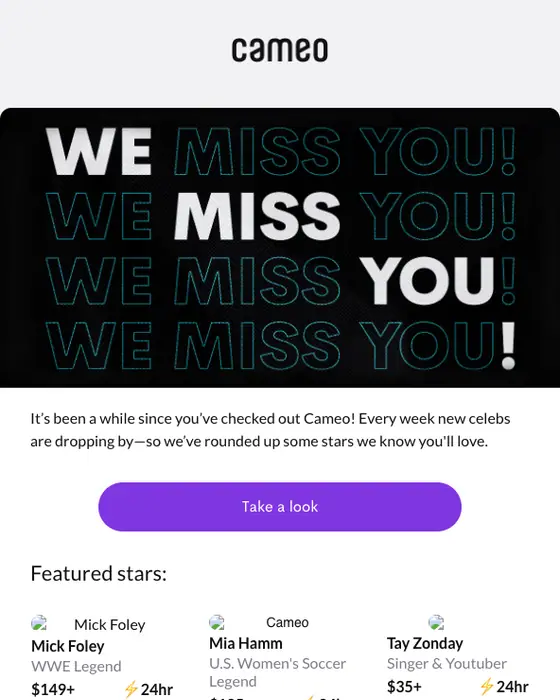
Cameo
Where have you been? 🥲
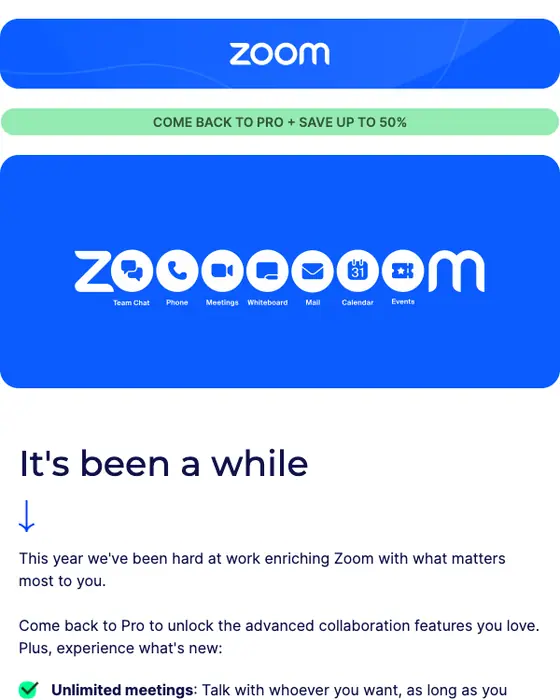
Zoom
📣 Come back to Pro + save up to 50% off
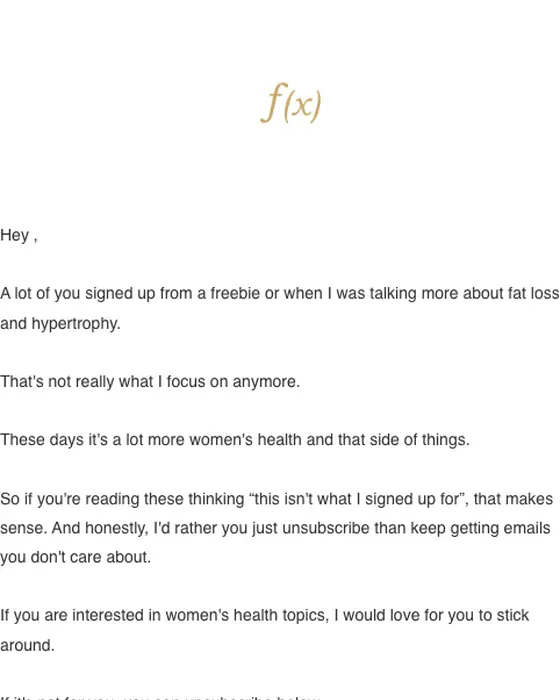
Sheridan Skye - The Female Fitness Formula
Do you still want to receive these emails?
The 58 emails, by what they ask the reader to do
Re-engagement email types
the 58 emails shown on this page| Type | Emails shown | A real subject line |
|---|---|---|
| We miss you: a nudge to come back, with no offer | 19 of 58 | Cameo: Where have you been? 🥲 (2023) |
| Special offer: a discount, bonus or free period to come back | 21 of 58 | The Dinner Ladies: We've missed you! Here's $20 off your next order (2026) |
| Product update: what is new since the reader left | 3 of 58 | Canva: Come back to a fresh, new Canva 🤩 (2024) |
| Preference center: what the reader still wants to receive | 7 of 58 | nib Insurance: [NAME], do you still want to hear from us? (2023) |
| Breakup: a final notice before the emails stop or the account closes | 6 of 58 | VEED: Have we reached the end of our time together? (2023) |
| A welcome back after the reader returned | 2 of 58 | QuiteLike: Look who’s back! Spoiler: it’s you. (2025) |
The set splits almost evenly between paying for the return and asking for it: 21 of the 58 lead with a discount, a bonus, a free period or a cheaper plan, and 19 give a reason to come back with no offer attached. Another 13 are about the relationship itself: 7 ask the reader what they still want to receive, or how it went, and 6 say the emails will stop or the account will close unless the reader acts. Each email is counted once, by its main ask, so an offer with a deadline sits under offers.
The same library cut by lifecycle stage has a separate page of winback email examples, which overlaps with this one. Offer-led sends of every kind are under discount offer emails, and feedback requests under survey emails.
How re-engagement emails differ from other email, same two inboxes
Re-engagement and all other email, same two inboxes
396 re-engagement emails and 12,315 others| What we measured | Re-engagement | All other email |
|---|---|---|
| Warm tone | 41% | 14% |
| Personalized subject line | 28% | 7% |
| Curiosity subject line | 21% | 5% |
| Question as the subject line | 9% | 2% |
| Greets by first name | 52% | 40% |
| Short or micro length | 66% | 53% |
| Exactly one call to action | 36% | 30% |
| Median calls to action | 2 | 2 |
| Plain-text layout | 34% | 32% |
| Median subject line length | 34 characters | 41 characters |
The difference is in the voice and the subject line more than the design. 41% of re-engagement emails are written in a warm tone, against 14% of everything else in the same inboxes. The subject line is about four times as likely to be personalized (28% against 7%) or built on curiosity (21% against 5%). They run shorter, with 66% short or micro against 53%. Layout barely moves: 34% use a plain-text layout against 32%. These percentages describe all 396 emails tagged as re-engagement, including the ones not shown.
Re-engagement email subject lines, by style
Subject line styles
all 396 re-engagement emails collected| Style | Emails | Share | An example on this page |
|---|---|---|---|
| Personalized | 109 emails | 28% of the 396 | Duolingo: ⏰ [NAME], got 3 minutes? (2024) |
| Descriptive | 95 emails | 24% of the 396 | Nutra Organics: Don't forget to refill your Thriving Family (2026) |
| Curiosity | 82 emails | 21% of the 396 | Modibodi: Where’d you go? (2024) |
| Question | 36 emails | 9% of the 396 | TeePublic: What’re you interested in? (2025) |
| Discount in the subject line | 32 emails | 8% of the 396 | Zoom: 📣 Come back to Pro + save up to 50% off (2023) |
| Urgency | 16 emails | 4% of the 396 | Wikipedia: Our final email (2020) |
| Emoji led | 16 emails | 4% of the 396 | This is Yoga: We want you back! 💛 (2025) |
None of the 396 subject lines uses the word re-engagement, which is the sender's label for the campaign. 100 of them contain a question mark and 20 say some form of "miss you". The median subject line is 34 characters, against 41 for the other email in the same inboxes. For how to write one, see our guide to email subject lines.
Next to this one
The same library, cut a different way: winback emails, retention emails, discount offers, cancellation emails and surveys.
Questions about re-engagement emails
A message sent to a subscriber or customer who has gone quiet, to bring them back or confirm they still want the emails. Of the 58 shown here, 21 lead with an offer, 19 nudge with no offer, 7 ask what the reader still wants to receive or how it went and 6 are a final notice.
Both spellings are in use, and this page uses the hyphen. Senders keep the word out of the subject line either way: none of the 396 we collected contains it. Brands write "we miss you" or ask a question instead: 20 subject lines say some form of "miss you" and 100 contain a question mark.
The 58 emails here do it in one of a few ways: an offer to come back (21), a reminder with no offer (19), a note on what is new (3), or a preference check or final notice (13). Who to send to and when to stop is in our re-engagement campaign guide.
Of the 396 collected, 28% use a personalized subject line, 24% a plain descriptive one and 21% curiosity. Only 8% put a discount in the subject line. The median length is 34 characters, shorter than the 41 of other email in the same inboxes.
Two ordinary inboxes that signed up to products and newsletters the way any customer would, between 2016 and 2026. Nothing is a mockup, and nothing is taken from another email gallery. The same inboxes hold 12,315 other emails, which is where the comparison on this page comes from.
We reviewed the candidates one by one and kept the clear cases. We left out emails tagged as re-engagement that were really newsletters, year recaps, onboarding nudges or plain promotions, and repeats of one brand's template. The percentages on the page still describe all 396.