
![Guzman y Gomez welcome email: Hey [NAME] 👋 Welcome to GOMEX Rewards!](/email-examples/img/19d60bf977480164-t.webp)
What a food and beverage email is
A food and beverage email is a message from a restaurant, delivery app, grocery box, coffee roaster, drinks brand or packaged food maker: order confirmations and receipts, pickup reminders, welcome emails, promotions and recipe newsletters.
We collected 406 of them from 106 brands in two ordinary inboxes, sent between 2016 and 2026, and show 77 here. 328 of the 406 are Australian, so the set leans on Australian restaurant chains and food brands such as Guzman y Gomez, Grill'd, Goldi and Farmers Pick, next to Uber Eats and DoorDash. The numbers below describe all 406.
Browse 77 food and beverage emails
Filter by type, or search a brand or subject line. Open any email to see it full length, with its subject line, notes on what it is doing, and a prompt that rebuilds it.
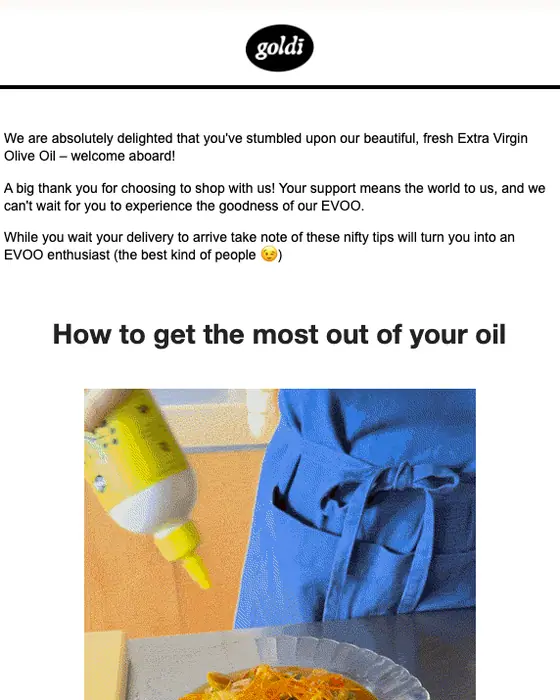
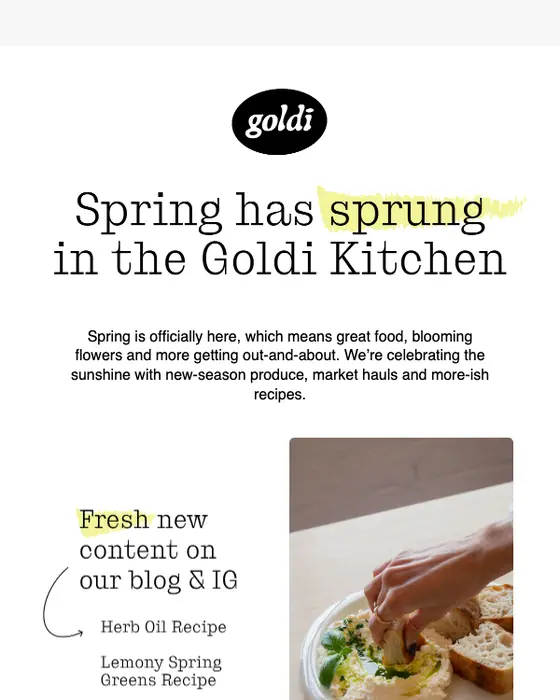
Goldi
You're what makes us great
Guzman y Gomez
Hey [NAME] 👋 Welcome to GOMEX Rewards!
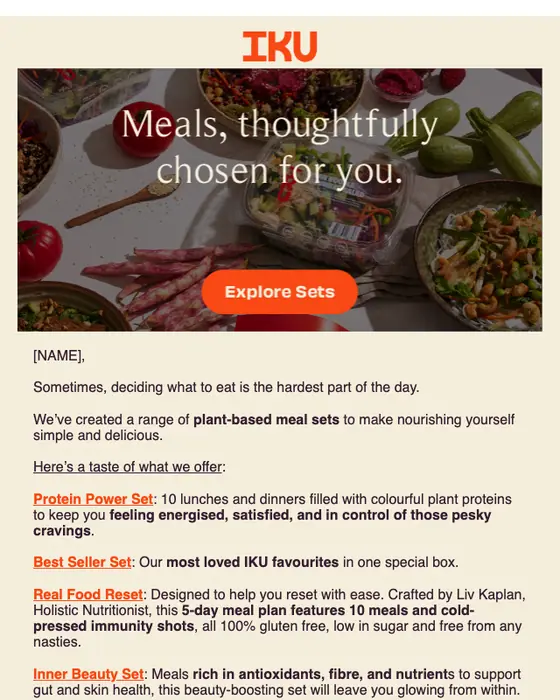
IKU
Which IKU set is calling your name?
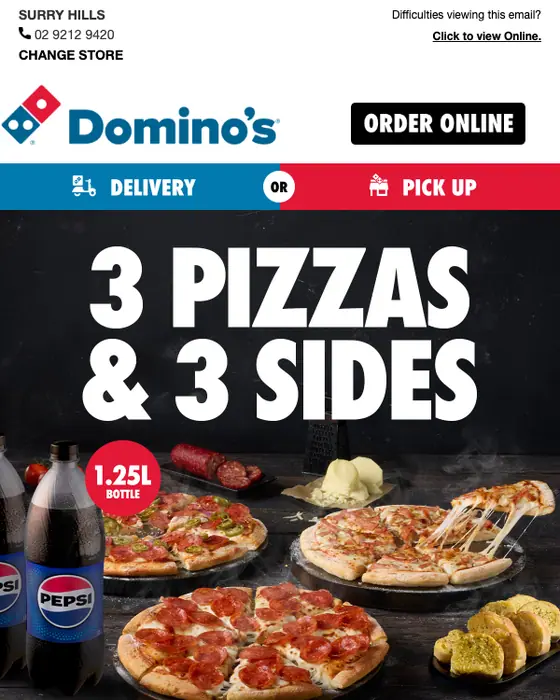
Domino's
🍕 TGIF! Get 3 Large Pizzas + 3 Sides From $29* Pick Up
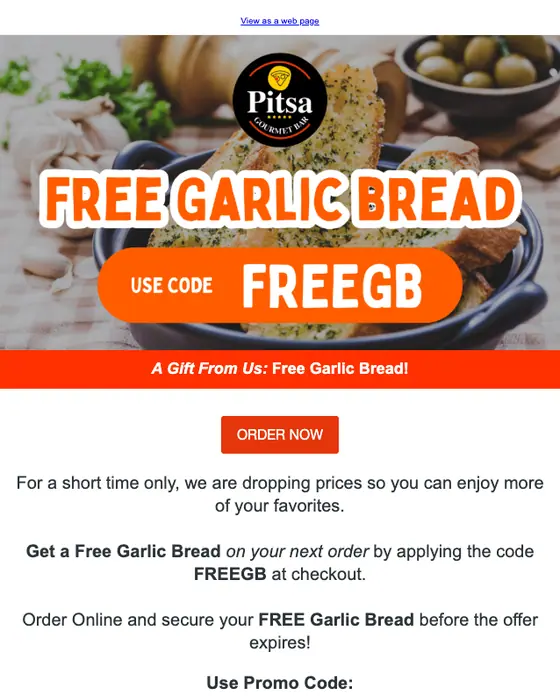
Pitsa Gourmet Bar
Pitsa Gourmet Bar: Free Garlic Bread Awaits! 🍞
Goldi
Spring means great produce and new recipes
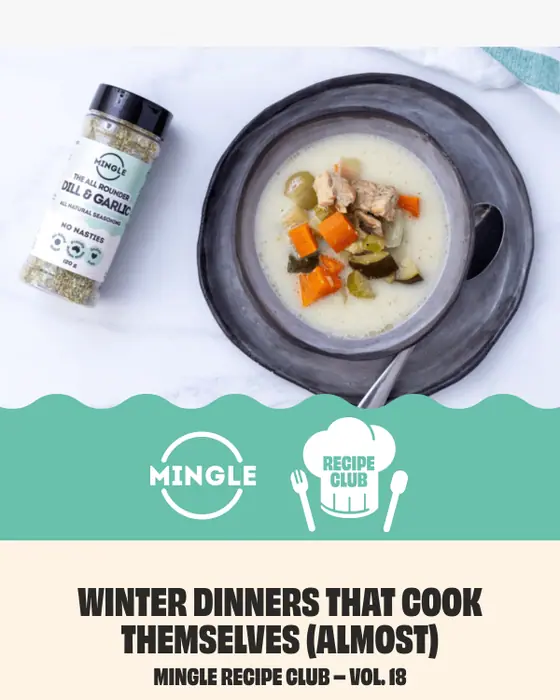
Mingle Recipe Club
3 New Slow Cooker Recipes To Warm Your Soul
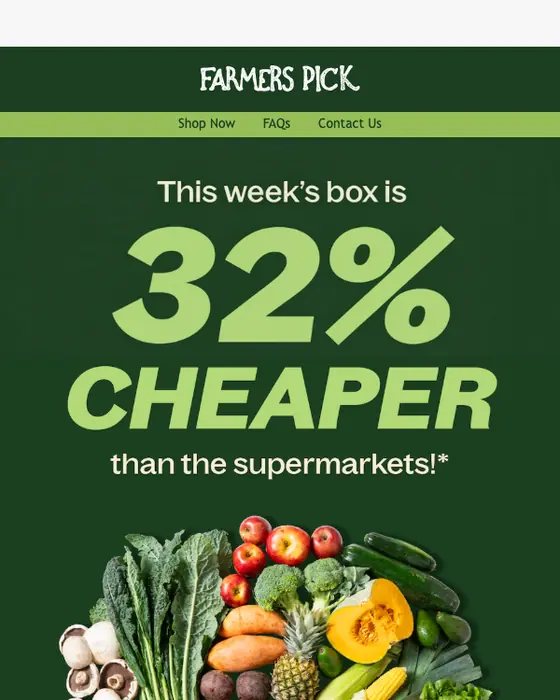
Farmers Pick
This week's box: too good to miss 👀
Too Good To Go
Welcome to Too Good To Go!
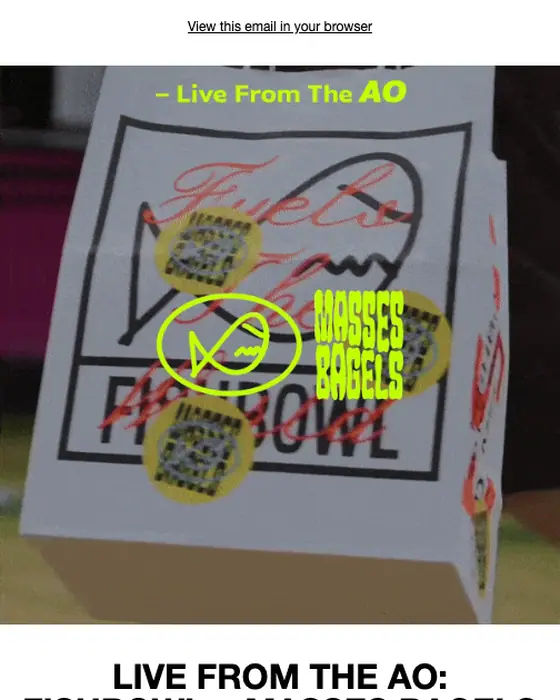
FISHBOWL
Live from the AO: FISHBOWL + MASSES
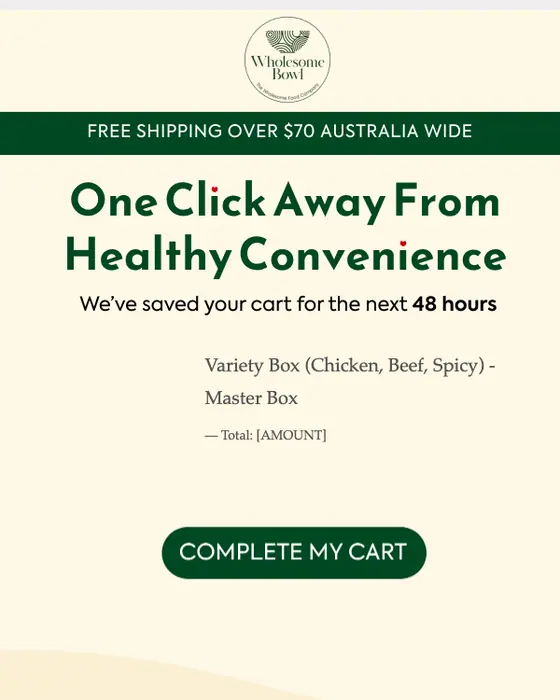
Wholesome Bowl
Att: Noodle lover, Don’t let dinner become takeaway again.
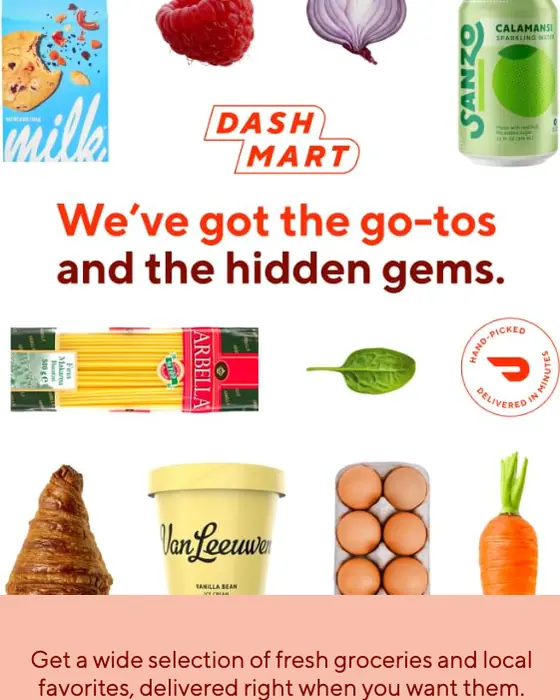
DoorDash
Meet DashMart: Your personal superstore.
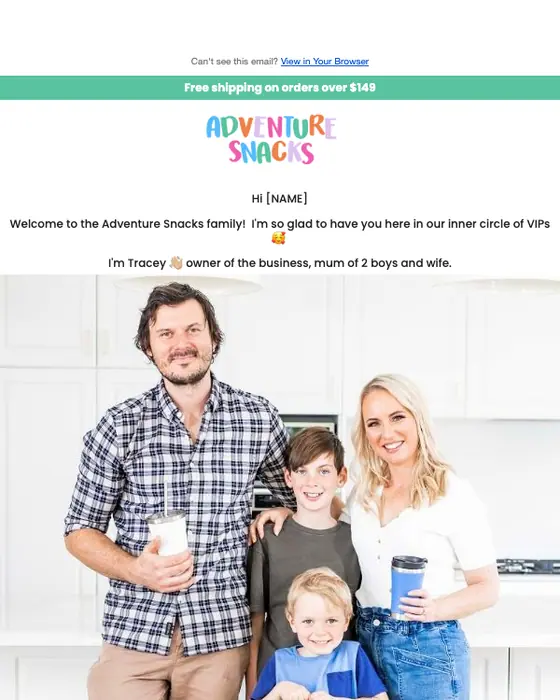
Adventure Snacks
[NAME] You're Now a VIP ✨
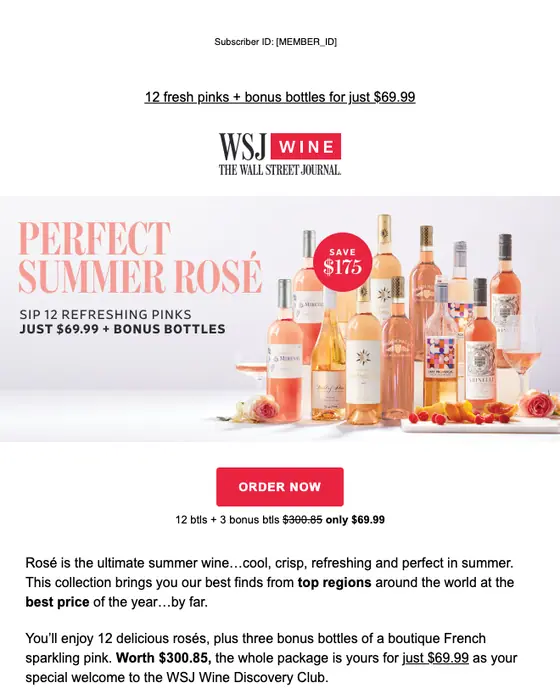
WSJ Wine
Sip rosé in style this summer (and save $175)
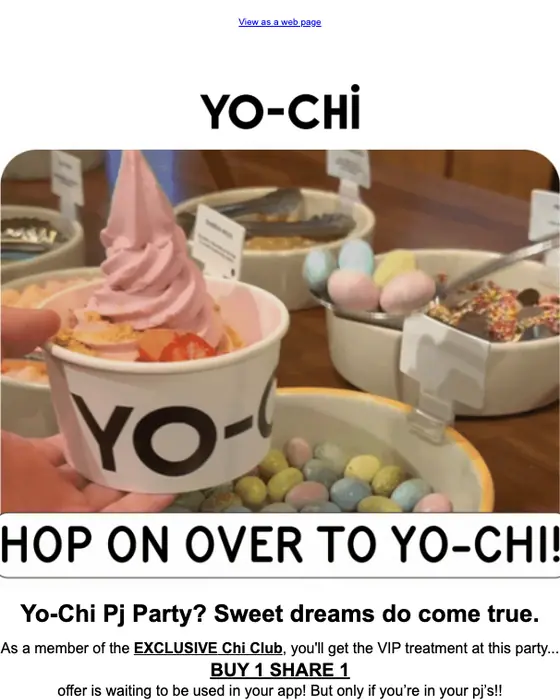
Yo-Chi
YO-CHI PJ PARTY?!
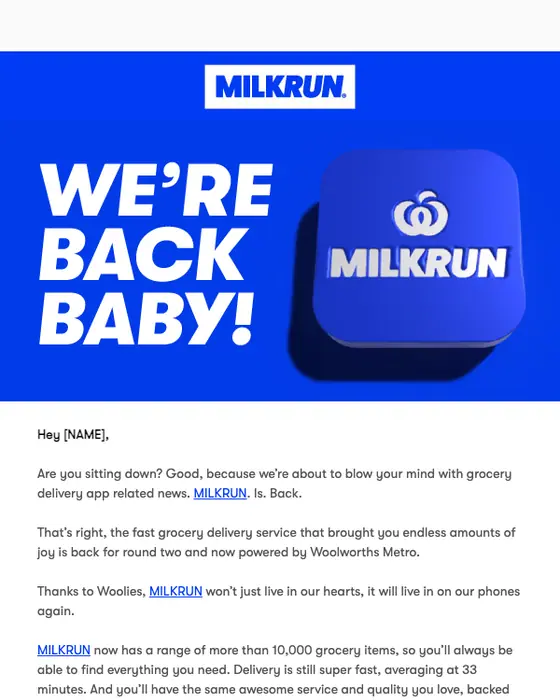
MILKRUN
MILKRUN is back. Celebrate with $15 off!
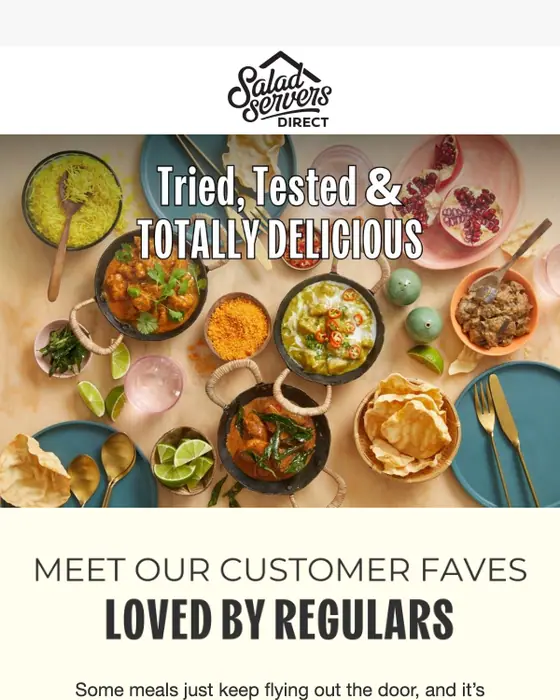
Salad Servers Direct
Our Most-Loved Meals, Picked by You
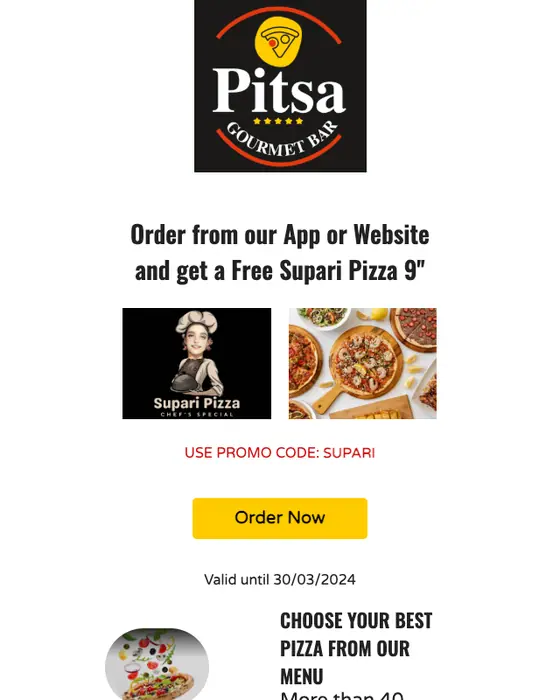
Pitsa Gourmet Bar
Get a Taste of Heaven (and Our Chef's Special) Today!
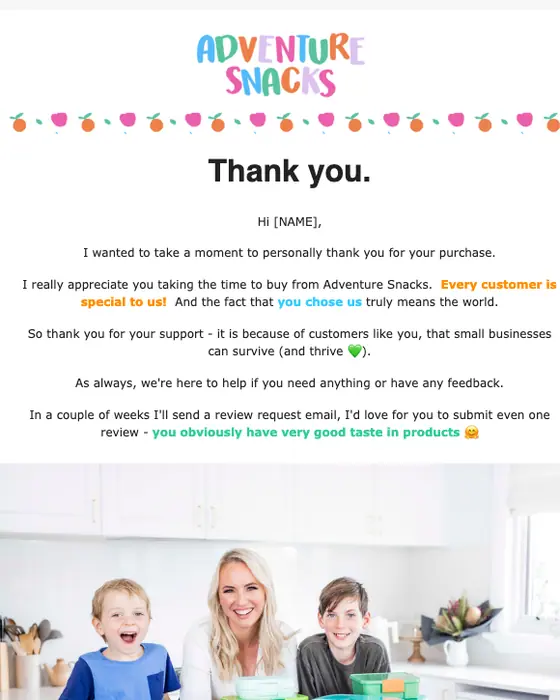
Adventure Snacks
Thank You From The Founder 💚
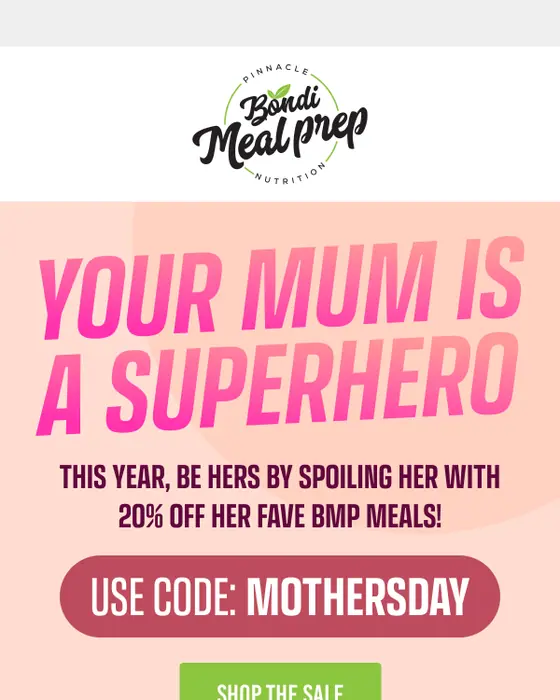
Bondi Meal Prep
Mother's Day Sale! 🌺
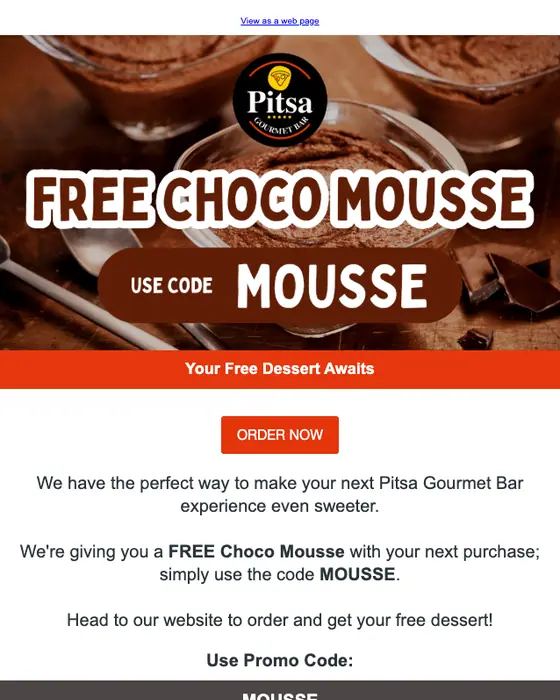
Pitsa Gourmet Bar
Don't forget your free dessert! 🎉
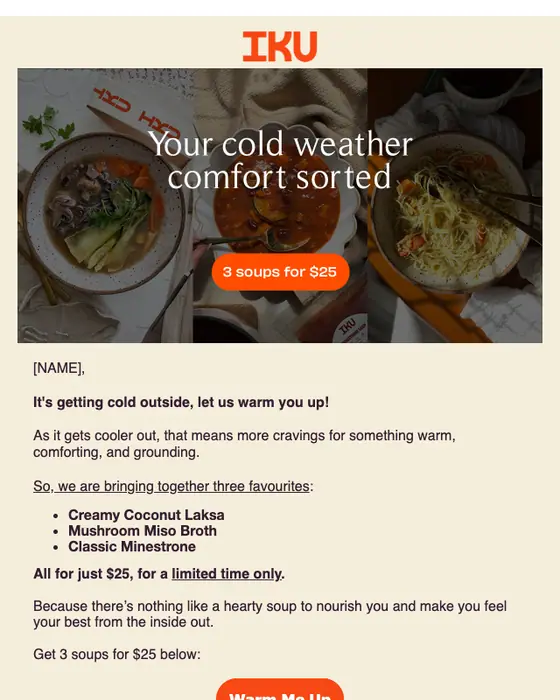
IKU
Limited Time Cosy-Deal: $25 for 3 soups
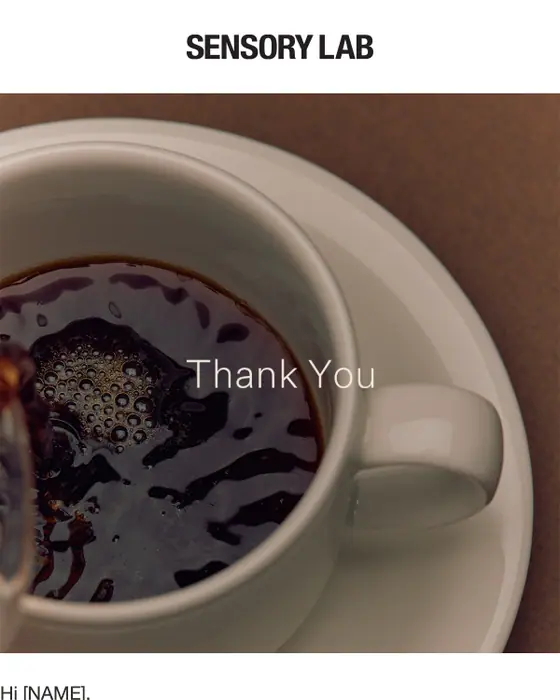
Sensory Lab
Thank you for purchasing!
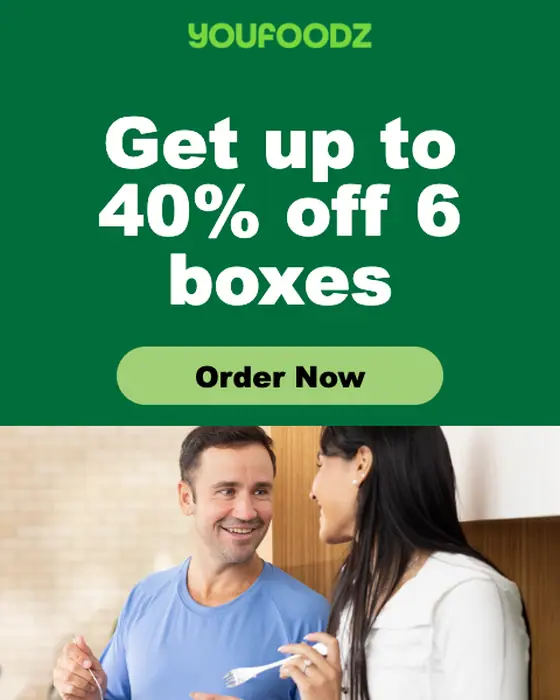
Youfoodz
🤩 You've scored up to 40% off!
How food and beverage email differs from everything else
Food and beverage email against every other email
406 food and beverage emails and 12,305 other emails from the same two inboxes| What we measured | Food and beverage | Everything else |
|---|---|---|
| Receipts, order confirmations and other order updates | 43% | 18% |
| Promotional email | 22% | 22% |
| Newsletters | 4% | 12% |
| Opens with a hero image | 24% | 11% |
| Single-column layout | 84% | 64% |
| Plain-text layout | 15% | 32% |
| Warm color palette | 13% | 1% |
| Black, white and gray only | 41% | 62% |
| Warm tone | 25% | 15% |
| Greets the reader by first name | 51% | 40% |
| Subject line leads with the offer | 16% | 11% |
| Has a button | 58% | 39% |
| Text heavy | 44% | 61% |
| Median calls to action | 2 | 2 |
More than anything else, food and beverage email is about an order. 43% of it is a receipt, an order confirmation, a pickup reminder or a delivery update, against 18% of other email. Two senders account for much of that: Uber Eats sent 51 of the 406 and Thoughtful Foods, a Sydney food co-op, sent 43, most of them weekly order reminders. Leave those two out and order emails are still 26% of the other 312.
Order email is the most underrated category in email design. It is the largest group these brands send, and the plainest: of the 173 order emails, 1 opens with a hero image, against 42% of the other 233, and 62% are black, white and gray only, against 26%. Leave out Uber Eats and Thoughtful Foods and it holds: 1 of the other 81 order emails opens with a hero image, and 69% are black, white and gray only.
Order email against the rest of the food and beverage set
173 order emails and 233 other food and beverage emails from the same two inboxes| What we measured | Order emails | Other food and beverage email |
|---|---|---|
| Opens with a hero image | under 1% | 42% |
| Black, white and gray only | 62% | 26% |
| Text heavy | 62% | 31% |
It also looks more like food. 24% opens with a hero image, against 11% of other email, 13% uses a warm color palette, against 1%, and 58% has a button, against 39%. Promotions take the same share as anywhere else, 22% against 22%, and newsletters are rarer, 4% against 12%.
What is in the collected set
By type
the 406 food and beverage emails| Type | Emails | Share of the set |
|---|---|---|
| Promotional | 91 emails | 22% of the set |
| Receipt | 67 emails | 17% of the set |
| Order confirmation | 43 emails | 11% of the set |
| Order reminder | 42 emails | 10% of the set |
| Re-engagement | 18 emails | 4% of the set |
| Welcome | 18 emails | 4% of the set |
| Newsletter | 17 emails | 4% of the set |
| Discount offer | 16 emails | 4% of the set |
| Shipping | 13 emails | 3% of the set |
| 21 other types | 81 emails | 20% of the set |
41 of the 42 order reminders are from Thoughtful Foods, and 47 of the 67 receipts are from Uber Eats. The grid shows 77 emails from 44 brands, 67 of them Australian and 73 sent in 2023 or later: 28 promotions, discounts, sales, seasonal sends and launches, and 12 order emails. It shows no receipts: the three rendered so far came off this page, two for showing someone's personal details and one for being a single line. Only 121 of the 406 have been rendered for the library so far, and receipt emails from other industries have their own page.
Next to this one
The same library, cut a different way: hospitality emails, ecommerce emails and retail and fashion emails by industry, or by the job the email does: order confirmations, receipts, order reminders, promotional emails, abandoned cart emails, re-engagement emails and welcome emails.
Questions about the collection
Domino's sells 3 large pizzas and 3 sides for pickup, Pitsa Gourmet Bar gives free garlic bread with a code, and IKU leads with a meal set. Promotional email is 22% of the 406 we collected, the same share as other email.
Order emails. Receipts, order confirmations, order reminders and delivery updates make up 43% of the 406, against 18% of other email, and still 26% without Uber Eats and Thoughtful Foods. Promotional email is the largest single type at 22%, then receipts at 17%.
One column and a button, with a photo up top about twice as often as other email. 84% of the 406 use a single-column layout, 24% open with a hero image against 11% of other email, and 58% have a button against 39%. 13% use a warm color palette, which only 1% of other email does.
121 of the 406 have been rendered full length for the library. We took 44 off this page: 33 more sends from brands already shown, four that did not render properly, four that showed personal details or a code, and three that did not fit. The other 285 count in every percentage but are not shown yet.
Promotional email is the largest type, 91 of the 406, such as Domino's pickup deal. Among marketing sends, welcome emails (18) follow, such as the Guzman y Gomez GOMEX Rewards welcome, then re-engagement emails (18) and newsletters (17), such as Mingle Recipe Club's slow cooker recipes. Use the type filter above to see each.