
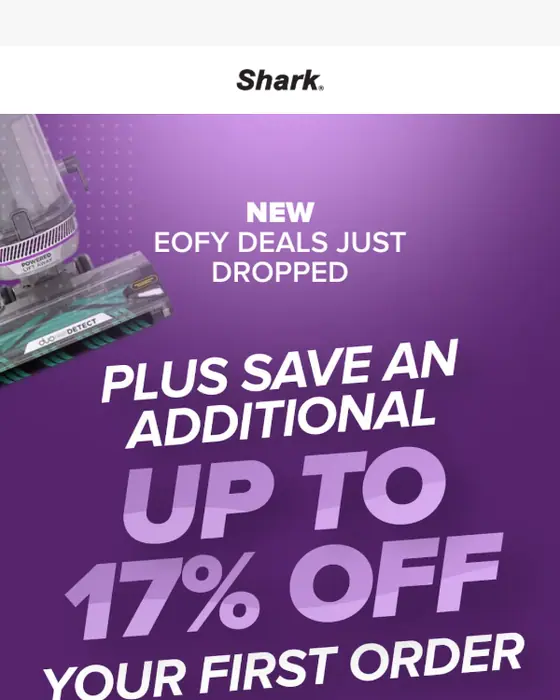
What an ecommerce email is
An ecommerce email is any email an online store sends to shoppers: welcomes, abandoned-cart reminders, launches, sales, order confirmations, shipping updates and review requests.
We collected 1,360 of them from 373 online stores out of two ordinary inboxes, sent between 2016 and 2026, 72% of them from Australian stores. Nothing here is a mockup. This page shows 136 from 102 brands, 104 of them sent in 2025 or 2026. Open any one full length to copy it as a template for your own store; the FAQ below says what was left off and why.
Browse all 136 ecommerce emails
Tap a job to narrow the grid, from welcome and abandoned cart through launches and review requests to shipping updates. Open any email to see it full length, with its subject line, notes on what it is doing, and a prompt that rebuilds it.
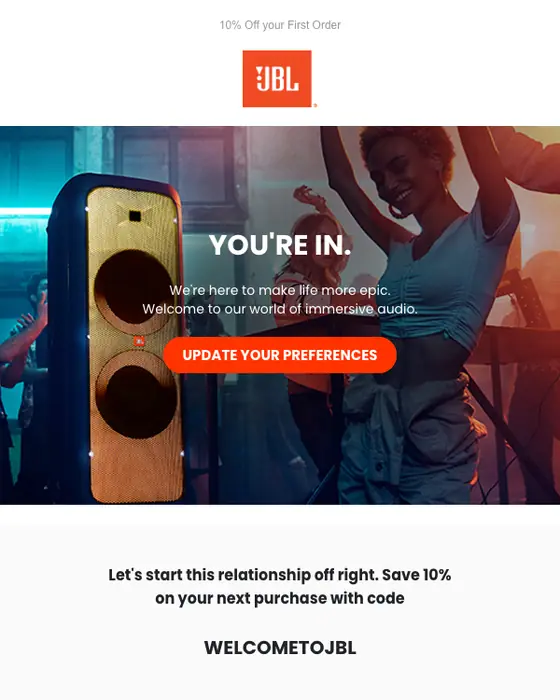
JBL
You're in: Welcome to JBL
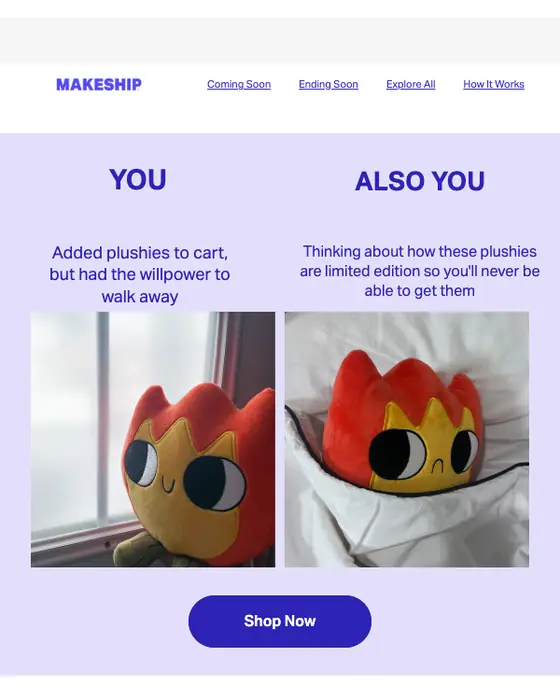
Makeship
Adopt me before it's too late!
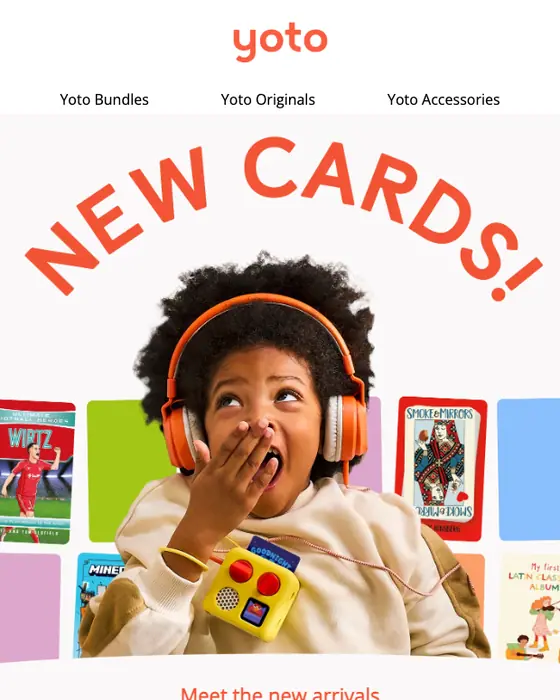
Yoto
Just added to Yoto

Snugzy
Got a great Snugzy Snap [NAME]? 🤩
Buck Knives
Welcome to the Buck Family! Take 10% Off Your Next Order*
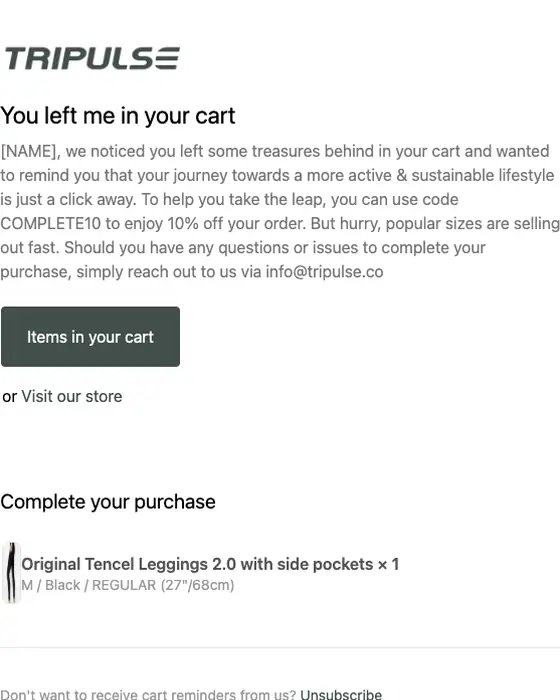
Tripulse
Complete Your Purchase: Exclusive 10% Off Just for You
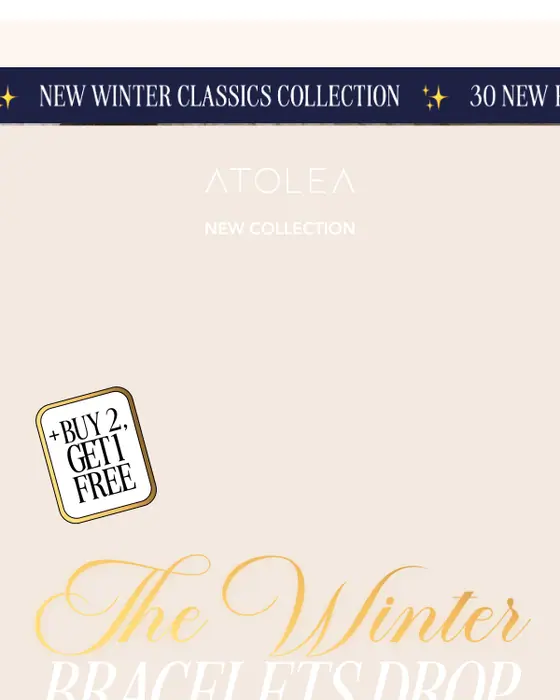
Atolea Jewelry
JUST IN: 7 BRAND-NEW BRACELETS
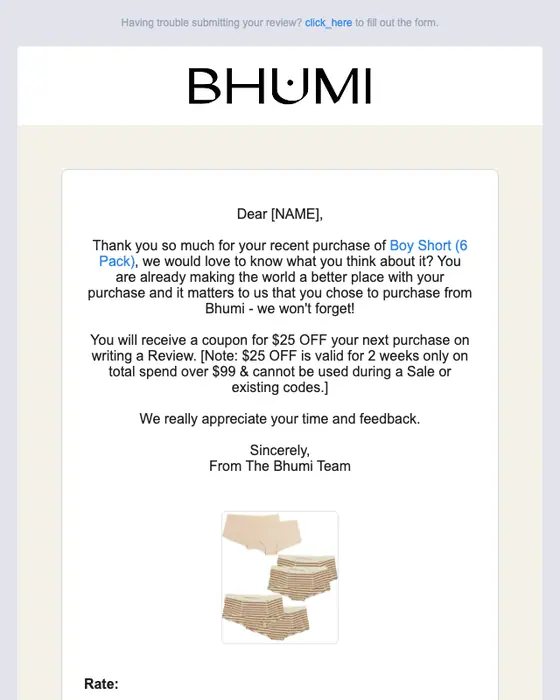
Bhumi Organic Cotton
Would you like to review your recent order and receive $25 OFF?
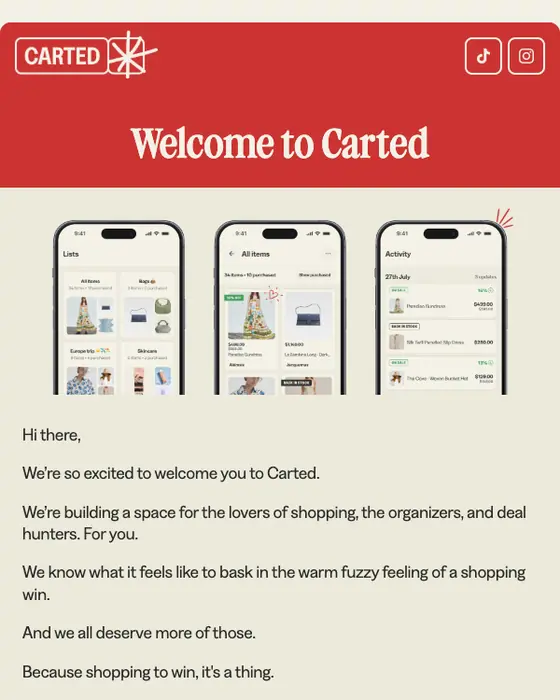
Carted
Welcome to Carted, where we shop to win
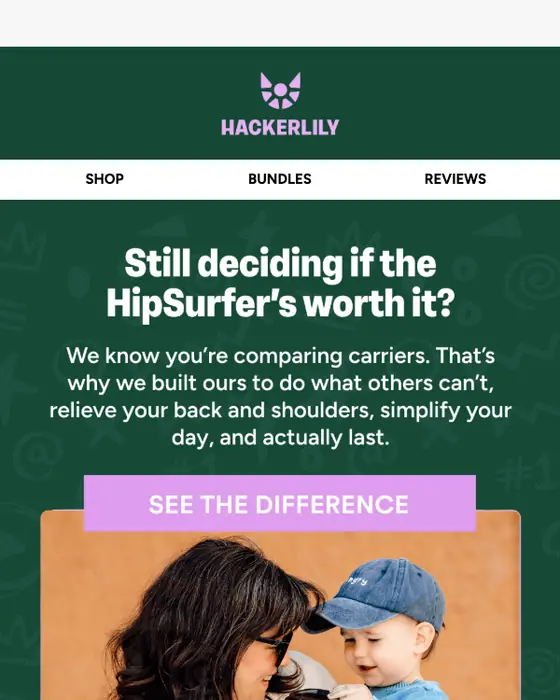
Hackerlily
This one's a keeper, [NAME] 🫂
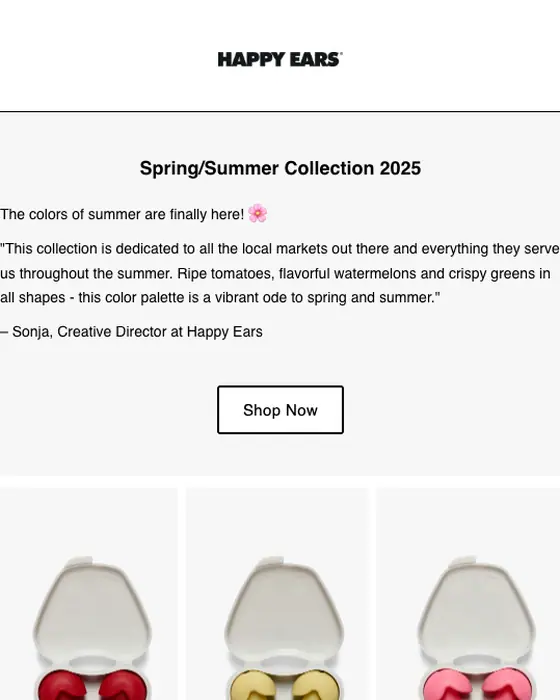
Happy Ears
NOW LIVE: Spring/Summer collection ☀️
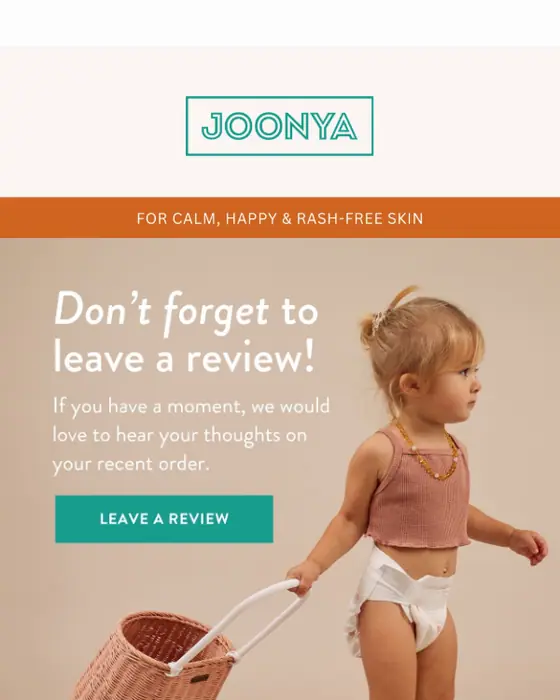
Joonya
We'd Love to Hear Your Thoughts! 🌟
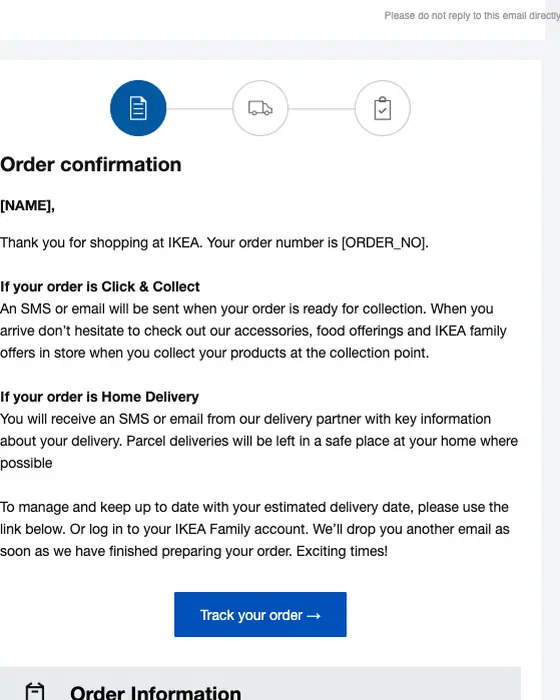
IKEA
Order confirmation

Snugzy
Have You Got a Good Picture?
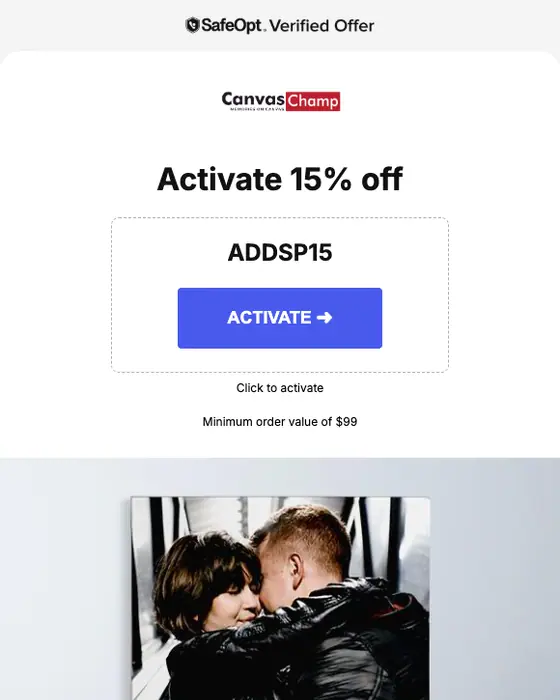
CanvasChamp
Reminder: Your recent visit unlocked an exclusive offer.
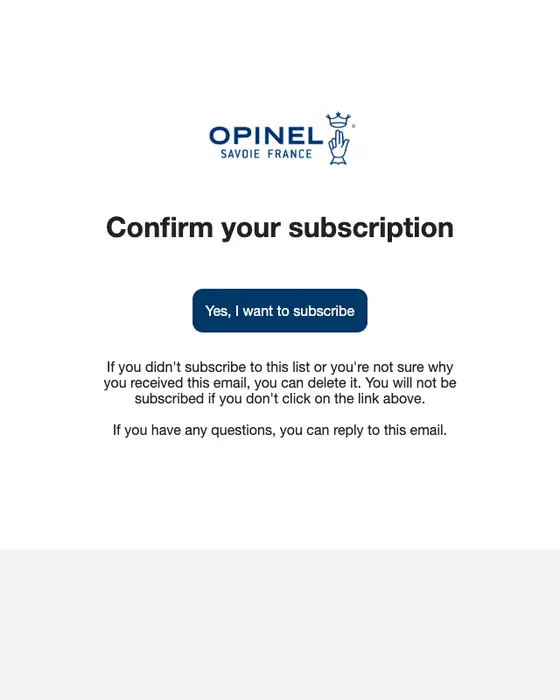
Opinel APAC
Confirm Your Subscription
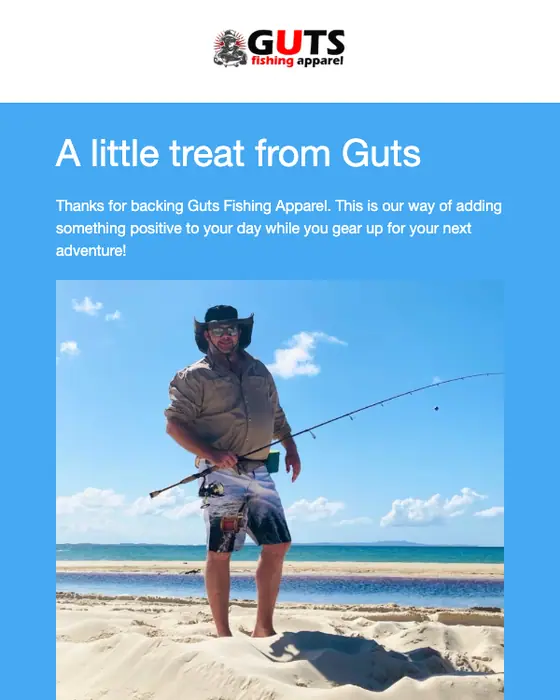
Guts Fishing Apparel
A little treat from Guts

Buck Knives
The Compadre Series: Built For Hard Work Outdoors
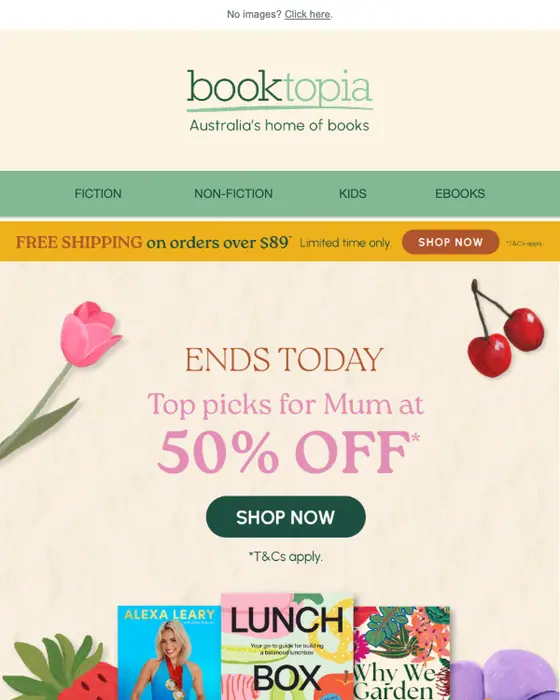
Booktopia
Ends Today: 50% off top picks for Mum 💐
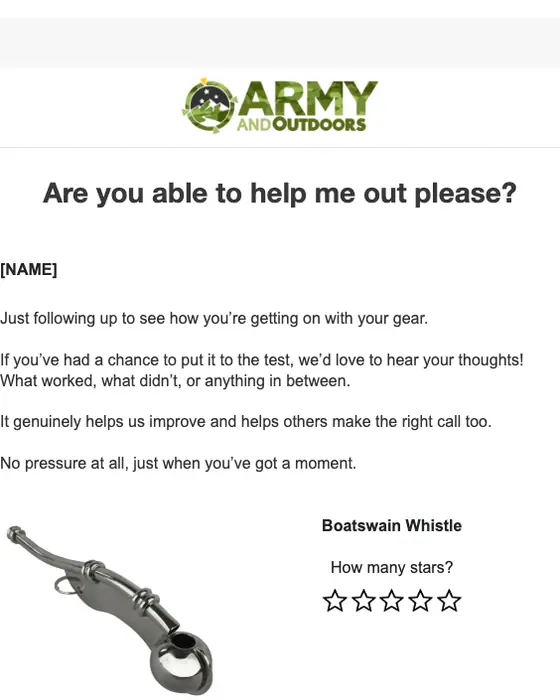
Army and Outdoors
Still curious what you thought…
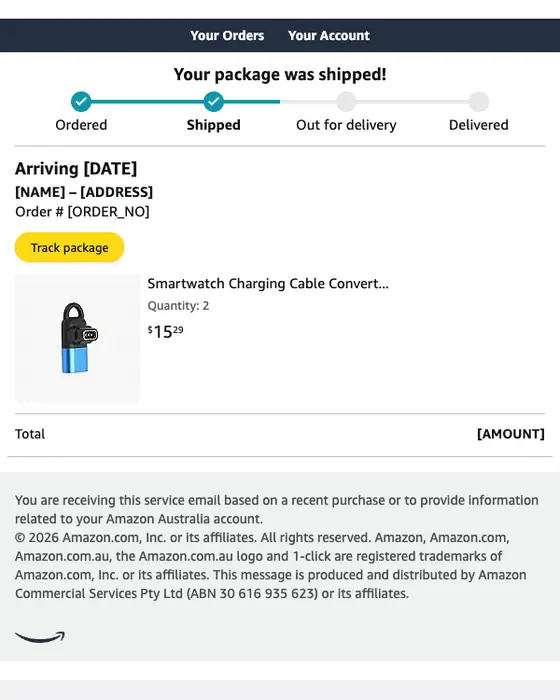
Amazon.com.au
Shipped: 2 "Smartwatch Charging Cable..."
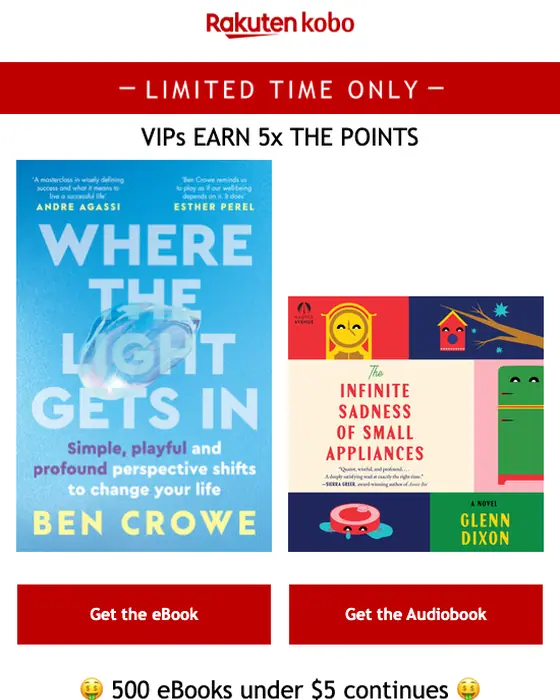
Kobo
Today, Where the Light Gets In can be yours for only $5.99
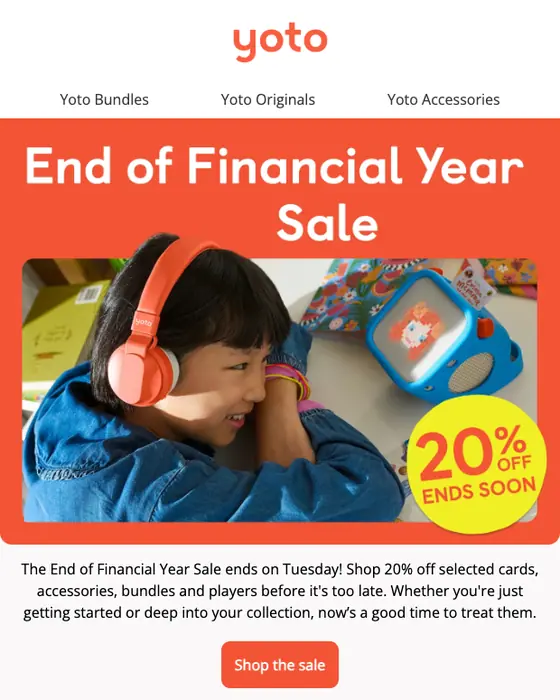
Yoto
20% off ends soon 🚨
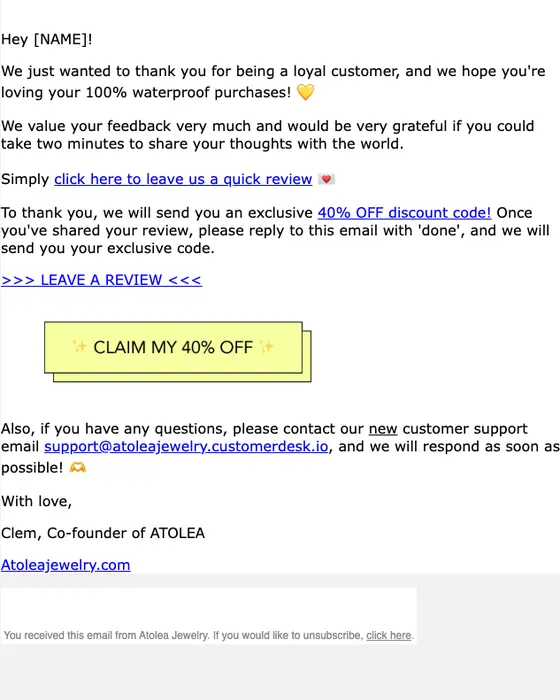
Atolea Jewelry
Thanks for your order, [NAME]! Here's a special surprise...
How ecommerce email differs from everything else in the same inboxes
Ecommerce email against all other email, same two inboxes
1,360 ecommerce emails, 10,942 other emails| What we measured | Ecommerce | Every other industry |
|---|---|---|
| Shipping and delivery updates | 31% | 6% |
| Order confirmations and receipts | 16% | 9% |
| Sales and offers | 29% | 49% |
| Sent to fulfill an order | 51% | 20% |
| Subject line plainly names the order or account event | 54% | 29% |
| Subject line leads with a discount | 17% | 11% |
| Opens on a hero image | 18% | 11% |
| Text heavy | 48% | 63% |
| Plain-text layout | 24% | 33% |
| Greets the reader by first name | 44% | 39% |
| Asks for one thing only | 35% | 30% |
| Median calls to action | 2 | 2 |
Most ecommerce email follows an order. 51% is sent to fulfill an order, against 20% of everything else, and 31% is shipping and delivery updates alone, against 6%. So subject lines are plainer: 54% simply name the order or account event, against 29%. Sales and offers are a smaller share, 29% against 49%, but when a store sells it leads with the price: 17% of subject lines open on a discount, against 11%. Ecommerce email is also more visual, with 18% opening on a hero image against 11%, and 48% text heavy against 63%. Abandoned-cart reminders are almost an ecommerce-only email: 31 of the 68 we collected across every industry came from online stores.
What online stores send, by job
Ecommerce email by the job it does
1,360 collected, 136 shown| Job | Collected | Share | Shown here |
|---|---|---|---|
| Shipping and delivery | 422 | 31% | 12 |
| Sales and offers | 399 | 29% | 54 |
| Orders and receipts | 220 | 16% | 8 |
| Account notices | 86 | 6% | 4 |
| Reviews and thank-yous | 69 | 5% | 19 |
| Launches and new products | 66 | 5% | 11 |
| Welcome | 43 | 3% | 10 |
| Abandoned cart | 31 | 2% | 11 |
| Re-engagement | 24 | 2% | 7 |
We sorted every email by its type into the job it does for the store. Shipping and delivery updates are the largest group, then sales and offers, then order confirmations and receipts. The grid leans the other way, toward sales, launches and the flows most stores set up first: many shipping and order emails repeat one template per store or carry order details, so fewer of them made the page. Three jobs have their own ecommerce page: ecommerce promotional emails, ecommerce order confirmations and ecommerce shipping emails.
Next to this one
The same library, cut a different way: retail and fashion emails, beauty emails, food and drink emails and home and furniture emails by industry, or by the job the email does: abandoned-cart emails, welcome emails and review and survey emails.
Questions about ecommerce emails
Five flows cover most of what online stores send: shipping and delivery updates, order confirmations, review requests, a welcome and an abandoned-cart reminder. Together they are 58% of the 1,360 ecommerce emails we collected: 31% shipping and delivery, 16% orders and receipts, 5% reviews and thank-yous, 3% welcome and 2% abandoned cart.
Shipping and delivery updates, then sales and offers. With order confirmations and receipts they make up 77% of the 1,360 ecommerce emails we collected. 51% are sent to fulfill an order, against 20% of the 10,942 emails from every other industry in the same two inboxes.
They are more about the order and less about the pitch. 31% are shipping and delivery updates, against 6% of other email, and 29% are sales and offers, against 49%. They are less wordy: 48% are text heavy, against 63%, and 18% open on a hero image, against 11%.
Only 278 of them have been published as images in this library so far, and we took 142 of those off this page, mostly repeats of a template the same brand already has here, emails with broken images, walls of plain text, sign-in and verification codes, and a few that showed someone's personal details. The percentages describe all of them.
Send one like it
Simple pricing. Unlimited contacts.
Every plan includes full stack emailing: Flows, Newsletter Campaigns and Transactional Email, plus our NitroWheel LLM and all agent integrations (Claude, ChatGPT, Codex, Cursor and others). Pay for what you send, not who you store.
- Emails 8,000then 500/mo
- Email types Transactional & Marketing
- AI actions 20/mo
- Contacts Free & Unlimited
- Brands 3 · Custom domain 1
- Seats 1
- Recipients / rolling 24h 100–5,000
- Email validation Prepaid only
- Emails 20,000/month
- NitroWheel LLM Included
- Brands 5 · Domains 3
- AI actions 1,000/mo
- Contacts Free & Unlimited
- BYO sending and AI keys Yes
- Seats 3
- Recipients / rolling 24h 1,000–100,000
- Email validation Prepaid only
- Emails 125,000/month
- AI actions 5,000/mo
- Brands 10 · Domains 10
- Seats 10
- Frontier AI Included
- Dedicated IP Available
- Recipients / rolling 24h 1,000–625,000
- Email validation Prepaid only
- AI actions Unlimited
- Unlimited brands & domains Included
- SSO / SAML Included
- 99.9% SLA Included
- Recipients / rolling 24h Contracted
- Email validation Prepaid only
Daily allowances depend on your plan and sender standing. Strong list, domain and delivery evidence can raise standing, including on day one. Trusted receives the full plan allowance; available email credits, safety checks and delivery pacing still apply.
Free forever. No credit card required. See full comparison →