
What an abandoned cart email is
An abandoned cart email is the automated reminder a store sends when a shopper adds something to their cart and leaves before paying. It shows what was left behind and links straight back to checkout.
We collected 68 from 51 brands in two ordinary inboxes, sent between 2018 and 2026, and show 38 of them here. The percentages describe all 68. Another 18 are counted but not in the library yet, and 12 were left out of the grid, for reasons given in the last question. A few in the grid are browse reminders, sent after a product was viewed rather than carted, such as iHerb's.
Browse all 38 abandoned cart emails
Filter by the kind of subject line, or search a brand or subject. Open any email to see it full length, with its subject line, notes on what it is doing, and a prompt that rebuilds it. The grid opens with Makeship, then the three reminders Wholesome Bowl sent over two and a half days, in the order they arrived.
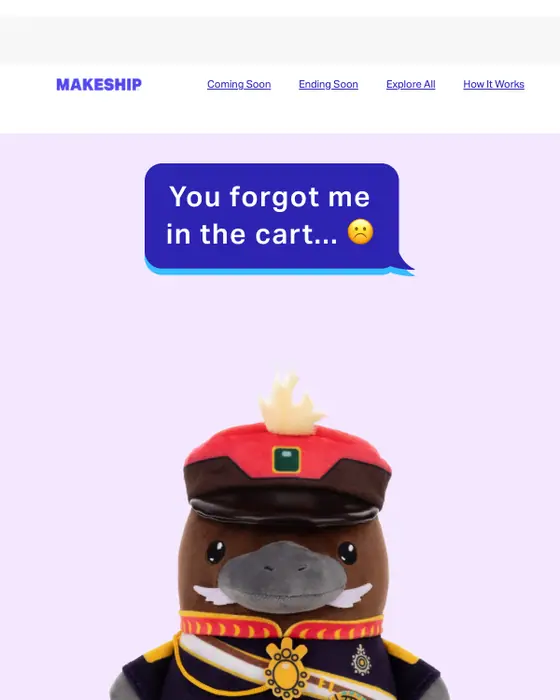
Makeship
You forgot me in the cart...
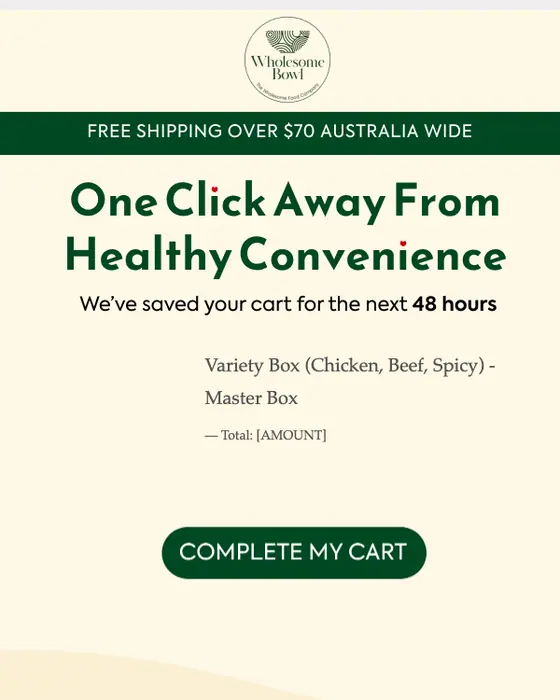
Wholesome Bowl
Att: Noodle lover, Don’t let dinner become takeaway again.
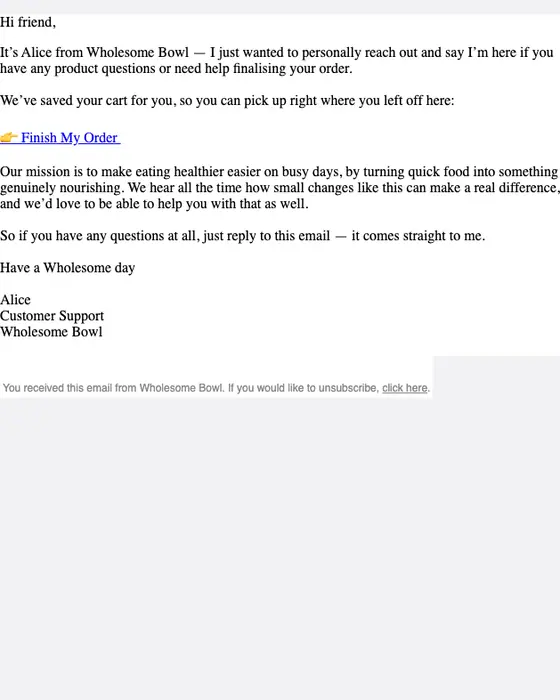
Wholesome Bowl
Just checking in
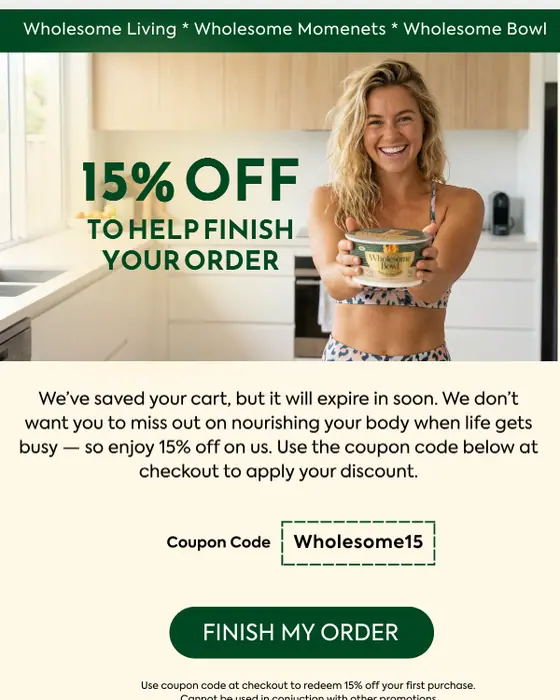
Wholesome Bowl
Att: Noodle lover, Take 15% off your saved cart
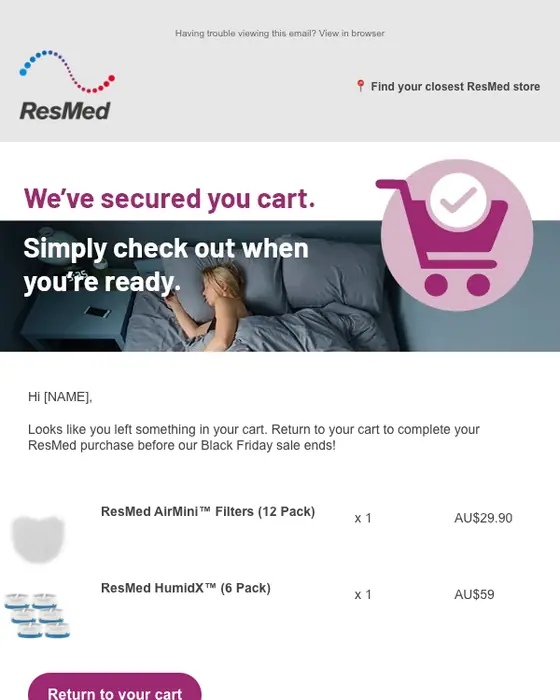
ResMed
You've forgotten something in your cart
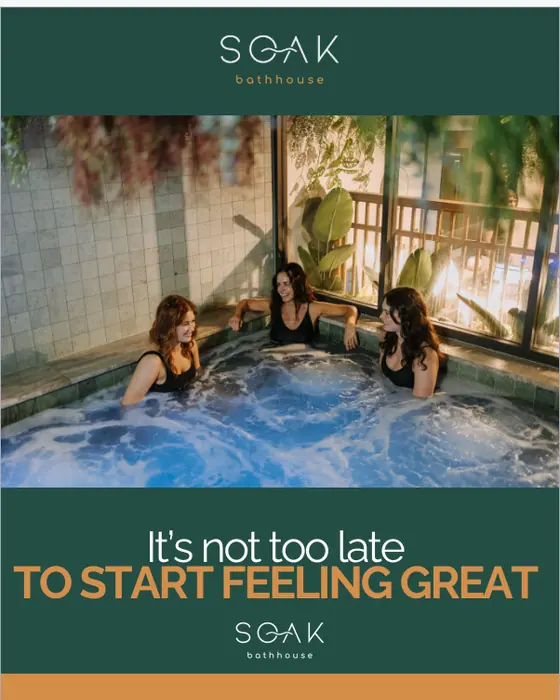
Soak Bathhouse
[NAME], We saved this for you!
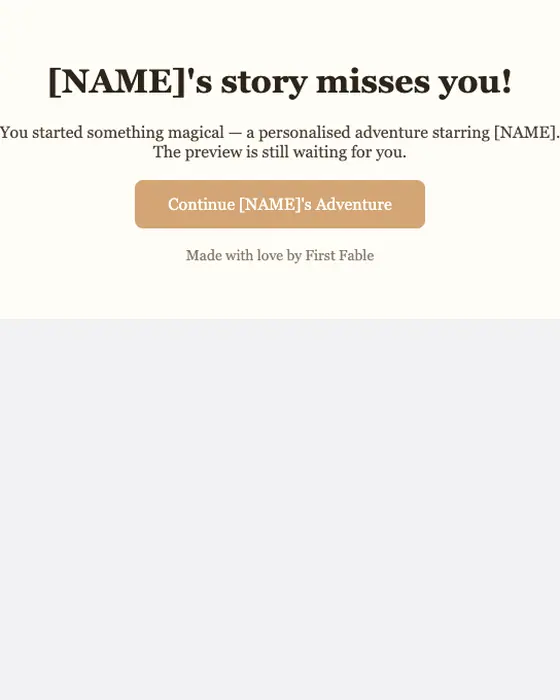
First Fable
[NAME]'s adventure is still waiting...
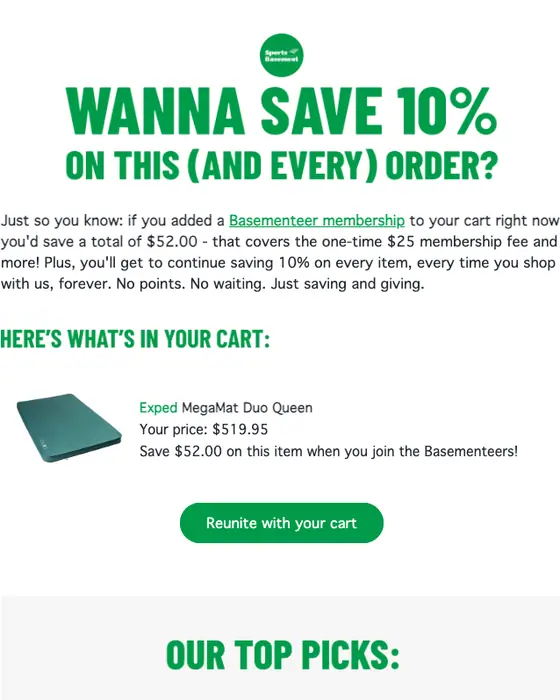
Sports Basement
Wanna save 10% on this order?
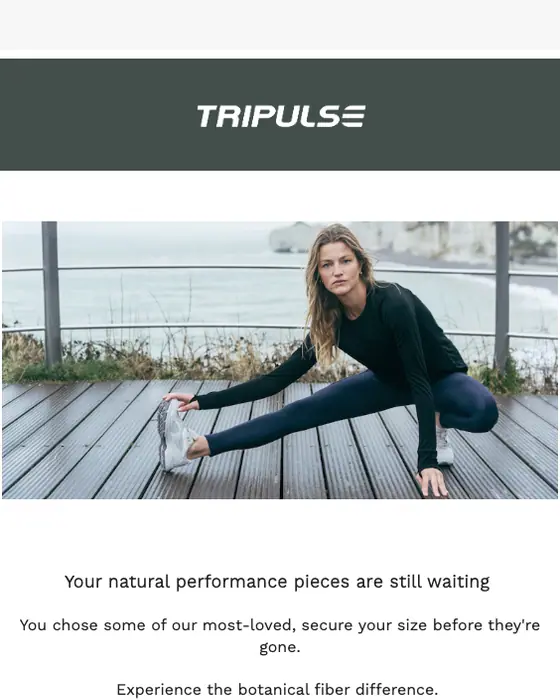
Tripulse
Still thinking it over?
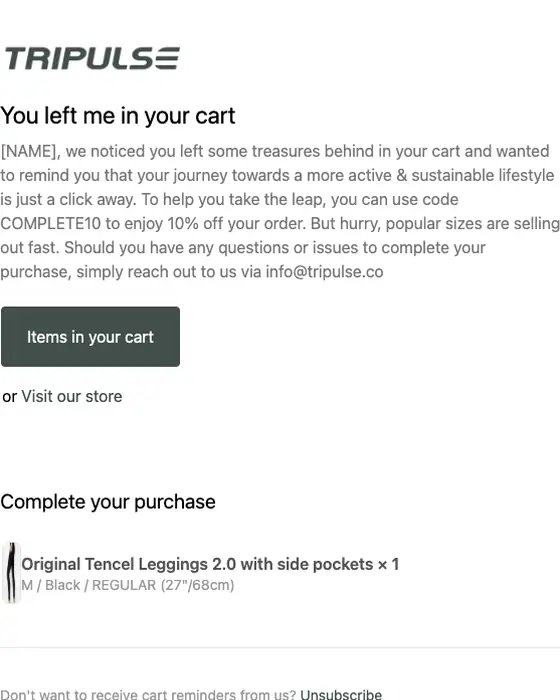
Tripulse
Complete Your Purchase: Exclusive 10% Off Just for You
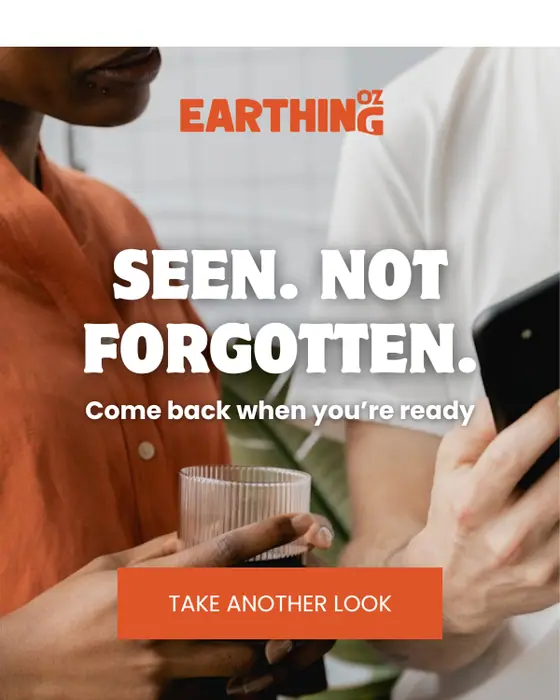
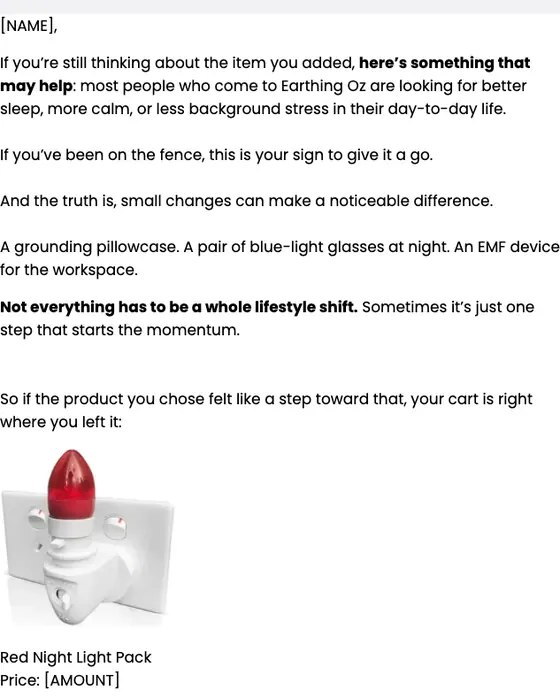
Earthing Oz
Was something missing?
Earthing Oz
Before you decide
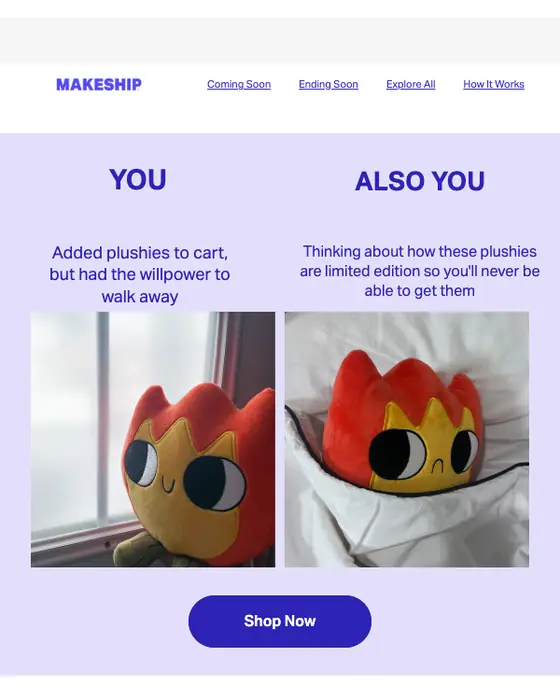
Makeship
Adopt me before it's too late!
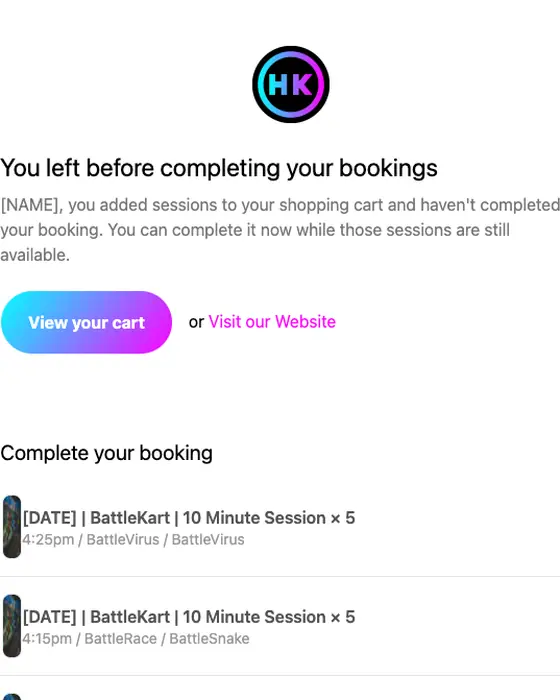
Hyper Karting
Complete your Booking
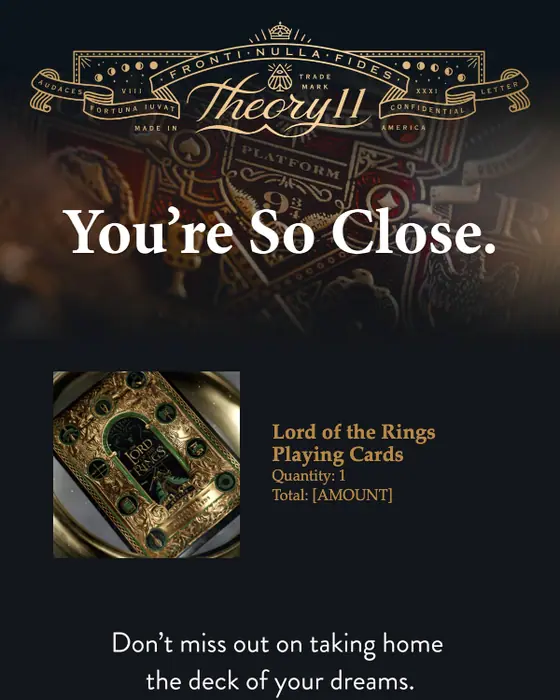
theory11
Don’t miss out!
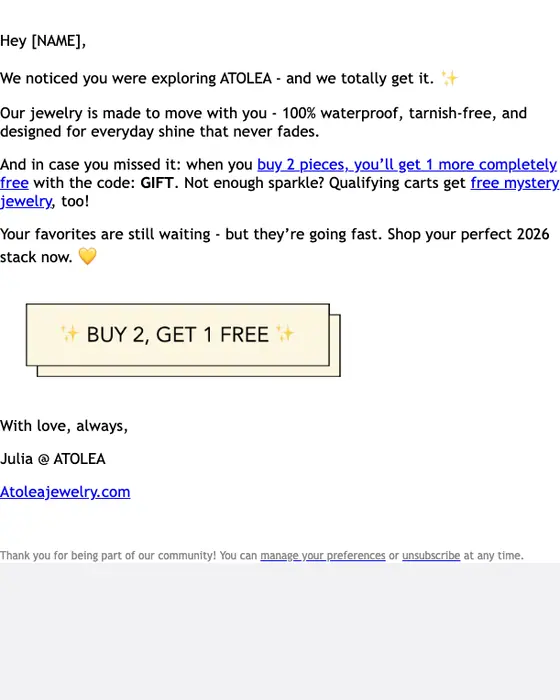
Atolea Jewelry
YOU LEFT SOMETHING SHINY BEHIND - BUY 2, GET 1 FREE!
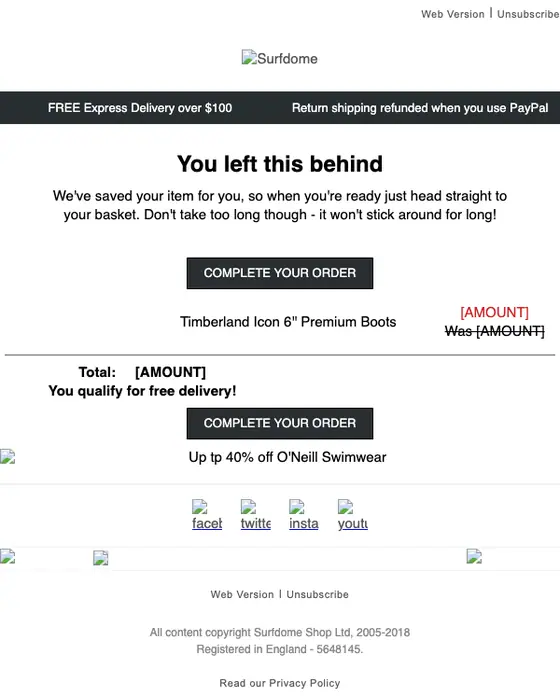
Surfdome
Did you forget something?
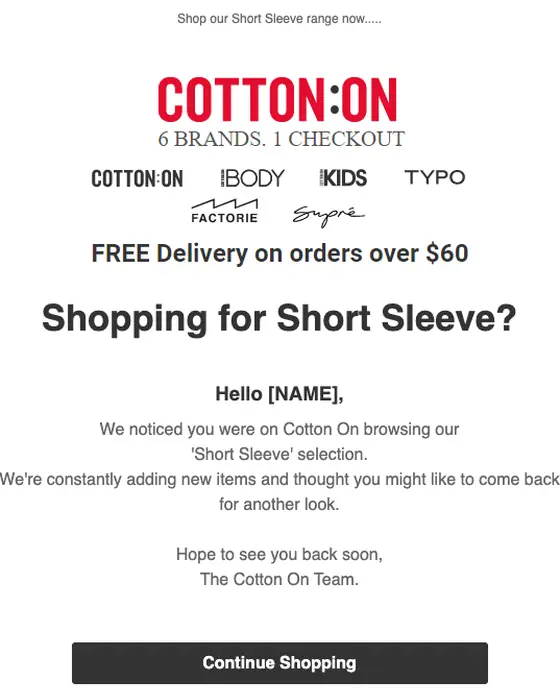
Cotton On
Shopping for Short Sleeve?
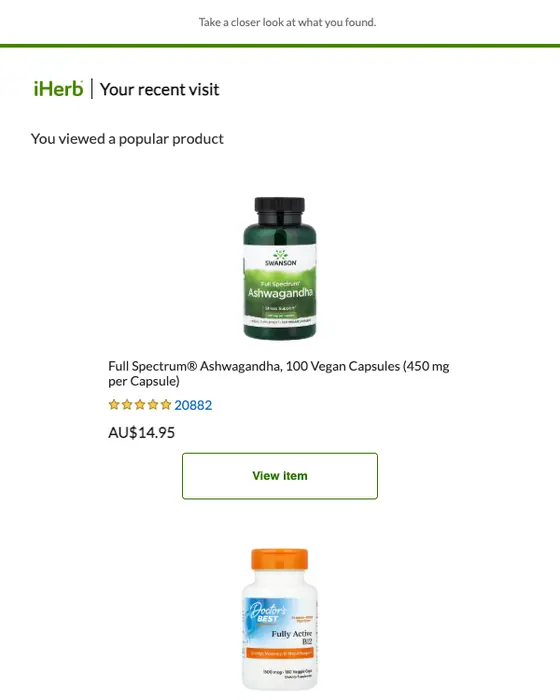
iHerb
👁️🗨️ Did Something Catch Your Eye?
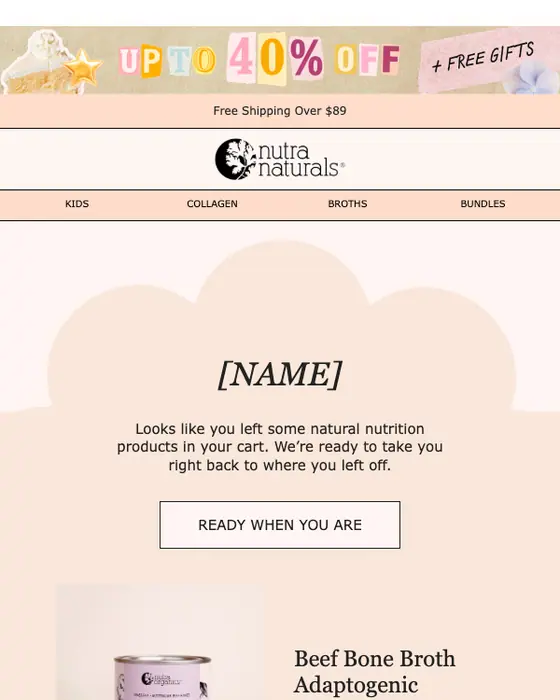
Nutra Naturals
Did you forget something?
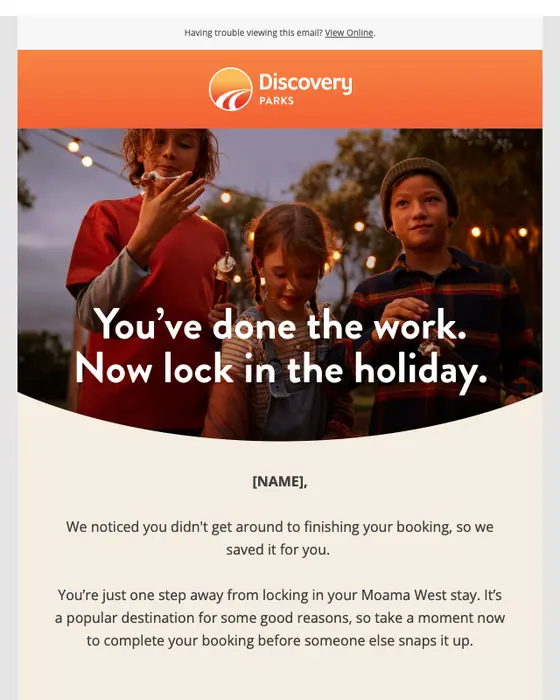
Discovery Parks & Resorts
Still off to Moama West?
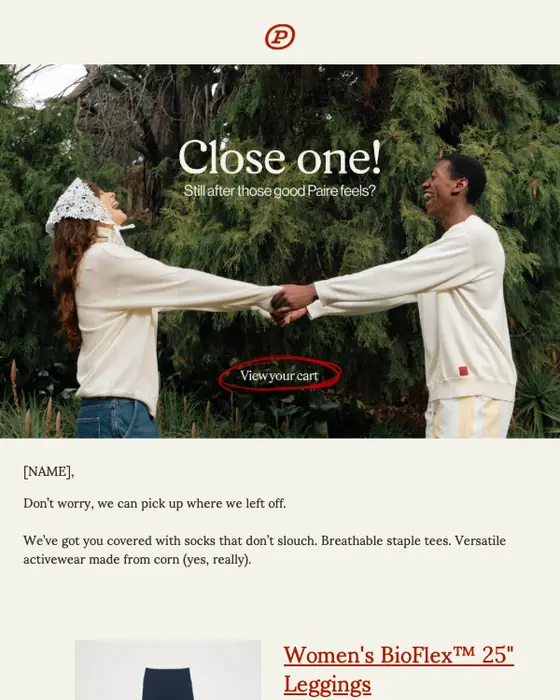
Paire
You left something behind
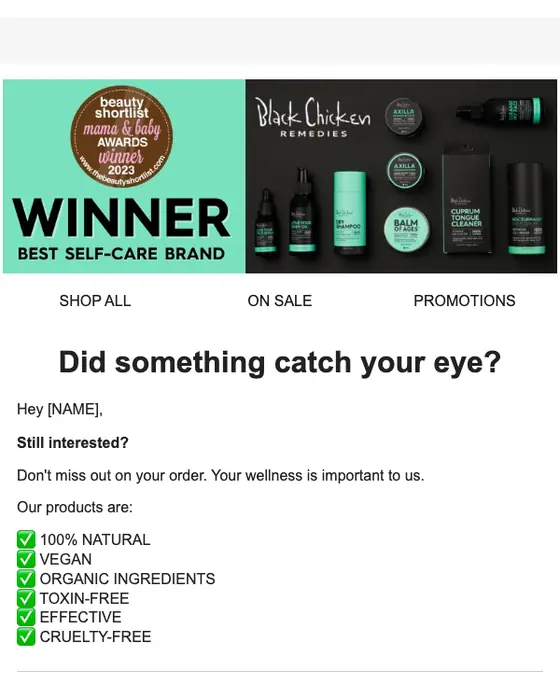
Black Chicken Remedies
Did you see something you liked?

ZONE By Lydia
Still thinking about this one? 💛
How abandoned cart emails differ from promotional emails
Abandoned cart emails against promotional emails and every other email
68 abandoned cart, 2,799 promotional and 12,643 other emails, the promotional ones included| What we measured | Abandoned cart | Promotional | Every other email |
|---|---|---|---|
| Subject line contains a question mark | 38% | 12% | 7% |
| Curiosity subject line | 38% | 12% | 5% |
| Urgency subject line | 19% | 4% | 4% |
| Reader's name in the subject line | 13% | 6% | 6% |
| A percentage in the subject line | 6% | 6% | 5% |
| Refers to what the reader looked at or did | 12% | 2% | 2% |
| Product grid | 31% | 6% | 4% |
| Urgent tone | 41% | 19% | 12% |
| A button | 69% | 51% | 40% |
| Exactly one call to action | 26% | 30% | 30% |
| Median calls to action | 2 | 2 | 2 |
Both kinds of email are trying to sell, and they go about it differently. 38% of abandoned cart subject lines contain a question mark, against 12% of promotional emails. Two of them are word for word "Did you forget something?", from Surfdome and Nutra Naturals. 31% show a product grid, against 6% of promotional emails, and 41% are written in an urgent tone, against 19%.
A discount in the subject line is no more common in a cart email than in a promotion. 4 of the 68 put a percentage there, and two of those four are follow-ups: Tripulse's second email of the day, at 10% off, and Wholesome Bowl's third, at 15%. The "Every other email" column includes the promotional emails.
The follow-ups in the 68
38 of the 51 brands sent one abandoned cart email. 13 sent more than one, and 11 of those sent the next within three days. Seven of the 11 sent the second reminder 22 to 24 hours after the first. Four of them are in the grid with every reminder they sent.
Abandoned cart series in the grid
dates and subject lines as received| Brand | Emails | What changed |
|---|---|---|
| Wholesome Bowl, 2026 | 3 over about two and a half days | "Don’t let dinner become takeaway again", then "Just checking in" in plain text, then "Take 15% off your saved cart" |
| Tripulse, 2026 | 2, about 7 hours apart | "Still thinking it over?", then "Complete Your Purchase: Exclusive 10% Off Just for You" |
| Earthing Oz, 2025 | 2, about 22 hours apart | "Was something missing?" with a designed layout, then "Before you decide" in plain text |
| Makeship, 2025 | 2, 24 hours apart | "You forgot me in the cart...", then "Adopt me before it's too late!" |
Ecommerce is the largest industry in the 68, with 31, and 47 come from Australian brands.
Abandoned cart email subject lines
The subject lines of the 38 emails in the grid, as received, grouped by the style the library gives each one. [NAME] stands in for the reader's first name.
Curiosity (17)
- Makeship, 2025: "You forgot me in the cart..."
- Wholesome Bowl, 2026: "Just checking in"
- Tripulse, 2026: "Still thinking it over?"
- Earthing Oz, 2025: "Was something missing?"
- Earthing Oz, 2025: "Before you decide"
- Surfdome, 2018: "Did you forget something?"
- iHerb, 2025: "👁️🗨️ Did Something Catch Your Eye?"
- Nutra Naturals, 2026: "Did you forget something?"
- Paire, 2026: "You left something behind"
- Black Chicken Remedies, 2025: "Did you see something you liked?"
- ZONE By Lydia, 2026: "Still thinking about this one? 💛"
- Toshi, 2026: "Still deciding?"
- Pushys, 2025: "Forget something? Your items are waiting!"
- Halcyon Nights, 2026: "We peeped, you peeping! 👀"
- Nimble Activewear, 2025: "Waiting for this?"
- Bont Cycling, 2025: "Still out riding?"
- SBR Collective, 2026: "Still thinking it through?"
Personal (7)
- Wholesome Bowl, 2026: "Att: Noodle lover, Don’t let dinner become takeaway again."
- Soak Bathhouse, 2025: "[NAME], We saved this for you!"
- First Fable, 2026: "[NAME]'s adventure is still waiting..."
- Nespresso, 2025: "Dont miss out [NAME] - Your coffee is waiting"
- BlockBlueLight, 2025: "This belongs with you [NAME] ❤️"
- Catch, 2024: "Still got your 👀 on this, [NAME]?"
- Hackerlily, 2026: "This one's a keeper, [NAME] 🫂"
Urgency (4)
- Makeship, 2025: "Adopt me before it's too late!"
- theory11, 2023: "Don’t miss out!"
- Clean Health, 2026: "DON'T MISS OUT..."
- FUNDAY Natural Sweets, 2026: "Last Chance to Grab Your Treats!"
Discount (3)
- Wholesome Bowl, 2026: "Att: Noodle lover, Take 15% off your saved cart"
- Tripulse, 2026: "Complete Your Purchase: Exclusive 10% Off Just for You"
- Atolea Jewelry, 2026: "YOU LEFT SOMETHING SHINY BEHIND - BUY 2, GET 1 FREE!"
Other styles (7)
- ResMed, 2022: "You've forgotten something in your cart"
- Sports Basement, 2025: "Wanna save 10% on this order?"
- Hyper Karting, 2025: "Complete your Booking"
- Cotton On, 2022: "Shopping for Short Sleeve?"
- Discovery Parks & Resorts, 2026: "Still off to Moama West?"
- ecostore, 2026: "Ready when you are"
- Bamboo Grove Co, 2025: "🛒 Do you still want these?"
Next to this one
The same library, cut by the job the email does: order reminder emails, discount offer emails, which carry the code a cart follow-up sometimes adds, re-engagement emails and every ecommerce email in the library.
Questions about abandoned cart emails
One that shows the items left behind and gets the reader back to checkout in one tap. Of the 68 we collected, 69% use a button and 31% show a product grid. ResMed's lists each item with its price above a Return to your cart button. 38% ask a question in the subject line, such as Surfdome's "Did you forget something?"
Short and quick. 11 of the 51 brands we collected followed up within three days. Wholesome Bowl sent three over two and a half days, the third with 15% off, and Tripulse sent two about seven hours apart, the second with 10% off. Our guide to ecommerce email flows sets out the order to build them in.
We can see when each reminder arrived, not when the cart was left. Of the 11 brands that followed up within three days, 7 sent the second reminder 22 to 24 hours after the first: theory11, Surfdome, Makeship, Nespresso, Cotton On, Earthing Oz and Wholesome Bowl. Tripulse waited about seven hours, Nimble Activewear about one, and Wholesome Bowl's third came 36 hours after its second.
Most brands in our inboxes sent one: 38 of the 51. 13 sent more than one, and the most any brand sent within three days was three, as Wholesome Bowl did. All three of its emails are in the grid above.
They are triggered by something the shopper did, like a receipt, but they are there to sell. In our inboxes they read more like promotions: 41% use an urgent tone, against 19% of promotional emails and 12% of everything else. Our transactional email glossary entry sets out the difference.
18 of the 68 are not in the library yet. Of the other 50, we left out 12: five extra sends from brands already in the grid, four store promotions or advertisements with no cart in them, two with missing or broken images and one that names private sellers. The percentages still describe all 68.