
What a plain text email is
A plain text email is an email with no formatting: no images, colors, fonts or layout, just words and links. This page collects emails that read that way, sorted by how they look, so some carry a logo, one image or one button and still read as a note from a person.
We collected 3,140 of them from 1,581 brands, sent between 2016 and 2026, out of two real inboxes that are part of the Nitrosend email library. This page shows 129 of them, one email per brand, 97 sent in 2023 or later. We left off repeats from a brand already shown, emails our tagging called plain text that are built like designed emails (banners, photo heroes, colored cards), emails that showed personal details such as a name on a booking or a health clue, and one of our own sends, which is still counted in the total.
129 plain text emails you can open
The first screen leads with welcomes, newsletters, surveys and launches. Password resets and account notices are under the type filter. Of the 129 shown, 15 are welcomes, 13 newsletters and 14 promotions, and 115 use a plain-text layout. Open any email for its subject line, what it does and a prompt that rebuilds it, which you can copy as a plain text email template.
Turso
Welcome to Turso Cloud!
Feedly
A quick hello
Happy Scribe
a personal hello
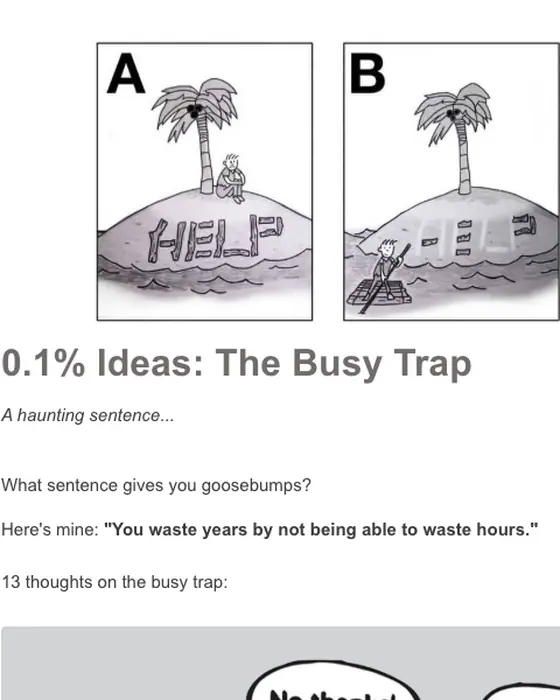
George Mack
0.1% Ideas: The Busy Trap
ScrapingBee
🎉 Welcome to ScrapingBee
Cursor Team
New: Try our model Composer 1, free for a limited time
Kiva
Help us improve Kiva with 2 minutes of your time.
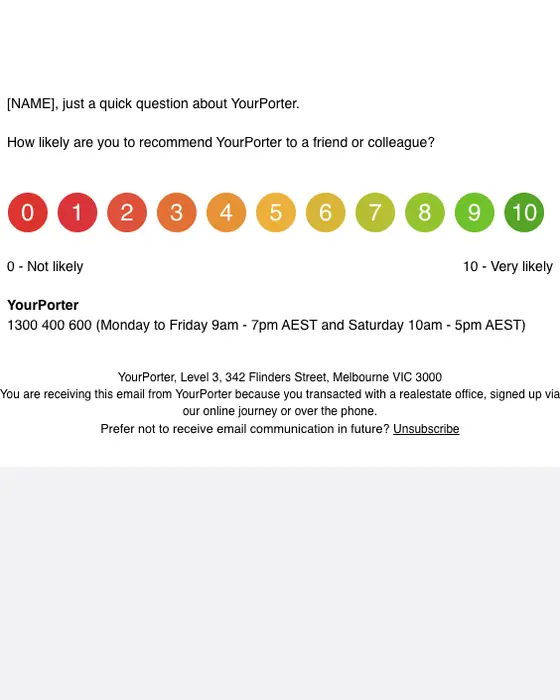
YourPorter
[NAME], just a quick question about YourPorter
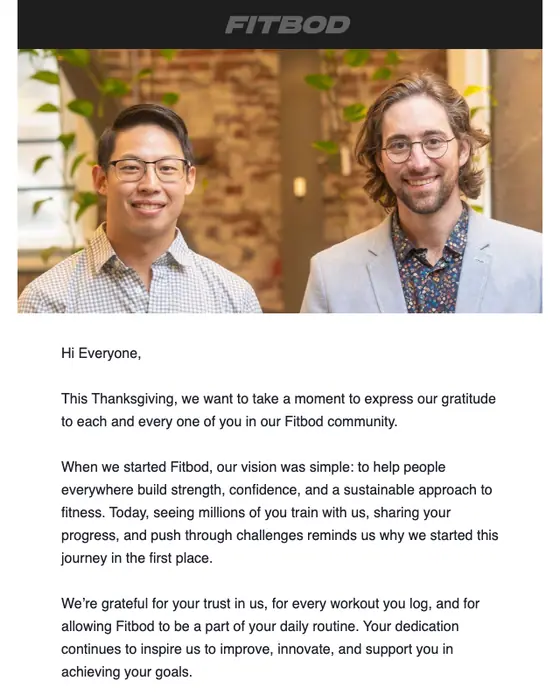
Fitbod
A note of thanks from the Fitbod Founders
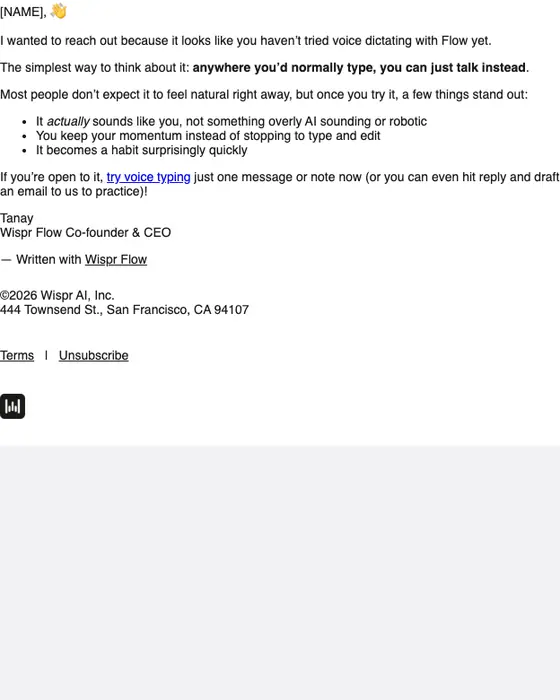
Wispr
Give this a quick try
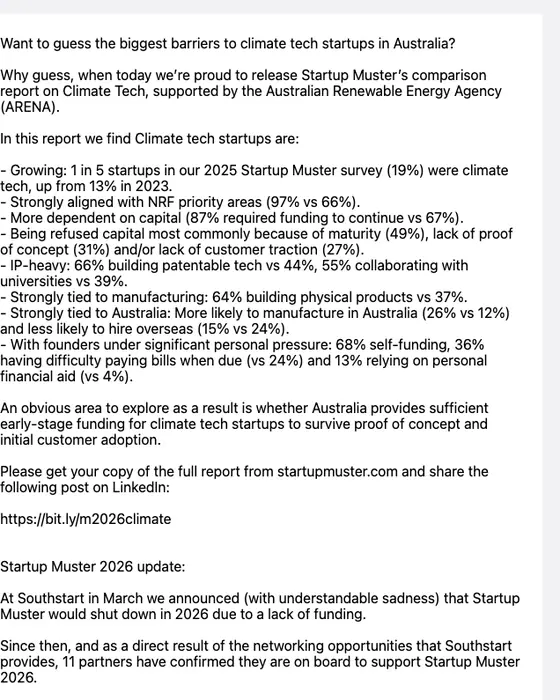
Startup Muster
Barriers to Australian Climate Tech
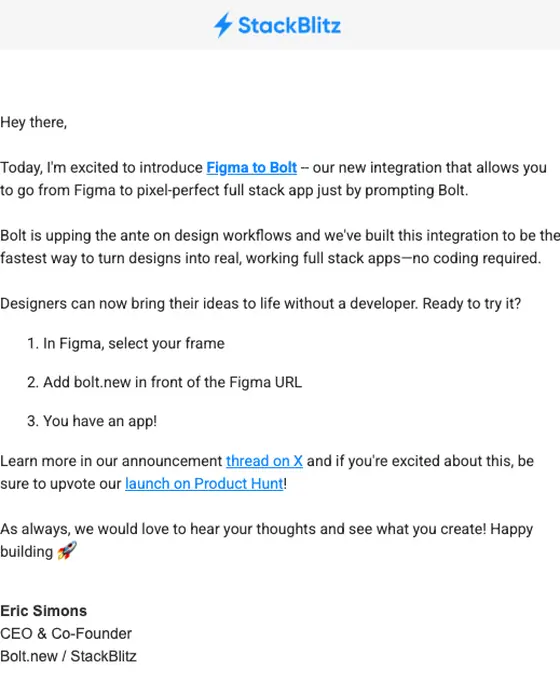
StackBlitz
Figma Designs ➡️ Fullstack Apps in a Single Click
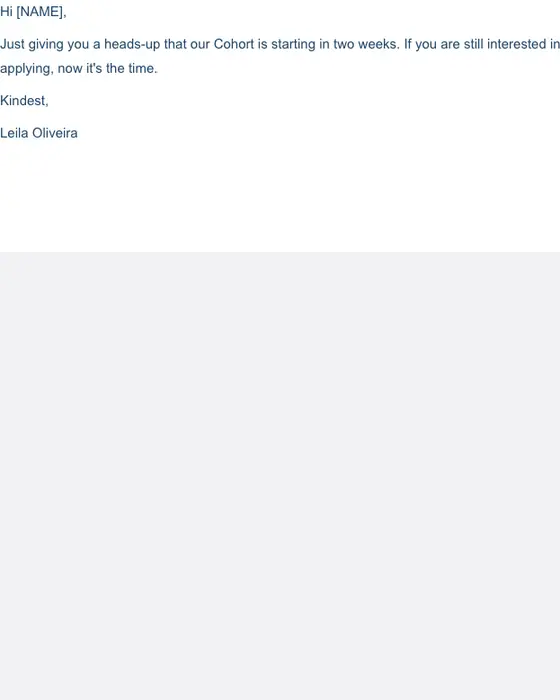
Antler
Last call to apply to AUS13 Antler
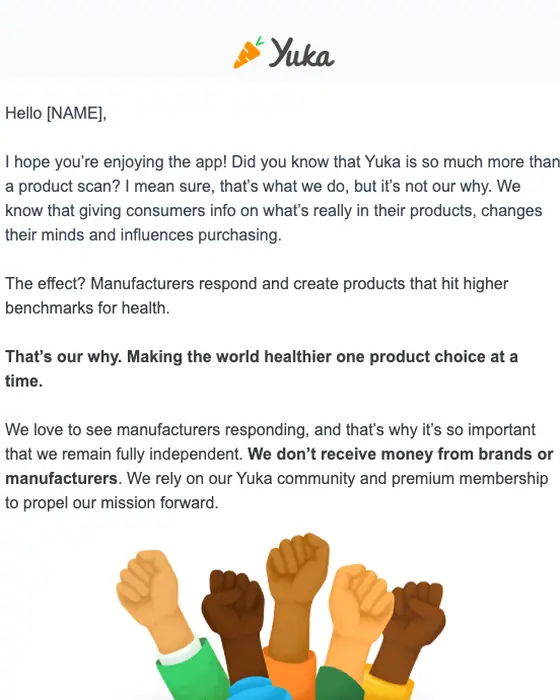
Yuka
The Power of 60 Million Users 💪
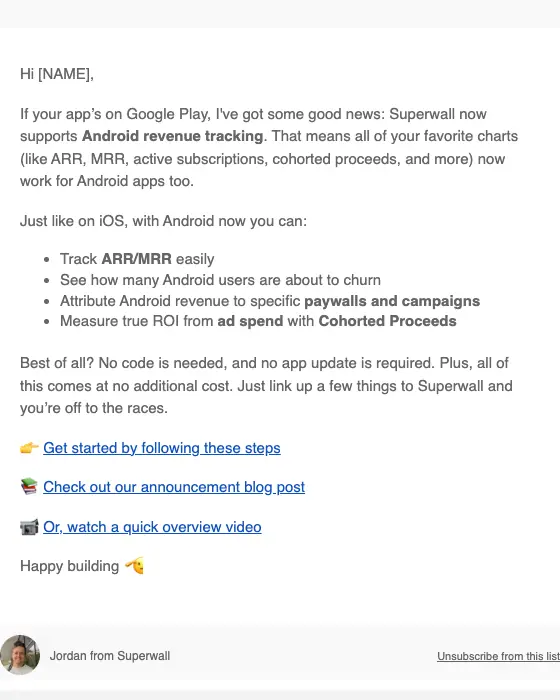
Superwall
📢 Android Revenue Tracking Has Arrived
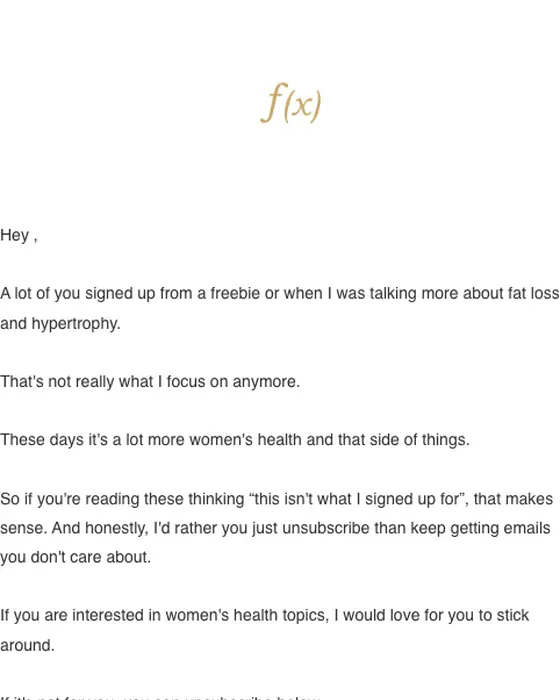
Sheridan Skye - The Female Fitness Formula
Do you still want to receive these emails?
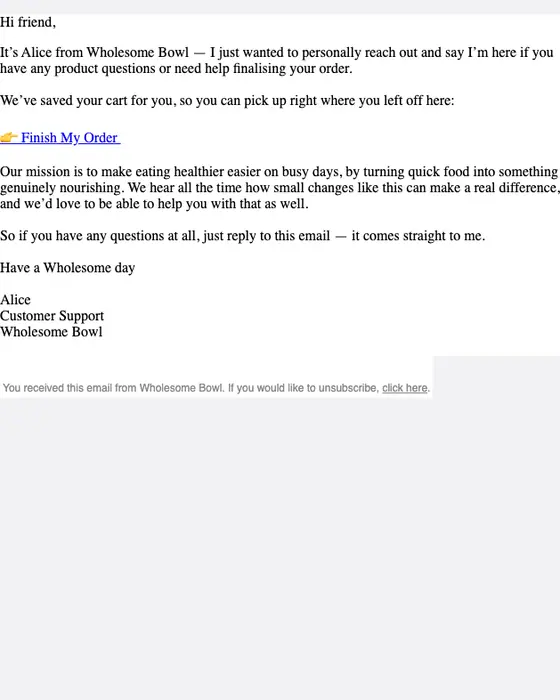
Wholesome Bowl
Just checking in
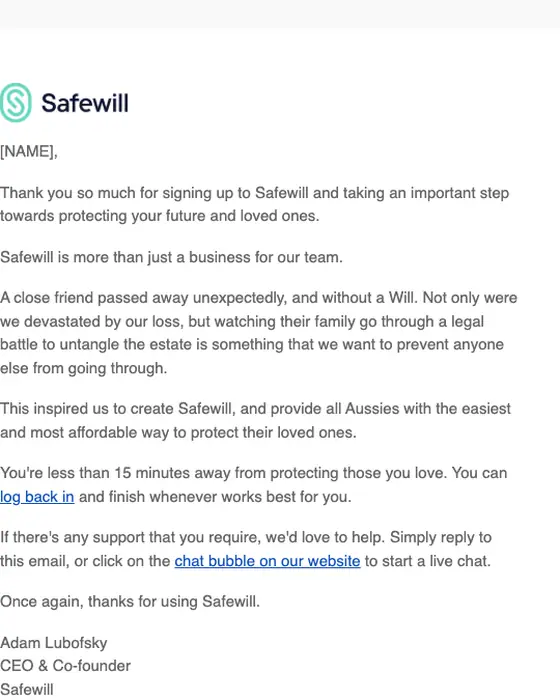
Safewill
Welcome to Safewill [NAME]
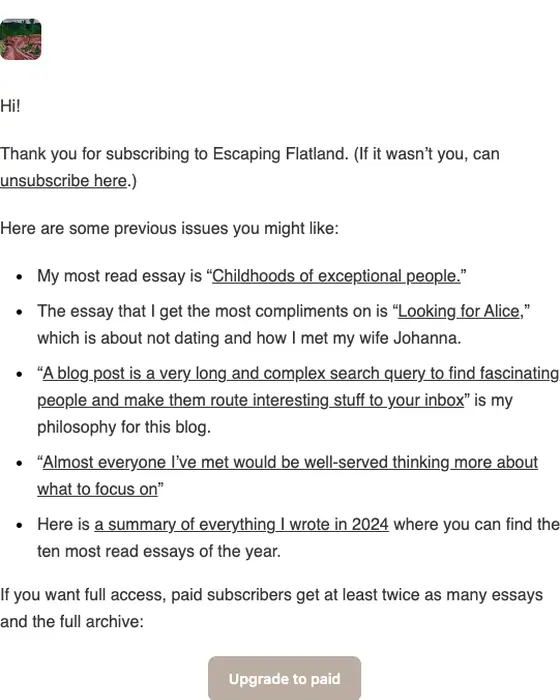
Escaping Flatland
Welcome to Escaping Flatland
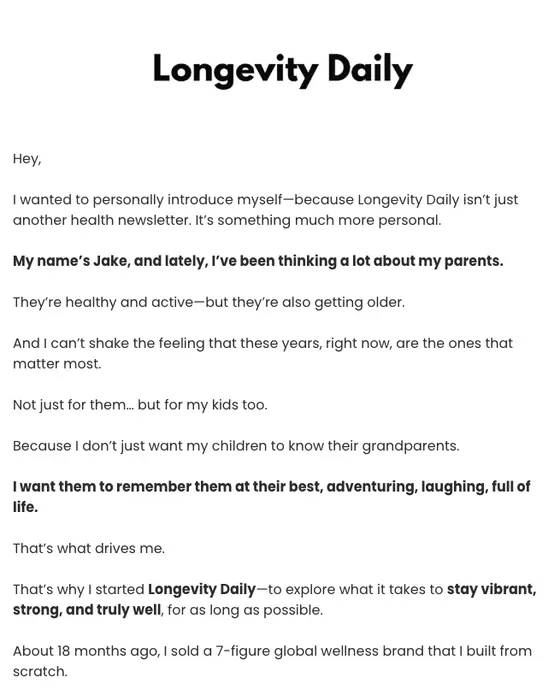
Longevity Daily
🌅 Why I Started Longevity Daily
Internet Archive
Welcome to the Internet Archive
Taplio
Your AI settings are ready - check them now
Cybertek
Your SEO looks fine… AI disagrees
Tally Forms
Welcome to Tally, [NAME]!
How plain text emails differ from the rest
Plain text style against every other email in the library
3,140 plain text emails and 9,571 others, same two inboxes| What we counted | Plain text style | Every other email |
|---|---|---|
| Plain-text layout (one column of text, no layout grid) | 94% | 11% |
| Median number of links or buttons asking for a click | 1 | 3 |
| Exactly one call to action | 39% | 27% |
| No call to action at all | 14% | 2% |
| Micro or short | 69% | 48% |
| Greets the reader by first name | 50% | 37% |
| Subject line says plainly what the email is | 42% | 30% |
| Promotions, sales and discount offers | 23% | 30% |
| Sent to a business audience | 29% | 16% |
Plain text emails ask for less. The median one has a single link or button asking for a click, against three for every other email we collected, and 14% ask for nothing at all. They are shorter (69% micro or short, against 48%), more likely to use your first name (50% against 37%) and more likely to go to a business inbox (29% against 16%). They are less likely to be selling something: 23% are promotions, sales or discount offers, against 30% of the rest. If you are deciding when a send should look like this, our guide to plain text or designed B2B email covers it.
Who the email goes to matters more than what it sells. A designed, branded email sent to someone who has never bought from the brand tends to read like an advert, and plain text keeps it reading like one person writing to another. Branded design earns its place with people who already know the sender. The library follows that line: 32% of the emails we collected that try to win a new customer are plain text, against 16% of those keeping an existing one, and 40% of win-back emails.
What is in the plain text collection
What the plain text emails are
3,140 emails, top 8 types| Type | Emails | Share |
|---|---|---|
| Promotional | 623 | 20% |
| Account notice | 385 | 12% |
| Newsletter | 290 | 9% |
| Event invite | 160 | 5% |
| Receipt | 144 | 5% |
| Invoice | 144 | 5% |
| Re-engagement | 125 | 4% |
| Welcome | 122 | 4% |
When in the customer's life they arrive
3,140 emails, top 6 stages| Stage | Emails | Share |
|---|---|---|
| After a purchase or booking | 880 | 28% |
| Keeping an existing customer | 762 | 24% |
| Winning a new one | 627 | 20% |
| Account admin | 245 | 8% |
| Activation | 214 | 7% |
| Onboarding | 182 | 6% |
Promotions are the biggest single type, but 21% of the collection is account notices, receipts and invoices. 28% arrive after a purchase or booking, the job of transactional email. For those, the transactional email templates show the fields each one needs.
Next to this one
Sorting by look is not the same as sorting by structure. The plain text layout examples sort the same library by structure instead: 4,027 emails in one plain column of text, 2,958 of them also counted here.
By style: minimal, utilitarian and editorial. By the types that most often go out plain: newsletters, welcome emails, re-engagement emails and survey emails.
Questions people ask
Plain text is email with no formatting: no images, colors, fonts or layout, just words and links. Of the 3,140 emails we collected that read this way, 94% keep to a single plain column of text, and the median one has one call to action.
It is the text-only copy sent alongside the designed HTML version in the same message, so a reader whose mail app shows only text still gets the content. Our newsletter best practices cover why to include it. It is a different thing from the 3,140 emails here, which are written to look plain.
An HTML email can carry layout, images, colors and buttons. A plain text email carries words and links only. Between them sits the style on this page: emails of either kind written to read like a note. Against the rest of our library those emails have a median of one call to action instead of three.
It reads like a person wrote it, and the data shows where brands use it. Plain text emails greet the reader by first name more often (50% against 37%), go to business inboxes nearly twice as often (29% against 16%) and are less often promotions (23% against 30%).
317 were rendered for this page and we cut 188: 50 repeats from a brand already shown, 69 tagged plain text that are visibly designed, 60 that showed personal details such as a name, contact details, a health clue or sign-in data, and 9 others, one of them our own send. The numbers in the tables cover all 3,140.