
What a health and fitness promotional email is
A health and fitness promotional email is one a gym, studio, supplement brand, health app or telehealth service sends to sell something: a membership, a class pass, a product, a test or a program.
We collected 206 of them from 101 health and fitness brands out of two ordinary inboxes, sent between 2016 and 2026, 187 of them in 2023 or later. Nothing here is a mockup. This page shows 35, one from each of 35 brands, all sent in 2024 or later. Only 58 of the 206 have been published as images so far, and we left off 23 of those: repeats from the same brand, three that are not health or fitness promotions, and six we are holding back over personal details.
Browse all 35 health and fitness promotional emails
Tap what the email sells to narrow the grid: gyms, studios and classes, supplements and wellness products, telehealth, tests and programs, or apps, wearables and gear. Open any email to see it full length, with its subject line, notes on what it is doing, and a prompt that rebuilds it.
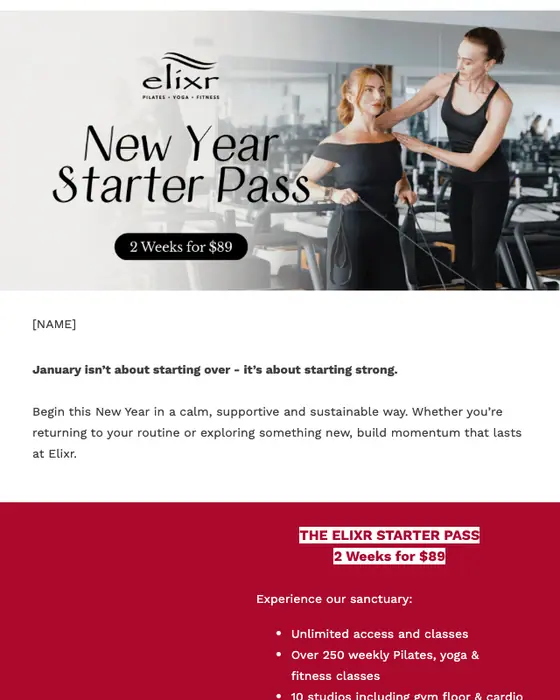
Elixr Health Club
Start Well this January ☀️
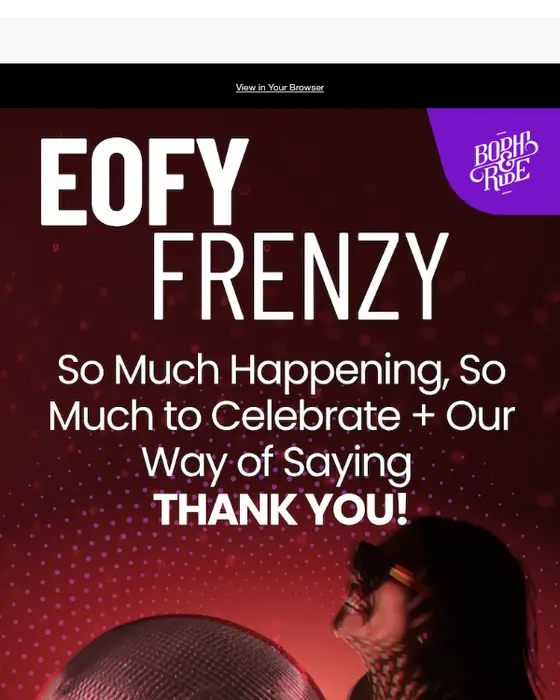
Bodhi and Ride
EOFY FRENZY! Our way of saying THANK YOU!🫶
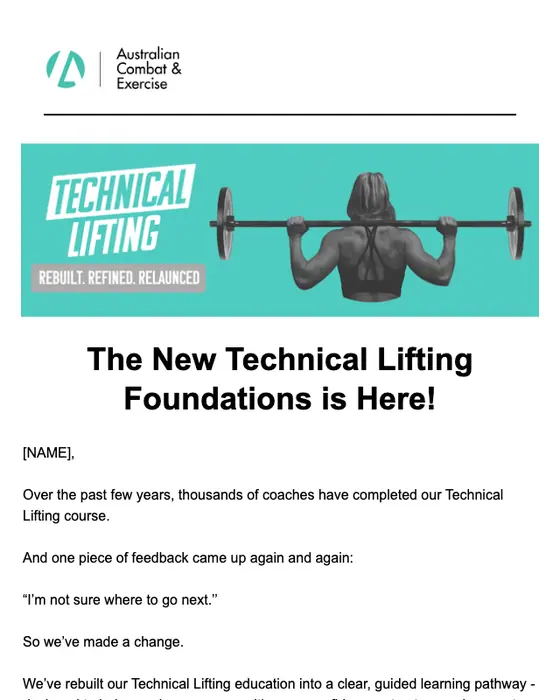
Australian Combat & Exercise
(Correction) HALF PRICE! New Technical Lifting (Includes FREE Resistance Band!)
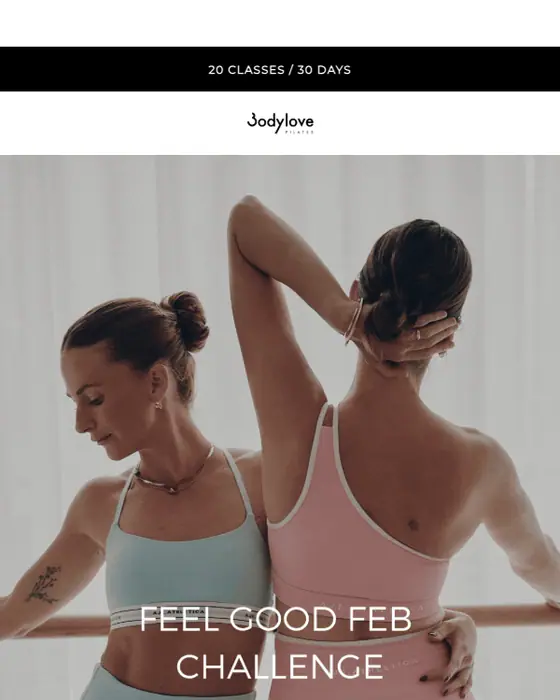
Bodylove
Feel Good Feb Challenge - LAST CHANCE!
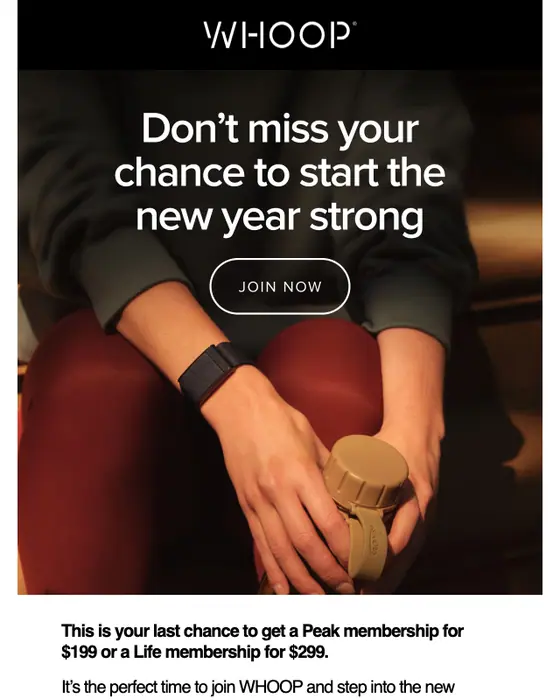
WHOOP
$199 for a limited time. HSA/FSA eligible.
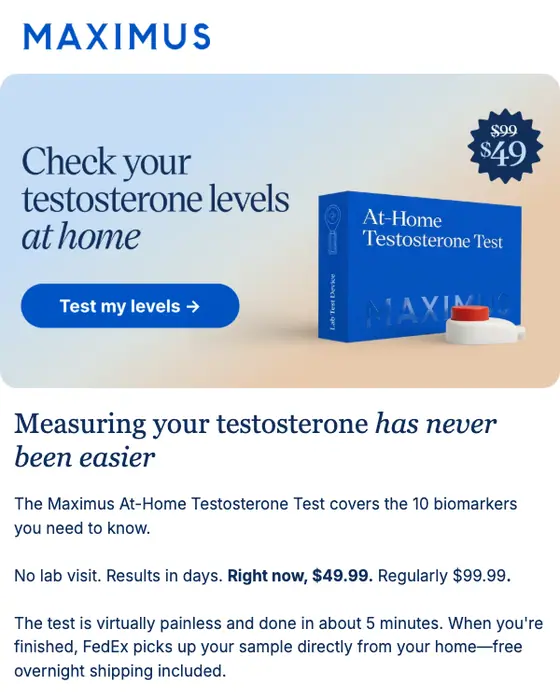
Maximus
Test your testosterone at home for $49.99
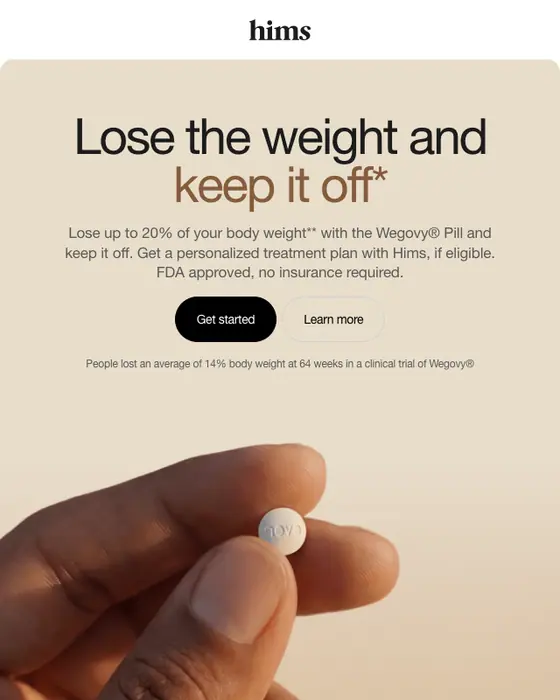
Hims
Lose weight and keep it off*
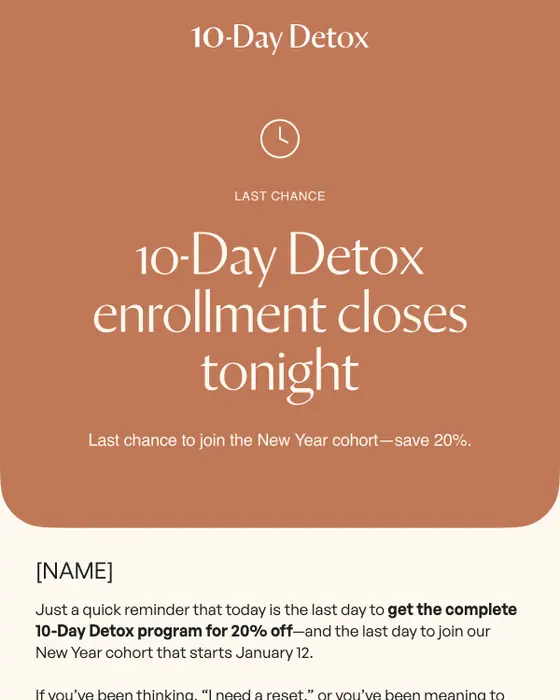
Dr. Mark Hyman
10-Day Detox enrollment closes tonight
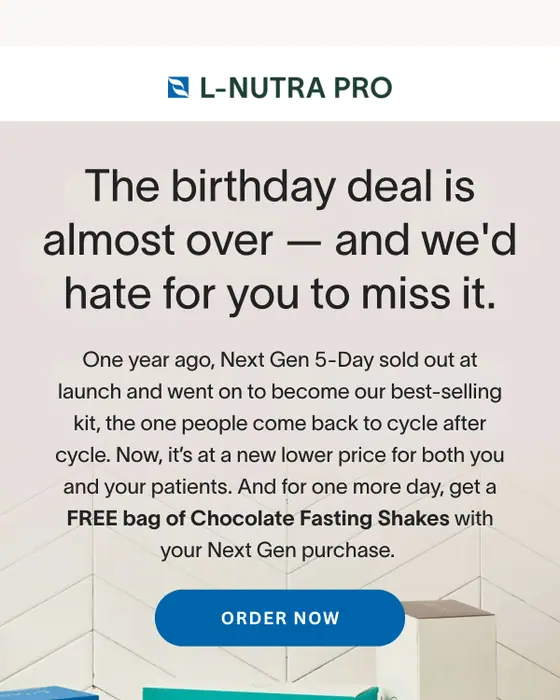
L-Nutra Professional
Final hours celebrating Next Gen’s one year birthday!
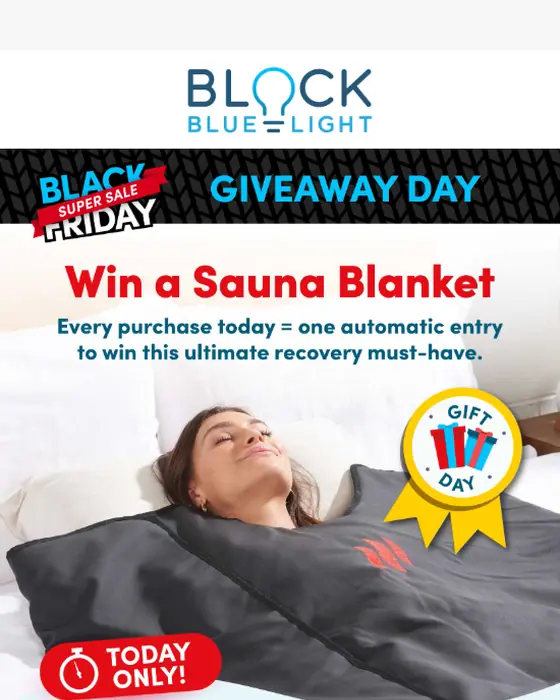
BlockBlueLight
Black Friday Deal: Win a Sauna Blanket Today
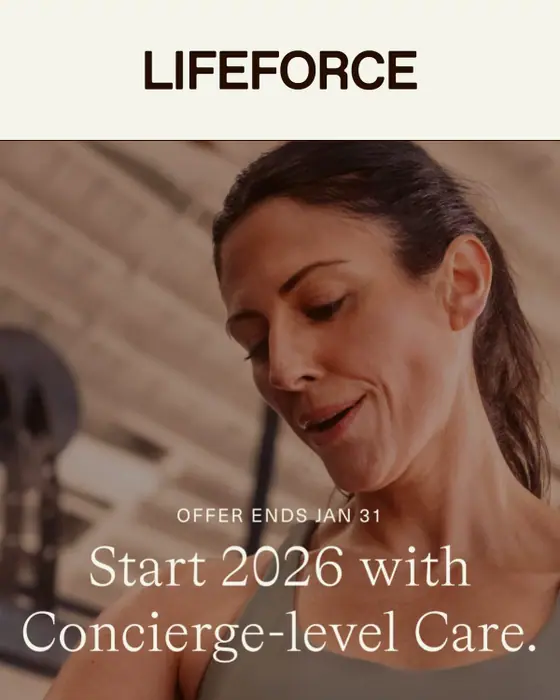
Lifeforce
OUT for 2026: Health “hacks”

ZOE
Here’s your Better Breakfast Guide
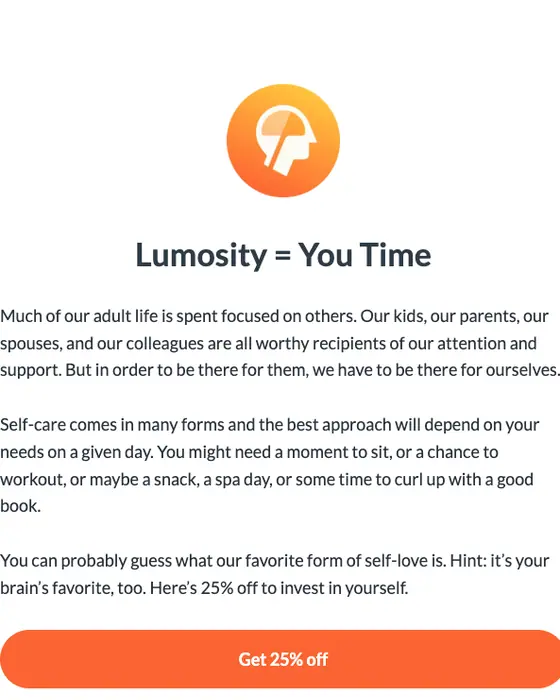
Lumosity
💡🧠 Take time for you
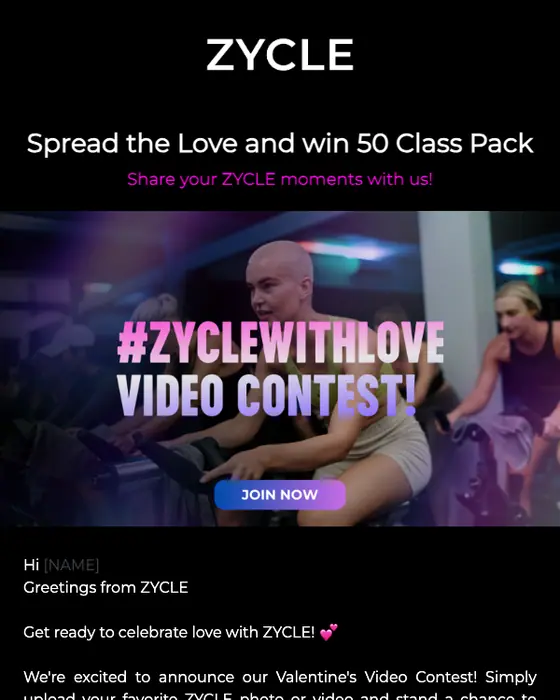
ZYCLE
[NAME]Let's join #ZYCLEWITHLOVE Video Contest!
HipTrain
Bidding Farewell to Festive Feasts!
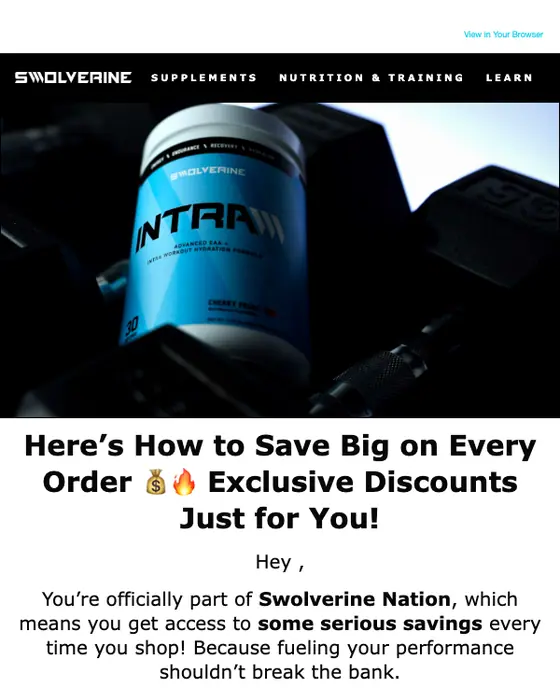
Swolverine
Get REAL results!
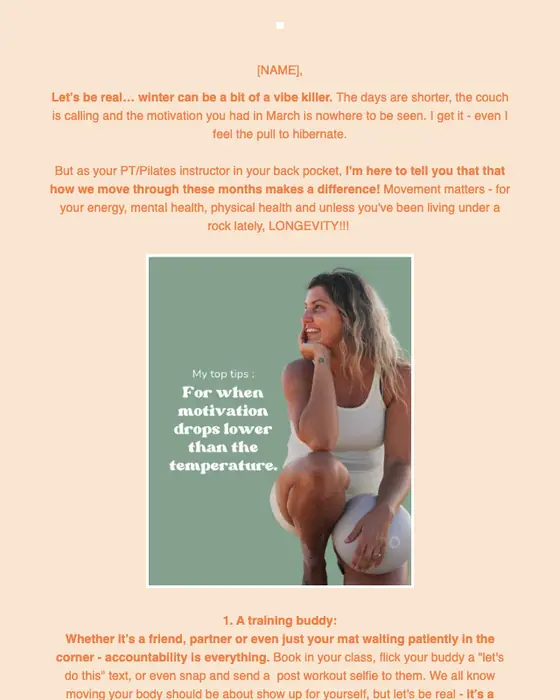
Peaches Pilates
How To Beat The Winter Slump!
ShiftLab Studio Collective
Studio Ownership Opportunities Are Now Open
GenoPalate
Your Daily Multivitamin, Personalized for You 💊
Undercard Boxing
It's happening. Saturday.
City of Sydney - Learn to Swim
Final days! Last chance to win a Back-to-School pack worth $200
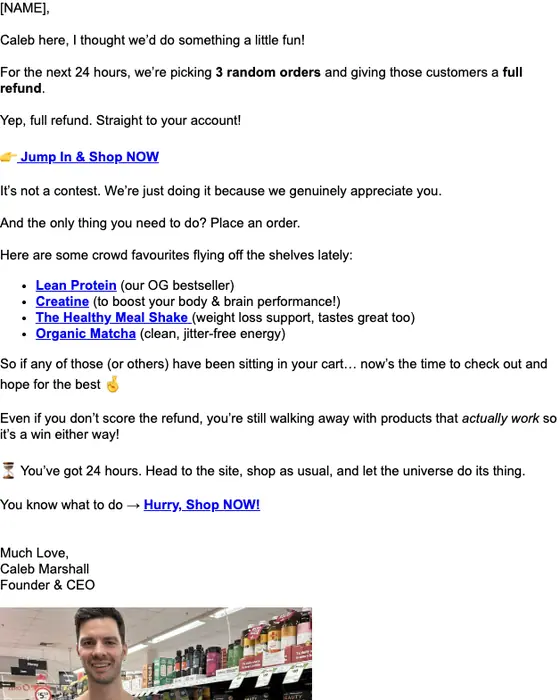
Tropeaka
Refund on Your Order? 🎁
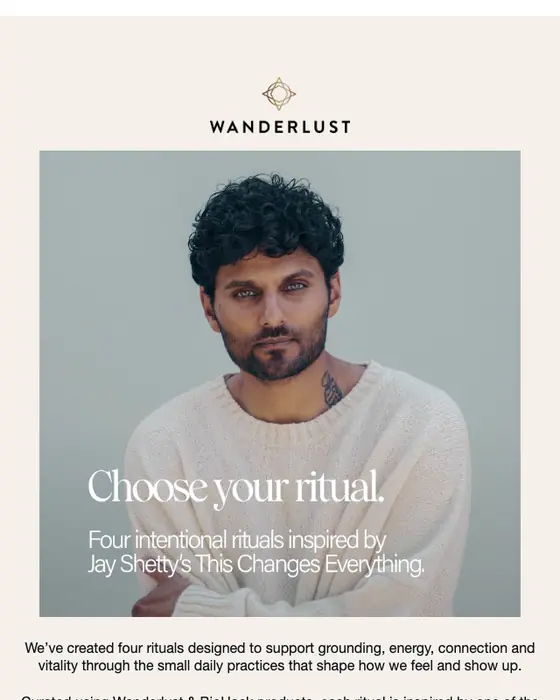
Wanderlust
Four rituals inspired by Jay Shetty
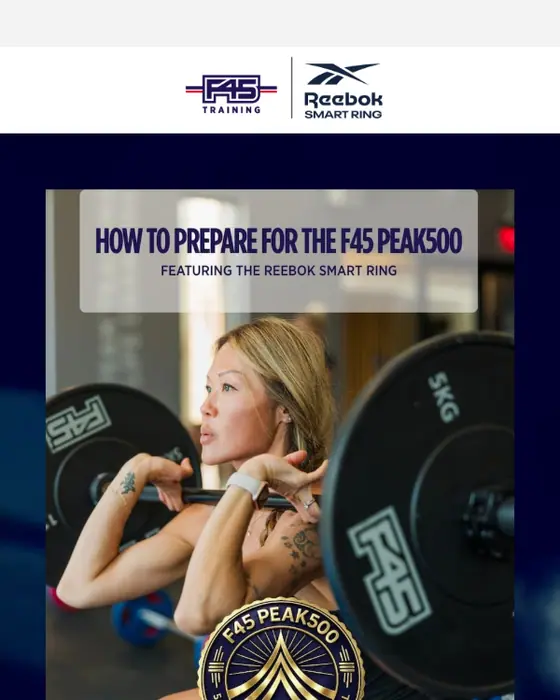
F45 Training
How to Prepare for F45 PEAK500 with the Reebok Smart Ring
How health and fitness promotions differ from other promotional email, same two inboxes
Health and fitness promotional email, all promotional email and all email, same two inboxes
206 health and fitness promotions, 2,799 promotions, 12,711 emails| What we measured | Health and fitness promotions | All promotions | All email |
|---|---|---|---|
| Sent to consumers | 96% | 77% | 79% |
| Instructional in tone | 45% | 36% | 37% |
| Greets the reader by first name | 20% | 29% | 40% |
| Plain text layout | 16% | 25% | 32% |
| Text heavy | 40% | 48% | 60% |
| Has a hero image | 26% | 24% | 12% |
| Has a product grid | 3% | 6% | 4% |
| Five or more calls to action | 18% | 24% | 23% |
| Asks for one thing only | 30% | 30% | 30% |
| Discount in the subject line | 26% | 22% | 11% |
| Urgency in the subject line | 7% | 4% | 4% |
| Long | 16% | 19% | 16% |
A health and fitness promotion explains more and personalizes less than other promotional email. 45% are instructional in tone, against 36% of all promotions, while only 20% greet the reader by first name, against 29% of promotions and 40% of all email. They are more often designed than typed: 16% use a plain text layout, against 25% of promotions. A hero image is about as common as in other promotions (26% against 24%), and they crowd the reader less, with 18% carrying five or more calls to action against 24%. In the subject line they lean on the deal: 26% name a discount, against 22%, and 7% use urgency, against 4%. Almost all of them, 96%, are sent to consumers.
Every kind of promotional email, every industry, is in promotional email examples.
What is in the set
By what the email sells
the 35 shown on this page, sorted by hand| What it sells | Emails | Share |
|---|---|---|
| Supplements and wellness products | 12 emails | 34% of those shown |
| Gyms, studios and classes | 10 emails | 29% of those shown |
| Telehealth, tests and programs | 6 emails | 17% of those shown |
| Apps, wearables and gear | 7 emails | 20% of those shown |
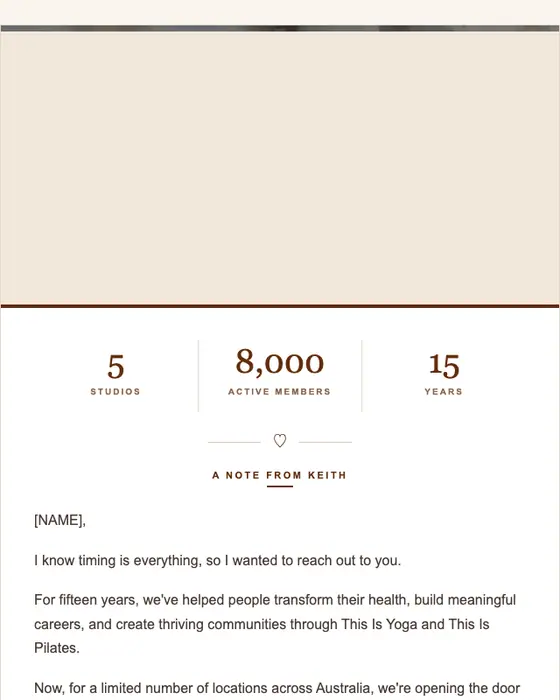
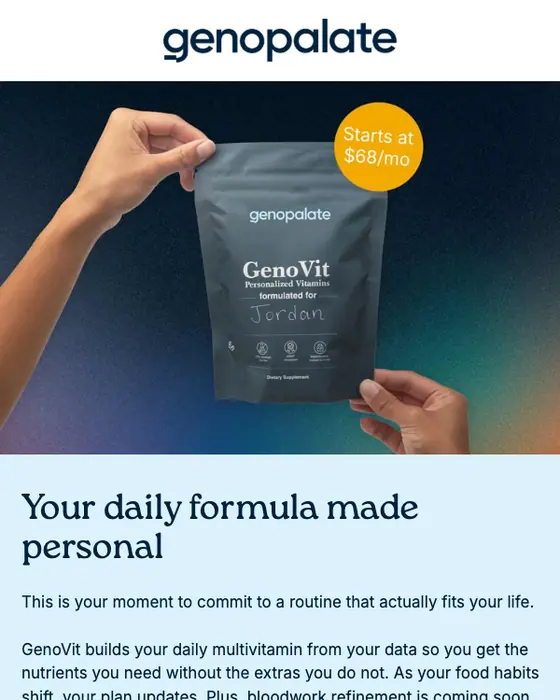
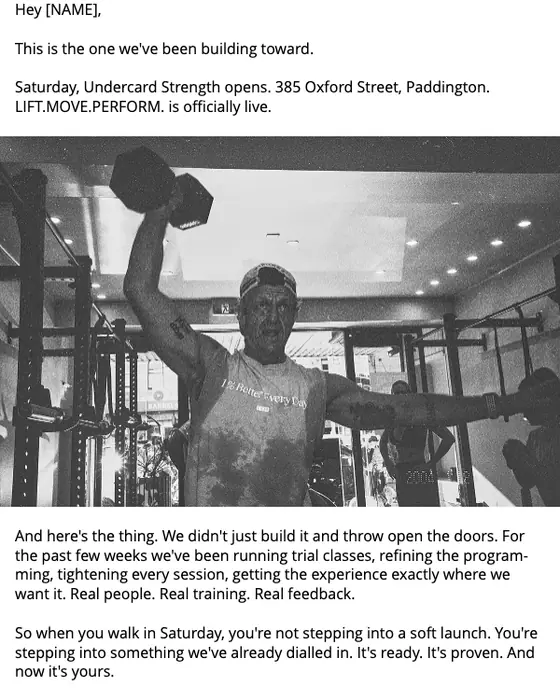
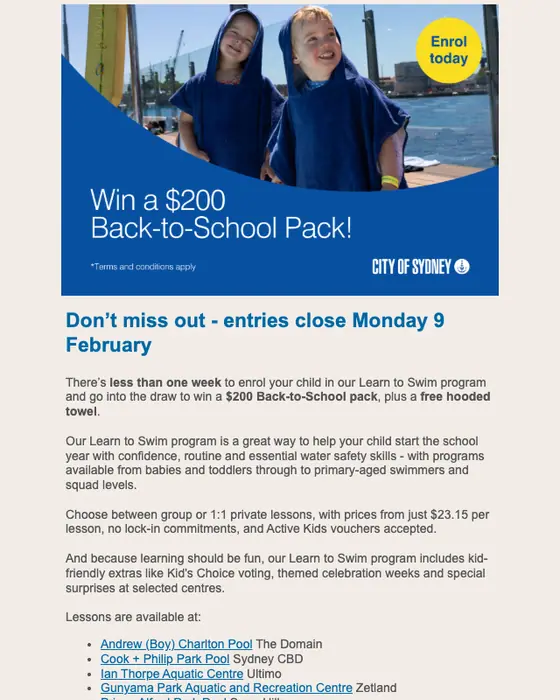
We read each of the 35 and sorted it by what it is selling. Supplements and wellness products are the largest group, from Swolverine, GenoPalate, Nutra Organics, Biome and Sun Powder among others. Tropeaka's plain text send from its founder promises that for the next 24 hours three random orders get a full refund. Gyms, studios and classes include F45 Training, Elixr Health Club, Bodhi and Ride, Peaches Pilates, Undercard Boxing, Bodylove and the City of Sydney's Learn to Swim program. The most direct gym offers here are Elixr's New Year Starter Pass, which is 2 weeks for $89, and Bodhi and Ride's end-of-financial-year sale, announced with 50% off memberships and 15% off class packs. The City of Sydney's Learn to Swim subject line offers a chance to win a back-to-school pack worth $200. Australian Combat & Exercise sent its half-price lifting course to the same inbox three times on June 30, 2026; the one shown is the third, with "(Correction)" in front of the subject line. ShiftLab Studio Collective is selling studio ownership rather than classes. Telehealth, tests and programs include Hims, Maximus, whose subject line prices an at-home testosterone test at $49.99, Lifeforce, Dr. Mark Hyman, ZOE and Genomelink. Apps, wearables and gear include WHOOP, Lumosity, Huckleberry, The Tapping Solution App, Shokz AU and BlockBlueLight.
By tone
all 206 health and fitness promotions collected| Tone | Emails | Share of the set |
|---|---|---|
| Instructional | 93 emails | 45% of the set |
| Warm | 59 emails | 29% of the set |
| Urgent | 34 emails | 17% of the set |
| Neutral, celebratory, playful or other | 20 emails | 10% of the set |
Instructional is the most common tone, and warm is next. Urgent ones on this page include WHOOP's "$199 for a limited time", Dr. Mark Hyman's "10-Day Detox enrollment closes tonight" and Nutra Naturals' "60 mins only!". Sales like these overlap with discount offer emails and sale emails, and challenges and events with event invitations.
Next to this one
The same library, cut a different way: every health and fitness email, including receipts and reminders, health and fitness newsletters, and promotions from ecommerce, education and retail and fashion brands.
Questions about health and fitness promotional emails
This page shows 35 real ones, one each from 35 brands, out of 206 we collected from 101. They sell gym and studio memberships (Elixr Health Club, Bodhi and Ride), supplements (Swolverine, Tropeaka), telehealth and tests (Hims, Maximus), and apps and wearables (WHOOP, Lumosity). Open any one to read it full length.
They explain more and personalize less. 45% of the 206 we collected are instructional in tone, against 36% of all 2,799 promotional emails. Only 20% greet the reader by first name, against 29% of promotions and 40% of every email in the library. 26% put a discount in the subject line, against 22%.
Mostly with a deal, a deadline or a lesson. 26% of the 206 put a discount in the subject line, 17% are urgent in tone, and 45% teach something on the way to the offer. On this page, Australian Combat & Exercise puts "HALF PRICE!" in the subject line, Dr. Mark Hyman with "enrollment closes tonight", and ZOE gives away a free breakfast guide.
Only 58 of the 206 have been published as images in this library so far. We took 23 of those off this page: 14 repeats from a brand already shown, so each brand appears once, 3 that are not health or fitness promotions, and 6 we are holding back over personal details. The percentages on this page still describe all 206.
Send one like it
Simple pricing. Unlimited contacts.
Every plan includes full stack emailing: Flows, Newsletter Campaigns and Transactional Email, plus our NitroWheel LLM and all agent integrations (Claude, ChatGPT, Codex, Cursor and others). Pay for what you send, not who you store.
- Emails 8,000then 500/mo
- Email types Transactional & Marketing
- AI actions 20/mo
- Contacts Free & Unlimited
- Brands 3 · Custom domain 1
- Seats 1
- Recipients / rolling 24h 100–5,000
- Email validation Prepaid only
- Emails 20,000/month
- NitroWheel LLM Included
- Brands 5 · Domains 3
- AI actions 1,000/mo
- Contacts Free & Unlimited
- BYO sending and AI keys Yes
- Seats 3
- Recipients / rolling 24h 1,000–100,000
- Email validation Prepaid only
- Emails 125,000/month
- AI actions 5,000/mo
- Brands 10 · Domains 10
- Seats 10
- Frontier AI Included
- Dedicated IP Available
- Recipients / rolling 24h 1,000–625,000
- Email validation Prepaid only
- AI actions Unlimited
- Unlimited brands & domains Included
- SSO / SAML Included
- 99.9% SLA Included
- Recipients / rolling 24h Contracted
- Email validation Prepaid only
Daily allowances depend on your plan and sender standing. Strong list, domain and delivery evidence can raise standing, including on day one. Trusted receives the full plan allowance; available email credits, safety checks and delivery pacing still apply.
Free forever. No credit card required. See full comparison →