
![edX welcome email: Welcome to edX, [NAME] You’ve registered. Now, go after your goals with 30% off.](/email-examples/img/197174222ff289f9-t.webp)
What an education email is
An education email is one that a school, university, tutoring service, training college or online course platform sends to students, parents and people thinking about enrolling: course and enrollment promotions, newsletters, event invitations, welcome emails and nudges to come back.
We collected 675 of them in two ordinary inboxes, sent between 2016 and 2026 under 253 sender names, and show 71 here. The percentages on this page describe all 675. The category is broad: alongside schools, universities and tutoring services it holds online course platforms, training colleges and people selling marketing and business courses. All of them count in the percentages.
Browse 71 education emails
Filter by type, or search a brand or subject line. The first screen holds emails sent in 2023 or later, most of them from schools, universities, tutoring services and online course platforms. Open any email to see it full length, with its subject line, notes on what it is doing, and a prompt that rebuilds it.
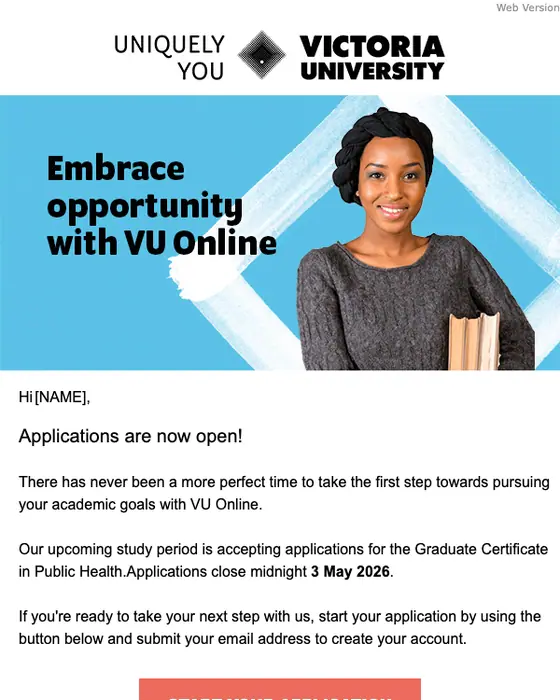
Victoria University Online
Applications for our upcoming study period now open

Victoria University Online
VU Online | Here's your Graduate Certificate in Public Health brochure!
GymbaROO-KindyROO
Term 2 Adventures Start Now, [NAME]! 🙌
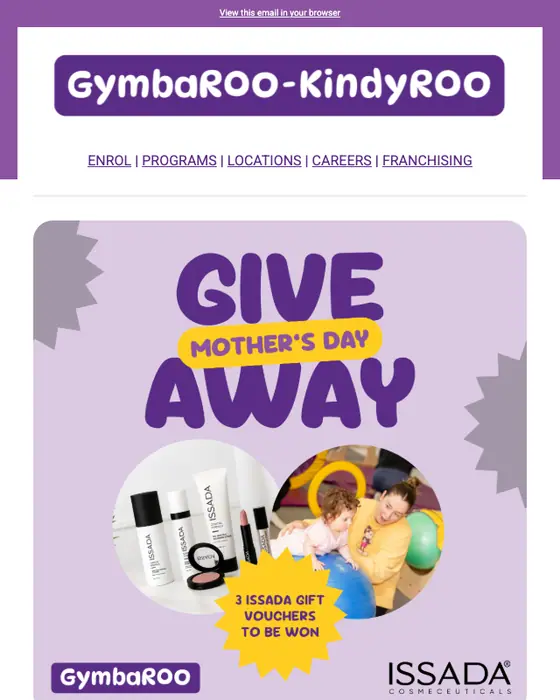
GymbaROO
Two sentences could win you $250 - Tell us about your Mum! ❤️
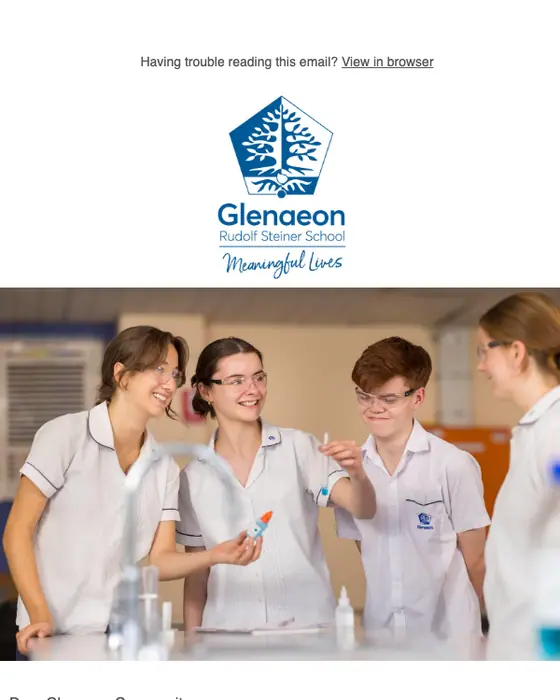
Glenaeon Foundation
One Week Left to Make a Difference – Support our Annual Giving Campaign 2026
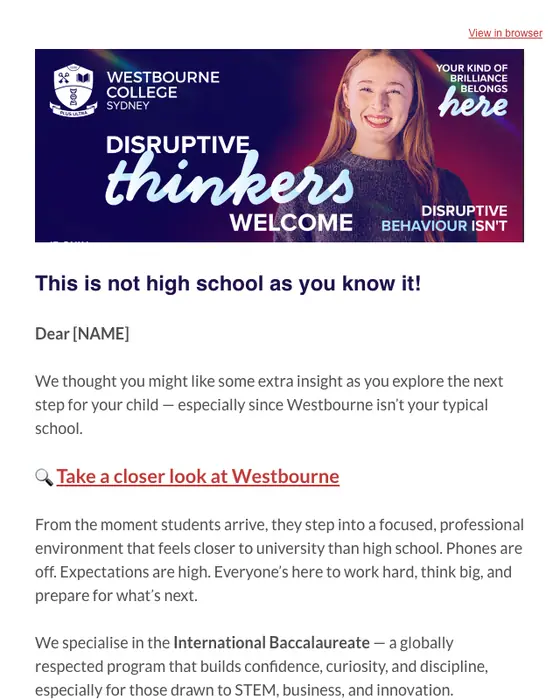
Westbourne College Sydney
See why ambitious teens choose Westbourne 🔎
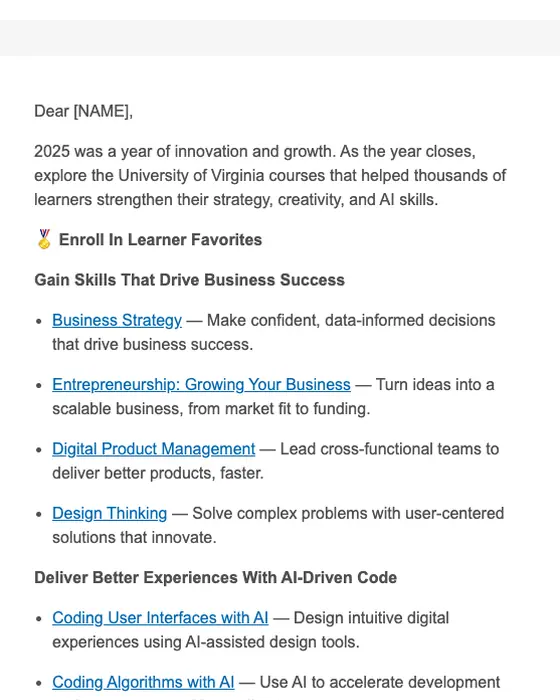
University of Virginia
University of Virginia: Top Business + AI Courses to Learn Before 2026
edX
Welcome to edX, [NAME] You’ve registered. Now, go after your goals with 30% off.
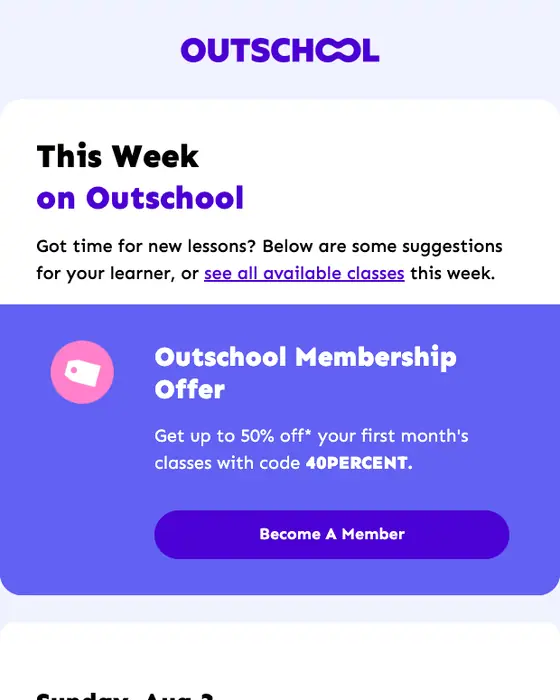
Outschool
This week on Outschool: Classes your learner may like
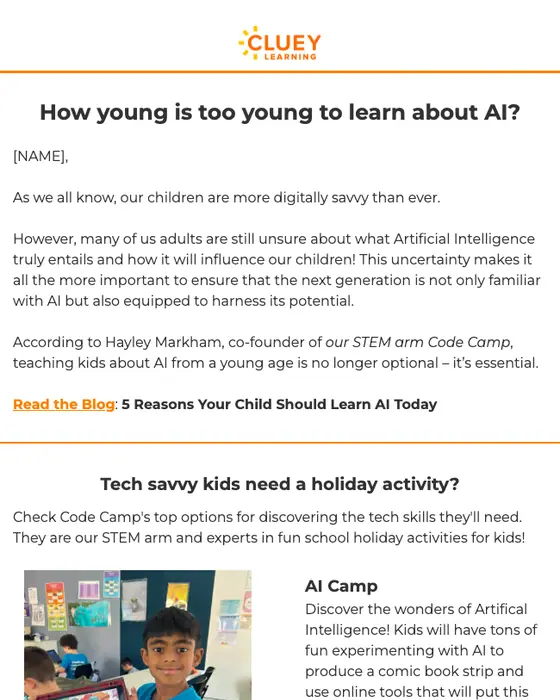
Cluey Learning
Should your kids be using AI?
EduGrowth
Final Call: Join the USA EdTech Trade Mission this April! 🚀🛰️
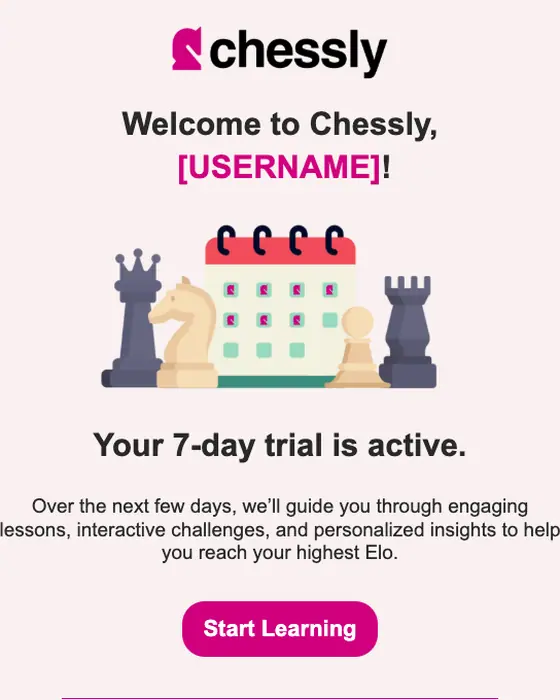
Chessly
[USERNAME], welcome to Chessly!
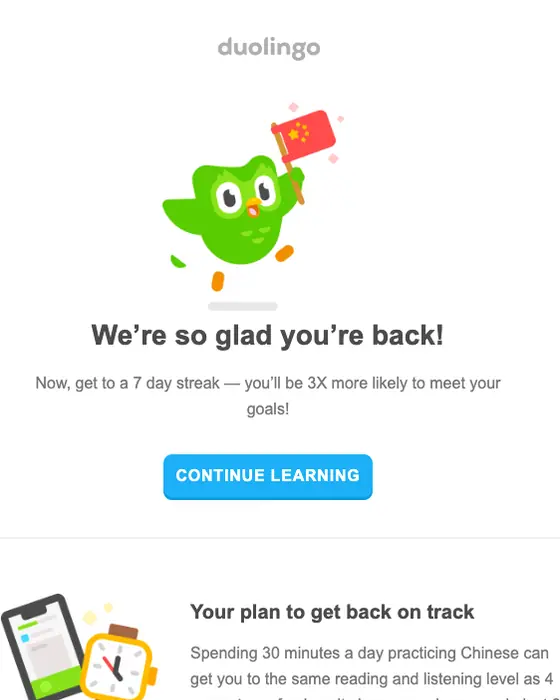
Duolingo
Welcome back! Check out your personalized learning plan
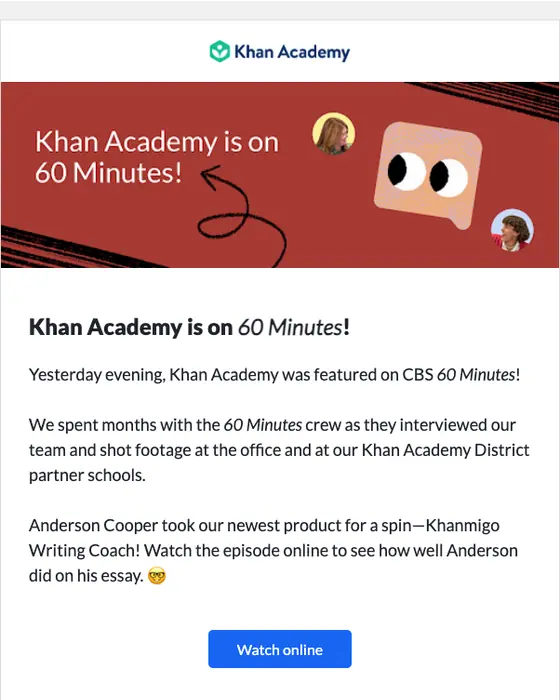
Khan Academy
60 Minutes Featured Khan Academy yesterday 🥺
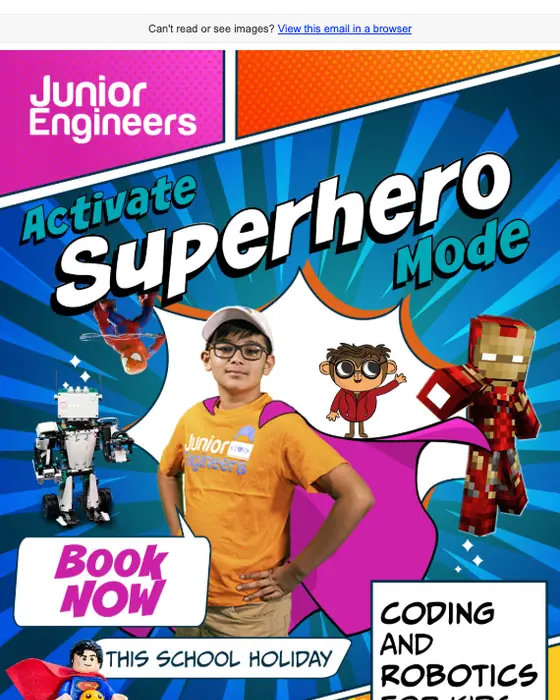
Junior Engineers
These holidays are long , but so is our list of coding and robotics classes!
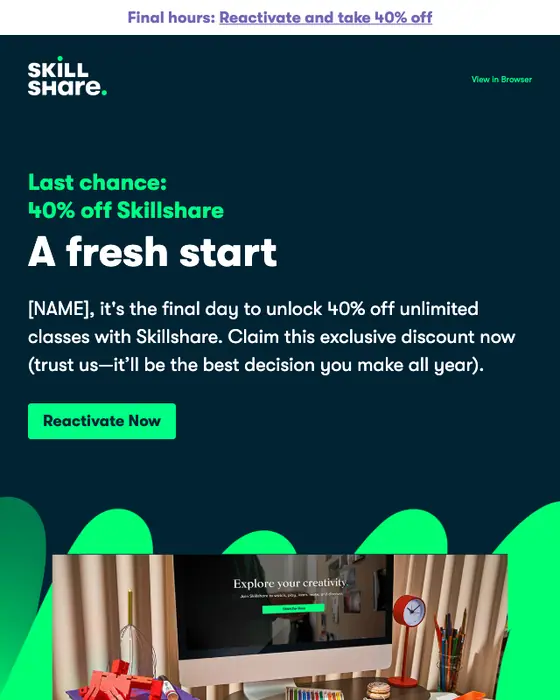
Skillshare
Final hours: take 40% off your membership
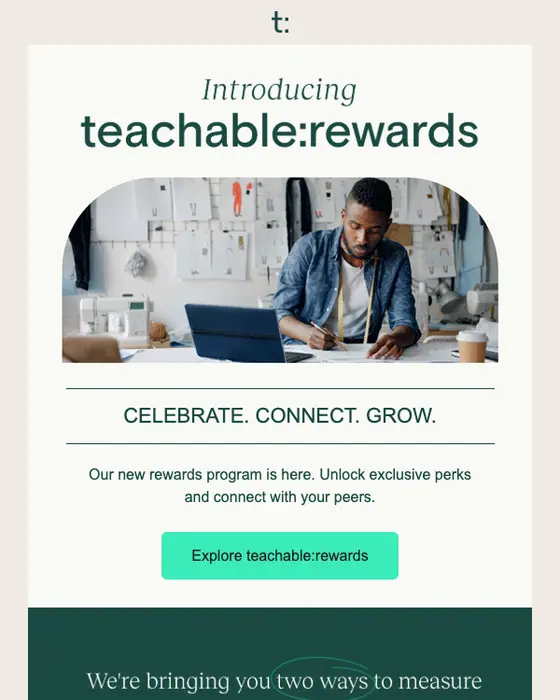
Teachable
[DRUMROLL] Welcome to teachable:rewards 🏆
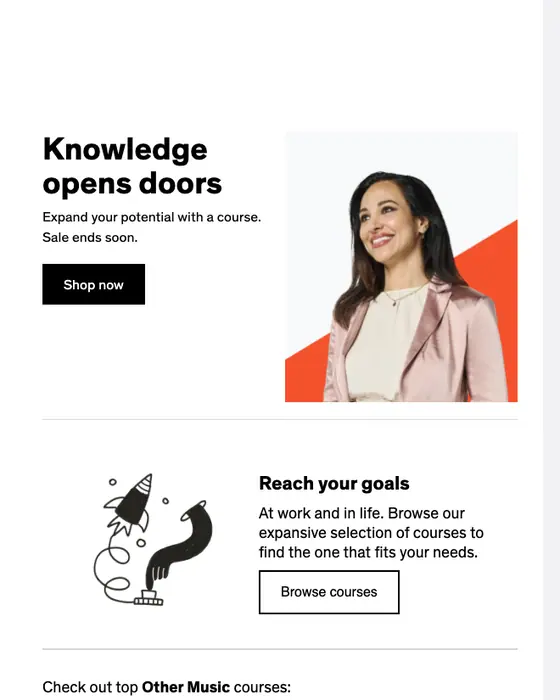
Udemy
Create new opportunities. Courses on sale now.
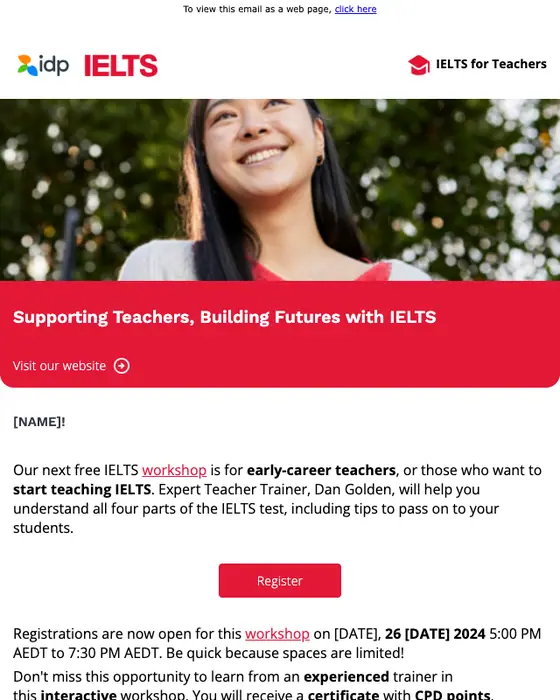
IELTS for Teachers
Boost your IELTS teaching skills! Register now for our next online workshop.
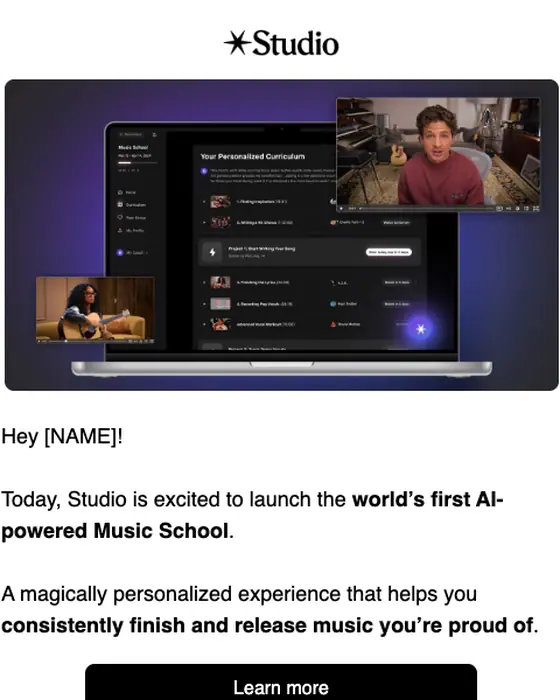
Studio
Introducing the World's First AI-Powered Music School
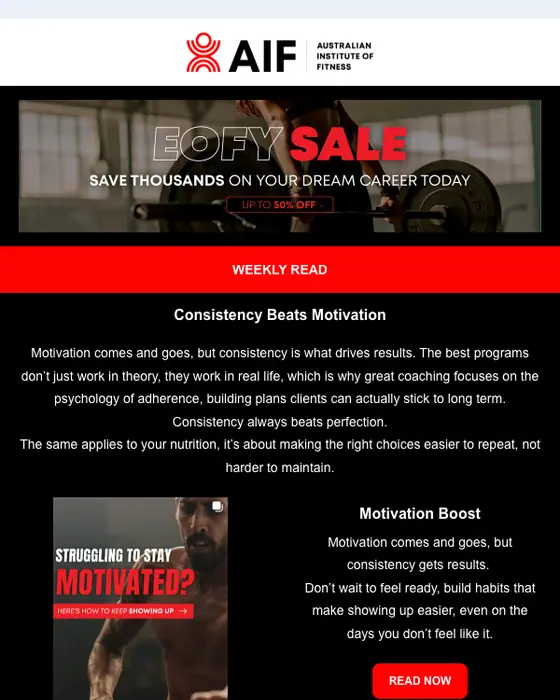
Australian Institute of Fitness
Consistency beats motivation
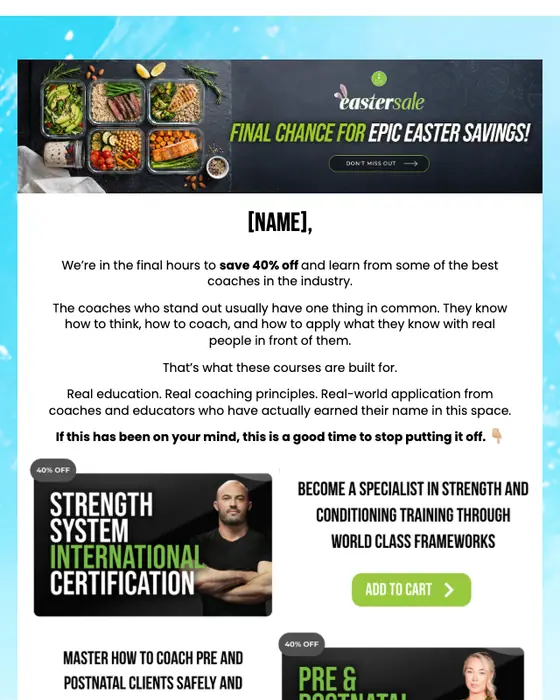
Clean Health
[NAME], your next move starts here!
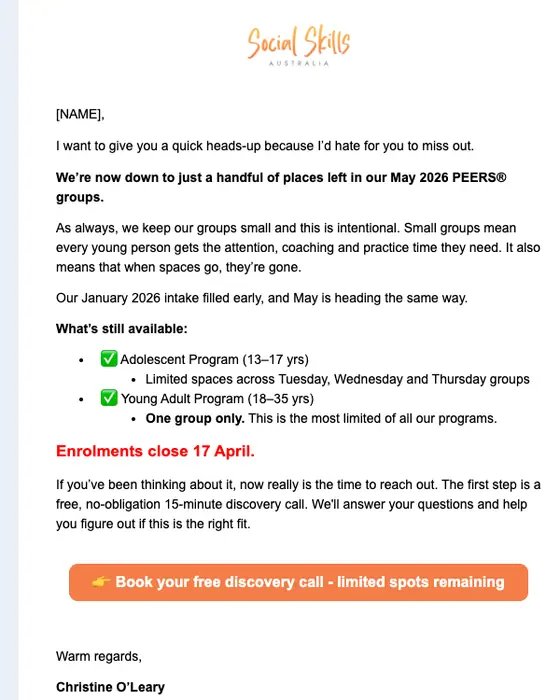
Social Skills Australia
⚠️ Only a few spots remaining for May
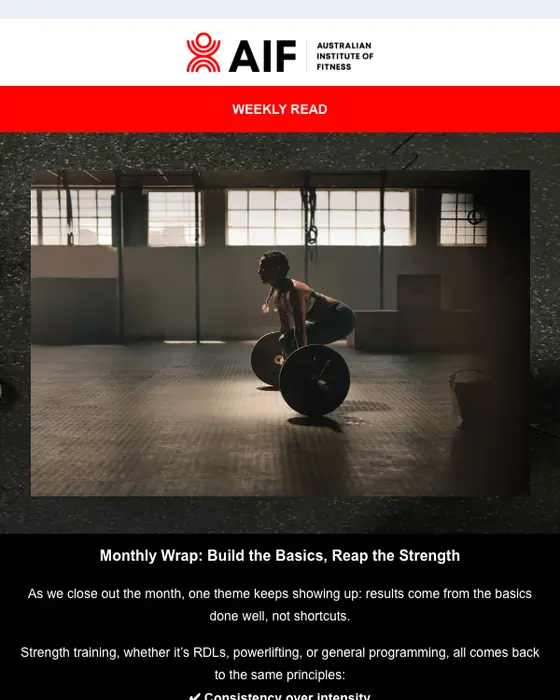
Australian Institute of Fitness
Your training needs this reminder
How education email differs from everything else in the same inboxes
Education email against every other email
675 education and 11,627 other emails| What we measured | Education | Everything else |
|---|---|---|
| Aimed at winning a new student or customer | 26% | 15% |
| Sent to existing students and customers | 41% | 39% |
| Receipts, bookings and other fulfillment | 7% | 25% |
| Promotional emails | 28% | 22% |
| Newsletters | 18% | 12% |
| Event invitations | 8% | 4% |
| Instructional tone | 50% | 36% |
| Neutral tone | 12% | 28% |
| Mostly text | 71% | 61% |
| Plain-text layout | 39% | 32% |
| Long emails | 22% | 16% |
| Main link is a text link | 60% | 55% |
| Main link is a button | 19% | 23% |
| Greets the reader by first name | 45% | 39% |
| Subject line says what is inside | 39% | 31% |
| From a US sender | 48% | 35% |
| From an Australian sender | 42% | 47% |
Education senders spend more of their email recruiting. 26% of the education emails aim to win a new student or customer, against 15% of everything else, and only 7% are receipts, bookings and other fulfillment, against 25%. Promotional emails (28% against 22%), newsletters (18% against 12%) and event invitations (8% against 4%) are all more common than in the rest of the inboxes.
The emails explain, and they do it in text. Half of them (50%) are instructional in tone, against 36% of other email, and only 12% are neutral, against 28%. 71% are mostly text, against 61%, 39% use a plain-text layout, against 32%, and 22% are long, against 16%. The main link is a text link in 60% of them and a button in 19%, against 55% and 23% elsewhere.
Greeting the reader by first name is a little more common than elsewhere (45% against 39%), and personalization mostly stops there: 10 of the 675 refer to something the reader did before. Subject lines usually say what is inside (39% against 31%). US senders make up 48% of this set and Australian senders 42%, against 35% and 47% of the rest, so read the comparison as US and Australian education email against a mixed inbox.
What is in the collected set
By type
all 675 education emails collected| Type | Emails | Share of the set |
|---|---|---|
| Promotional | 191 emails | 28% of the set |
| Newsletter | 123 emails | 18% of the set |
| Event invitation | 55 emails | 8% of the set |
| Account notice | 52 emails | 8% of the set |
| Discount offer | 32 emails | 5% of the set |
| Re-engagement | 30 emails | 4% of the set |
| Welcome | 26 emails | 4% of the set |
| 25 other types | 166 emails | 25% of the set |
Of the 71 in the grid, from 50 sender names, 52 were sent in 2023 or later. 19 are promotional, 15 are newsletters, 9 are welcome emails, 7 are discount offers, 5 are event invitations and 6 are re-engagement emails.
177 of the 675 have been rendered full length so far, and we left 106 of those off this page: 29 text-heavy sends with little to show about design, most of them course pitches that run as a wall of text, 29 that were not education email on a closer look (startup and conference event tickets, marketing and community newsletters, a nature newsletter), 25 repeats of a template or campaign already shown, 17 that showed personal details, had broken or clipped images or were test sends, and 6 for smaller reasons, such as a bare verify-your-email notice. The other 498 have not been rendered yet. All 675 still count in every percentage on this page.
Plain text is common in the collected set and rare in the grid. 262 of the 675 (39%) use a plain-text layout. 22 of those have been rendered and one is shown: a short enrollment reminder from Social Skills Australia, written as a letter from the founder with one button. Of the other 21, 17 were course pitches or updates with little to show about layout, 3 showed personal details and 1 was off topic.
Next to this one
The same library, cut a different way: education newsletters and education promotional emails, the neighboring nonprofit and events industries, or by the job the email does: welcome emails, newsletters and re-engagement emails.
Questions about the collection
Of the 675 education emails we collected, 191 are promotional (28%) and 123 are newsletters (18%). Event invitations and account notices make up 8% each, discount offers 5%, re-engagement emails 4% and welcome emails 4%. The other 25% spread across 25 more types.
The 80/20 rule says about 80% of email should help and 20% should sell. Education email sells more than that. Of the 675 education emails we collected, 35% are promotions, discount offers or sales and 65% are not, against 29% selling in every other email from the same inboxes.
They carry more text. 71% of the education emails we collected are mostly text, against 61% of other email, and 39% use a plain-text layout, against 32%. Half are instructional in tone, against 36%. Buttons are a little rarer: 19% put the main link on a button, against 23%.
Lightly. 45% of the 675 education emails we collected greet the reader by first name, against 39% of other email from the same inboxes. Only 10 of the 675 refer to something the reader did before, and 350 (52%) carry no personalization at all.
177 of the 675 have been rendered full length so far. We left 106 of those off this page, mostly text-heavy course pitches, sends that were not education email on a closer look, repeat templates and renders that broke or showed personal details. The other 498 still count in every percentage here.