
What a transport email is
A transport email is a message from a company that moves people or parks their cars: ride-hail, car share, bike and scooter hire, parking, trains and coaches. Most are ride discounts, receipts, booking confirmations and account notices.
We collected 104 of them from 17 companies in two ordinary inboxes, sent between 2016 and 2026, and show 25 here. 73 of the 104 are Australian, and 101 are email to consumers from apps such as Uber, DiDi, Lime and Share with Oscar. None of it comes from a freight or haulage company. The numbers below describe all 104.
Browse 25 transport emails
Filter by type, or search a brand or subject line. Open any email to see it full length, with its subject line, notes on what it is doing, and a prompt that rebuilds it.
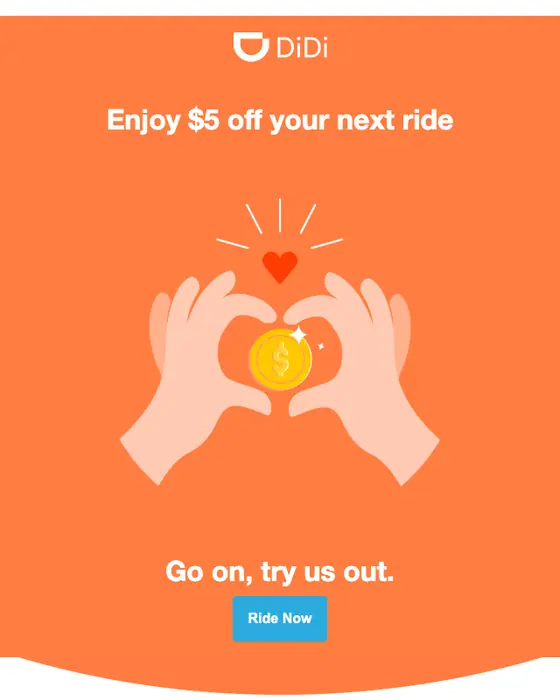
DiDi Australia
Coming in hot 🔥, $5 off your next ride.
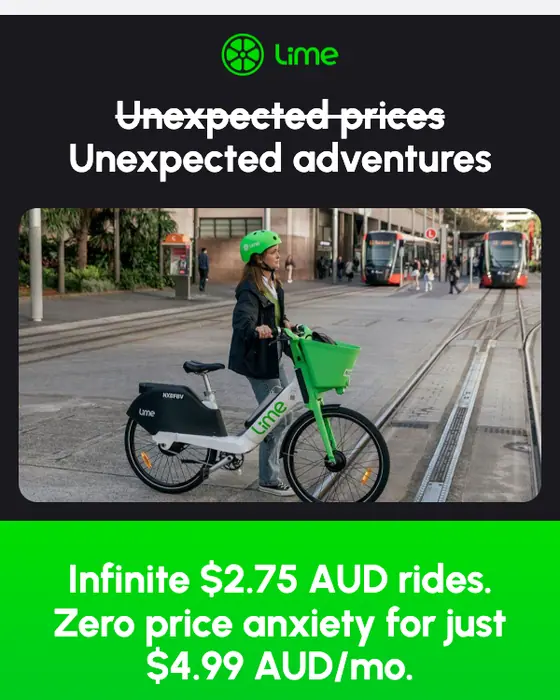
Lime
You're missing $2.75 AUD flat-rate rides with LimePrime
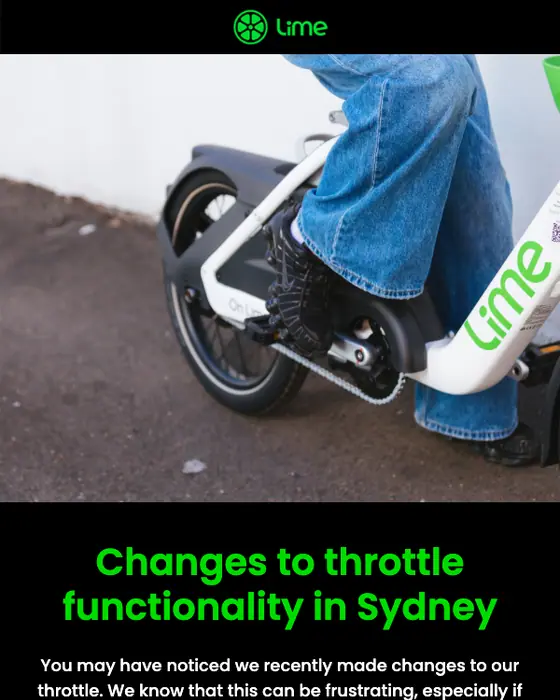
Lime
Update to your throttle experience
Uber One
Save in as little as 2 orders with Uber One 🙌
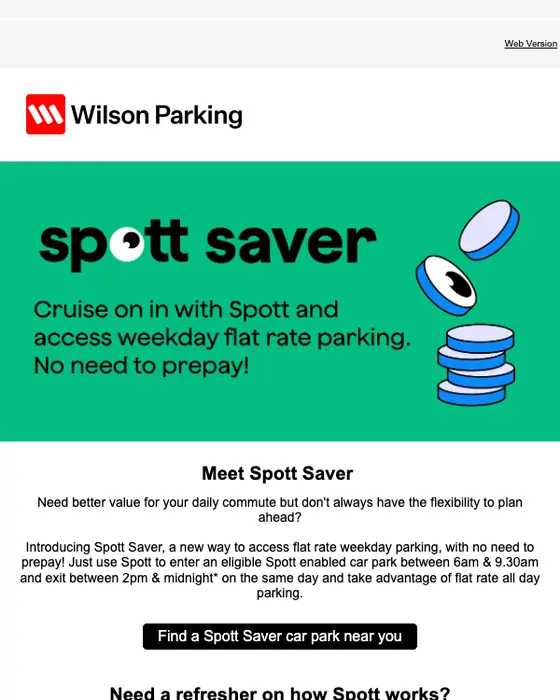
Wilson Parking Australia
Introducing Spott Saver, a new way to access flat rate weekday parking
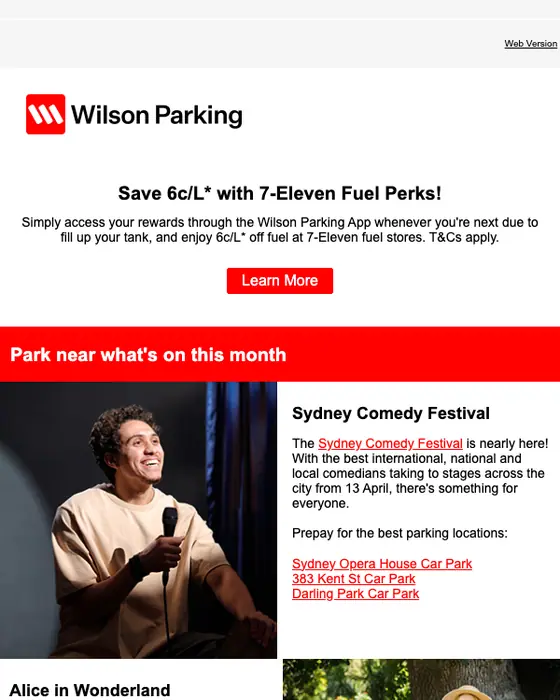
Wilson Parking Australia
April plans? Make sure to use your 7-Eleven Fuel Perks ⛽
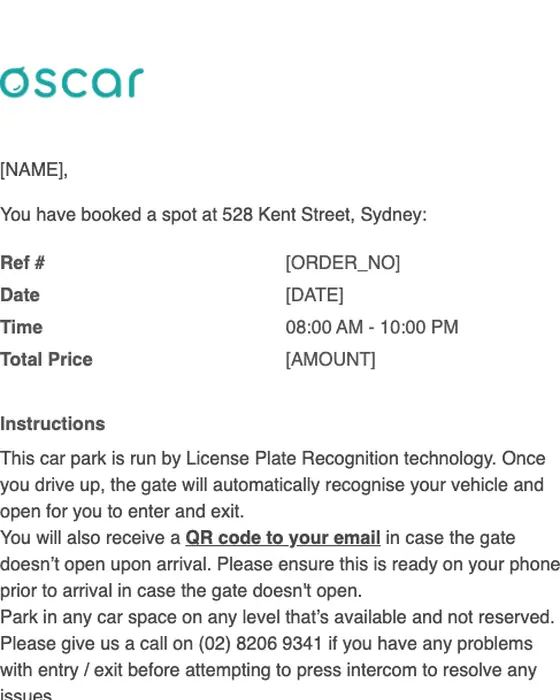
Share with Oscar
Your booking receipt [Ref#[ORDER_NO]]
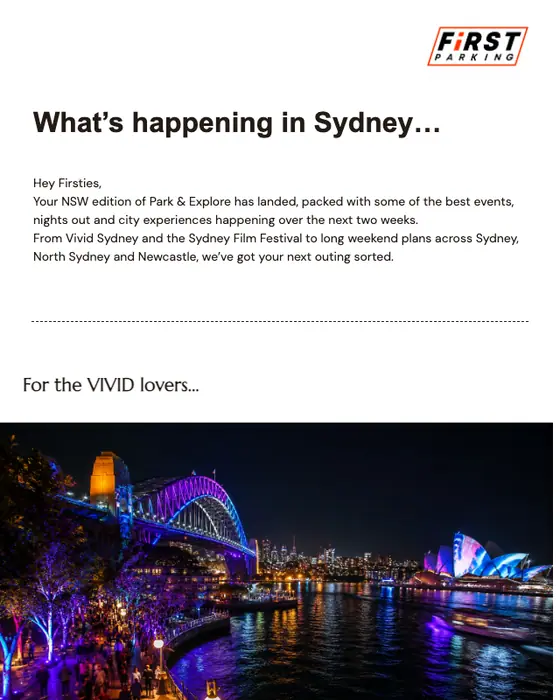
Express by First Parking
Park & Explore: Your plans sorted
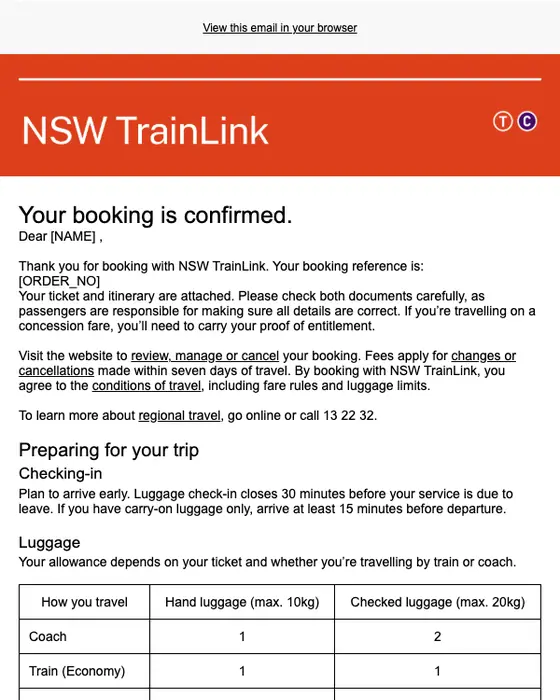
NSW TrainLink
NSW TrainLink - Purchase Confirmed for Booking [ORDER_NO]
Lime
Welcome to Lime
Uber Research
Reminder: Help us improve Uber for Business!
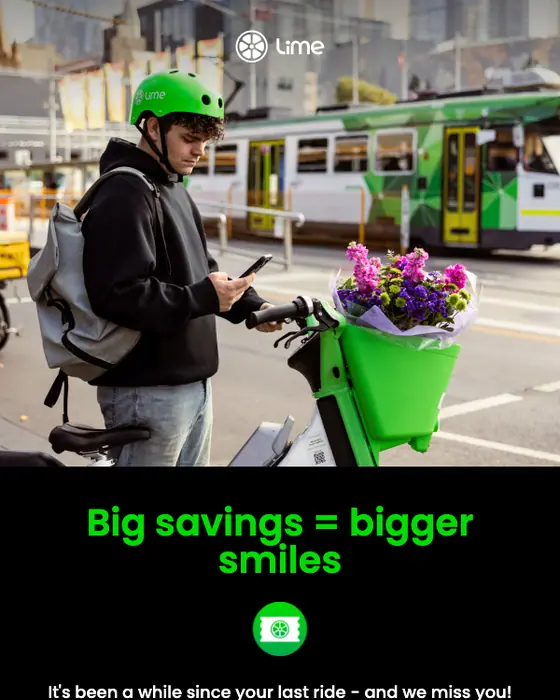
Lime
Open for big savings on Lime 💸 What are you waiting for?
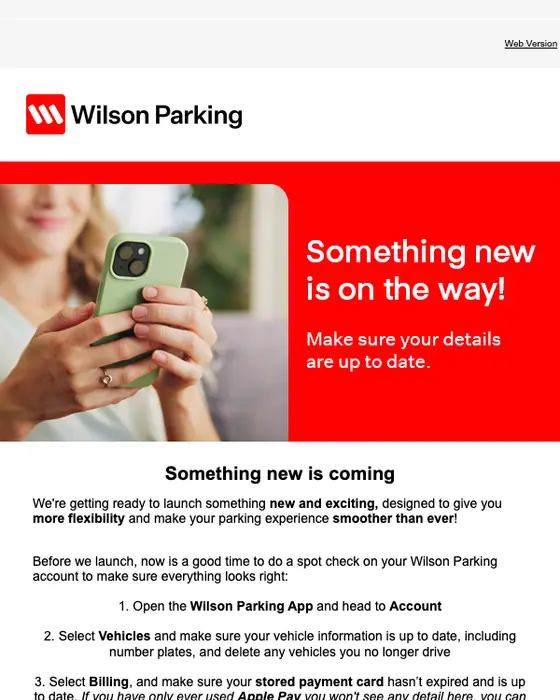
Wilson Parking Australia
Something new is coming, [NAME]
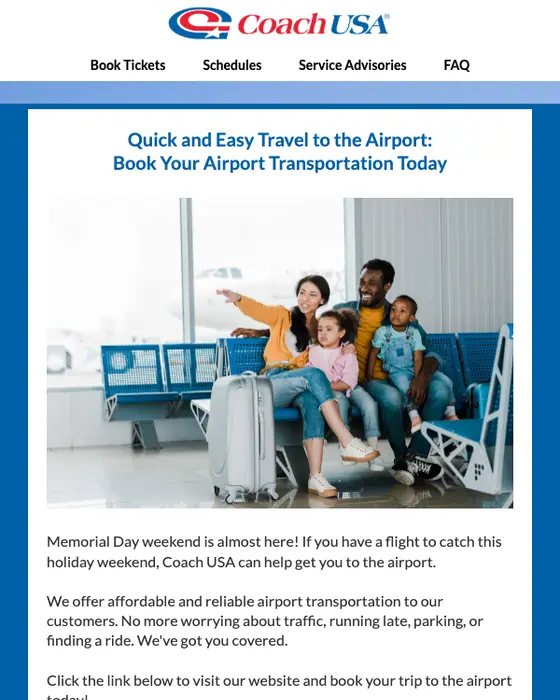
Coach USA
Quick and Easy Travel to the Airport
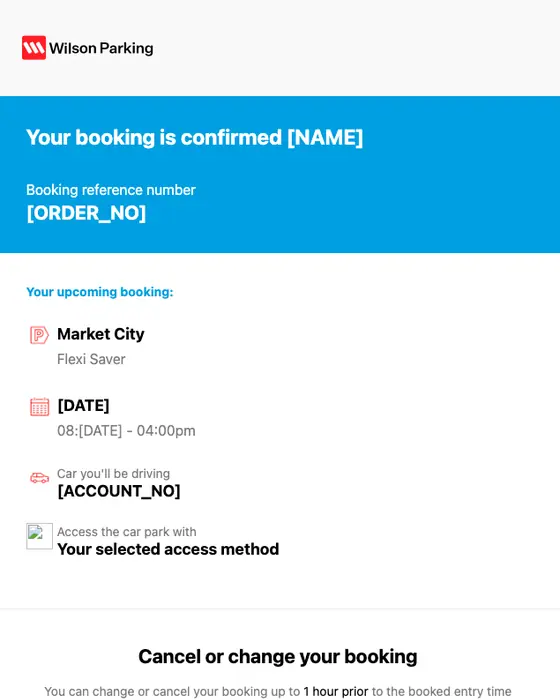
Wilson Parking
Booking Confirmation
DiDi Australia
Get $10 off and earn Velocity Points on every ride
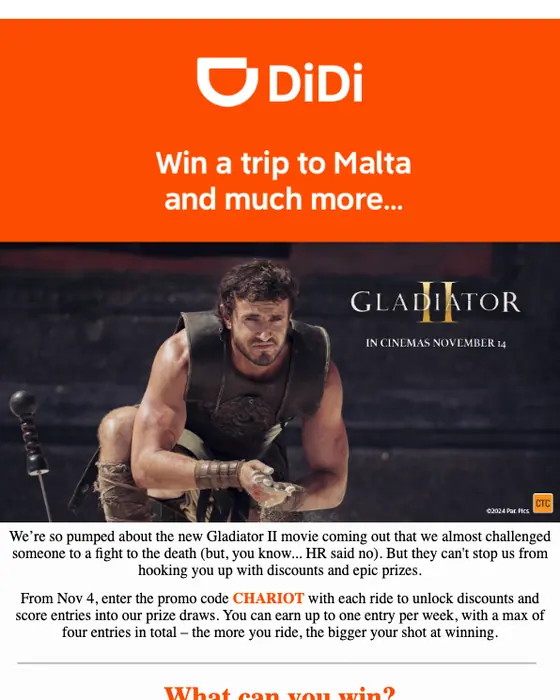
DiDi Australia
Ready to ride like a Gladiator? 🚗⚔️
Uber Carshare
Your trip receipt [ORDER_NO]
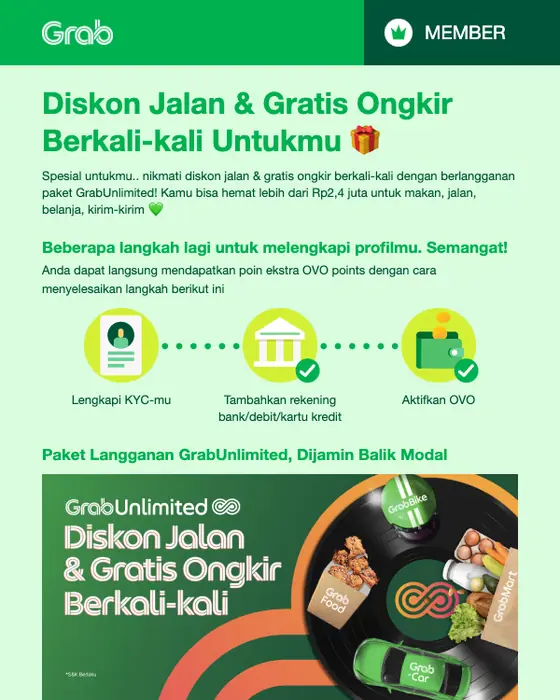
Grab Indonesia
Lagi mau jajan apa? 🤤
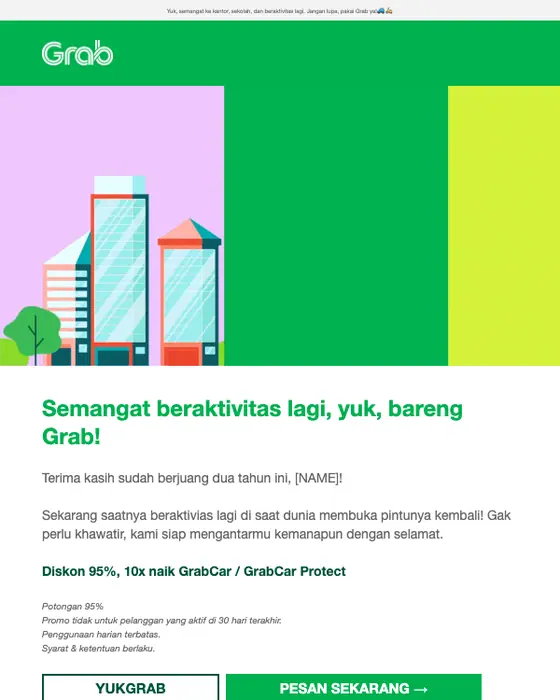
Grab Indonesia
Diskon 95%, 10x naik GrabCar / GrabCar Protect
BlaBlaCar
Sicherheit hat bei uns Vorfahrt
BlaBlaCar
Mach deine nächste Reise ganz entspannt
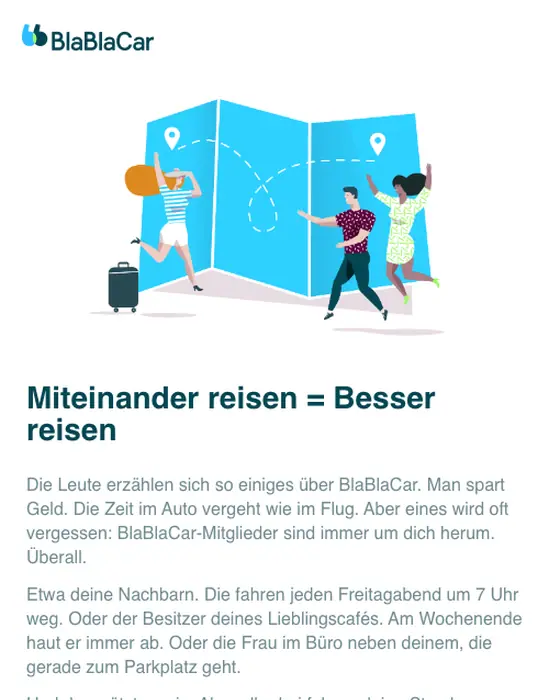
BlaBlaCar
Sie sind überall! 👀
Wilson Parking Australia
We are still here to help [NAME]
How transport email differs from everything else
Transport email against every other email
104 transport emails and 12,607 other emails from the same two inboxes| What we measured | Transport | Everything else |
|---|---|---|
| Discount offers | 19 (18%) | 3% |
| Receipts | 24 (23%) | 3% |
| Promotional email | 22 (21%) | 22% |
| Newsletters | 1 (1%) | 12% |
| Subject line leads with the offer | 20 (19%) | 11% |
| Uses the reader's first name | 61 (59%) | 40% |
| Utilitarian design | 52 (50%) | 33% |
| Instructional tone | 49 (47%) | 37% |
| Short or very short | 66 (63%) | 53% |
| Plain-text layout | 23 (22%) | 32% |
| Exactly one call to action | 38 (37%) | 30% |
| Opens with a hero image | 8 (8%) | 12% |
Transport brands discount by email far more than other senders do. 19 of the 104 are discount offers, 18%, against 3% of other email, and 20 subject lines lead with the offer. One ride-hail app sent 10 of the 19. Leave it out and discount offers are still 9 of the other 94, 10%.
The receipts figure does not hold up the same way. Share with Oscar, a parking-space app, sent 25 of the 104, and 21 of its 25 are receipts. Leave it out and receipts are 3 of the other 79, 4%, about the same as other email.
Receipts are also the clearest case of unused space. 11 of the 24 receipts are plain text, and 7 carry a single link or button.
The rest is consistent across senders. 59% use the reader's first name, against 40%. Half are utilitarian in design, against a third of other email, and 8 of the 104 open with a hero image. There is one newsletter in the set.
What is in the collected set
By kind of sender
the 104 transport emails, 17 companies| Kind of sender | Emails | What they mostly send |
|---|---|---|
| Ride-hail, car share, bike and scooter apps | 61 emails | 19 discount offers, 13 promotions, 8 account notices |
| Parking | 41 emails | 21 receipts, 8 promotions, 4 booking confirmations |
| Trains and coaches | 2 emails | 1 booking confirmation, 1 promotion |
The two halves send different email. The 10 ride, car share and scooter companies sent every one of the 19 discount offers. The 5 parking companies sent 21 of the 24 receipts.
The grid shows 25 emails from 10 companies, and it leans toward promotions: 11 promotional emails, 4 account notices, 3 booking confirmations and 2 re-engagement emails, with one each of a receipt, a discount offer, a product launch, a welcome and a survey. Only 2 of the 24 receipts have been rendered for the library so far, so the receipt examples page is the better place for those. Five of the emails shown are not in English: three from BlaBlaCar in German and two from Grab in Indonesian.
Next to this one
The same library, cut a different way: travel emails, logistics emails and automotive emails by industry, or by the job the email does: discount offers, booking confirmations, promotional emails, account notices and re-engagement emails.
Questions about the collection
It depends on the company. Ride-hail, car share and scooter apps mostly send offers: 19 discount offers and 13 promotions among their 61 emails. Parking companies mostly send receipts, 21 of 41. Across all 104 we collected, receipts are 23%, promotions 21% and discount offers 18%.
A common rule of thumb is that about 80% of what you send should be useful to the reader and 20% should sell. Transport email in this set sells more than that. Promotions and discount offers are 41 of the 104 emails, 39%, against 25% of the other 12,607 emails from the same inboxes.
Mostly with money off the next ride. 20 of the 104 subject lines lead with the offer, 19%, against 11% of other email. DiDi's reads "Coming in hot 🔥, $5 off your next ride." Parking brands promote products instead: the Wilson Parking emails on this page introduce flat rate weekday parking and remind members to use their fuel perks.
More often than most email. 61 of the 104, 59%, use the reader's first name, against 40% of other email. Subject lines do it less: 15 of 104 are personalized, such as Wilson Parking's "Something new is coming, [NAME]", where [NAME] stands in for the recipient's name.
48 of the 104 have been rendered for the library so far. We took 23 of those off this page: 9 that showed personal details such as a license plate or an employer's name, 5 whose images did not load, 7 repeats of a template already shown, and 2 weak ones. The other 56 count in every percentage.