
What a media newsletter is
A media newsletter is the regular email a news site, magazine, streaming service or independent writer sends to its subscribers: the day's stories, a weekly roundup, what to watch, or one essay.
We collected 263 of them from 122 brands in two ordinary inboxes, sent between 2016 and 2026. This page shows 23: 20 of those 263, plus 3 newsletters from publishers that our library files under another industry (health, education and software). The questions below explain why only 23 are shown. The numbers below describe all 263.
Browse 23 media and publisher newsletters
Filter by design style, or search a sender or subject line. Open any email to see it full length, with its subject line, notes on what it is doing, and a prompt that rebuilds it.
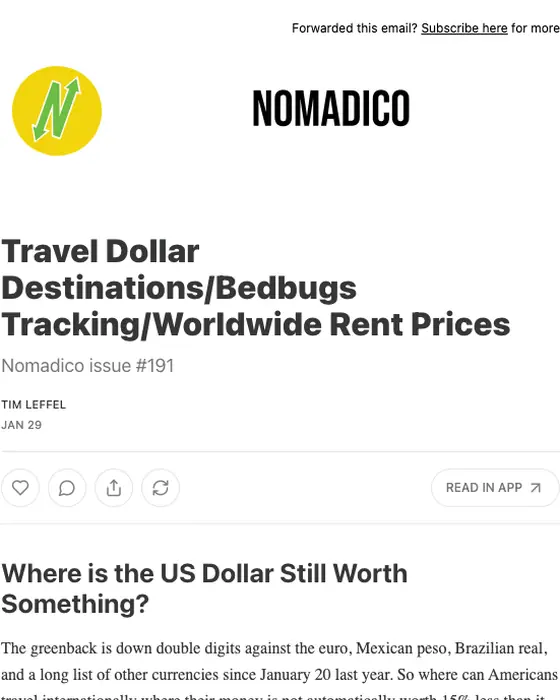
Nomadico
Travel Dollar Destinations/Bedbugs Tracking/Worldwide Rent Prices
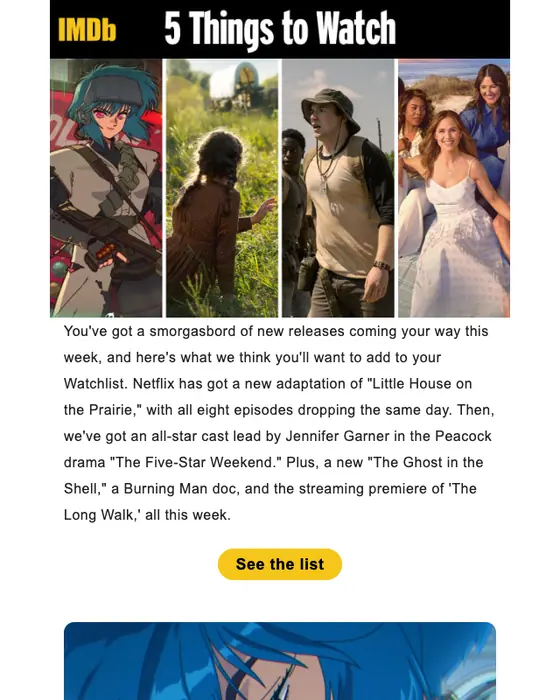
IMDb
5 new shows and movies to watch this week
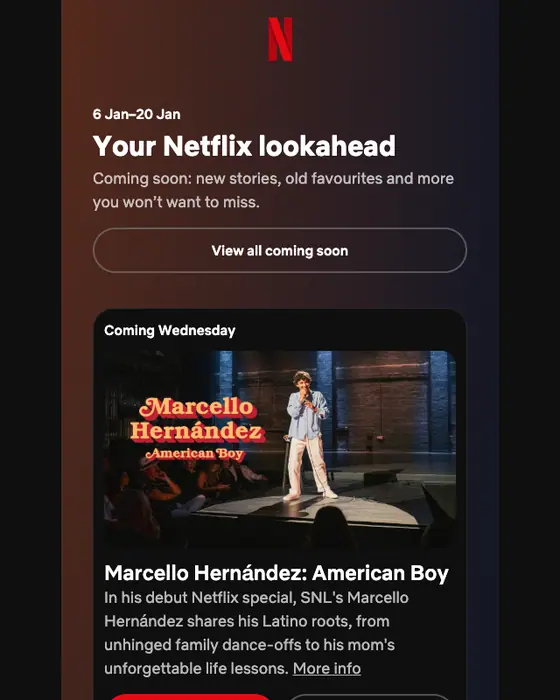
Netflix
[NAME], here's what's coming soon to Netflix
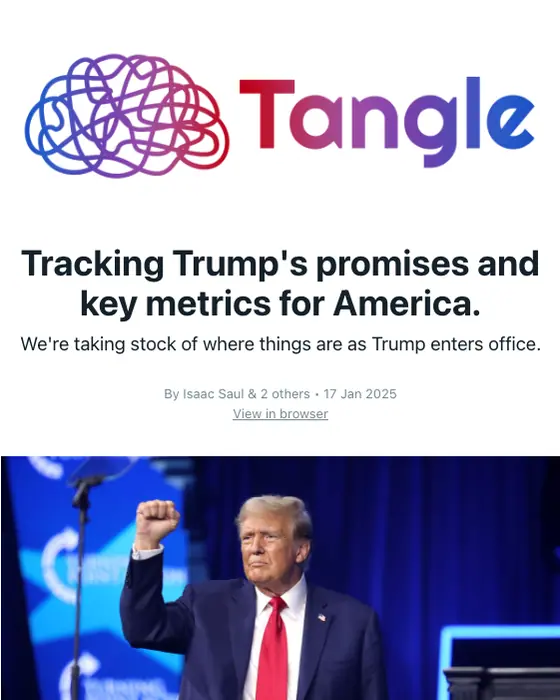
Tangle
Tracking Trump's promises and key metrics for America.
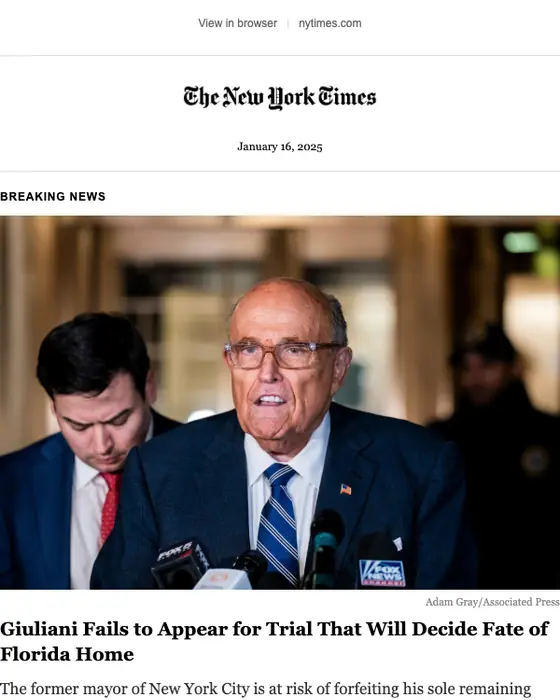
The New York Times
Breaking news: Giuliani fails to appear for trial deciding the fate of his Florida home
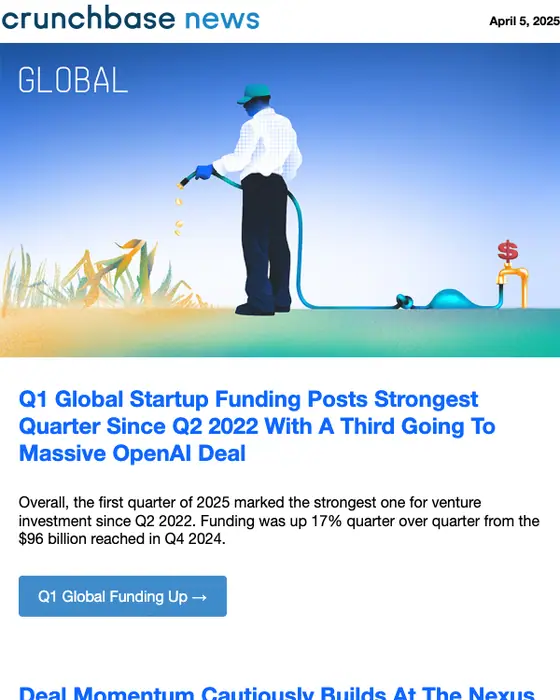
Crunchbase News
Global Startup Funding Sees Strongest Quarter Since 2022, And Deal Momentum At The Nexus Of AI And Real Estate
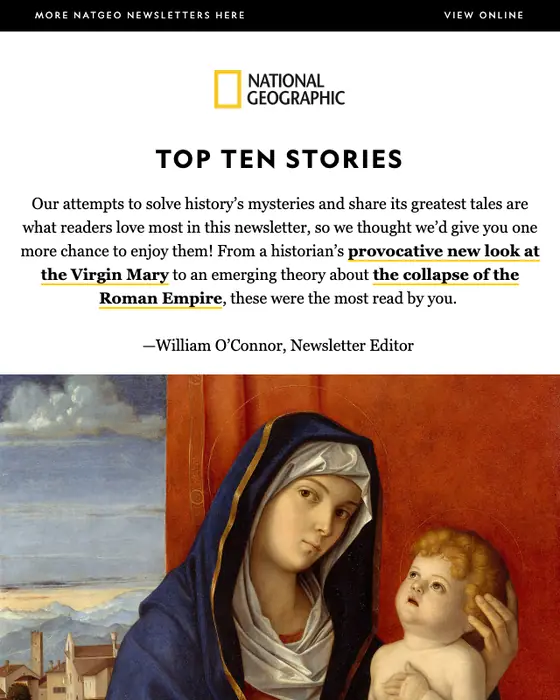
National Geographic
Who was the real Virgin Mary?; a new fall of the Roman Empire theory; Queen Victoria’s secret marriage
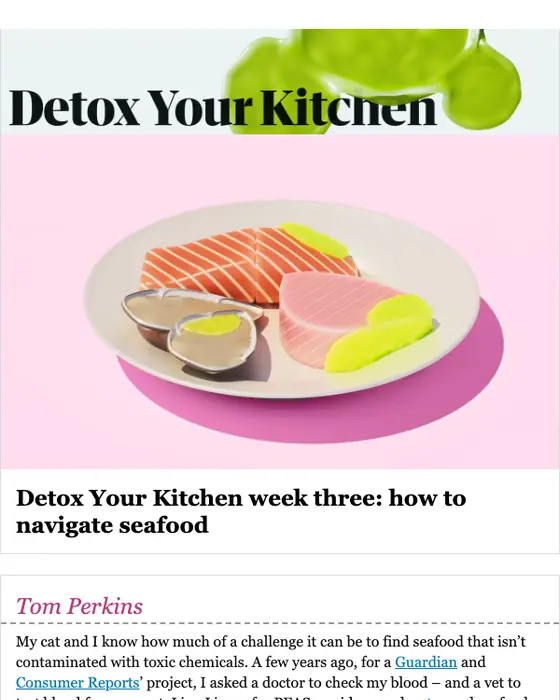
The Guardian
Detox Your Kitchen #3: Seafood
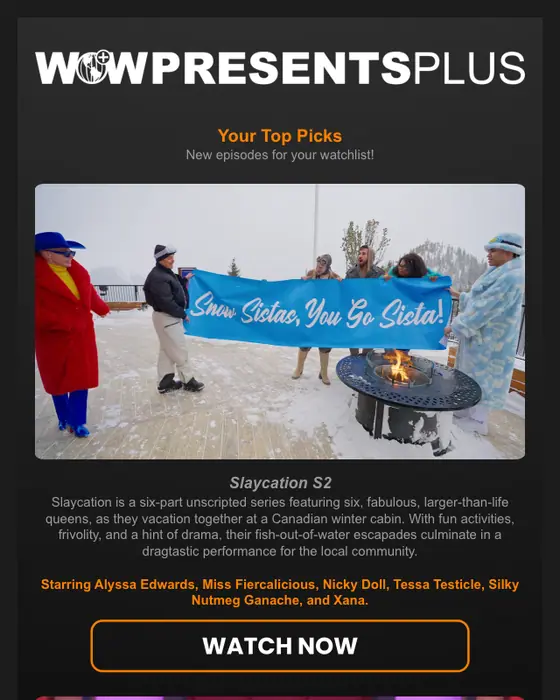
WOW Presents Plus
Open For Your Weekend Watchlist! 🍿
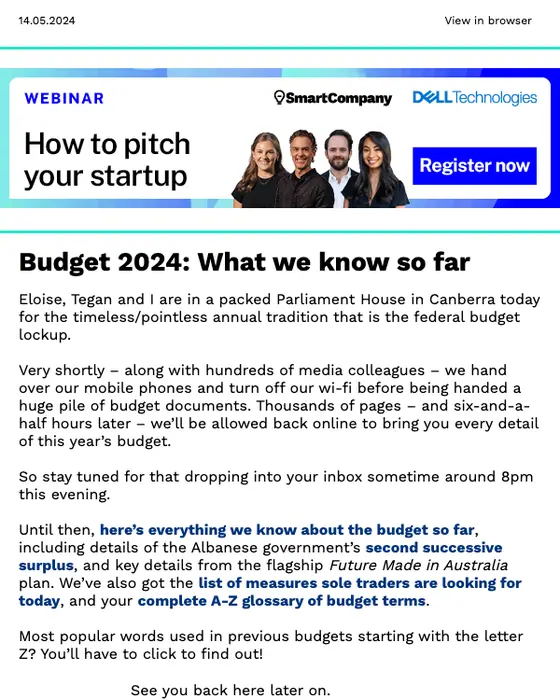
SmartCompany
Budget preview | $9.1 billion surplus | Sole traders want tax relief
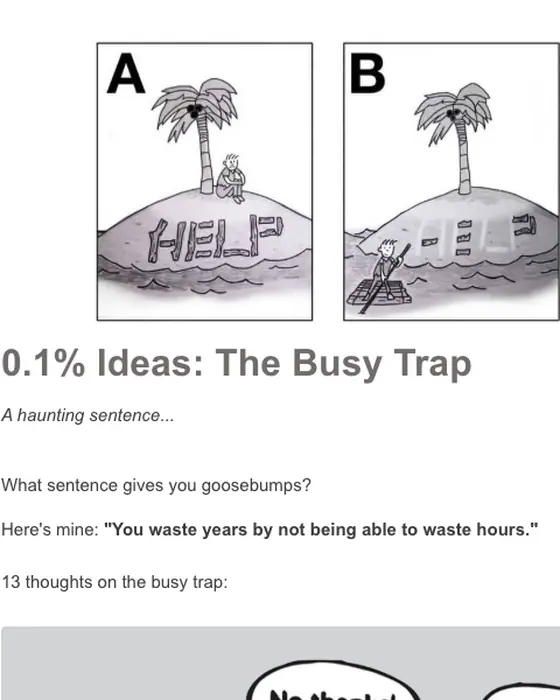
George Mack
0.1% Ideas: The Busy Trap

NFL Game Pass from DAZN
🏈 Week 11 Rewind 👀
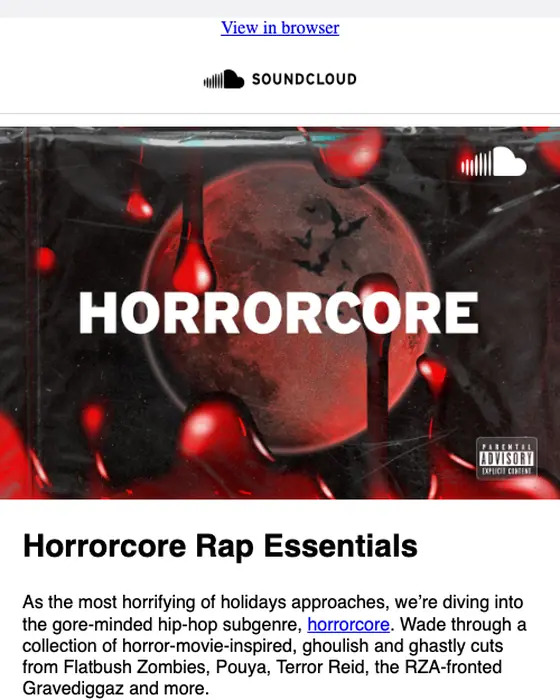
SoundCloud
Weekly Download: Your Halloween Soundtrack, Horrorcore Rap Essentials – Plus a Guide to ADE 2024 and more
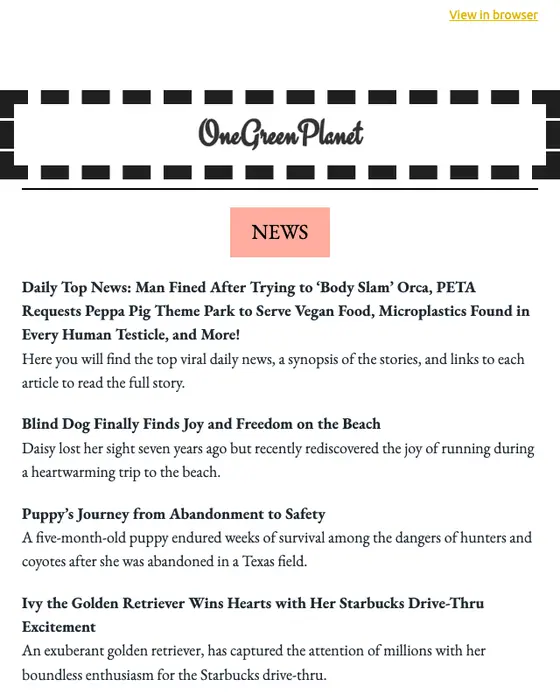
One Green Planet
Spicy Meatless Buffalo Recipes + Man Tried to 'Body Slam' Orca + Microplastics Found in Testicles + Barbaric Animal Hoarding Case
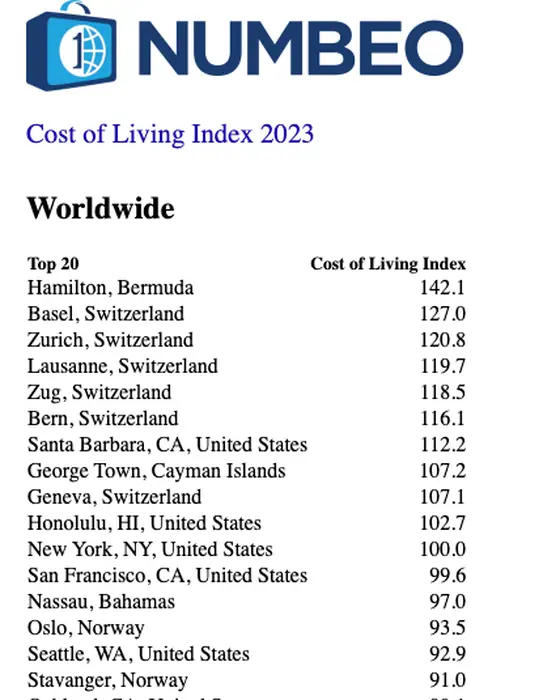
Numbeo
Cost of Living Index 2023
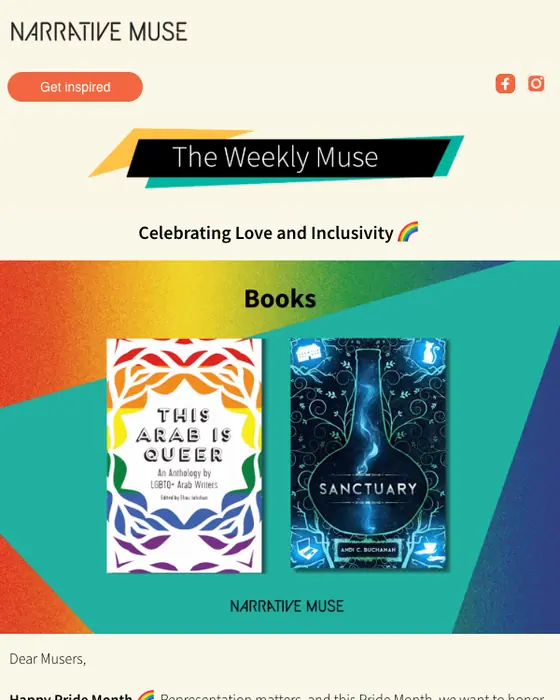
Narrative Muse
Amplifying LGBTQ+ Voices: Pride Month Recs
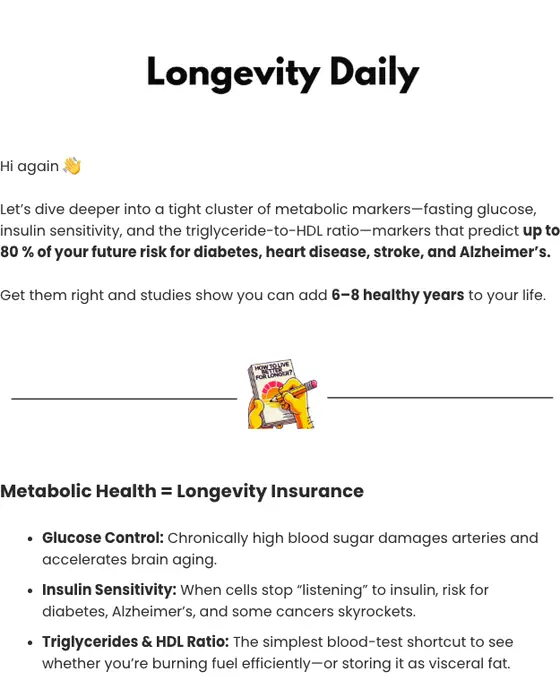
Longevity Daily
🌅 The #1 Predictor of a Longer Life? Master Your Metabolic Health
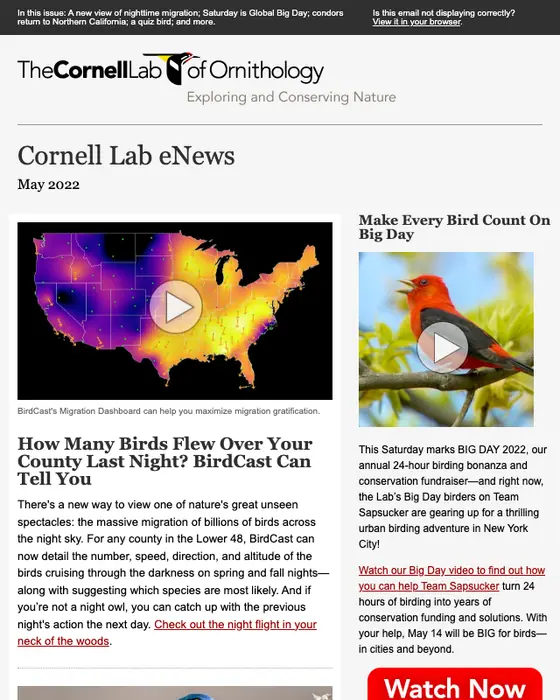
Cornell Lab of Ornithology
eNews: How Many Birds Are Flying Over Your County Each Night During Migration? BirdCast Can Tell You.
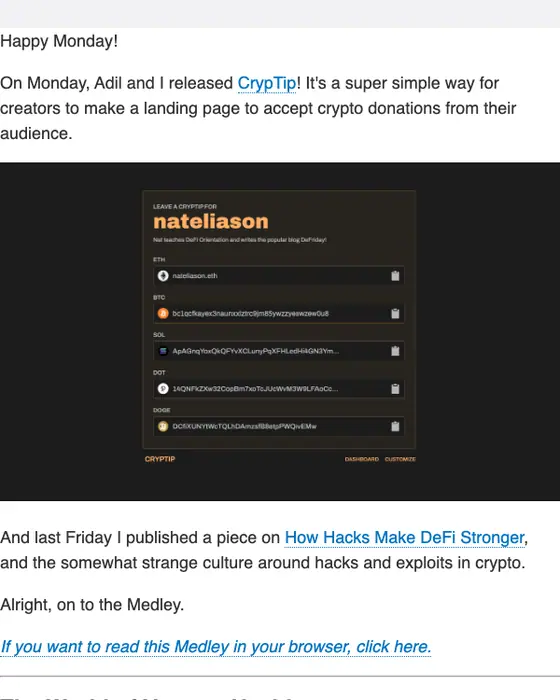
Nat Eliason
Medley 271: Hacks, Testosterone, Investments, Addiction, CrypTip, Games, Relationships...
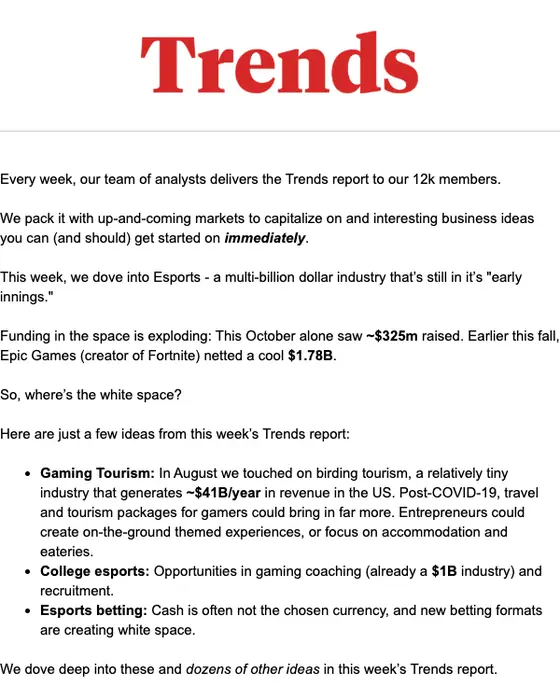
Trends
The industry raising $325M in one month
Wait But Why
New (little, not the main one) post
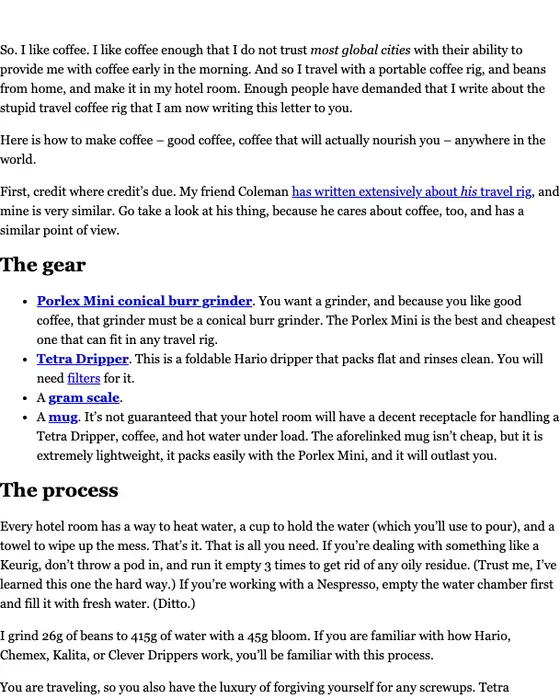
Draft
The Travel Coffee Rig
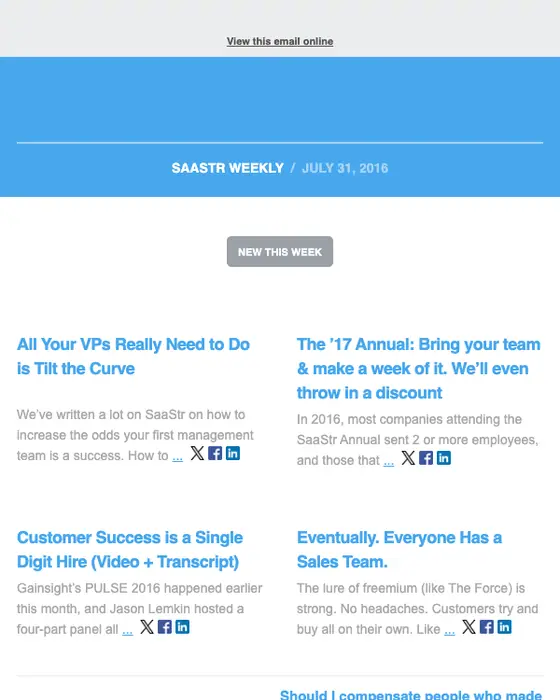
SaaStr
SaaStr Weekly - July 31, 2016
How media and editorial newsletters differ from other newsletters
Media newsletters against every other newsletter
263 media newsletters and 1,269 newsletters from every other industry, collected from the same two inboxes| What we measured | Media newsletters | Every other newsletter |
|---|---|---|
| Editorial design style | 33% | 11% |
| Instructional tone | 49% | 77% |
| Neutral tone | 35% | 9% |
| Greets the reader by first name | 8% | 28% |
| Sent to consumers, not businesses | 75% | 54% |
| Black, white and gray palette | 73% | 59% |
| Text heavy | 70% | 62% |
| Subject line says plainly what is inside | 79% | 74% |
| Single-column layout | 78% | 78% |
| Plain-text layout | 16% | 19% |
| Long | 48% | 46% |
| Opens with a hero image | 6% | 5% |
| Five or more calls to action | 53% | 51% |
| Median calls to action | 5 | 5 |
| From a US sender | 67% | 50% |
The clearest difference is design. 33% of the media newsletters carry the design style our library tags as editorial, against 11% of other newsletters. Tangle, The New York Times, National Geographic and The Guardian on this page all carry that tag. Tone differs as well: 49% are instructional, against 77% of other newsletters, and 35% are neutral, against 9%. Media newsletters also use the reader's name less: 8% greet the reader by first name, against 28%, and 75% are written for consumers, against 54%.
Several things that look like media habits are newsletter habits. Single-column layout (78% and 78%), length (48% long and 46%), hero images (6% and 5%) and a median of 5 calls to action in both groups barely move. The US share, 67% against 50%, reflects the two inboxes as much as the industry.
What is on this page
The 23 newsletters come from 23 senders, and 17 were sent in 2023 or later. They fall into five formats.
One story
The New York Times (2025) sends a breaking news alert on a single story. Tangle (2025) gives a whole issue to tracking a president's promises. Crunchbase News (2025) leads with a quarterly startup funding report, and SmartCompany (2024) previews the Australian federal budget.
Collections of stories
National Geographic (2025) sends its ten most read stories. The Guardian (2025) sends part three of its Detox Your Kitchen series, and Nomadico (2026) packs three topics into one issue.
What to watch or hear next
IMDb (2026) lists five shows and movies for the week, Netflix (2026) lists what is coming soon, and WOW Presents Plus (2025) sends a weekend watchlist. The NFL Game Pass (2024) Week 11 Rewind points to the week's highlights, and SoundCloud's (2024) Weekly Download points to a themed set of tracks.
Plain-text letters
6 of the 23 use a plain-text layout, among them Draft's (2019) letter about a travel coffee rig and Numbeo's (2023) Cost of Living Index 2023, a ranked list of cities.
Filed under other industries
The 3 publisher newsletters our library files elsewhere are Longevity Daily, Cornell Lab eNews and SaaStr Weekly.
Next to this one
The same library, cut a different way: every media and publishing email, including the receipts, sign-up and account emails publishers send, media and publishing promotional emails, digest emails and plain-text emails. Other newsletters by industry: SaaS, education, health and fitness and professional services, or every newsletter example.
Questions about the collection
This page shows 23 real ones, among them The New York Times, The Guardian, National Geographic, Tangle, Crunchbase News, SmartCompany, Netflix, IMDb and SoundCloud. 20 come from the 263 media newsletters we collected from two inboxes. Filter by design style to compare a news alert with a magazine roundup or a plain-text letter.
It is the regular email a news site, magazine, streaming service or independent writer sends to subscribers. On this page, The New York Times sends a breaking news alert on one story, and National Geographic sends its ten most read stories. We collected 263 media newsletters from 122 brands.
An inbox cannot show which newsletters worked, only what senders chose. In the 263 media newsletters we collected, 79% use a subject line that says plainly what is inside, 78% use a single column, 70% are text heavy and the median one has 5 calls to action. Only 8% greet the reader by first name.
Mostly long or medium. Of the 263 media newsletters we collected, 48% are long, 33% are medium, 15% are short and 3% are very short. Other newsletters are much the same at 46% long, so length comes with the newsletter format, not with the media industry.
42 of the 263 are published as full-length images. We took 22 of those off: 12 extra sends from publishers with several emails in the set, 3 not publisher newsletters, 3 broken renders and 4 for privacy or house style. That leaves 20, plus 3 filed under other industries. The other 221 still count in the numbers.