
What editorial email design is
Editorial email design lays an email out like a page of a magazine or newspaper: one column of headlines, short summaries and links, written to be read rather than to sell one product. Most editorial emails are newsletters.
We collected 380 editorial emails from 240 brands, sent between 2016 and 2026, out of two real inboxes that are part of the Nitrosend email library. This page shows 93 of them, one per brand, 68 sent in 2023 or later. We left off sales and product promotions that our tagging called editorial, repeats of one brand's template, broken renders and one email that named a private person. The tables below still count all of them.
93 editorial emails you can open
The first screen starts with recent sends from The New York Times, Tangle, IMDb, Netflix, New York Magazine, National Geographic, The Guardian and Nomadico. Of the 93 shown, 65 are newsletters, 16 are promotions, and 90 use a single-column layout. Filter by industry, or open any email for its subject line, what it does and the prompt that rebuilds it.
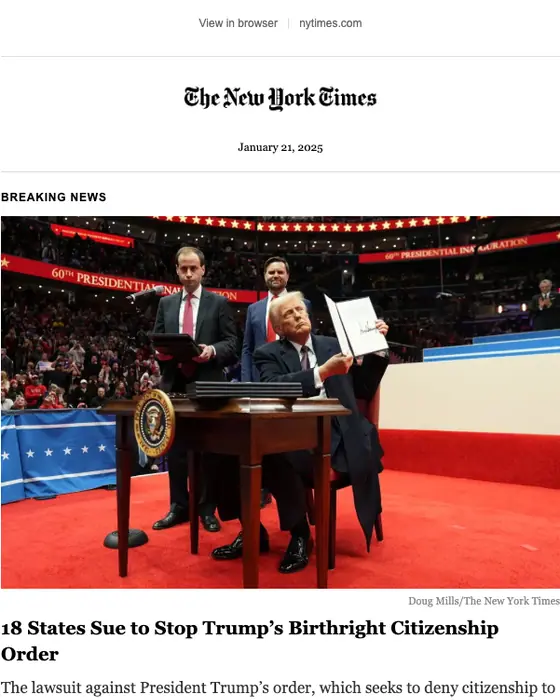
The New York Times
Breaking news: 18 states sue to stop Trump’s birthright citizenship order
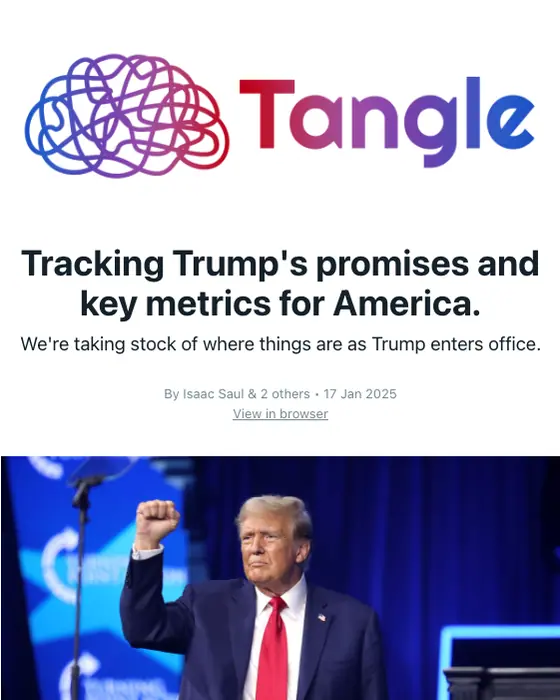
Tangle
Tracking Trump's promises and key metrics for America.
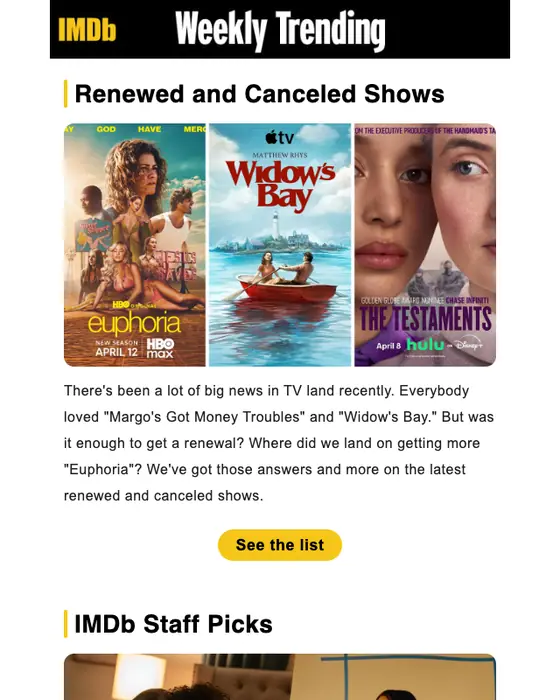
IMDb
The latest renewed and canceled shows
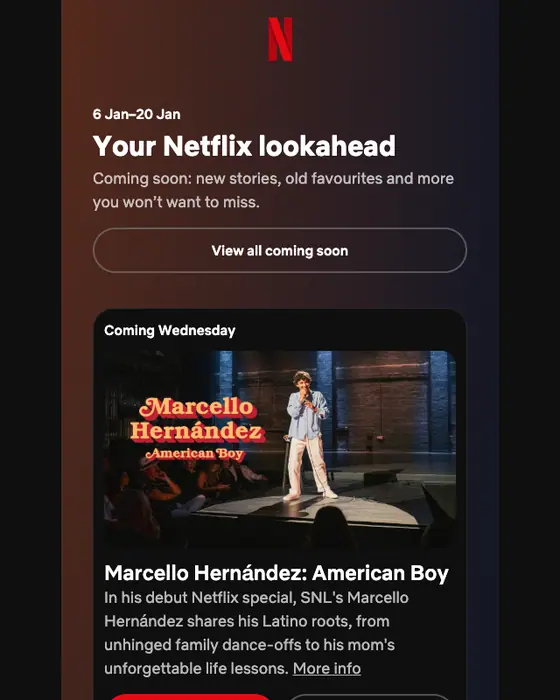
Netflix
[NAME], here's what's coming soon to Netflix
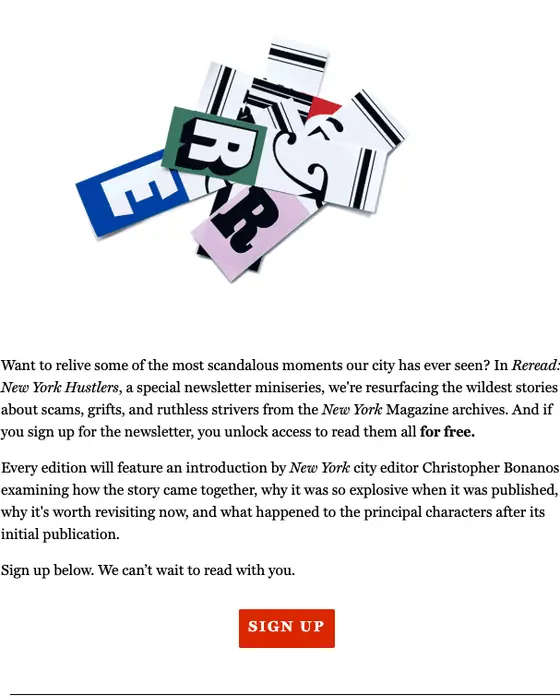
New York Magazine
Read Our Most Scandalous Stories for Free
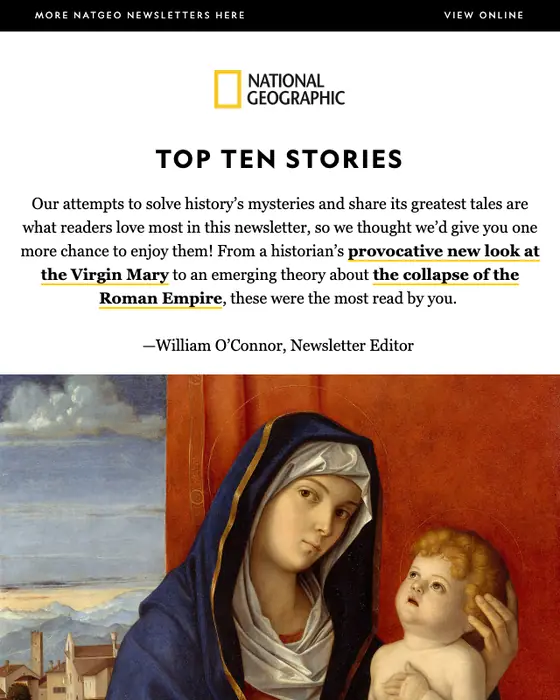
National Geographic
Who was the real Virgin Mary?; a new fall of the Roman Empire theory; Queen Victoria’s secret marriage
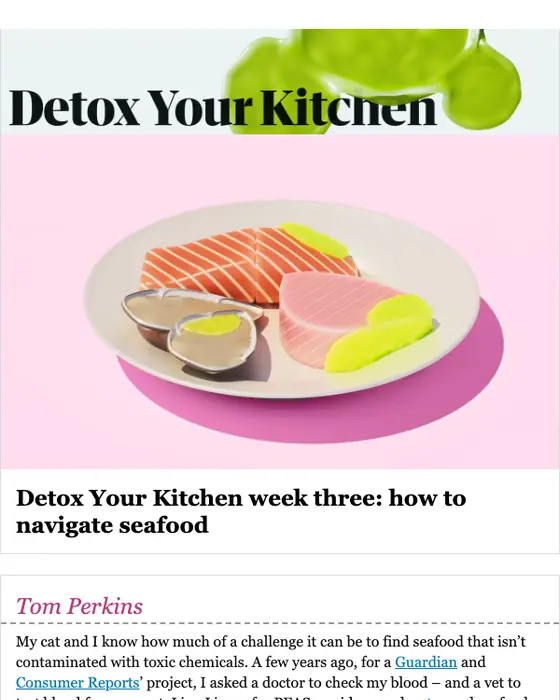
The Guardian
Detox Your Kitchen #3: Seafood
Nomadico
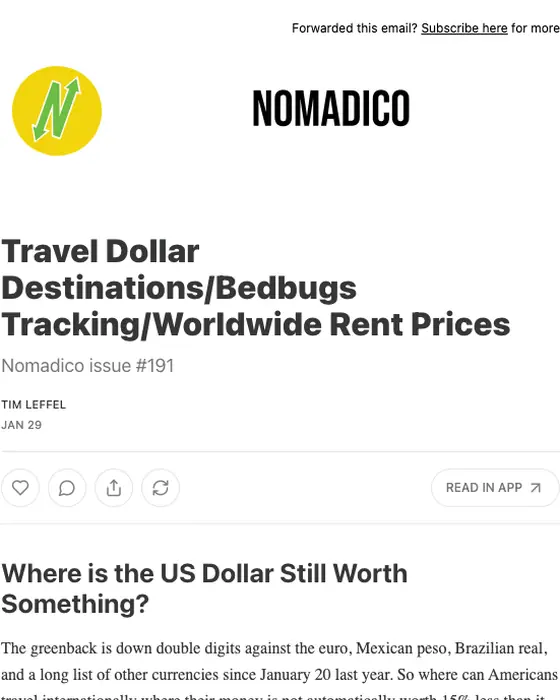
Travel Dollar Destinations/Bedbugs Tracking/Worldwide Rent Prices
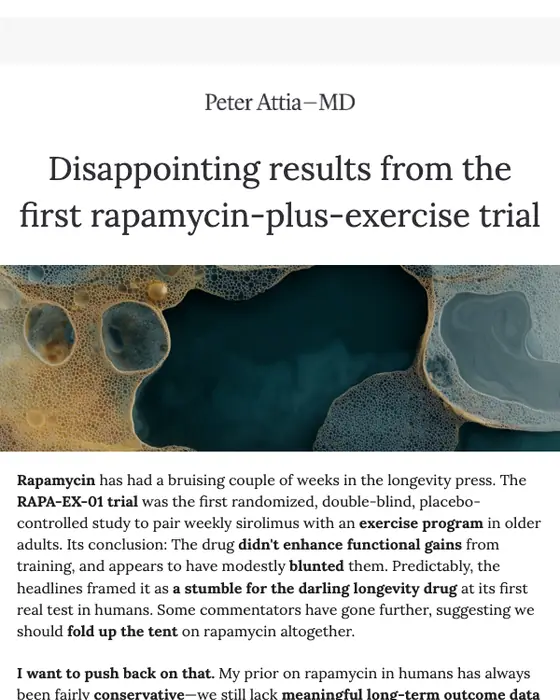
Peter Attia, M.D.
Disappointing results from the first rapamycin-plus-exercise trial
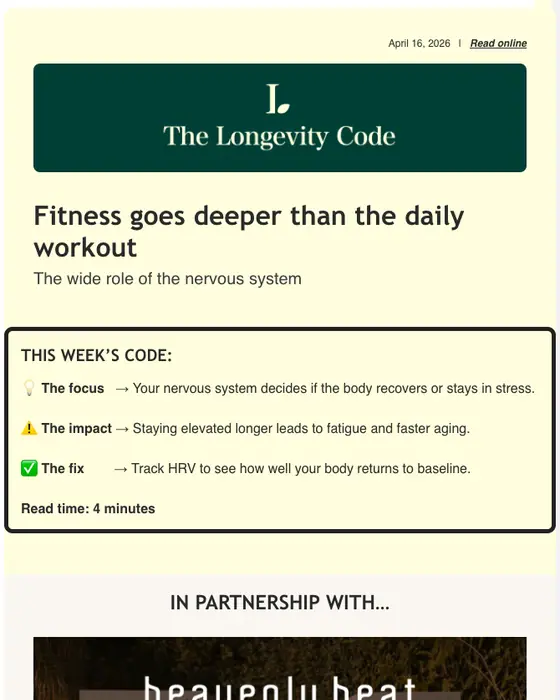
The Longevity Code
🧬 Fitness goes deeper than the daily workout
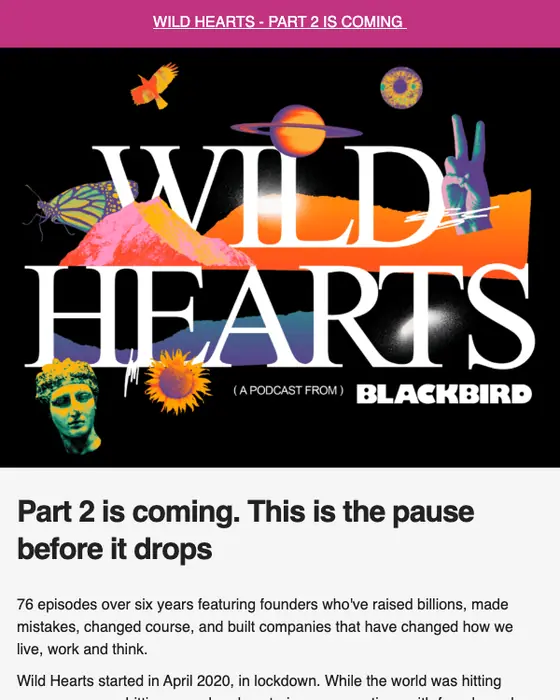
Blackbird
Part 2 is coming. This is the pause before it drops.
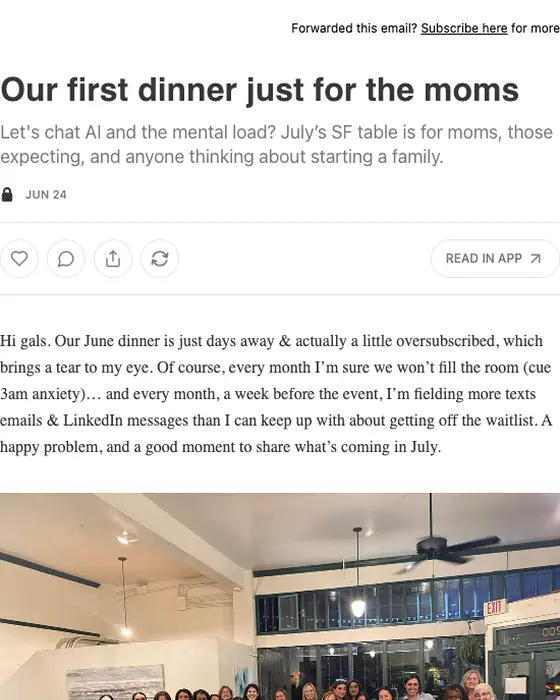
Women + AI
Our first dinner just for the moms
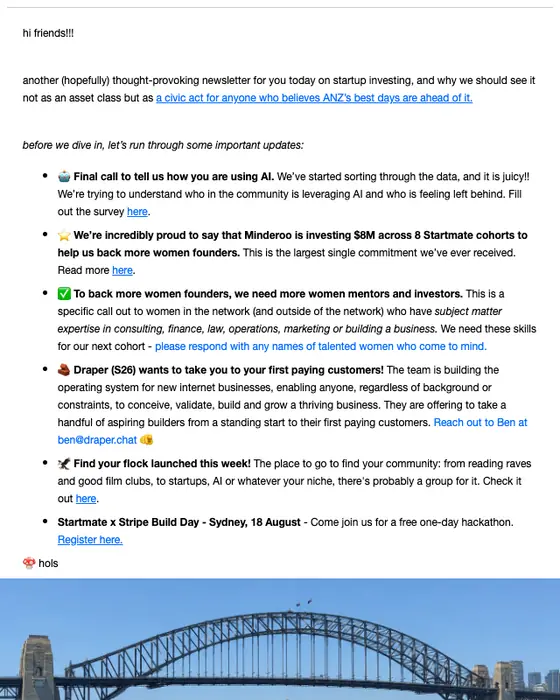
Startmate
🧠 startup investing as a civic act + stripes x startmate build day
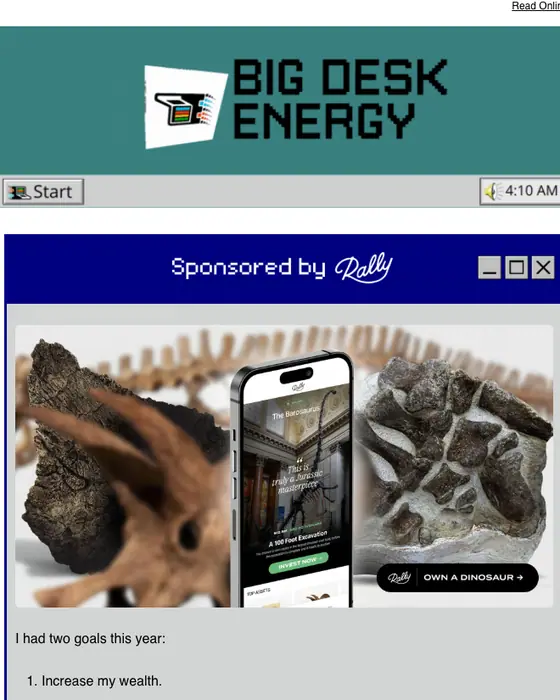
Big Desk Energy
welcome to cooldown
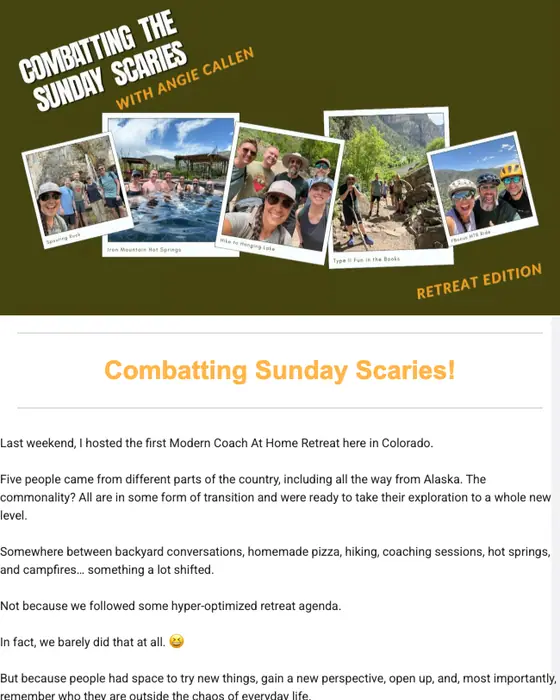
Career Benders
Take Your Sunday Scaries Outside 🔥

Dr. Mark Hyman
The Food Label Scam Big Food Hopes You Never Notice
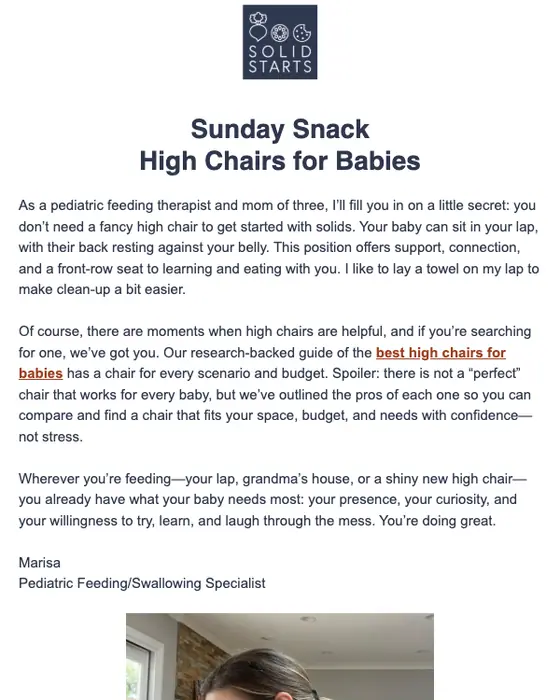
Solid Starts
Sunday Snack: Best high chairs ⭐
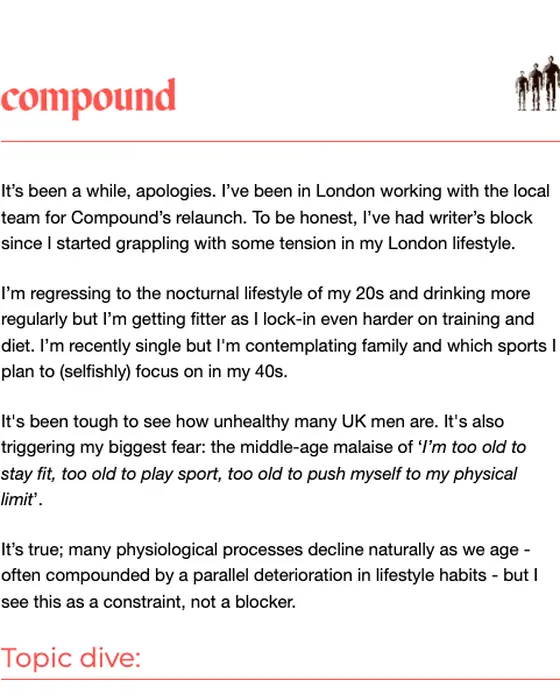
Compound
Ageing hormones
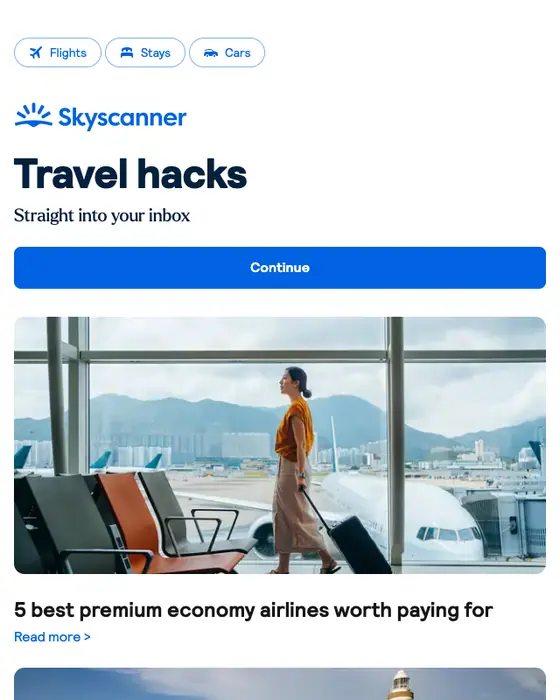
Skyscanner
5 best premium economy airlines worth paying for
Unsplash
What photographers rely on to preserve every moment ❤️
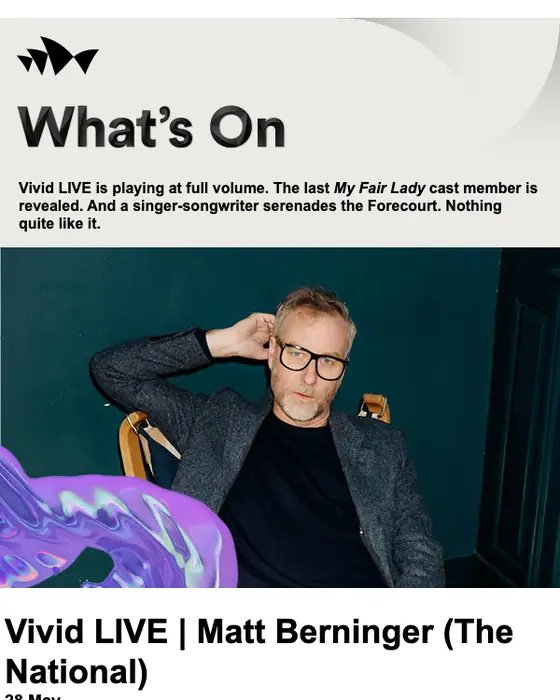
Sydney Opera House
What's On: Matt Berninger, Dylan Gosset and Rise Against
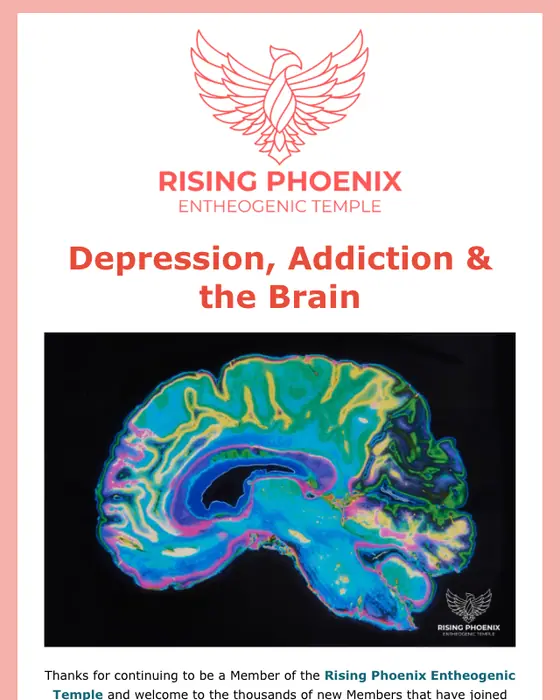
Rising Phoenix Entheogenic Temple
Depression, Addiction & the Brain
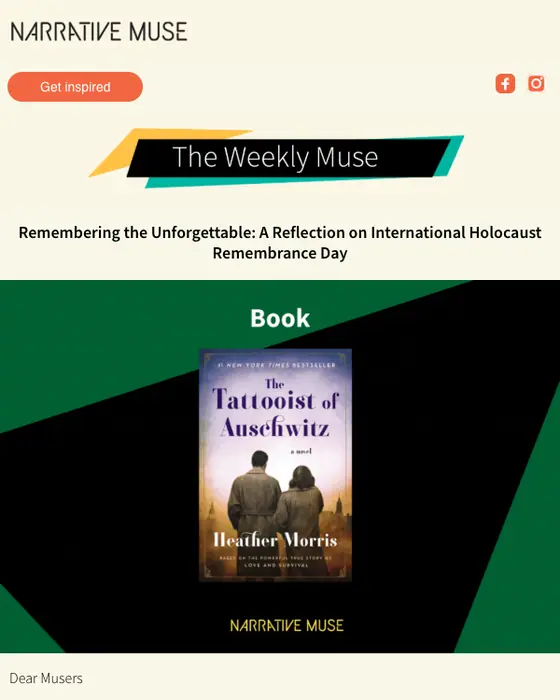
Narrative Muse
Connecting Past and Present on Holocaust Remembrance Day
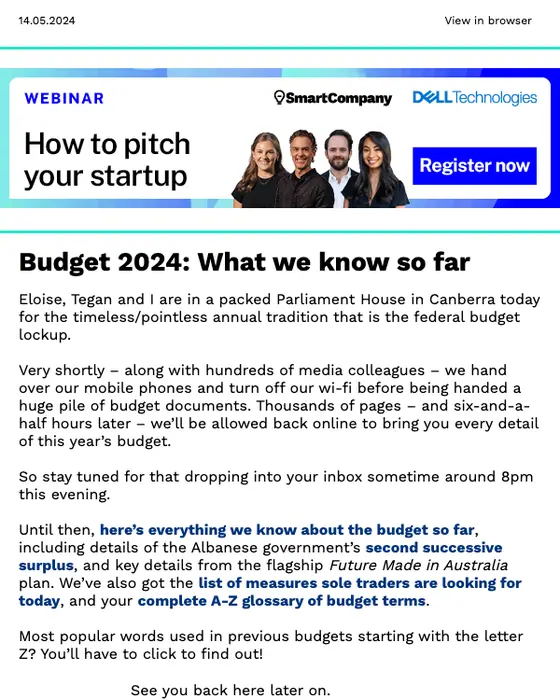
SmartCompany
Budget preview | $9.1 billion surplus | Sole traders want tax relief
How editorial emails differ from the rest
Editorial emails against every other email in the library
380 editorial emails and 12,331 others, same two inboxes| What we counted | Editorial | Every other email |
|---|---|---|
| Newsletters | 61% | 11% |
| Single-column layout | 93% | 64% |
| Long | 63% | 15% |
| Micro or short | 5% | 54% |
| Median calls to action | 6 | 2 |
| Five or more calls to action | 60% | 22% |
| Exactly one call to action | 10% | 31% |
| Opens on a hero image | 21% | 12% |
| Mostly text (tagged text heavy) | 51% | 61% |
| Limited color palette (tagged monochrome) | 38% | 63% |
| Instructional tone | 55% | 36% |
| Sent to existing customers or readers | 83% | 37% |
| Greets the reader by first name | 17% | 41% |
Editorial emails are long and they link out a lot. 63% are long, against 15% of everything else, and 93% use one column, against 64%. The median editorial email carries 6 calls to action, against 2 for the rest, and 60% carry five or more. Only 10% have exactly one. That is the opposite of the usual advice to keep calls to action subdued: a newsletter with five stories has five links.
Two more results run against the usual description of the style. Editorial emails open on a hero image more often than other emails (21% against 12%), and our tagging marks fewer of them as mostly text (51% against 61%) or monochrome (38% against 63%). The rest of the library includes plain receipts and account notices, most of them tagged mostly text and monochrome, so editorial reads as a designed style beside them. 83% go to people who already read or buy from the brand, and only 17% greet the reader by first name, against 41%.
For how designers lay out a newsletter, see how to run an email newsletter and the best email designs of 2026.
What is in the editorial collection
What the editorial emails are
380 emails, top 6 types| Type | Emails | Share |
|---|---|---|
| Newsletter | 232 | 61% |
| Promotional | 89 | 23% |
| Product launch | 14 | 4% |
| Event invite | 10 | 3% |
| Seasonal | 9 | 2% |
| Re-engagement | 8 | 2% |
Who sends them
380 emails, top 6 industries| Industry | Emails | Share |
|---|---|---|
| Media and publishing | 105 | 28% |
| Health and fitness | 39 | 10% |
| Education | 33 | 9% |
| Entertainment | 28 | 7% |
| SaaS | 22 | 6% |
| Professional services | 19 | 5% |
61% of the editorial emails are newsletters and 23% are promotions that our tagging also called editorial. Publishers send the most, 28% of the collection, followed by health and fitness and education brands. For newsletters in every style, see the newsletter email examples, and for publishers in every format, the media and publishing newsletters.
Next to this one
The same library by structure: single column email layouts. By style: minimal, plain text, corporate, playful, bold graphic and utilitarian. Nearby formats: digest emails, and everything publishers send in any style: media and publishing emails.
Questions people ask
One column of short items, each a headline, a summary of a sentence or two and a link. In our library 93% of the 380 editorial emails use a single column, 63% are long and 61% are newsletters, against 11% of all other emails.
More than most emails. The median editorial email we collected has 6 calls to action, against 2 for every other email, and 60% have five or more. Only 10% have exactly one, against 31% of other emails, so a long list of links is normal for the style.
The editorial newsletters here mostly stack stories in one column: 93% are single column and the median carries 6 calls to action. They lean on the writing more than on personal data: only 17% greet the reader by first name, against 41% of other emails.
Yes, more often than you might expect. 21% of the editorial emails we collected open on a hero image, against 12% of other emails, and our tagging marks 51% as mostly text, against 61%. The rest of the library includes plain receipts and notices, which pull its text share up.
194 were rendered for this page and we removed 101: 46 sales and product promotions our tagging called editorial, 41 repeats of one brand's template, 11 broken or private renders and 3 near-empty ones. That leaves one email per brand. The tables count all 380.